
2026 Kawasaki KLE500: An Upgraded Versys-X Or A Modern KLR650?
A rebooted KLE500 arrives stateside in a fresh, approachable, affordable package.
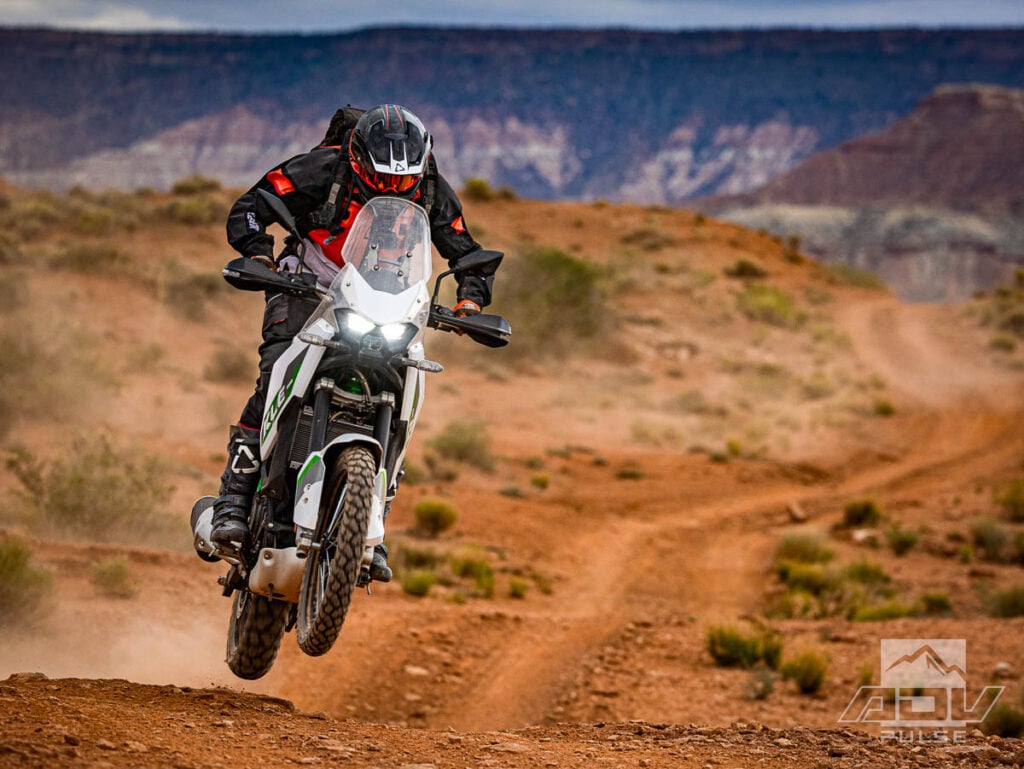
I remember being on a trip in Europe years ago, spotting a Kawasaki adventure bike at the airport I’d never seen before and thinking, “What a cool‑looking machine. Why don’t we get these in the States?” I later learned it was a KLE500 — a long‑running overseas model sold from 1991 to 2007. Now it’s back, completely reimagined, and this time it’s coming to the U.S.
Like the original, the new KLE500 follows a familiar formula: a 21/17‑inch spoked wheelset, a parallel‑twin engine borrowed from its Ninja 500 sport‑bike sibling, Rally-inspired styling and a chassis aimed at light off‑road use. Add in a budget‑friendly price tag, and it’s clear Kawasaki is targeting new adventure riders entering the segment.
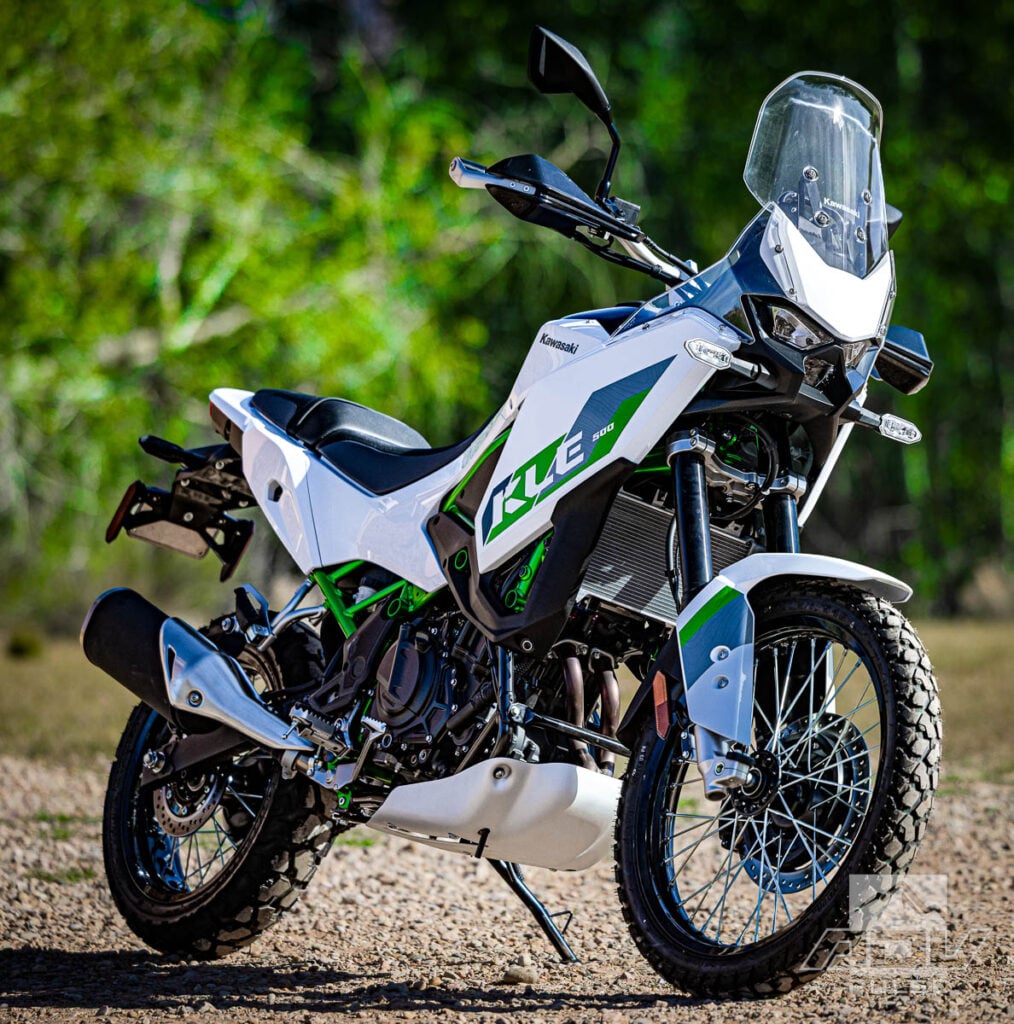
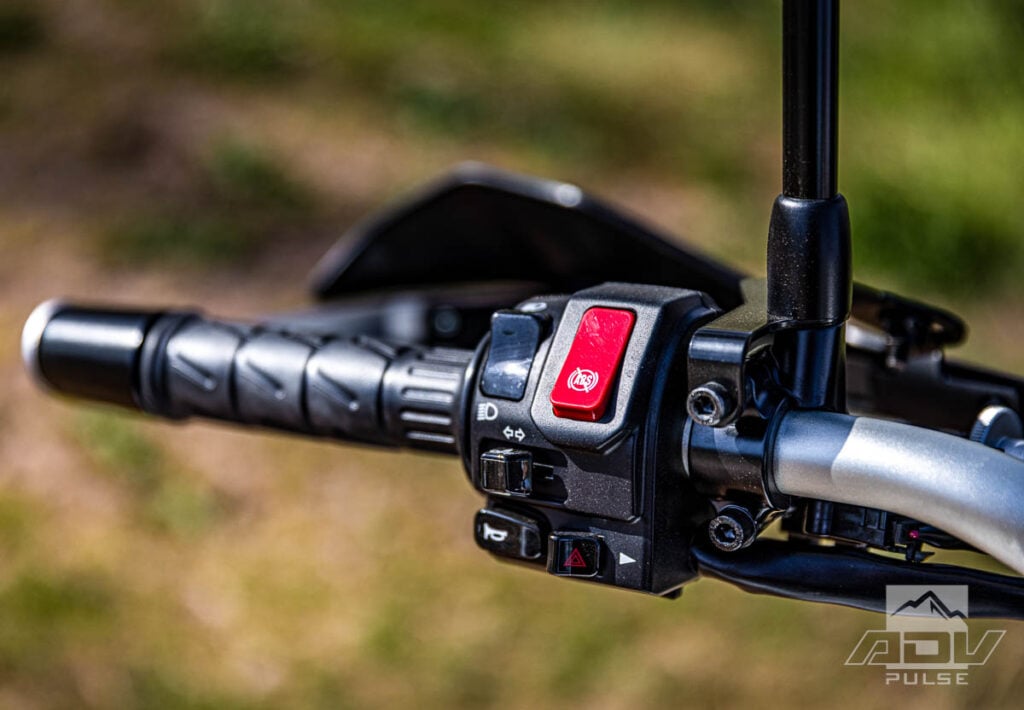
For a $6,599 starting MSRP, you get a 451cc twin producing 51 horsepower and 32 ft‑lbs of torque, paired with a 6‑speed gearbox and slipper clutch. Electronic aids are minimal — no traction control or ride modes — just ABS that can be disabled at both wheels via a big red button on the oversized 1‑⅛‑inch handlebars.
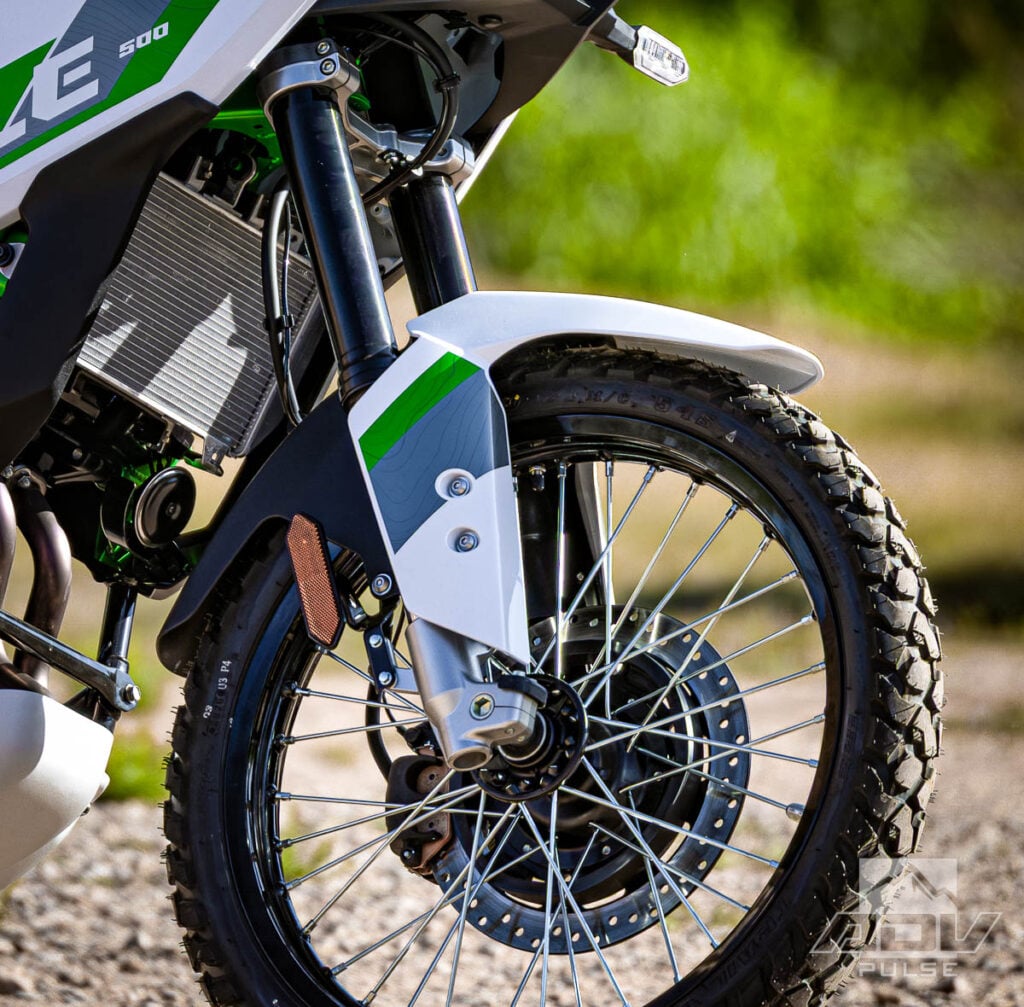
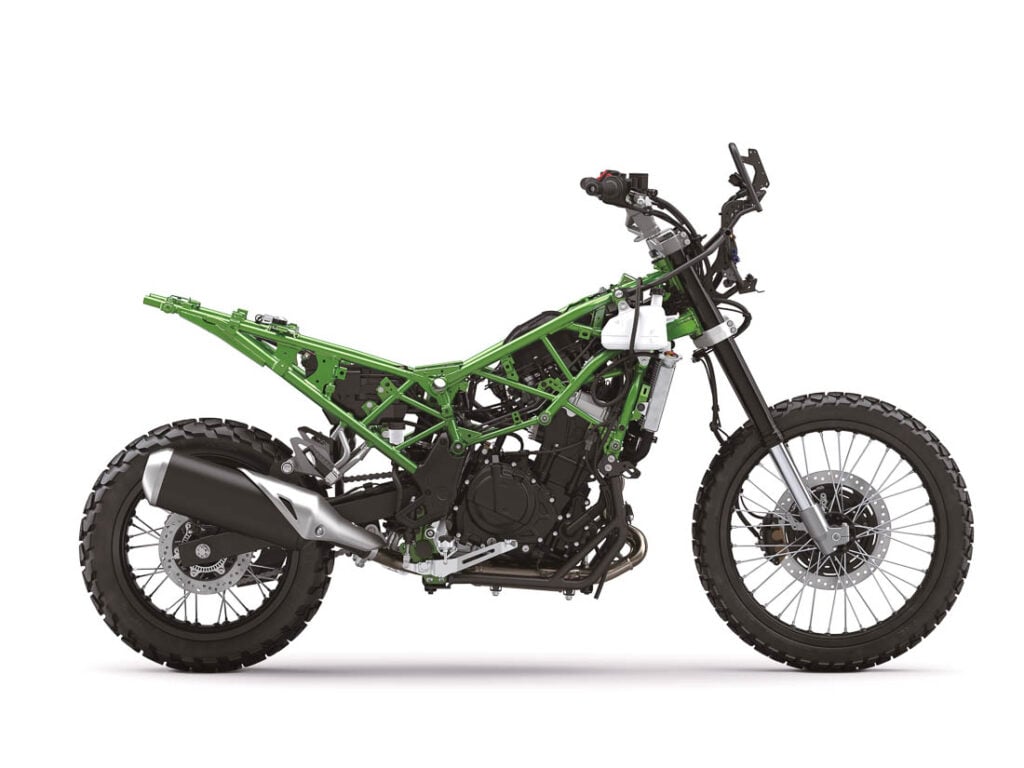
The frame is a trick‑looking steel trellis design using the engine as a stressed member, with a non‑removable subframe reinforced for carrying luggage. Suspension comes via a KYB 43mm USD fork offering 8.3 inches of travel, while a Uni‑Trak linkage rear setup delivers 7.7 inches. Adjustability is limited to rear preload only. Ground clearance is 7.3 inches, seat height is 34.3 inches, and the wheelbase stretches to 61.2 inches. Braking is handled by Nissin dual‑piston calipers on a single 300mm front disc and a 230mm rear. Fuel capacity is 4.2 gallons, and fully fueled, the KLE500 tips the scale at 428 pounds.
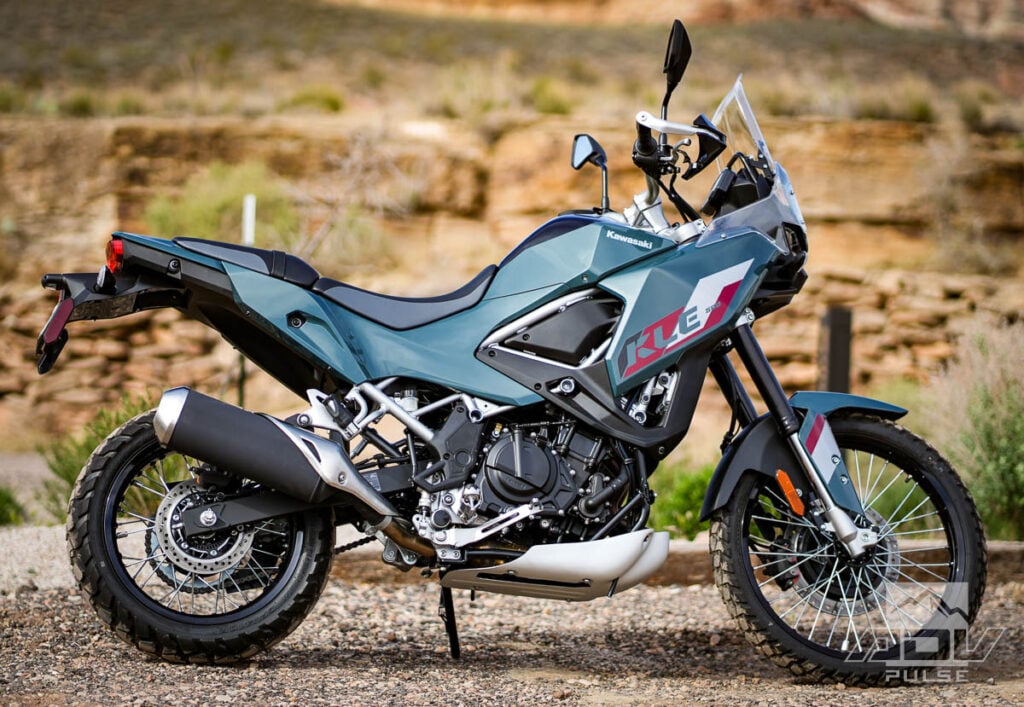
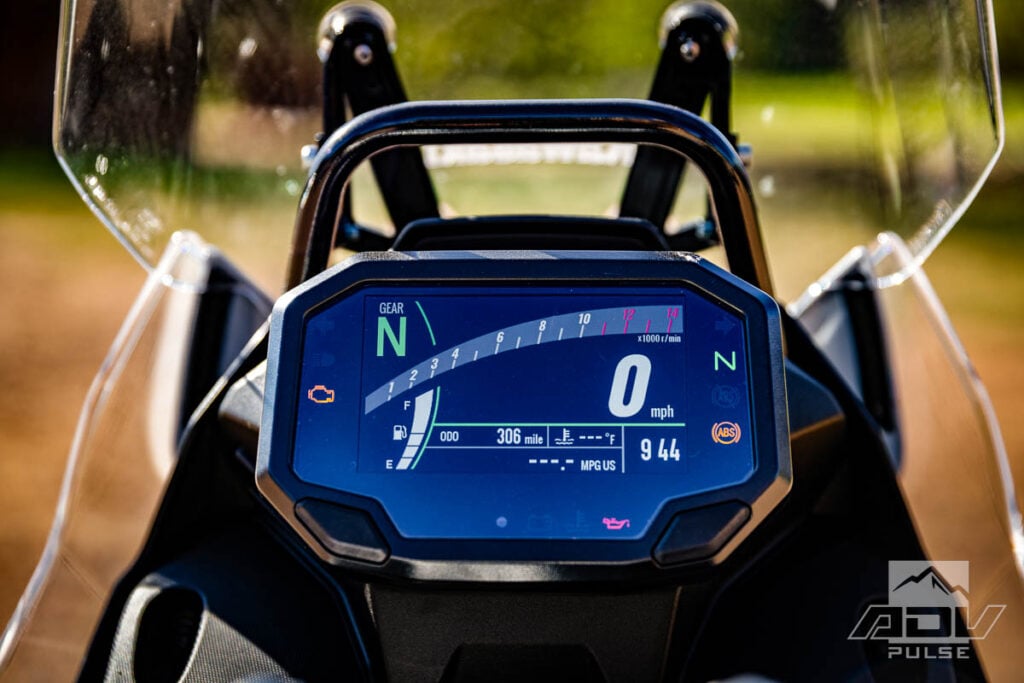
The model we used for testing was the KLE500 ABS SE ($7,499 MSRP), which adds several factory upgrades: steel‑braced wraparound handguards, a larger, beefier skid plate, a taller touring windscreen (4.1 inches higher), LED turn signals, and a 4.3‑inch color TFT display with Bluetooth connectivity through Kawasaki’s Rideology app.
On The Street
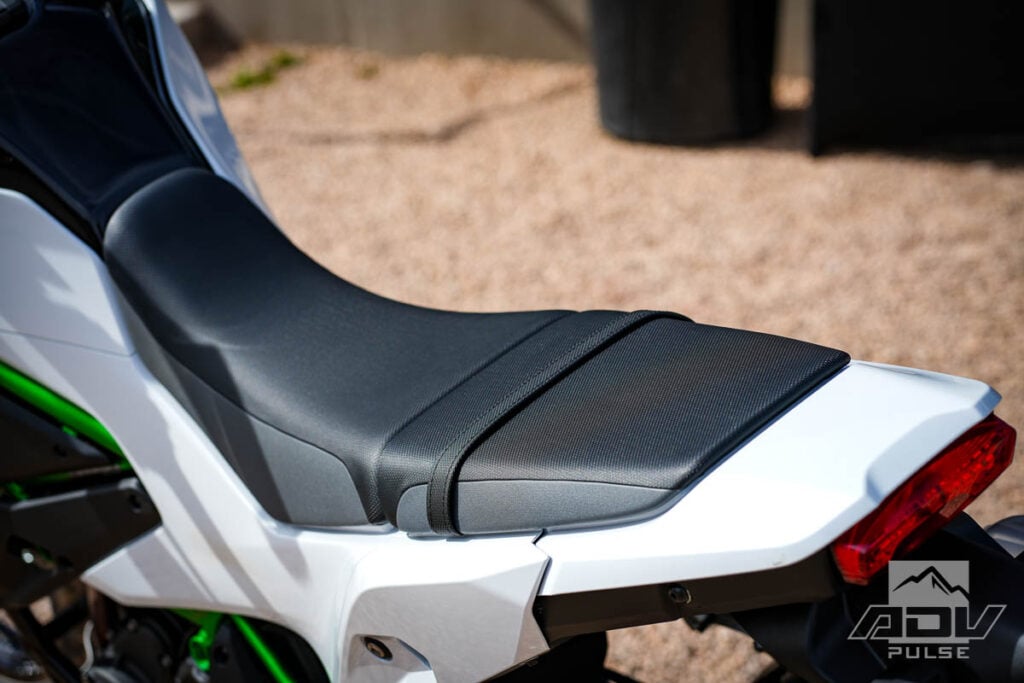
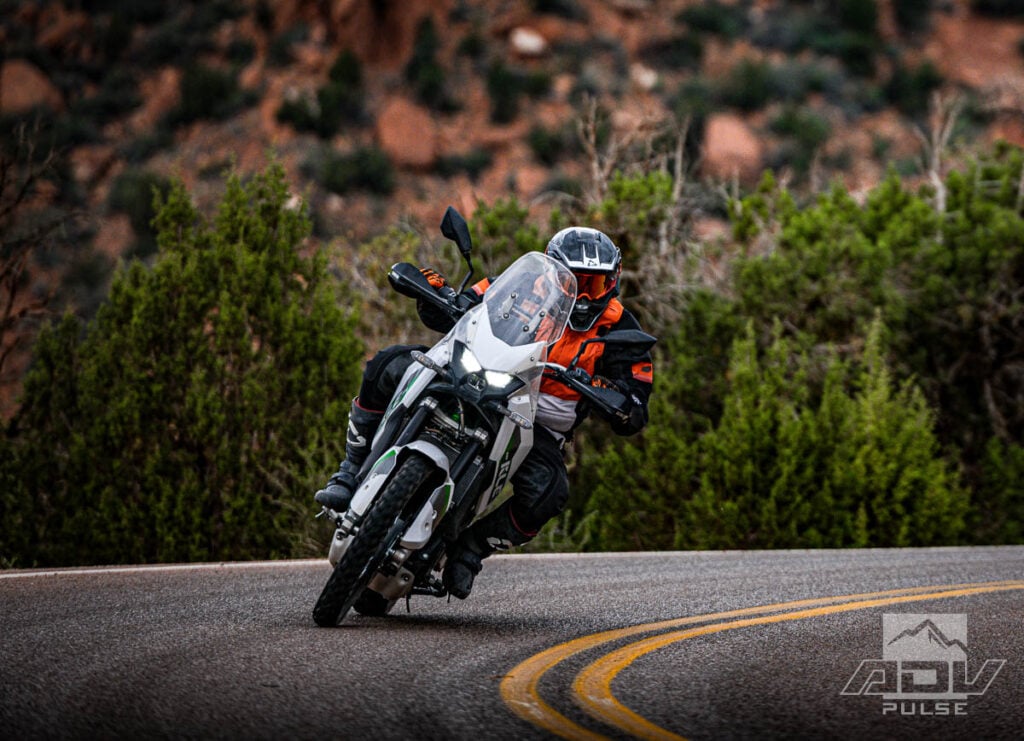
Getting comfortable came quickly on the opening highway stretch. The seat uses a stepped design with a rise for the passenger, yet still offers enough room to slide forward or backward, without feeling locked in. The seat is flat, wide, and plush, and its comfort remained one of the bike’s standout features throughout the test.
For me at 6’2”, the reach to the bars felt like a bit of a stretch from the seated position, though not enough to force a forward lean. And although the seat‑to‑peg distance is a touch tight, it never caused any uncomfortable knee bend during the ride. As for the seat height, it is typical for an adventure bike — I could flat‑foot it easily, though riders under 5’8” may find themselves up on their toes.
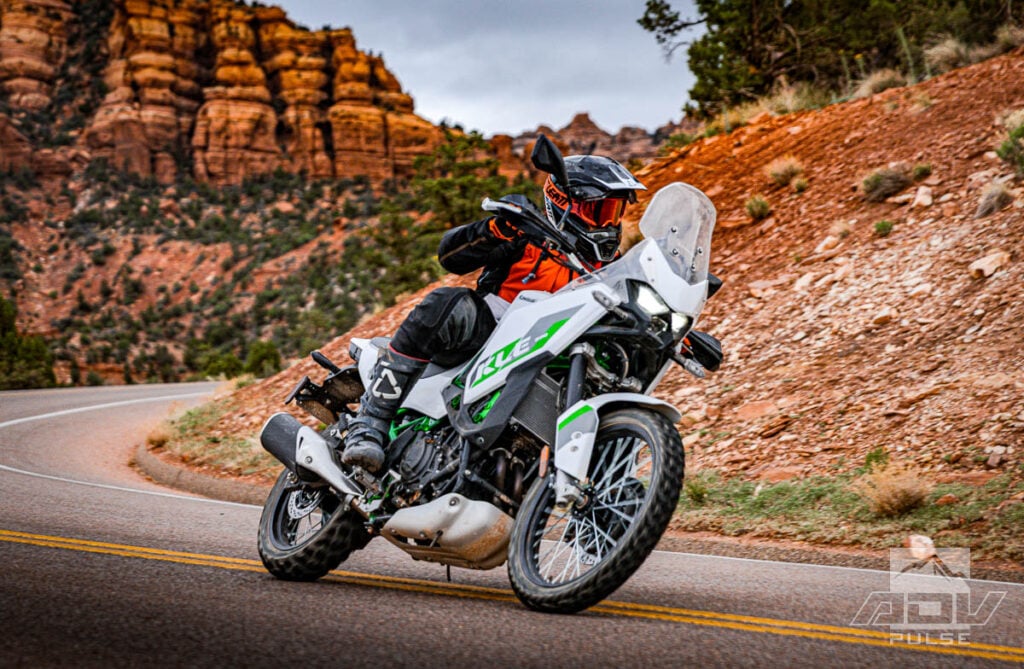
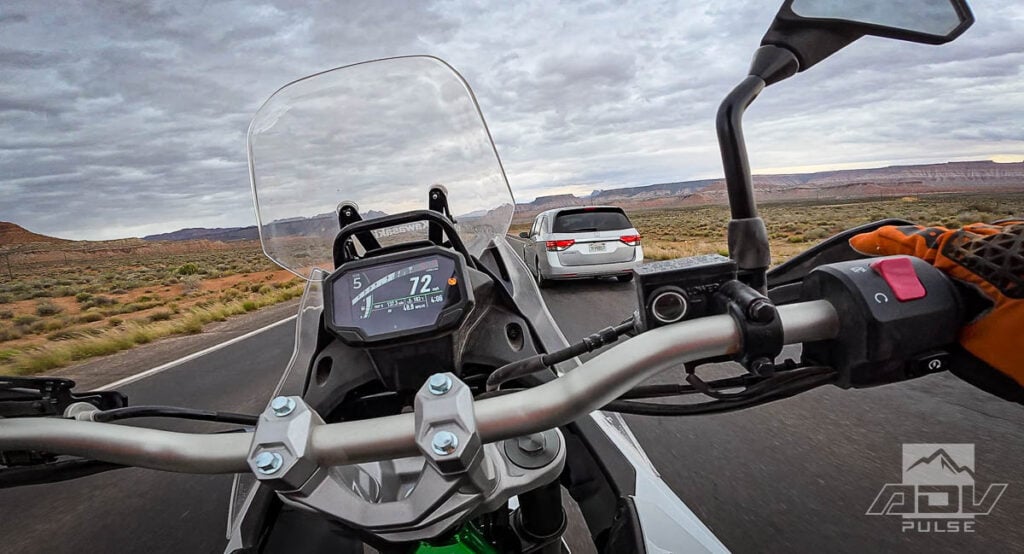
Both the standard and SE models feature a three‑position adjustable windscreen, though tools are required to change it. In the high setting, it looks tall and does a respectable job pushing air over my helmet. Its narrow profile means some wind still reaches the shoulders, but overall the cockpit is comfortable for long‑range cruising.
Power is adequate for passing a slow-moving car, but overtaking multiple vehicles may require a double downshift to tap into stronger acceleration in the upper‑RPM range. And although it is noticeably quicker than the Versys‑X 300, it never feels particularly thrilling. The exhaust note is also fairly muted — reminiscent of an ’80s sport bike with a stock can. A 270‑degree crank would have added more character, but as it stands, the bike will reach triple‑digit speeds without much delay.
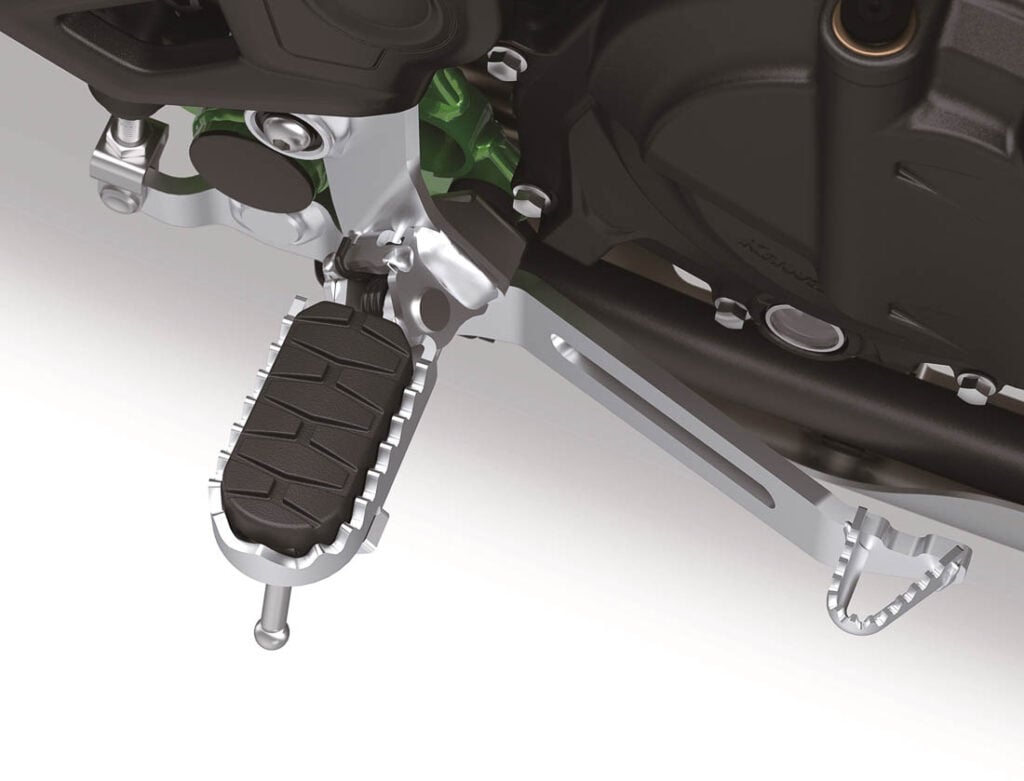
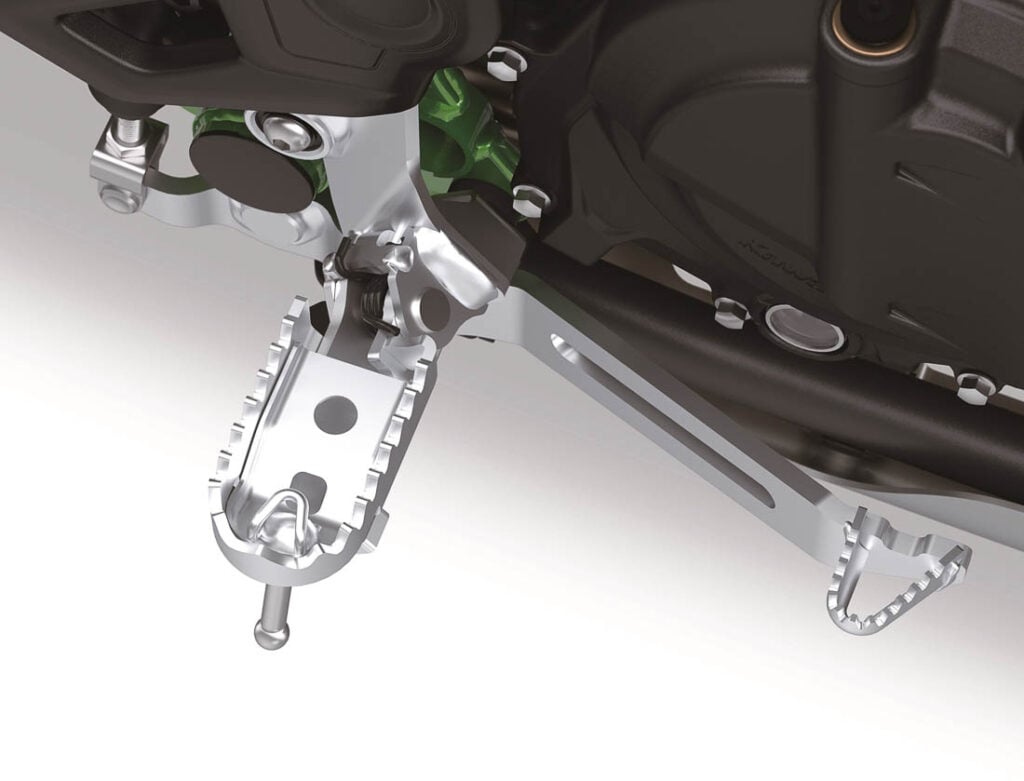
The level of engine vibration was more surprising. With a twin‑cylinder engine, I expected a smoother highway feel — that’s typically the whole point of choosing a twin over a single. But the KLE500 isn’t as smooth as some of the singles I’ve tested. If memory serves, the old Versys‑X 300 (which shares the same engine family) felt calmer at speed. Unfortunately, on the KLE500, the vibes start to creep in at around 75 mph. The heavy bar‑end weights and rubber‑mounted clamps help at the bars, and the pegs stay reasonably steady, but the tank and seat transmit the most buzz. Unlike some bikes that settle into a sweet spot at higher speeds, the KLE500 gets progressively buzzier past 75 mph. In my opinion, it’s no smoother at 75–80 mph than Kawasaki’s KLR650 or KLX300 single‑cylinder engines.
I also expected the KLE to shine in the twisties, given its Ninja DNA. Instead, the power delivery is very mild. You can grab a handful of throttle and the power rush is smooth and predictable. Shifting is buttery, and the slipper clutch keeps aggressive downshifts from unsettling the chassis. The bike feels light and maneuverable, but not especially quick‑steering. Braking performance is solid with good feel, and the bike can achieve respectable lean angles without touching down. It stays planted, with only modest dive and squat, but the overall demeanor is relaxed. It never feels like it wants to be pushed. It’s not poor handling — just mellow and unintimidating, great for staying out of trouble. Newer riders will appreciate that; experienced riders may find it a bit uninspiring.
We didn’t get a chance to test the Bluetooth connectivity, but the SE model’s TFT display is highly visible and easy to navigate. One quirk: the fuel gauge barely moves until you’re down to half a tank. I also went looking for a USB charging port for my phone, but that’s only available as a factory option. Leaving such a common feature off the standard bike, let alone the SE model, feels like a miss. Another item that really should be standard on a bike intended for off‑road use is a radiator guard, yet that too is only offered as an accessory. Kawasaki did at least include a GPS mounting bar above the dash, which is pretty cool and appreciated.
In The Dirt
With its 21‑inch front wheel and purposeful stance, the KLE500 may seem like it is ready for the open desert. The suspension travel numbers aren’t bad either at 8.3 inches up front and 7.7 inches in the rear — slightly more than the KLR650 and a big step up from the Versys‑X. It even gets a beefier fork than both of those bikes (43mm vs. 41mm). Ground clearance, however, is less impressive at 7.3 inches, landing about an inch shy of the KLR and only marginally higher than the Versys‑X’s 7.1 inches.
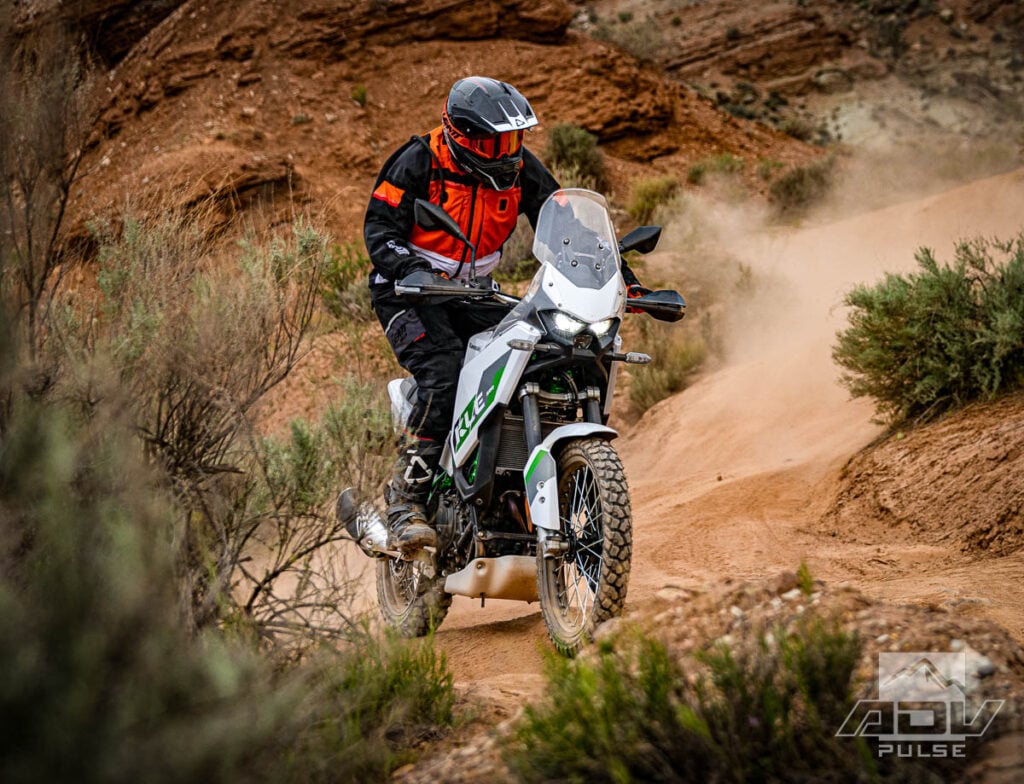
Given my concerns with the low ground clearance, I added some extra preload to the rear shock to help keep my 210‑pound frame from bottoming the bike out. Kawasaki emphasized that the KLE500 is meant to be approachable and comfortable on unpaved roads, not a high‑flyer, so expectations were set accordingly. Most of our testing took place on easy dirt roads with a few mildly-challenging sections mixed in. And for that intended purpose — cruising dirt roads — Kawasaki nailed the comfort and approachability.
One of the first stretches we hit was freshly graded with endless stutter bumps that could rattle your fillings loose. The KLE’s plush suspension soaked up the chatter impressively though. Keep the speeds modest and it feels like a luxury cruiser over smaller chop and rocks.
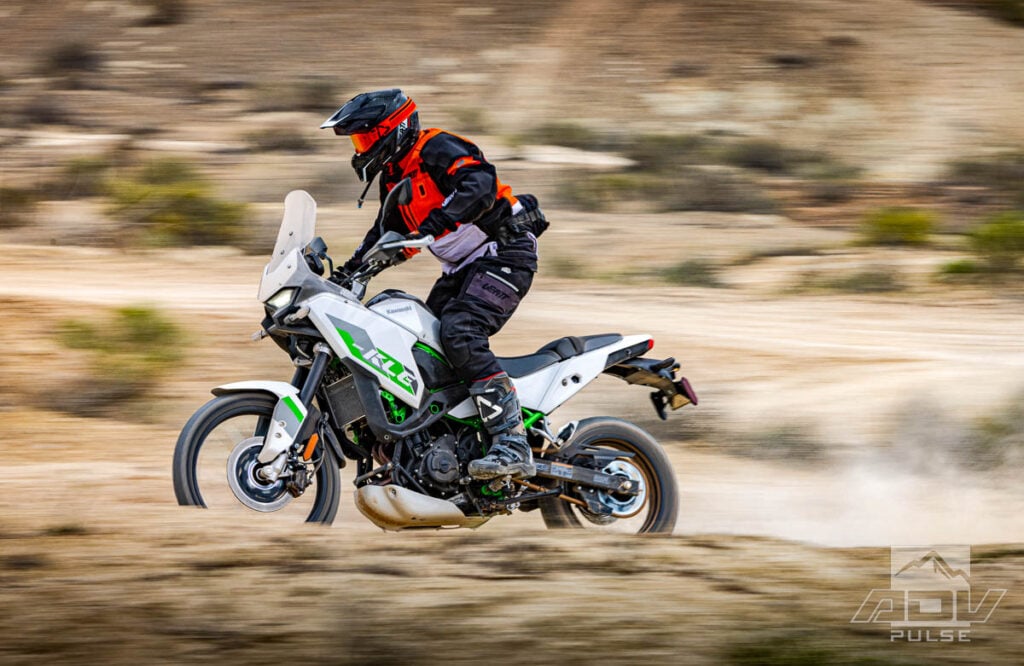
The bike has a long, slender feel, and the stand‑up ergonomics work well for covering long dirt miles. The tall bar puts you in a natural upright position, and the pegs sit directly beneath you for that classic meerkat adventure stance. That said, the pegs sit slightly farther forward than on a typical enduro, making it harder to drop into an aggressive attack position. Kawasaki highlighted the smooth bodywork where your legs make contact — nice to have, though not something I’ve ever noticed as a problem on other adventure bikes.
The cushy seat makes it comfortable to cruise seated for hours on smooth dirt roads, but getting your weight over the front end is tougher due to the seating position being set backward a bit. There is some room to slide back in the seat before hitting the step‑up though, if you want to weight the rear wheel for a climb.
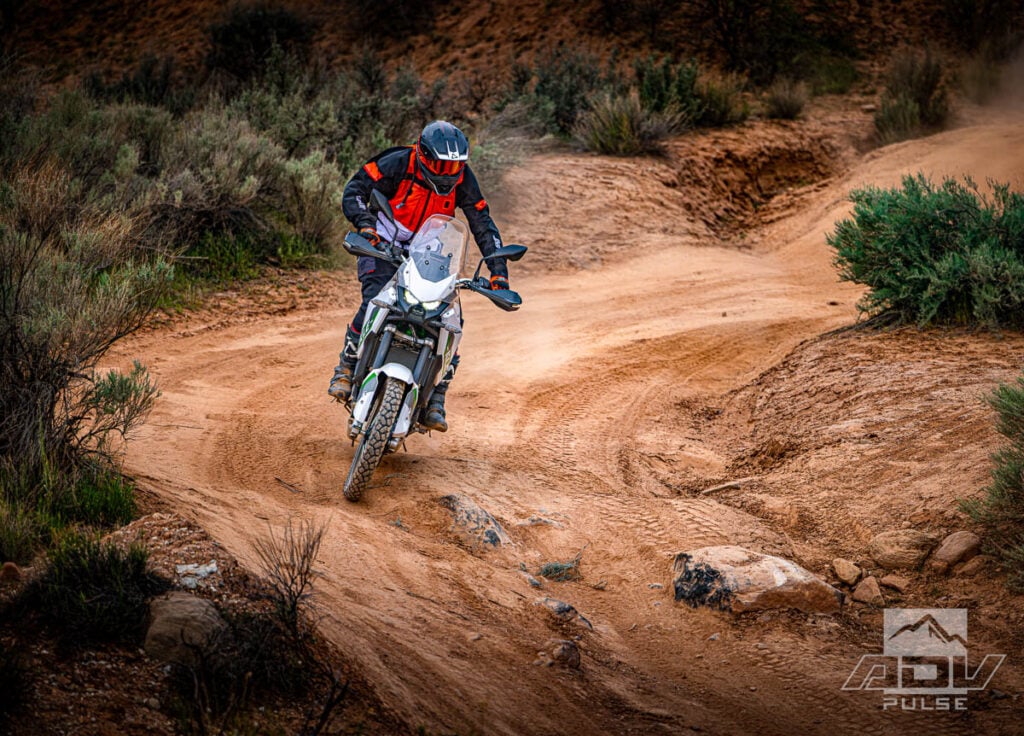
Overall, the KLE500 is a comfortable off‑road cruiser at lower speeds, with good stability from the 21‑inch front wheel and longer wheelbase. It tracks straight through rocky sections and doesn’t deflect easily. We didn’t get to test it in sand, but based on its balance and stability, I’d expect it to perform well there. At moderate speeds, it handles predictably and absorbs bumps effectively. It’s well balanced and easy to manage at slow speeds, though the long wheelbase and limited steering lock make tight turnarounds on two-track more difficult. Despite the tall tank design, it doesn’t feel top‑heavy, though I wouldn’t call it low‑slung either. Lean it over at a standstill and you’ll soon notice a point where the weight becomes hard to pull back from.
At higher speeds over bigger bumps or dips, the KLE starts to lose composure. Ride at a casual pace and it’s fine, but push harder or hit an unexpected rock or hole and the fork responds with a definitive thunk. High‑speed compression damping is lacking, and when it hits the bump stops, it’s not a soft bottom.
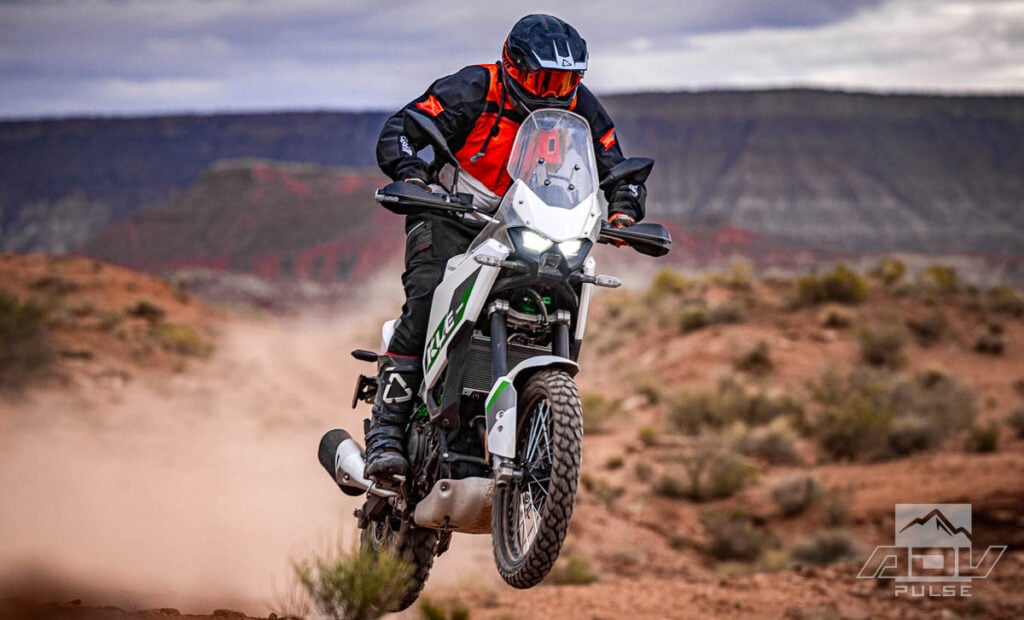
The rear shock behaves similarly. Leave the ground more than a few inches and land on flat terrain and you’ll likely get a thunk from the rear as well. And if there are rocks underneath the bike, expect the bellypan to make contact. In small whoops, g‑outs, or hitting medium-sized embedded rocks, the skid plate touches down regularly. I also noticed the SE’s taller windscreen tapped my helmet a few times in chunky terrain, though it can be lowered more than three inches to avoid this.
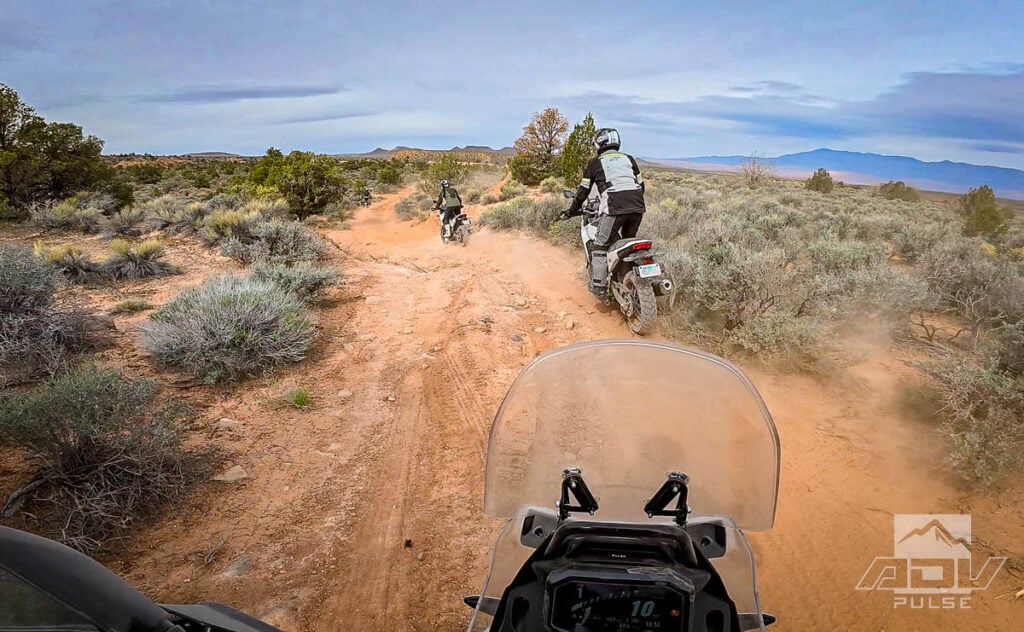
With no ride modes of any sort, you’re working with a single power map, and off‑road the delivery is calm in the lower RPMs. There’s enough torque to climb steep grades without excessive clutch work or bogging, and traction is excellent with minimal wheelspin. But there’s not much punch down low. You can lighten the front end, but a first‑gear wheelie requires revving it near the redline and popping the clutch. Newer riders will appreciate the smooth, non‑jerky throttle response and lack of unintended wheels spin though.
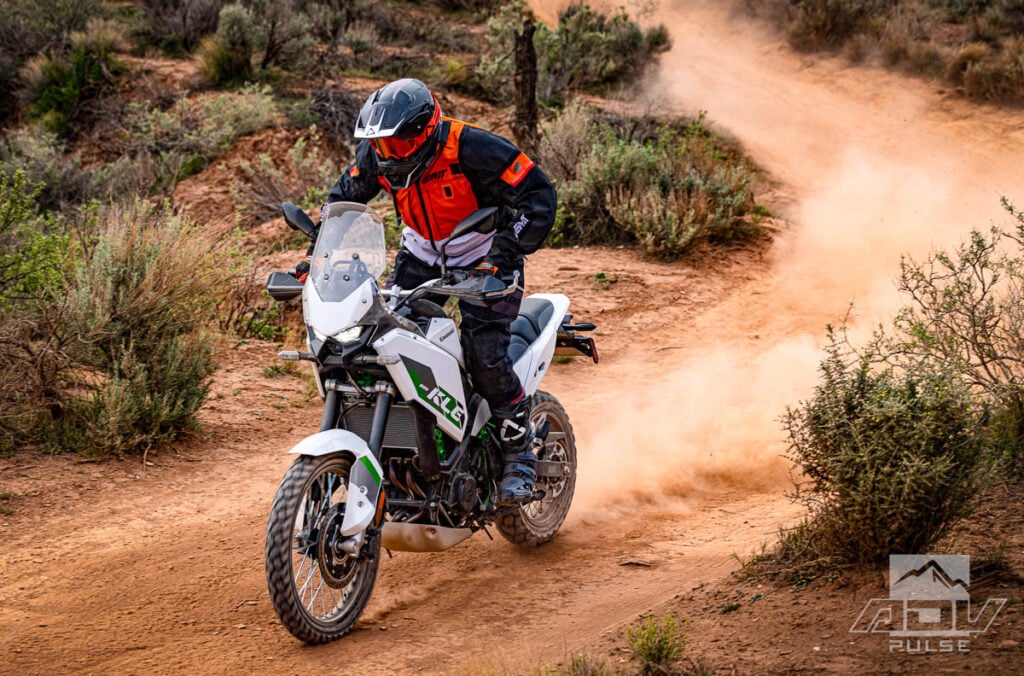
For riders who want more snap to clear obstacles, it’s simply not there in the lower RPMs. Although, you can drop a gear and ride it in the upper revs for a more responsive throttle. Above 7,000 rpm it feels livelier and still maintains traction, but it takes some getting used to riding that high in the powerband.
Traction control wasn’t missed. With the KLE’s mild output, spinning the rear tire requires deliberate effort. Even in the rain on slick pavement, I doubt TC would make much difference. Only in rare cases might a new rider benefit from it, and learning traction limits without electronic intervention is arguably more valuable. Many riders might also appreciate that with fewer electronics there are fewer things to fail when you’re far away from home.
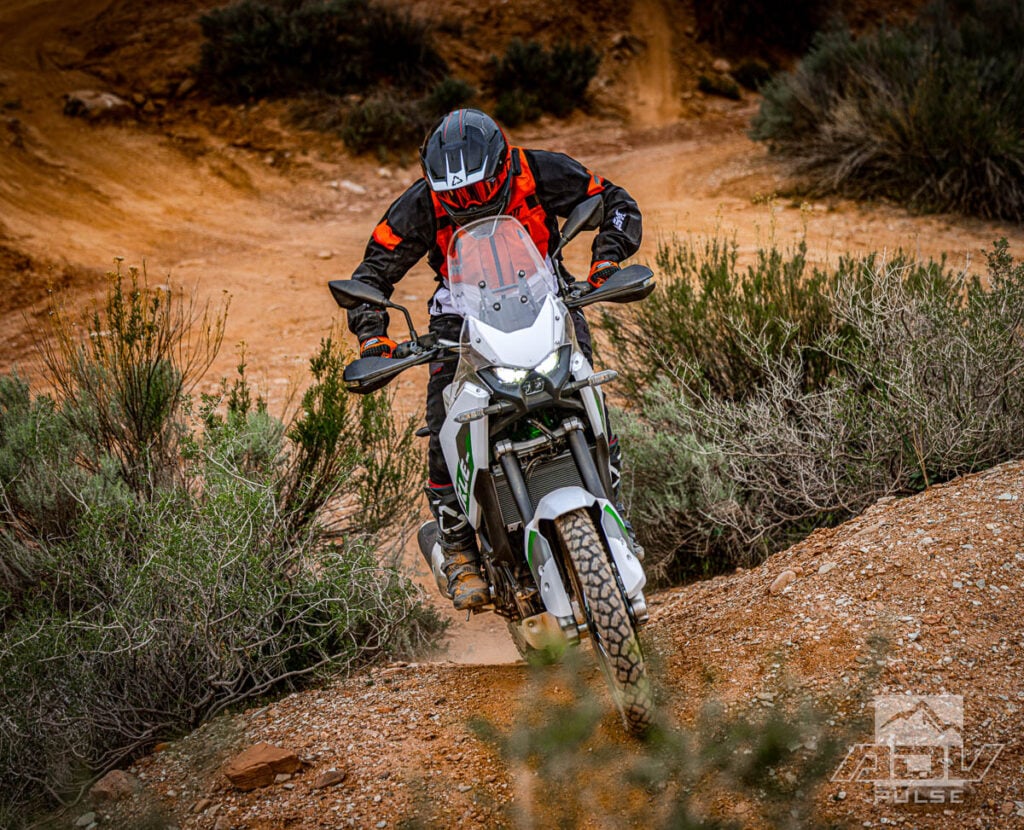
The ABS system works well, even when left on in the dirt, and for the basic dirt roads this bike is designed for, you can leave it engaged without issue. The system doesn’t chatter or pulse excessively in loose terrain and provides a reassuring safety net for newer riders. For those who want no intervention, disabling it is simple: from a stop, tap the ABS button once, then hold it for a few seconds to shut off both wheels. Pull over and repeat the process to reactivate it. ABS stays off if you hit the kill switch and only resets when you cycle the key.
The Bottom Line
When it comes down to it, the KLE500’s strongest attributes are its Japanese engineering, the proven reliability of this long‑running powerplant, and the relaxed rider comfort the bike delivers for casual cruising. Its design carries hints of rally styling, yet underneath it’s an easy‑going, approachable bike. Efficiency is another plus: I averaged 48.8 mpg on mixed terrain, giving it a solid 200‑mile range.
It’s a good option for newer riders or anyone curious about exploring off‑road trails for the first time. Even experienced older riders who are dialing back the pace from their faster days may find it appealing. For riders sticking to light off‑road or occasional trail outings, the KLE500 is fully capable of taking them into the backcountry with confidence and comfort.
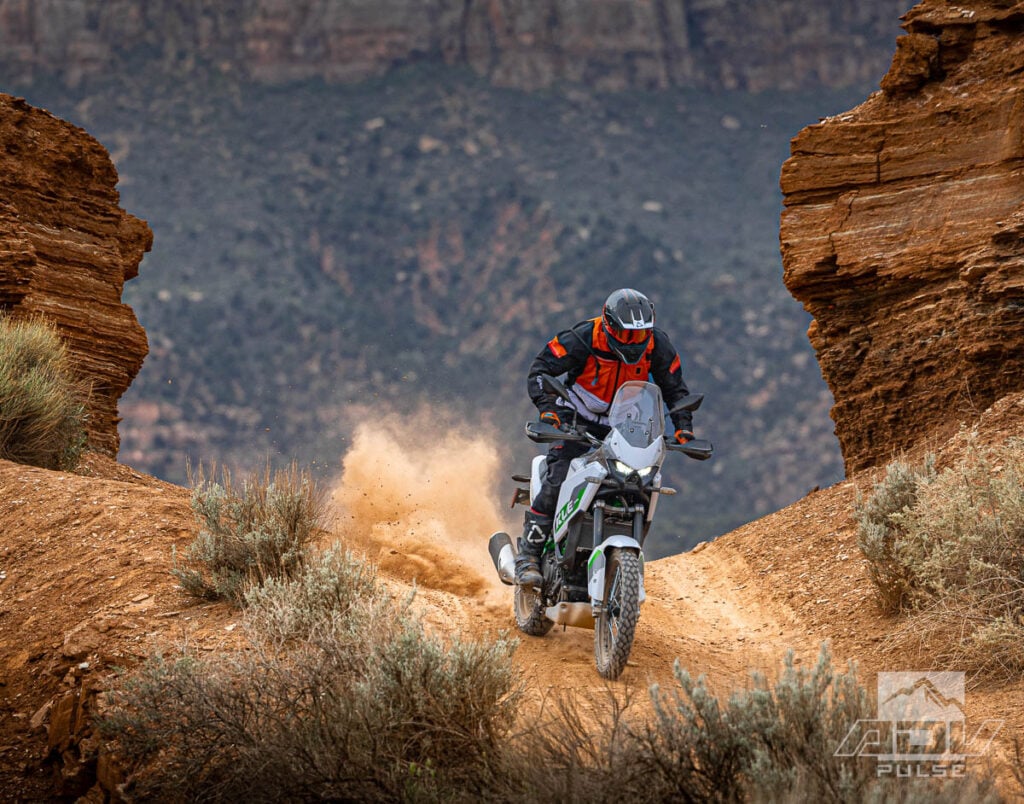
However, more-aggressive riders — even those at an intermediate level — may find its capability in the dirt limiting. At higher speeds, especially over chop or deeper dips, the suspension and limited ground clearance quickly signal that it’s time to ease off and enjoy the scenery.
On the street, it’s a solid commuter and a comfortable long‑range cruiser, provided you stay below about 75 mph, where vibration becomes more noticeable. Some of that may improve after break‑in, and vibration tolerance is subjective, so a test ride is worthwhile if this bike is on your radar.
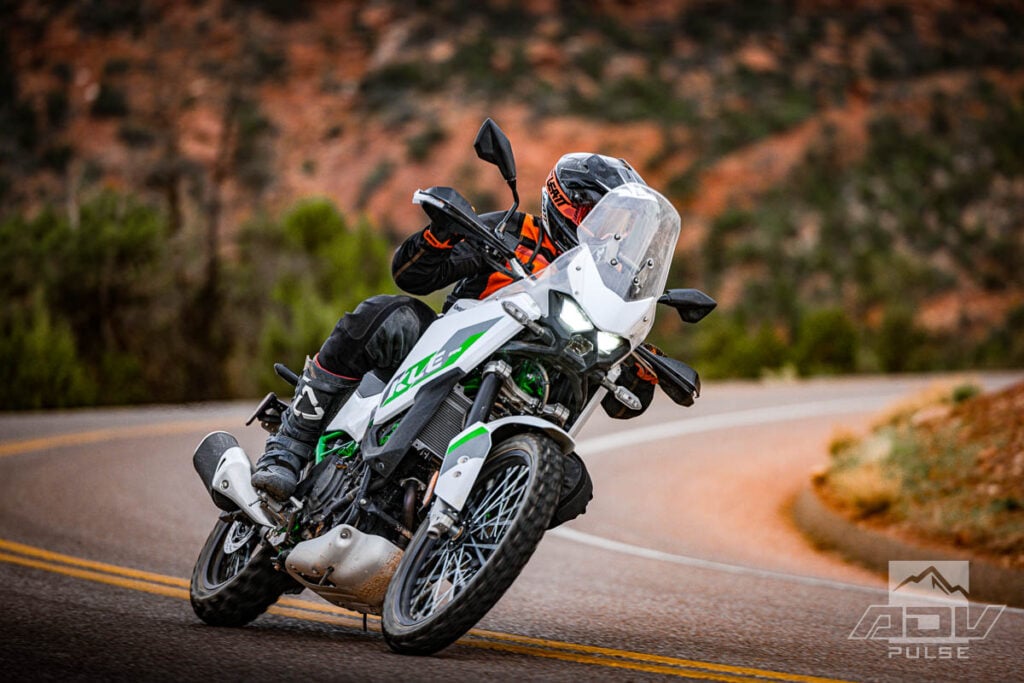
At $6,499, the KLE500 is attractively priced for a Japanese-brand, though it’s worth noting it’s built in Thailand to Kawasaki’s specifications. Competition at this price point is stiff these days with the Royal Enfield Himalayan and CFMoto Ibex 450 both offering strong on‑ and off‑road versatility. And for a bit more money, the KLR650 ($6,999) remains a better off‑road tool. The KLE500 feels more approachable and quicker on the street than the KLR, but it isn’t any smoother at fast highway speeds. And if you’re considering the SE model at $7,499, the similarly priced KTM 390 Adventure R becomes hard to ignore — it’s far more capable off‑road, smoother on the highway despite being a single, and still friendly to new riders.
The KLE500’s biggest drawback is its limited ground clearance, which places a firm cap on its off‑road potential. A new rider may not notice it at first, but as skills progress, the limitation becomes obvious. For occasional dirt use, that may be acceptable. But riders who want to grow their off‑road abilities or spend more time in challenging terrain will find better‑suited options elsewhere.
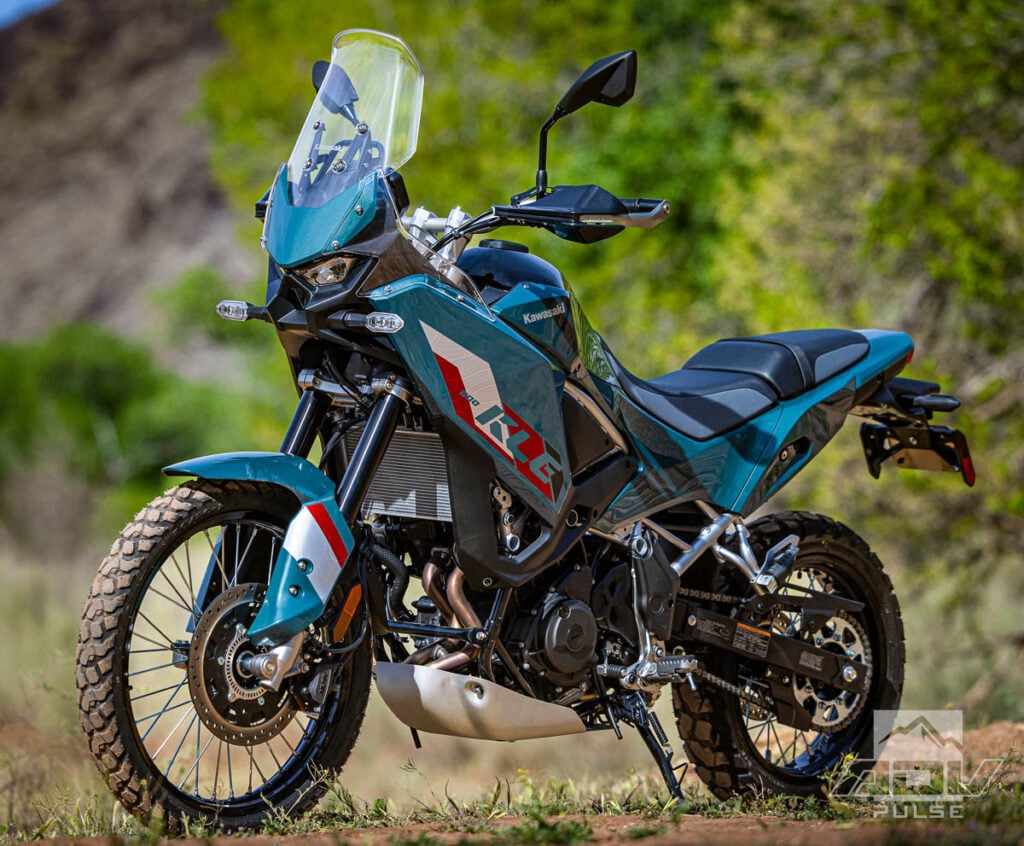
If you look at it as a successor to the Versys‑X 300, the KLE500 is a solid upgrade. But as a modern replacement for the KLR650, it doesn’t quite make the case. With competition in the 400–500cc ADV segment now in full bloom, I think Kawasaki needed to come to market with something more compelling. This feels like a case of too little, too late. Perhaps the engine platform’s height created design constraints for off‑road use, or cost considerations dictated the direction. Still, Kawasaki could have anticipated this and invested in a more purpose‑built solution rather than just grabbing what was already available on the shelf.
Of course, buying decisions often come down to aesthetics, brand loyalty, and practical considerations like parts availability in third-world countries you are traveling through. In that regard, the KLE500 benefits from a powerplant derived from the Ninja 300 introduced in 2013 — a globally supported engine with widespread parts access and mechanics familiar with its design.
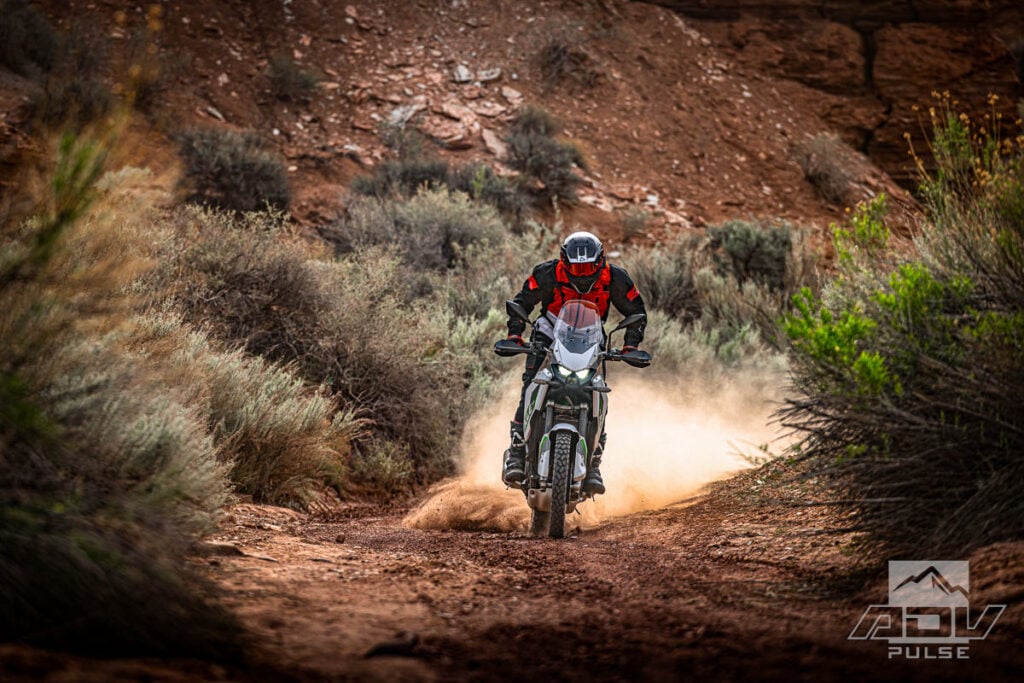
Time will tell how the market responds to Kawasaki’s new midsize ADV. It will likely do well overseas, where the KLE500 name already has a following. But as a brand‑new model in the U.S., where off‑road capability often drives sales — whether riders fully use it or not — it may face challenges finding a broad audience. Still, it’s great to finally see the KLE nameplate finally come to the U.S., and hopefully it finds its niche and enjoys a run as long as the original.
2026 KLE500 Specs
| Engine Type: | Liquid-cooled, 4-stroke Parallel-Twin |
| Displacement: | 451cc |
| Bore x Stroke: | 70 x 58.6 mm |
| Fuel System: | Fuel injection |
| Power: | 51 hp @ 10,000 rpm |
| Torque: | 31.7 lb-ft @ 7,500 rpm |
| Transmission: | 6 speed |
| Clutch: | Assist & Slipper Clutch |
| Lubrication: | Forced lubrication, wet sump |
| Starting System: | Electric |
| Final Drive: | Chain |
| Braking System: | Switchable on/off ABS |
| Front Brakes: | Single 300mm disc. Dual piston caliper. |
| Rear Brakes: | Single 230 mm disc. Dual piston caliper |
| Front Suspension: | 43mm USD fork, 8.3 in travel |
| Rear Suspension: | Uni-Trak linkage system, 7.7 in travel with adjustable preload |
| Ground Clearance: | 7.3 in |
| Seat Height: | 34.3 in |
| Frame type: | Backbone, trellis high-tensile steel |
| Front Wheel: | 21″ spoked tube-type |
| Rear Wheel: | 17″ spoked tube-type |
| Dimensions (LxWxH): | Standard – 90.6 in x 37.0 in x 53.3 in (low) / 55.3 (high); SE – 90.6 in x 38.6 in x 57.5 in (low) / 59.4 in (high) |
| Wheelbase: | 61.2 in |
| Rake/Trail: | 28.0°/4.1 in |
| Fuel capacity: | 4.2 gallons |
| Dry Weight: | 385.9 pounds (388.1 pounds 50-state model) |
| Wet Weight: | 427.8 pounds (430 pounds 50-state model) |
| Colors: | (Standard) Metallic Carbon Gray/Ebony; (SE) Pearl Blizzard White or Metallic Bluish Green |
| Features: | Standard: LCD instrument panel, LED headlight & taillight, Adjustable windscreen, Aluminum skid plate, ERGO-FIT, Smartphone Connectivity via RIDEOLOGY THE APP MOTORCYCLE, USB Type-C outlet available as an accessory; SE: 4.3-in All-digital TFT color Instrumentation, All-LED lighting, Tall adjustable windscreen, Handguards, Larger aluminum skid plate, ERGO-FIT, Smartphone Connectivity via RIDEOLOGY THE APP MOTORCYCLE, USB Type-C outlet available as an accessory |
| Availability: | Currently shipping to U.S. dealers. |
| Price: | (Standard) $6,599; (SE) $7,499 |
Gear We Used
• Helmet: Leatt 9.5 Carbon
• Jacket: Leatt ADV Rally 7.5 HydraDri
• Pants: Leatt ADV Rally 7.5 HydraDri
• Boots: Leatt 4.5 Enduro
• Gloves: Leatt ADV Rally 5.5
• Goggles: Leatt Velocity 6.5
Photos by Justin Coffey and Rob Dabney

Author: Rob Dabney
Rob Dabney started a lifelong obsession with motorcycles at the age of 15 when he purchased his first bike – a 1982 Honda MB5. Through his 20’s and 30’s he competed in off-road desert races, including the Baja 250, 500 and 1000. Eventually, his proclivity for exploration led him to dual sport and adventure riding. Rob’s never-ending quest to discover what’s around the next bend has taken him on Adventures in Latin America, Africa, Europe, Asia, and throughout the American West. As a moto journalist, he enjoys inspiring others to seek adventure across horizons both near and far.Related Stories
Related Stories
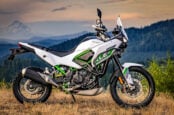 Kawasaki Unveils Twin-Powered KLE500 Adventure Bike It’s official. After a year of camouflaged sneak peeks and forest-shredding teaser clips,...
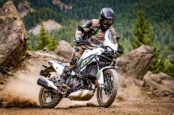 Kawasaki Updates Specs For New KLE500, And There Are Changes When Kawasaki first pulled the covers off the KLE500 last month with only...
 Watch: 2022 Kawasaki KLR650 Tested As they say a legend never dies, it’s just reborn. And in the...
Popular Stories
Bultaco Staging Comeback With Budget-Friendly 300cc ADV Bike
Bultaco is officially back in the motorcycle busi...
5 Small‑Bore Adventure Bikes That Aren’t Buzzy On The Highway
Small‑bore adventure bikes in the 300–500cc range...
KTM Announces Specs And Availability Of New 690 Rally Model
KTM is expanding its LC4 lineup with the introduc...
Kove Unveils 350 Rally: A Lower, Lighter Alternative To The 450 Rally
Photo: Peak Motorcycles Kove has pulled the co...
Notify me of new posts via email
Good write up. Like how objective you were on the comparos.
Thank you Jojo. Always try to give the straight scoop!
Good write up! I just ordered on here in Thailand and can’t wait to get my hands on it.
I hear a lot about the missing ground clearance but there are 2 easy solutions to this. First a more beefy tyre set up will add some space and secondly – replacing the “dog bone”. I ordered those component’s already and I am curious what difference it will make. Given time there will be some aftermarket suspension as well which will make a difference. Mind you the bike is brand new. Take the CRF 300 Rally for example – without a suspension upgrade that bike isn’t all that fantastic off road. For me the new KLE plays all the right tunes. Off road or even on longer gravel stretches I don’t need a plus 800cc bike – I am happy with 400cc that is easy to handle and won’t break my back when I have to lift it up for the 5th time 🙂 Personally I have been waiting for an ADV bike in this cc range for years.