
Aprilia Tuareg 660 Rally Review
The rally-tuned ADV gets a sharper off‑road focus but did they go a step too far?
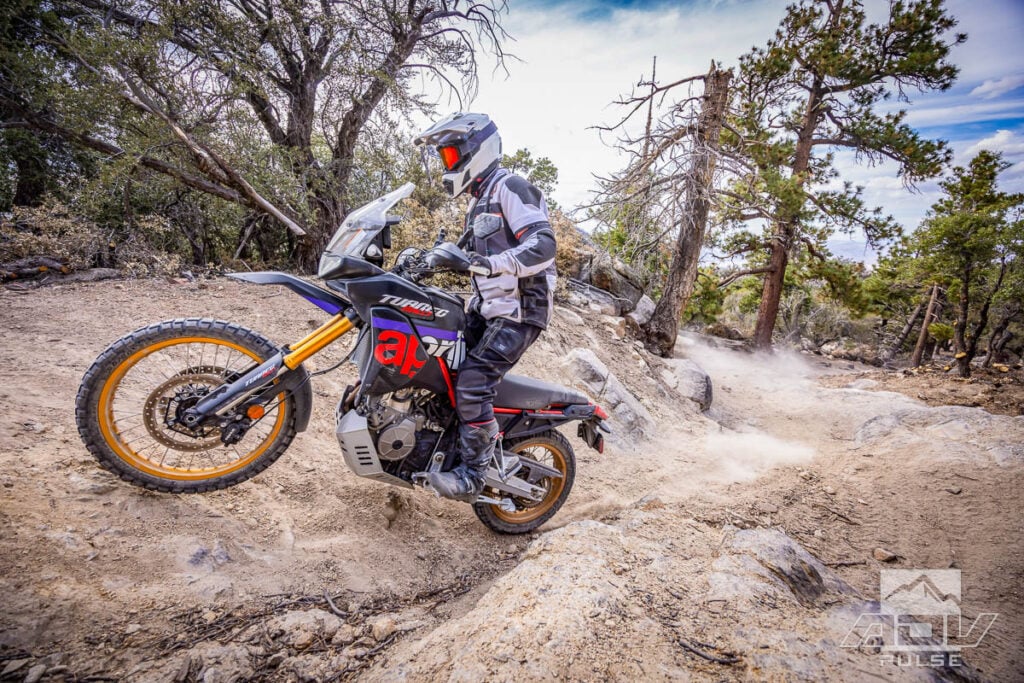
Since its bold entry into the middleweight ADV class in 2022 the Aprilia’s Tuareg 660 has earned a reputation as one of the segment’s most dirt‑capable machines, while still delivering the refinement expected for long days in the saddle. That makes any revision to the original formula consequential: improve the right areas and you elevate a proven platform; push too far and you risk upsetting the balance that made it special.
Enter the 2025 Tuareg 660 Rally. Rather than replace the standard model, the Rally arrives as a specialized variant with a sharper off-road focus. Drawing inspiration from Aprilia’s Rally program, it adds a range of race-bred upgrades aimed squarely at improving performance in the dirt. Skin deep, the Rally might look similar to the standard, but quite possibly appeals to an entirely different customer. Let’s dig into the details and see what differentiates the Rally from the standard model.
First Look
The name “Rally” needs to be underscored when looking at Aprilia’s new Tuareg 660. Through their “Back to Africa Project,” Aprilia set its sights on the Africa Eco Race—a competition that includes both a class for purpose-built 450cc rally bikes and another for machines over 650cc. In their debut attempt, with Jacopo Cerutti piloting a modified Tuareg, Aprilia not only dominated the 650cc-plus category but claimed overall victory. The following year, they repeated the feat and added another triumph at the Hellas Rally.
It is from those testing grounds that Aprilia says they’ve developed the Tuareg Rally—a model derived from the competition machine, forged in the heat of the Italian brand’s rally raid wins. Like the standard model, the Rally boasts a 659cc parallel twin, connected to a ride-by-wire throttle, which puts out a claimed 80 hp @ 9,250 rpm, and 51.6 ft-lbs of torque at 6,500 rpm. Both versions sit on fully-adjustable suspension with 240mm of travel front and rear, however the Rally version has switched to a straight-rate spring setup versus progressive springs.

An exclusion which makes sense for a motorcycle aiming to emulate its factory rally inspiration—the Tuareg 660 Rally’s six-speed manual gearbox lacks a quick shifter in stock form (AQS, or Aprilia Quick Shift is available as an option). The multi plate wet clutch includes a slipper system, which became a very welcome feature during road testing.
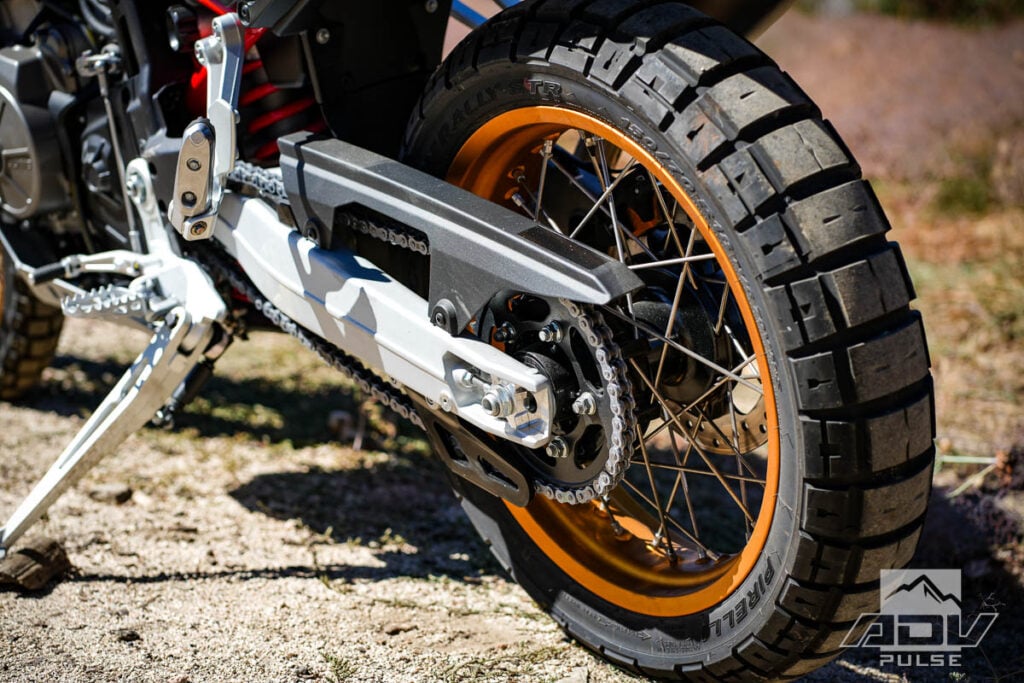
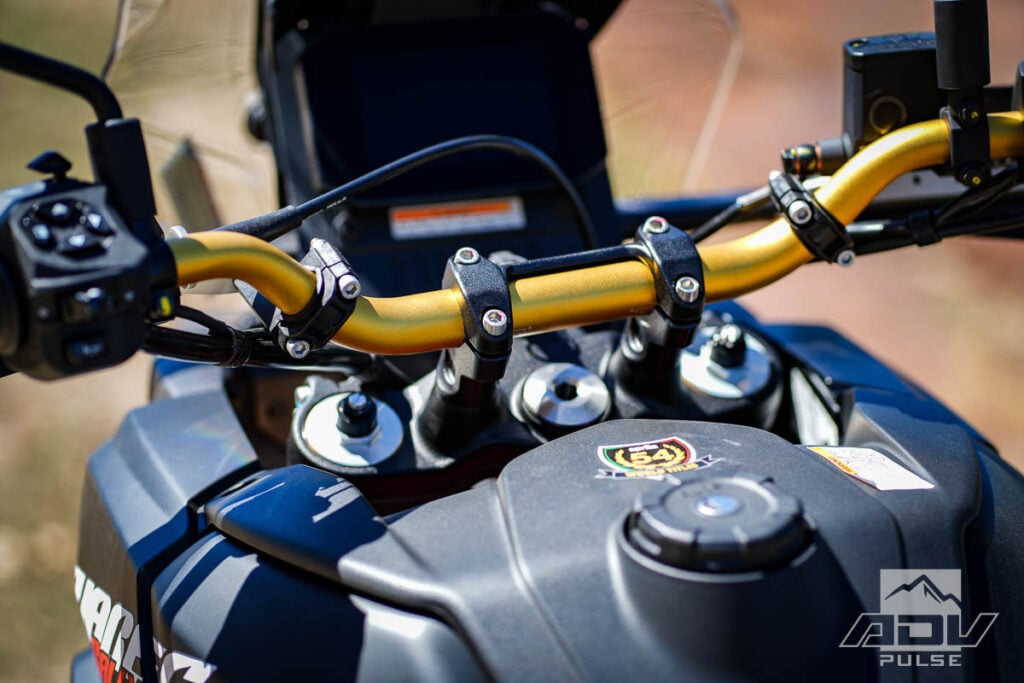
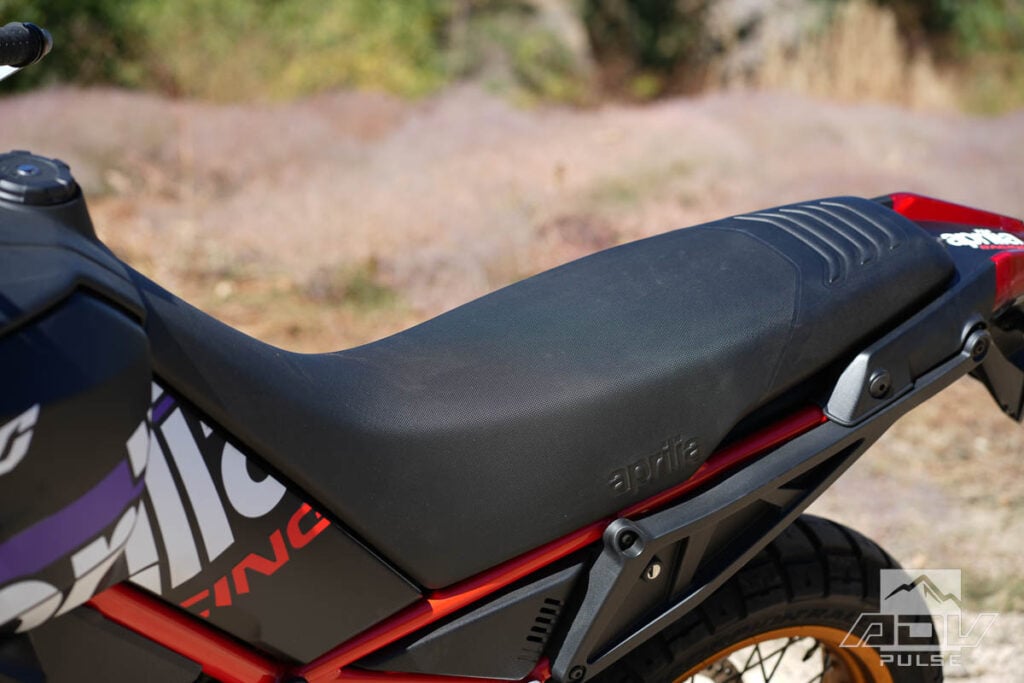
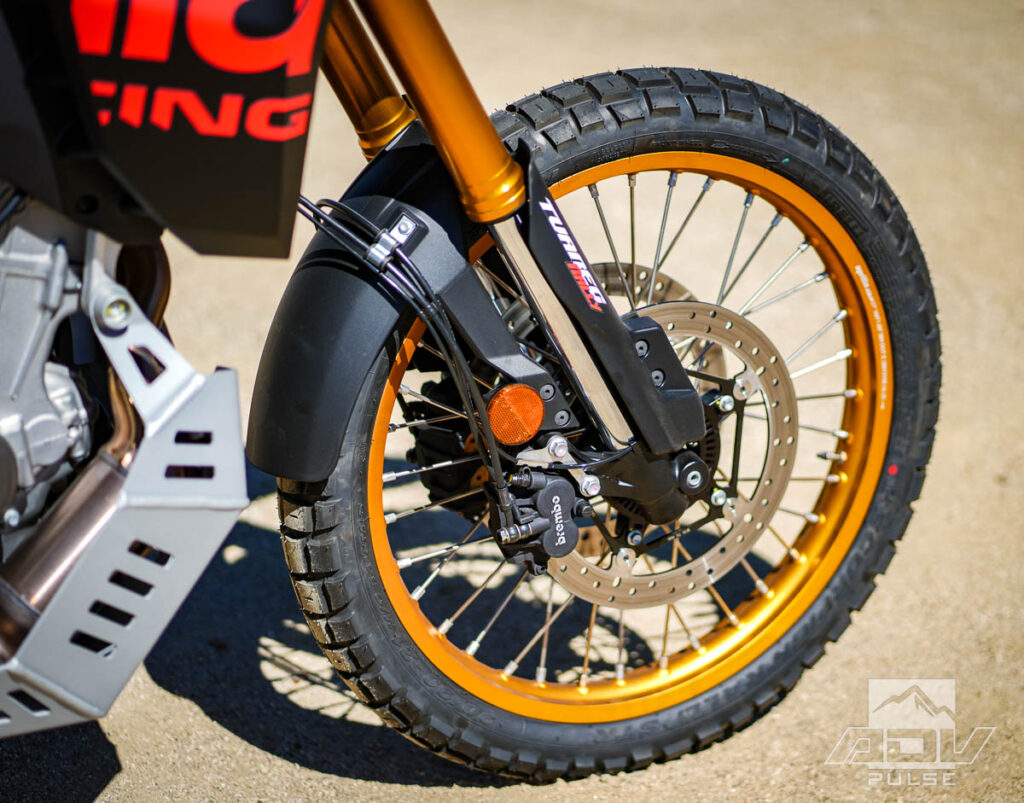
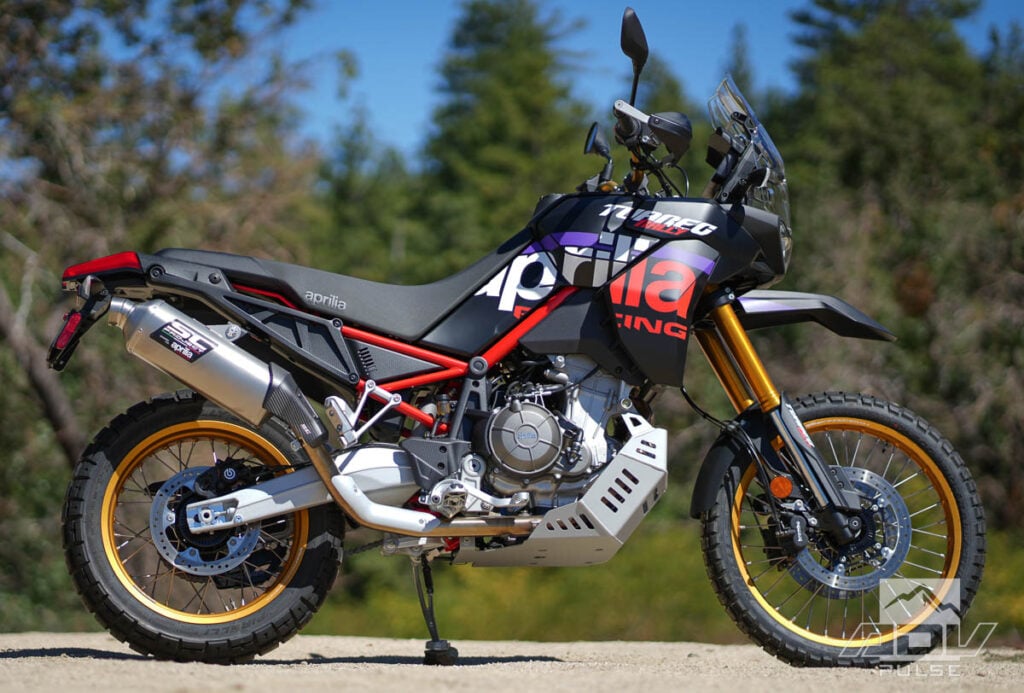
Gleaming in the alpine sun, the heavy-duty gold anodized rims on the Tuareg 660 Rally are both narrower and lighter than those of the standard version. These wheels, combined with the SC Project exhaust system silencer, reduce the overall weight of the Tuareg 660 Rally by 11 pounds over the standard version, giving the bike a claimed wet weight of 439 lbs.
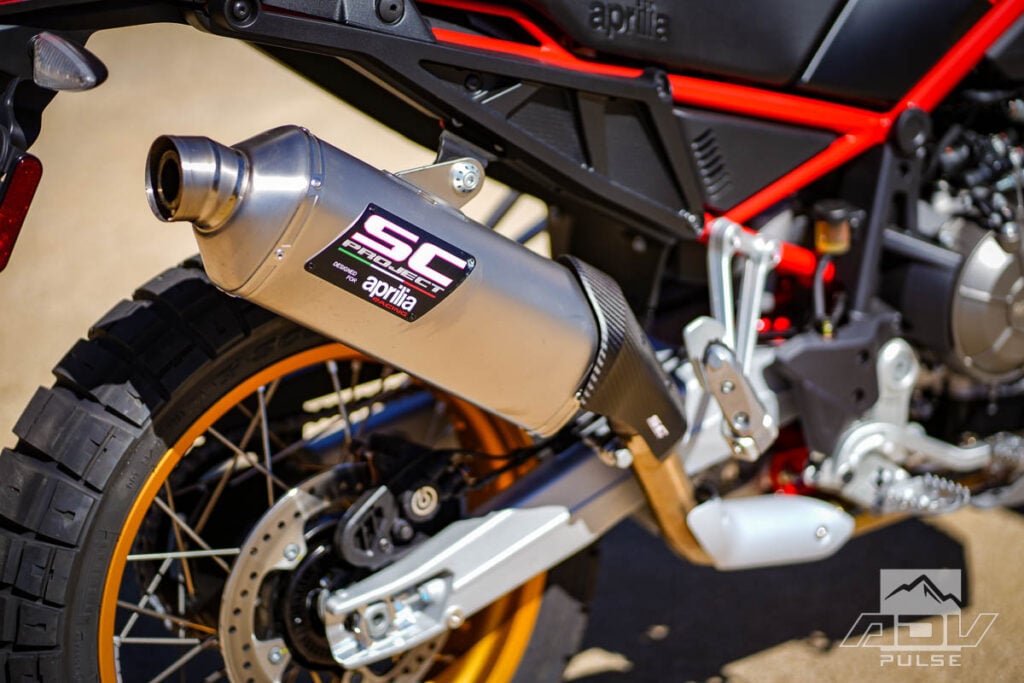
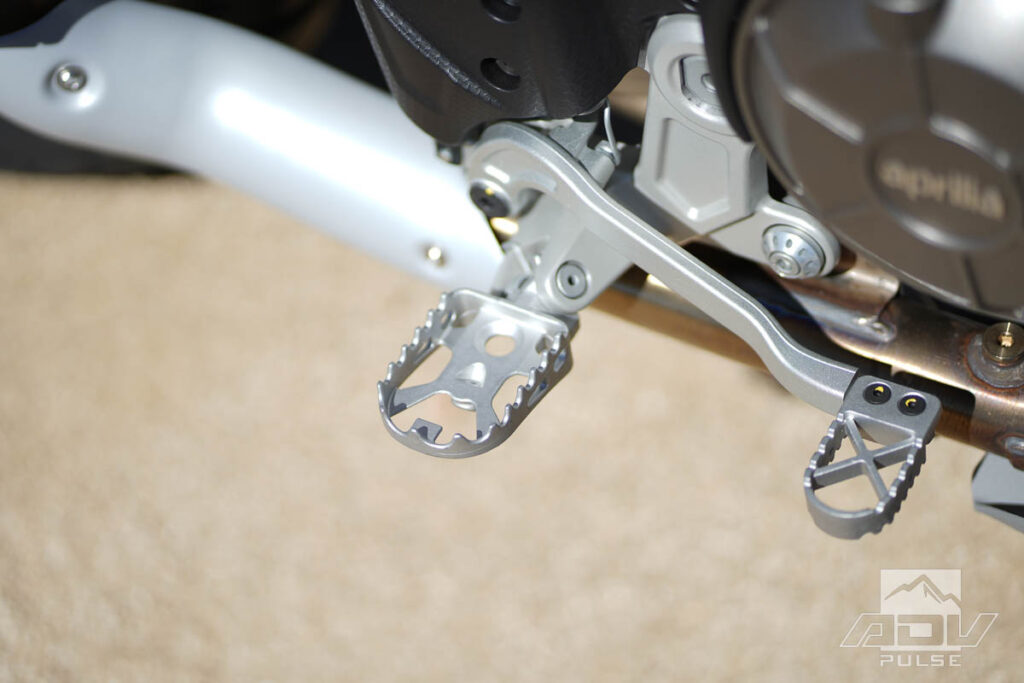
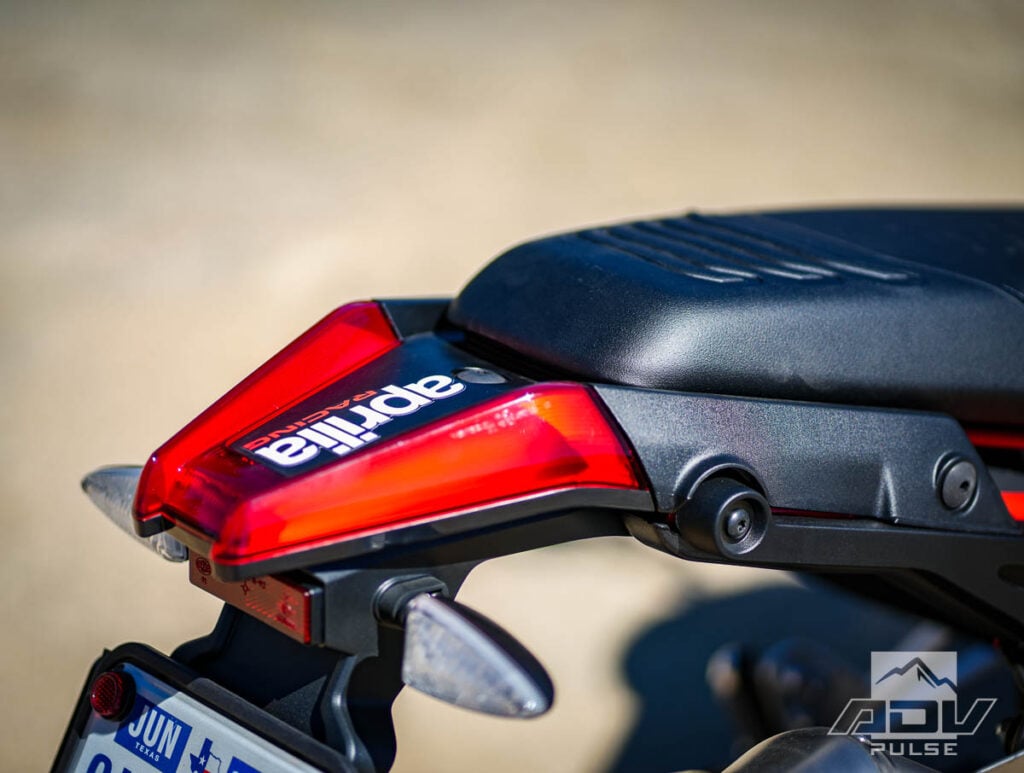
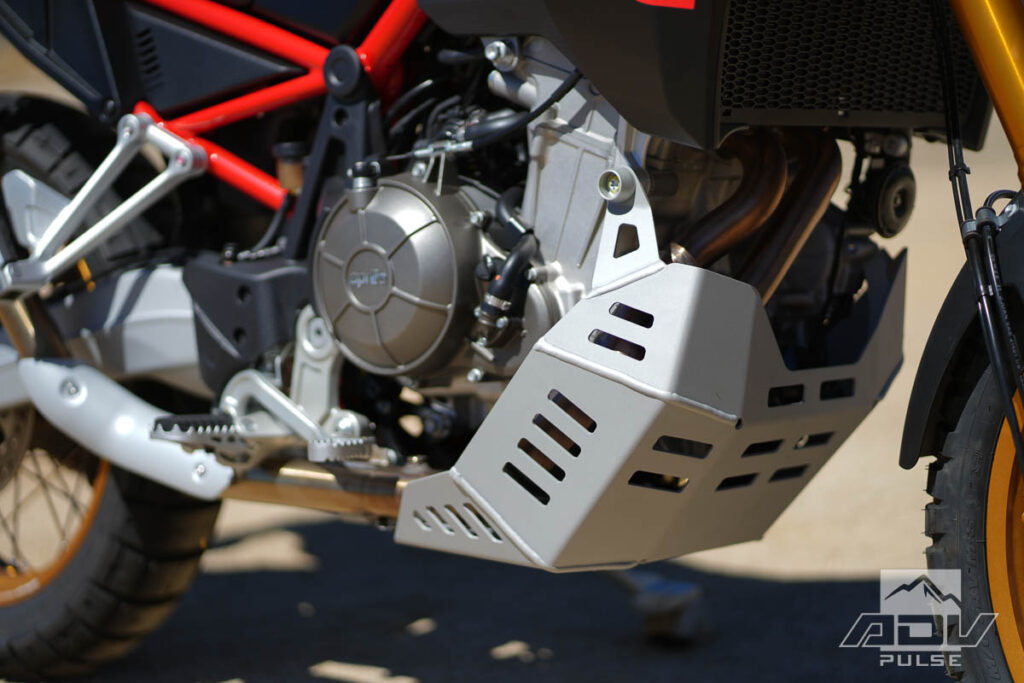
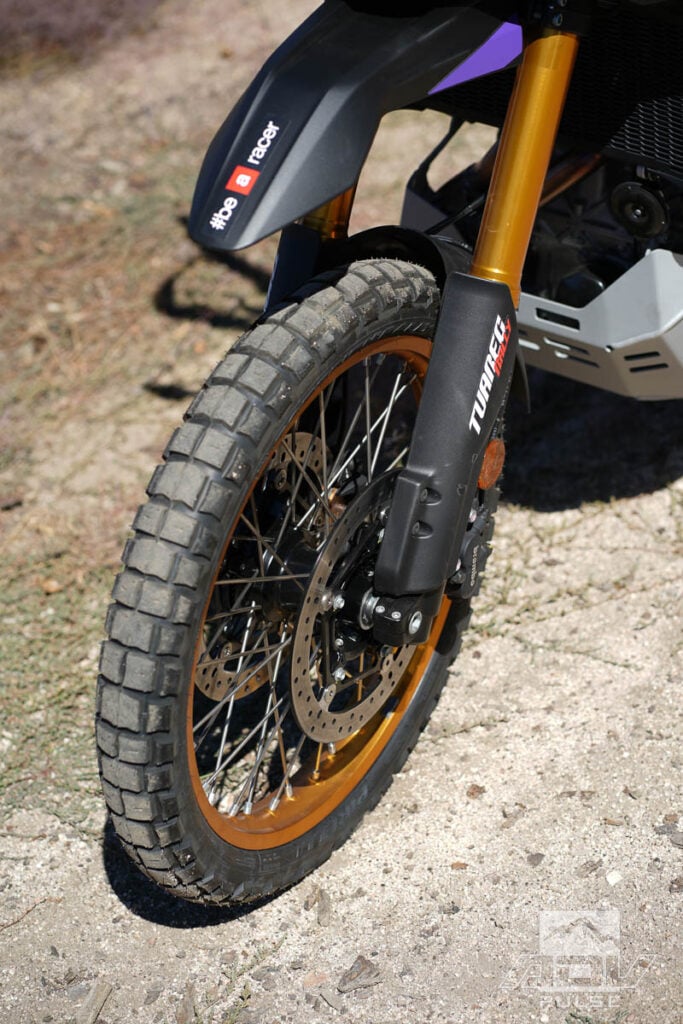
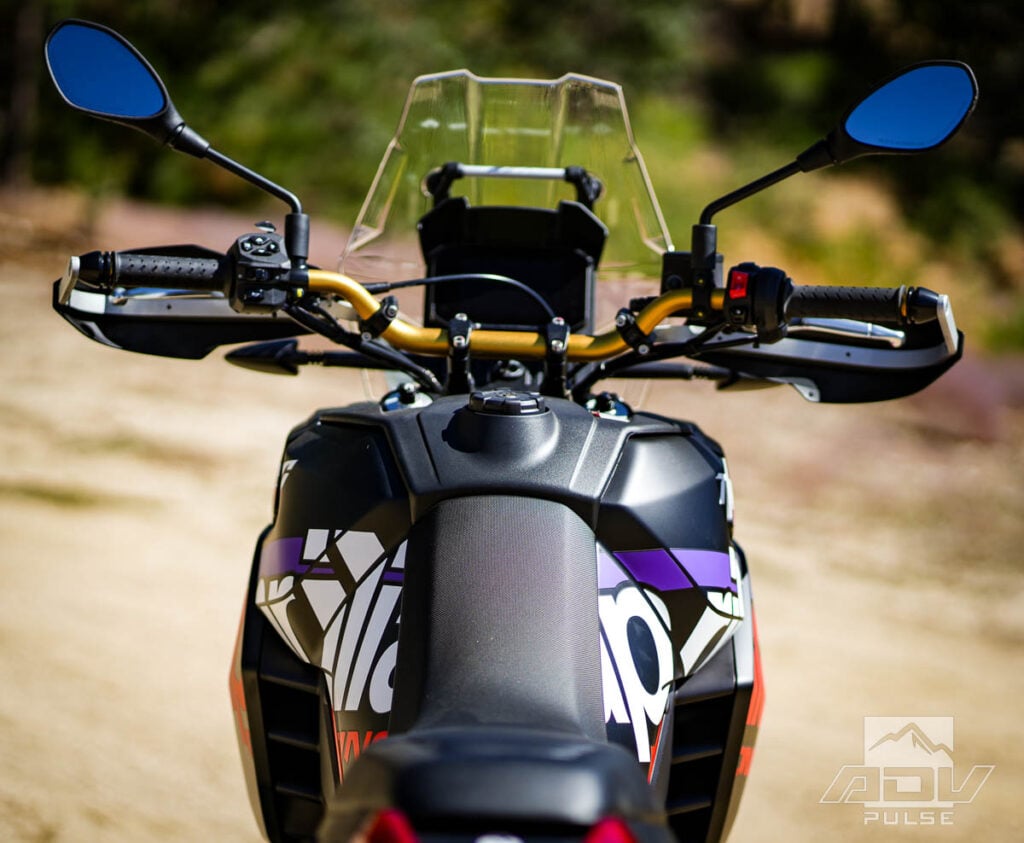
Even before riding this new Aprilia, just throwing a leg over it reveals the redesigned handlebar’s noticeably higher and more forward-angled bend, as well as a redesigned seat that is now 20mm higher. Among other visually apparent changes on the new Rally model are a robust aluminum skid plate, a high front fender, redesigned side stand with a larger foot, sturdy hand guards with metal cores, and a redesigned chain guard. Oddly, while the tires have “Rally” in the name, Pirelli’s more street-biased Scorpion Rally STR are featured as stock rubber on this very off-road focused bike from Aprilia.
The Electronics
Both the Standard and Rally versions of the Tuareg 660 share a bonded 5” TFT screen up front, but the APRC (Aprilia Performance Ride Control) software package features a few subtle and not-so-subtle differences which are quickly discovered once you start riding.
Color choices and brightness levels on the TFT seemed very well thought out for both the day and night profiles. With no prior instruction, navigating the menu system can be a bit challenging at first, but overall is fairly intuitive given such an extensive array of available options.
The same four riding modes of Urban, Explore, Off Road, and Individual are featured on both versions of the Tuareg. Each of those ride modes incorporates four different parameters at varying levels of intervention: ATC (traction control), AEB (engine braking), AEM (engine map), and ABS (anti-lock braking).
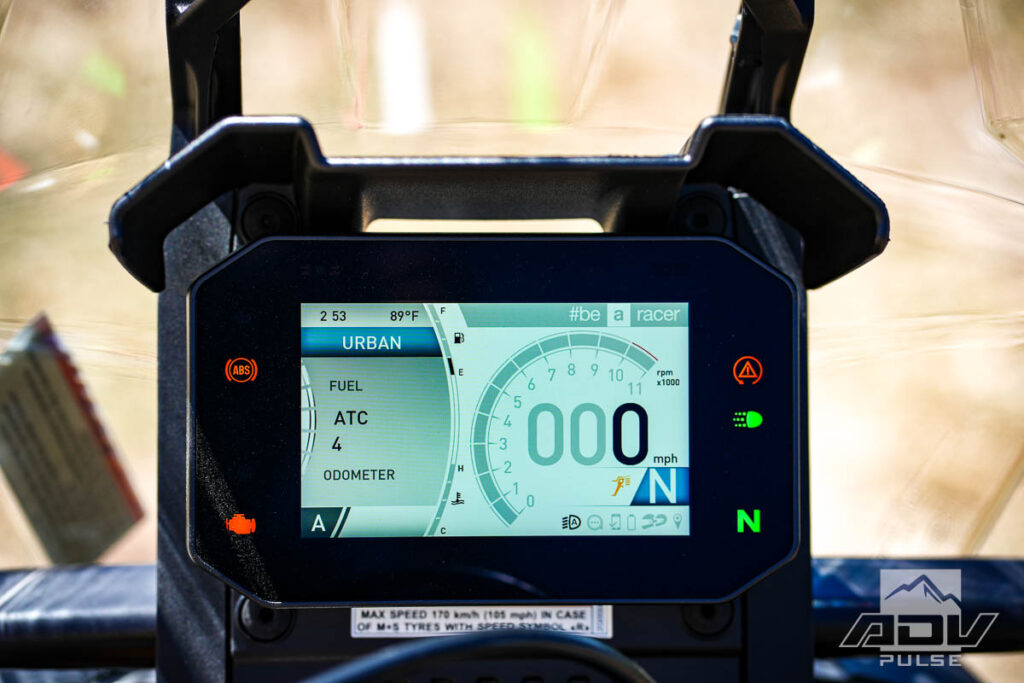
Explore and Urban modes have their settings fixed, while Off Road and Individual modes are fully adjustable. A long press of the right switch cluster button brings up the extensive menu of options, scroll to Riding Mode, and then the four different riding modes appear, providing adjustment opportunities where possible. In either of the adjustable modes, riders can select between five levels of traction control (including “off”), three levels of engine braking (level 1 has the least braking), and three power delivery settings from the available engine maps (1=most aggressive; 3=smoothest).
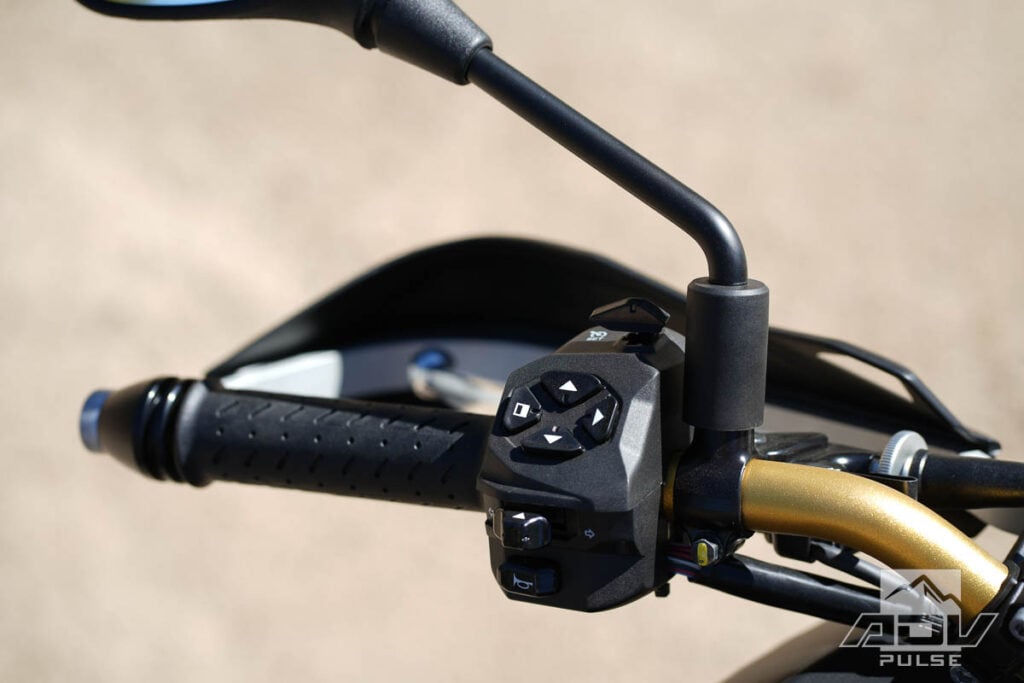
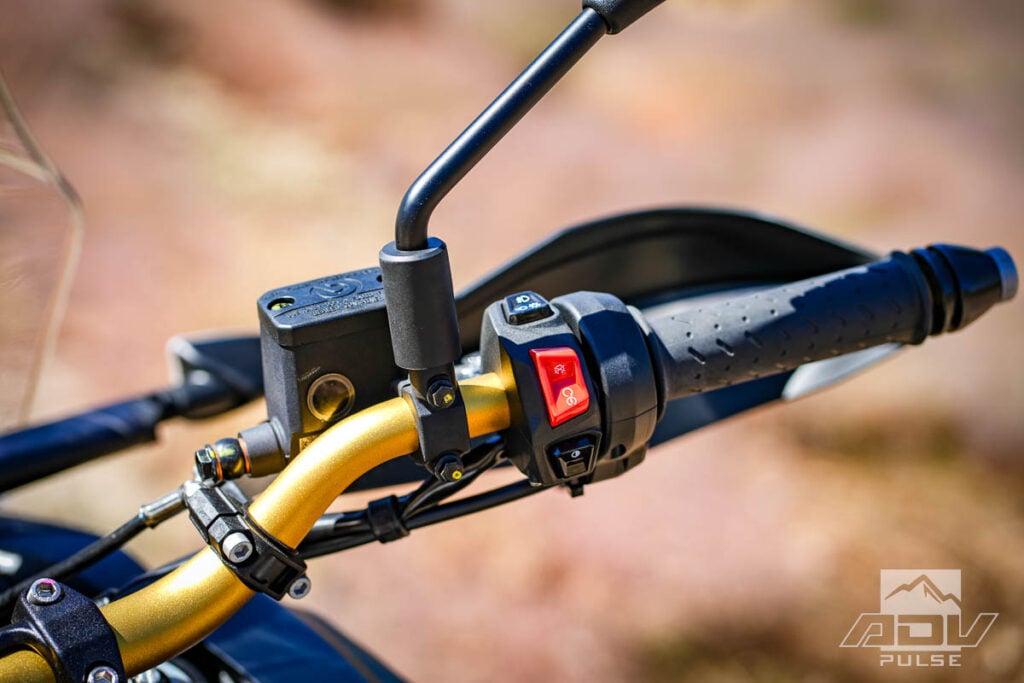
Regardless which settings are adjusted in either Off Road, Individual, or both, with the exception of fully-defeated ABS all settings are stored at key-off. An ABS setting of 1 in either of these adjustable modes defeats ABS to the rear wheel – and that setting is saved even when the bike is shut off. Only Off Road mode allows ABS to be fully defeated (achieved by a long press of the Mode button when in that riding mode), however that is the one parameter that is reactivated if the bike is either power cycled with the key or switched to a different mode while the bike is running.
With its tube-type tires and taller rally saddle design, the Tuareg 660 Rally omits the optional Tire Pressure Monitoring System and heated comfort seat options.
| ADJUSTABLE MODES | NON-ADJUSTABLE MODES |
| OFF ROAD DEFAULTS: AEM: 1; AEB: 3; ATC: 1; ABS: 1 | URBAN DEFAULTS: AEM: 3; AEB: 1; ATC: 4; ABS: 2 |
| INDIVIDUAL DEFAULTS: AEM: 2; AEB: 2; ATC: 2; ABS: 2 | EXPLORE DEFAULTS: AEM: 2; AEB: 2; ATC: 4; ABS: 2 |
On-Road Performance
Going into this test, the Tuareg 660 Rally already had a fairly high personal bar to clear in terms of performance and value. I’d previously spent extensive time on the standard Tuareg 660 in a comparison test with a Yamaha T7, and the Tuareg was the surprise winner in almost every regard.
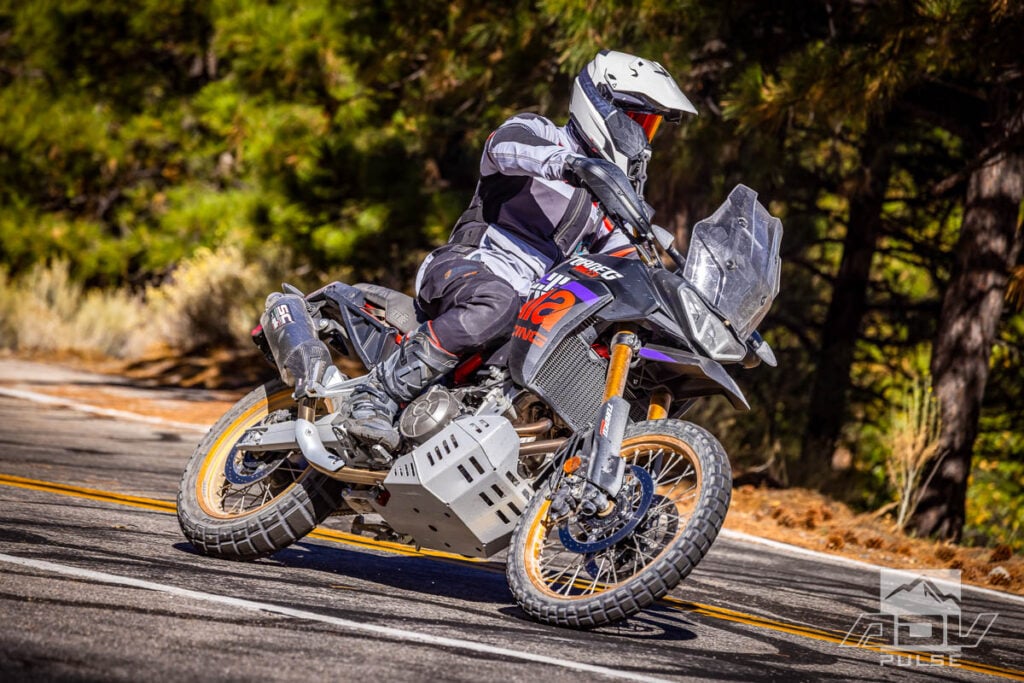
Out of the gate, initial impressions of the Tuareg 660 Rally on the road were surprising, and not in the best way. Compared to the standard model, the much stiffer suspension of the Rally version with its straight-rate springs felt quite harsh over even small pavement bumps. Narrower dirt-focused wheels reduced stability in tight corners, and gave the 660 Rally a more dirt-bike feel on pavement.
While on long freeway stretches, excellent cockpit geometry overcame many of these off-road oriented characteristics. For my tastes, seat comfort was more than adequate for the road, but I also wasn’t expecting a mile-eater setup. Good power made passing a breeze on the highway, and the tighter pavement sections is where the Rally’s more aggressive throttle further revealed itself—especially with AEM set to level 1.
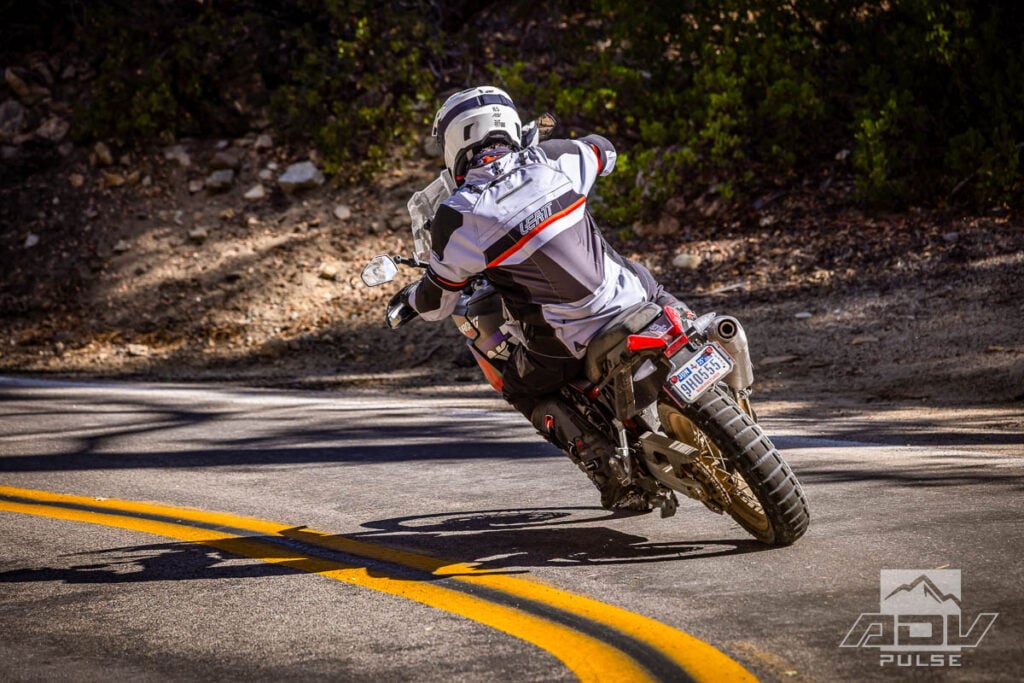
Between the narrow wheels, and stiffer rally-style suspension dynamics, the slipper clutch became an indispensable feature when riding twisty pavement at an aggressive pace. The comparatively less-stable feel on the road was manageable, in that rear wheel hop on hard deceleration was almost entirely prevented by the slipper system. I was expecting a more firm and precise feel out of the front brake but it had a somewhat mushy feel, as if it needed bleeding. Given the very off-road orientation in the Rally 660’s design, this brake feel is perhaps intentional to provide a greater degree of modulation instead of a snappy on/off style brake. At the rear, braking felt very predictable, aided by the large footpad on the brake lever. Near the end of each deceleration, a loud howl could be heard from the rear. Simply cleaning the rotor with some brake clean and a shop towel completely eliminated this symptom, indicating the OEM pads might not be the best choice for this bike. .
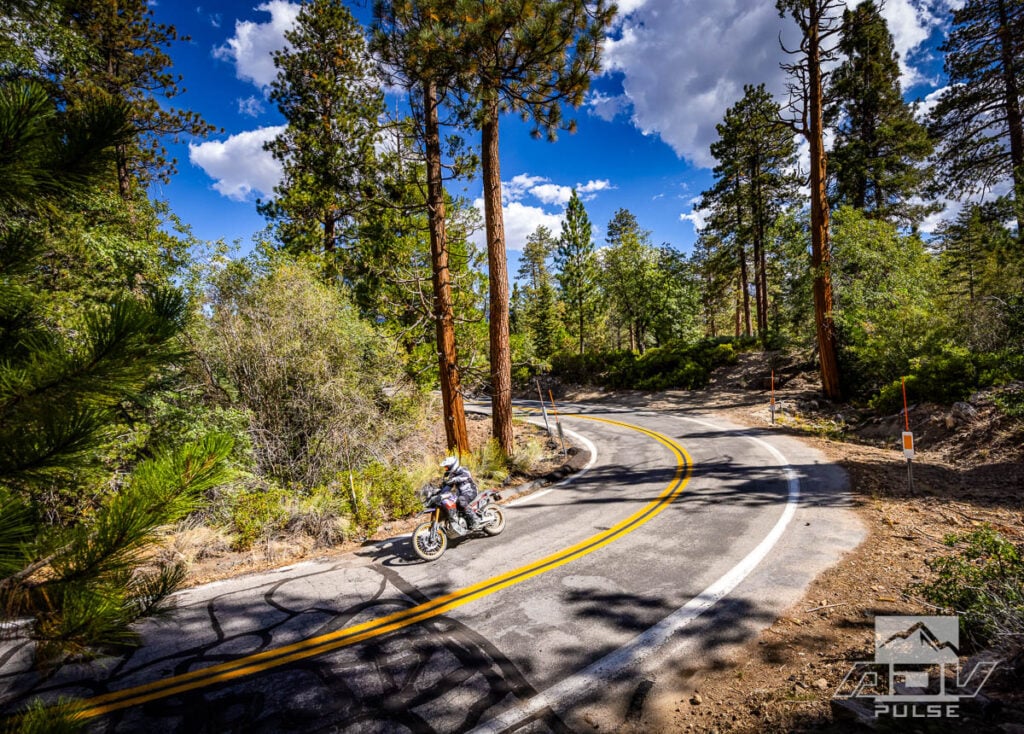
Perhaps conversely, the higher bar bend and taller rally seat gave the bike a very controlled feel, even on the road. Off-road focused riders will almost certainly appreciate these seemingly simple but important characteristics, while those coming from a street background will likely feel like they’re canyon carving on a motorcycle clearly intended for the dirt.
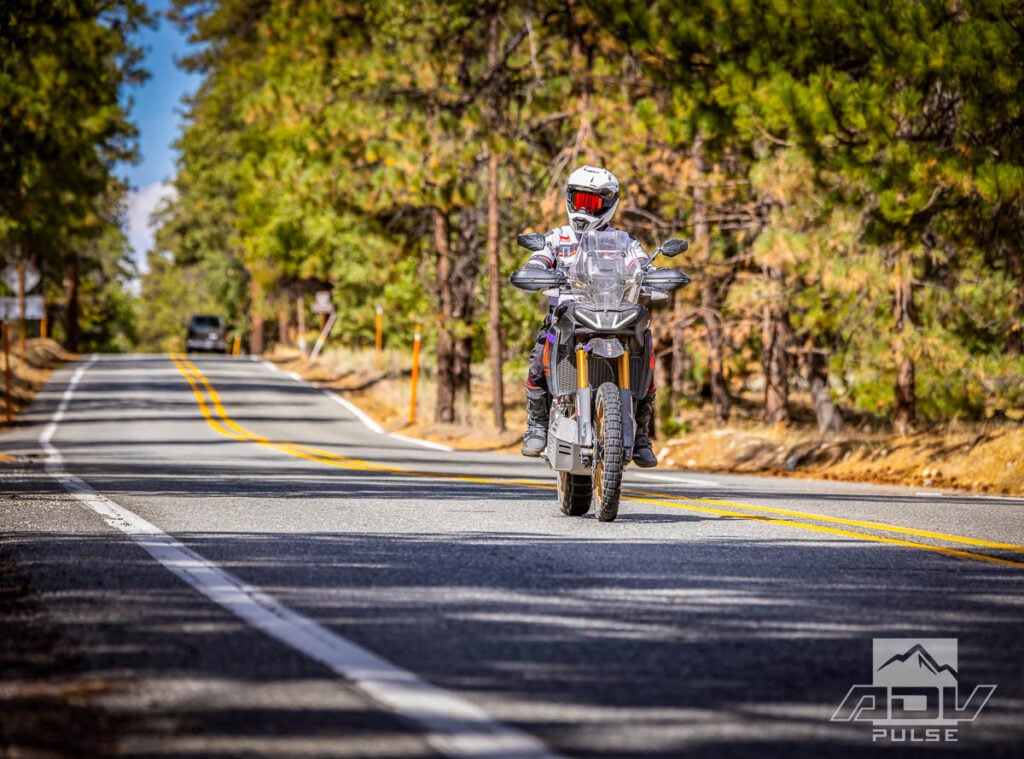
Around 200 miles worth of pavement was involved just getting to and from the starting location for the test. The small but surprisingly effective windscreen, combined with a nearly ideal cockpit geometry were welcome characteristics for the long road miles. Cruise control being included as a standard feature on the 660 Rally was also a key component which rendered this consumer friendly rally bike a very practical commuter.
Off-Road Performance
Starting a discussion of the Tuareg 660 Rally with comments about its road-going performance seems almost a disservice. The primary intention in designing this motorcycle was enhancing the more extreme aspects of off-road worthiness. Extensive pro-level field testing was involved in the Tuareg 660 Rally’s development.
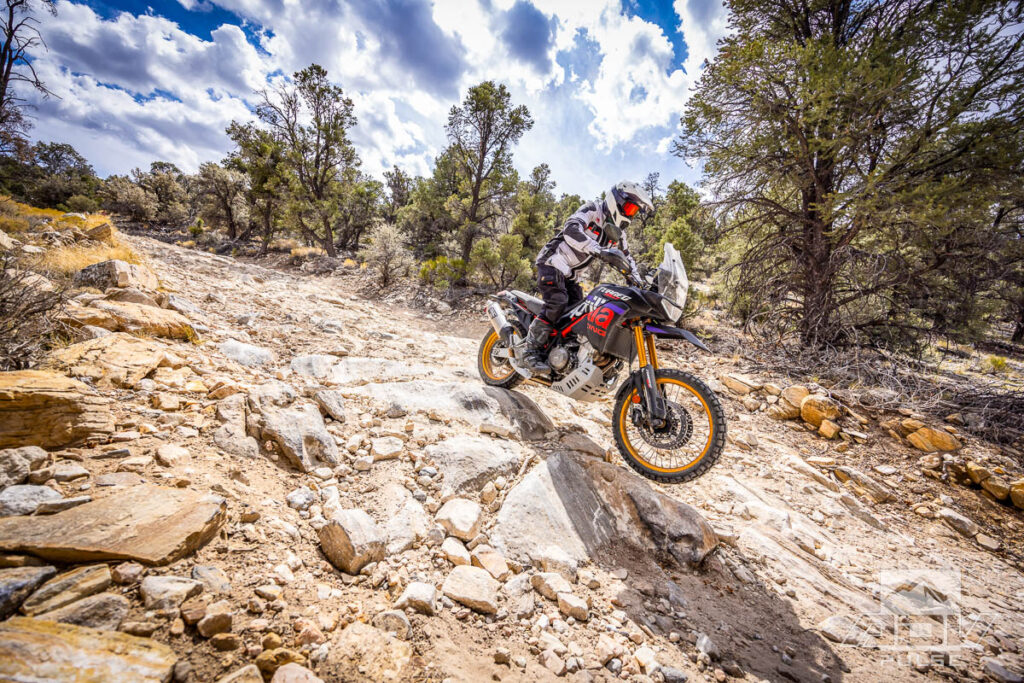
Aprilia developed the production Tuareg 660 Rally in a technical collaboration with the Guareschi brothers’ GCorse, who helped take the competition Tuareg to the top step of the podium. Commenting on the production version of the Tuareg 660 Rally, Cerutti said of the bike, “The goal was to make it as similar as possible to the bike with which we won the Africa Eco Race, and I can say we succeeded.”
This level of engineering and development comes with pros and cons, and most of the “pros” would be things appreciated by professional riders, while bits in the “cons” column would be potential complaints from regular adventure riders.
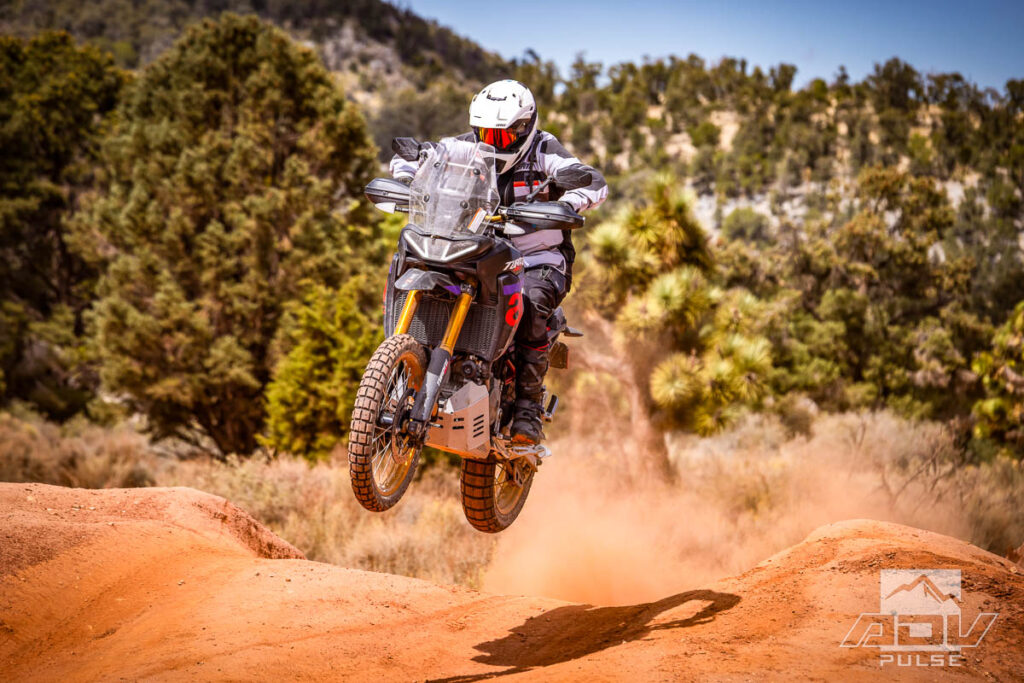
Certain aspects of this high-level offroad bike are easily and immediately appreciable by anyone. The redesigned handlebar complimented the cockpit geometry in a way most apparent when standing, and especially when standing in the most difficult of off-road situations.
I’d previously ridden a couple of the more technical routes, such as Big Bear Valley’s Gold Mountain Trail, for a test of the Africa Twin 1100L. While the Honda got through everything without issue, photos and video revealed that the cockpit had a good-but-not-ideal arrangement for serious off-road terrain. While it was in keeping with most top-level “adventure” motorcycles, the subtle geometry differences in the Tuareg 660 Rally would seem to edge it towards the category of “consumer rally bike” more than “adventure bike.”
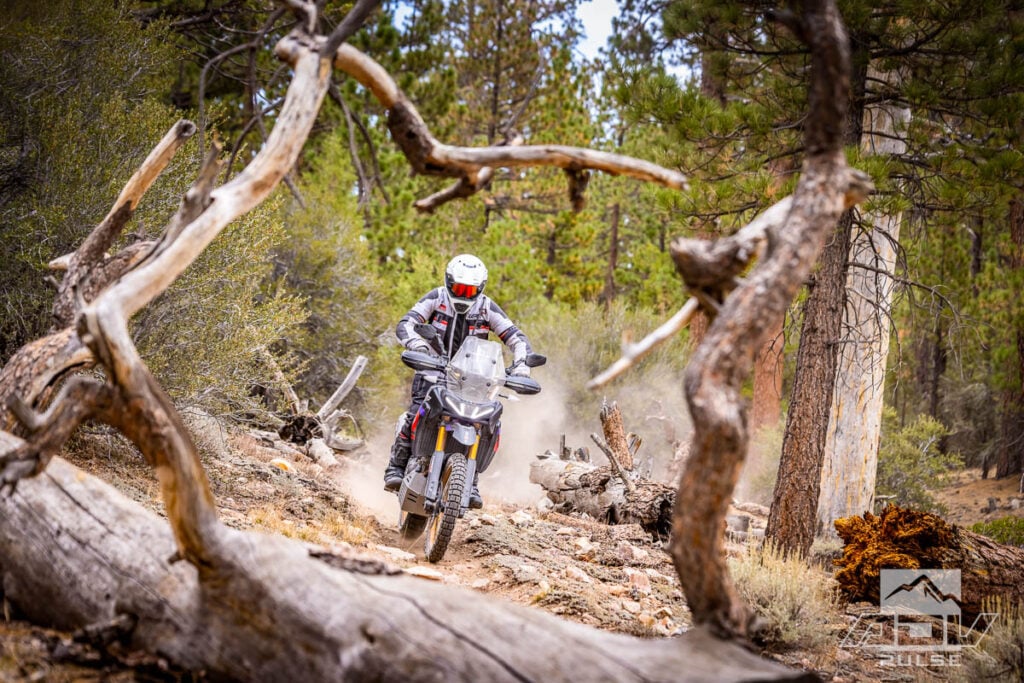
Several miles of fast and sandy fire road were blasted through confidently and comfortably, with the 660 Rally’s geometry providing great leverage and overall feel of the chassis. While most of the terrain merited being up on the pegs, those few stretches of faster road revealed a very confident and controlled feeling over the bike while seated. The lighter and narrower rims should offer a more knife-like feel when changing direction, however precision in direction changes while off road was diluted a bit by the more street-biased Scorpion Rally STR tires.
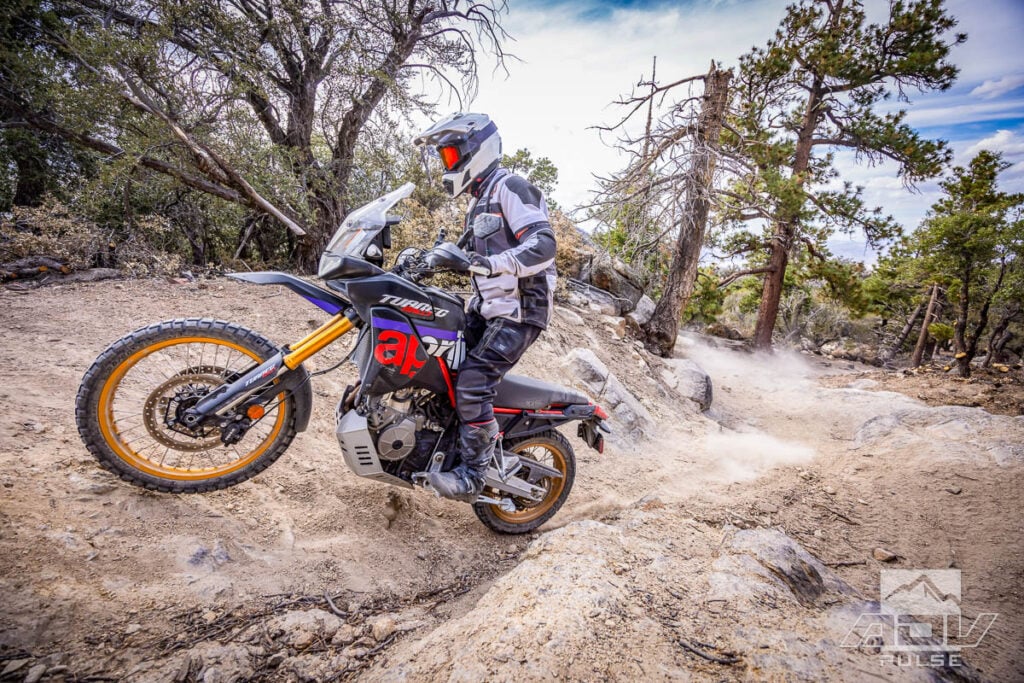
Skipping ahead to conclusions, default settings in Off Road mode eventually proved to be my favorite… almost. If I were to try and pick an “issue” with the bike, it’s simply that the Tuareg 660 Rally is a motorcycle you definitely need to set up for your riding style before trying to really push it in technical off-road terrain. This bike is massively capable, and will bite you pretty quick if you’re not ready for it.
Setting out for my first day aboard this new Aprilia, it was almost beneficial that I had no previous introduction to the updates in the 660 Rally’s electronics package. My opinion of how the bike performed was not colored by anything I’d read or heard about what the various modes and adjustment parameters were intended to do, I simply experienced what they actually did.
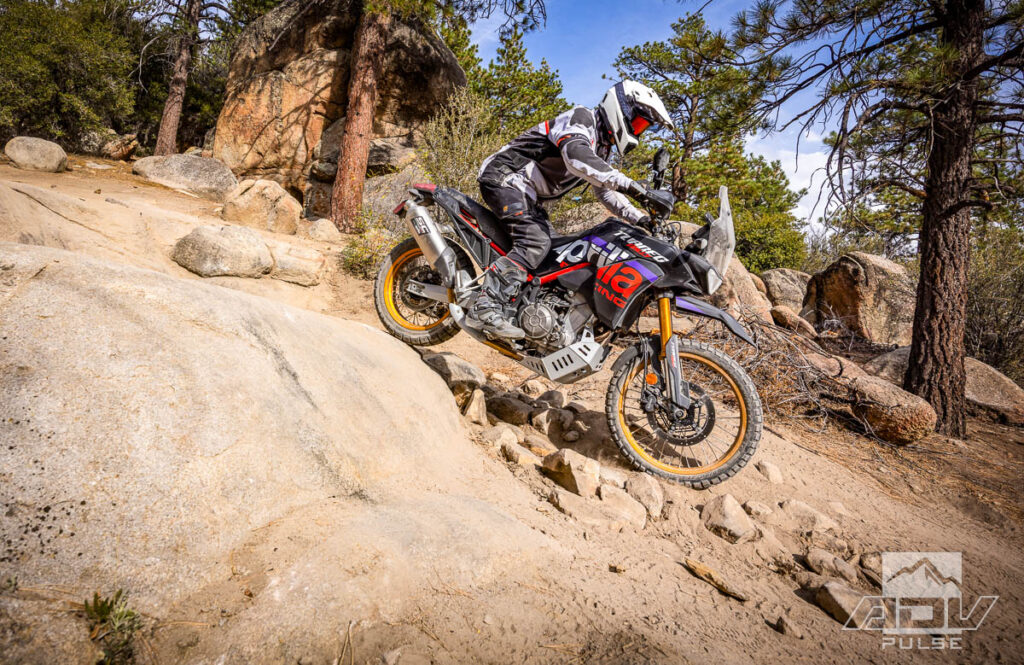
Sandy paths for this test quickly gave way to miles of steep and endlessly rocky trails. Where those trails ended was often in a deep sandy wash featuring even larger rocks to overcome. For the first several miles of the more technical sections, the Tuareg 660 Rally’s throttle felt quite difficult to control. I eventually dived into the menu and found the “AEM” was set to level 1.
Simply replacing the first letter of “A” in all the acronyms with “Aprilia” made it fairly easy to know what each setting was about. “ATC” = “Aprilia Traction Control”, “AEB” = “Aprilia Engine Brake”, “AEM” = “Aprilia Engine Map”, and so on. “ABS” would probably be an exception however. There’s definitely no “BS” associated with Aprilia’s new electronics package.
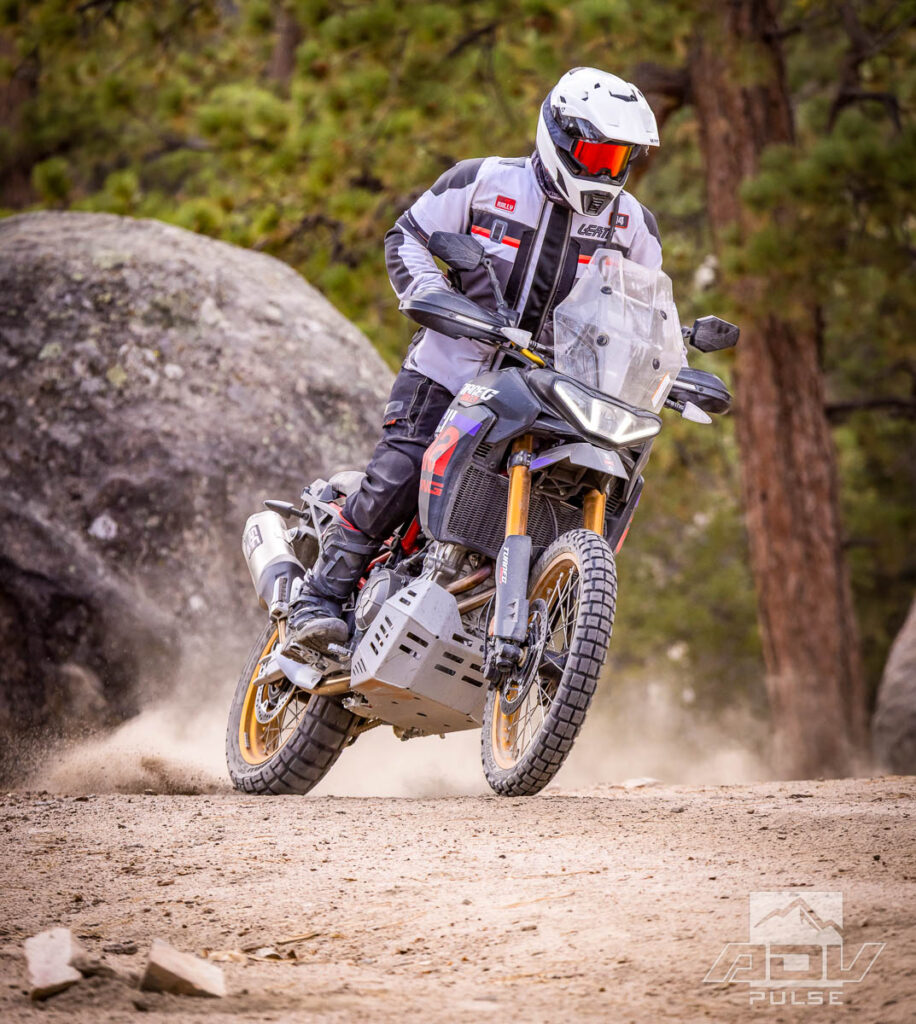
Not being 100% sure what AEM level 1 entailed, I simply switched the parameter to the opposite end of the spectrum, 3, and the bike was immediately more manageable. The incredibly precise and prominent throttle input at level 1 was addicting in the faster sections of trail, however, when the going got slower and more technical, it felt difficult to control as the bike bounced and leaped over rocks, and danced between ruts. Seemingly the most minute movements of the throttle resulted in immediate power to the rear wheel, sometimes when you didn’t want it, and usually too much.
Switching to AEM level 3 for the most technical sections of terrain felt almost like riding a different bike, at least as far as throttle control. All the unruliness I’d felt with level 1 in these situations was gone, replaced with a smooth-yet-powerful and confidence inspiring throttle. Given the AEM settings were developed directly from Jacopo Cerutti’s testing feedback, the aggressive and dynamic profiles of the engine maps further underscore this bike’s rally ambitions.
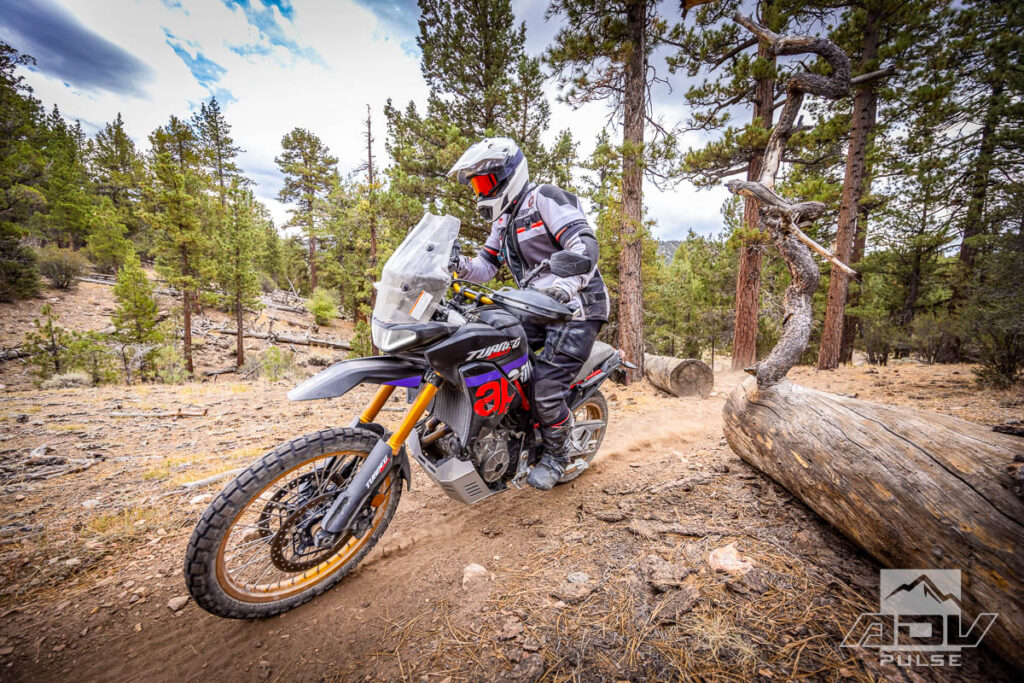
In some situations, choosing between ATC settings of 1 through 4 or off felt connected to the AEM setting. In the hyper-responsive AEM 1 setting, shutting ATC off would require diligent throttle control to keep the rear from spinning out. A combination of ATC 4 and AEM 1 could cause the system to intervene quite often, leading to a feeling of hesitation in some situations. The magic (for my part) seemed to be AEM 2 or 3, and ATC 1 or 2 – that combination resulted in a responsive but manageable throttle, with almost zero chance of braking traction to the rear, and almost zero feeling of the system intervening in control over the rear wheel.
ABS was another setting I used more often on the Tuareg 660 Rally than any other bike in recent memory. Where with most adventure bikes, I prefer full braking control over both wheels in almost all settings, aboard this new Aprilia, I opted for the default off-road setting of front on / rear off in the vast majority of trails. After a couple days of testing, the only time I preferred ABS to be completely shut off was in the most difficult and rocky slow speed technical situations, particularly the downhills.
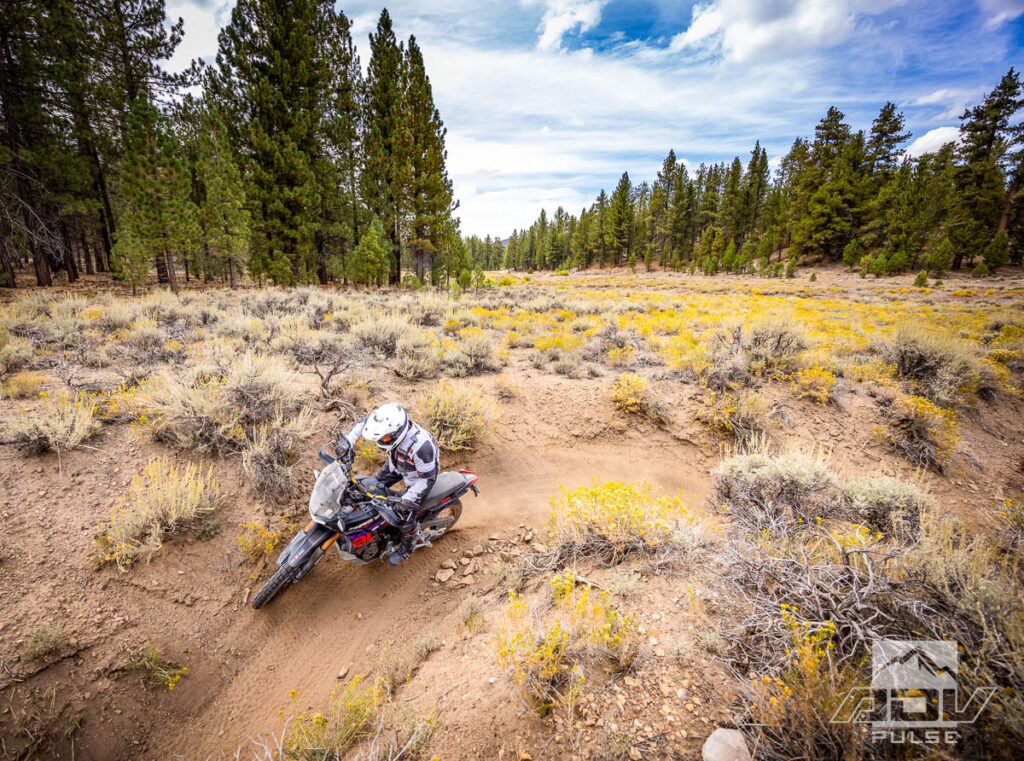
Whether on high-speed sandy roads or tight twisty singletrack, the front wheel ABS was a welcome control feature which I never felt intervening, until things slowed down and the rocks increased in size. Full disclosure, this system was working with the aforementioned Pirelli Rally STR tires. I’m guessing the percentage of time the ABS system was either on or off would have been shifted dramatically had the 660 Rally been shod with more aggressive dirt-focused tread.
Suspension on the Tuareg 660 Rally seems worthy of the rally moniker. Setting the rear sag to the 72mm target required using all of the available preload, indicating the bike was designed around a rider weighing in at less than my 190 lbs. This observation led to another surprise being the 660 Rally is possibly the only bike which I did not bottom out once during an entire test – and not for lack of getting the wheels off the ground.
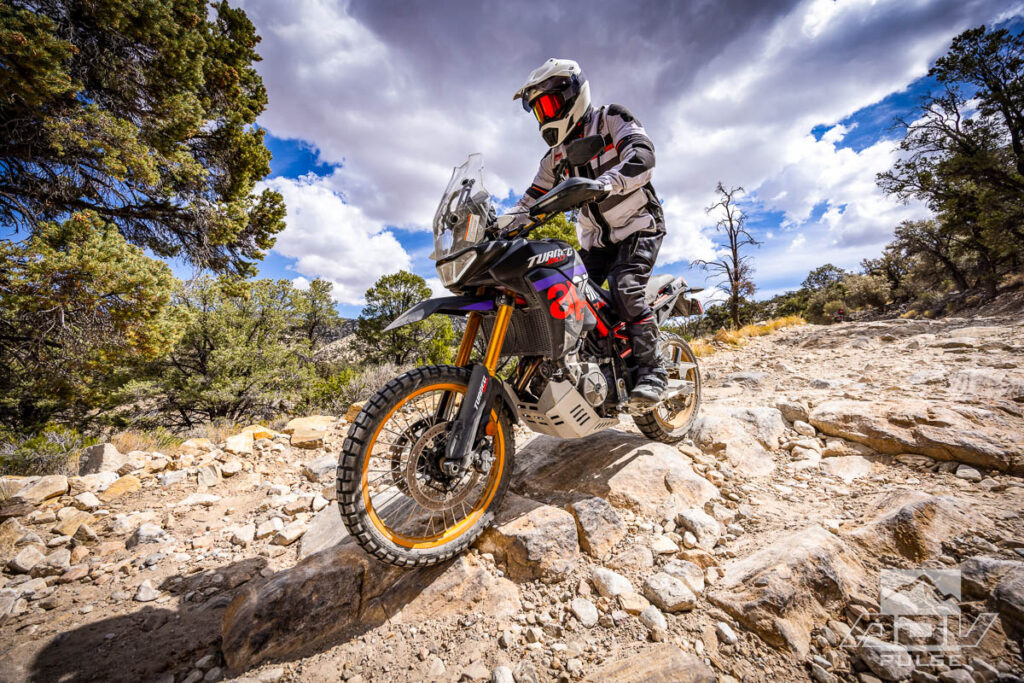
More than trail-style jumps here and there, some rain rut G-outs provided the opportunity to evaluate a worst-case scenario of descending a steep trail and being presented with a decent size chasm at or near the bottom. The sort of thing that sucks your front wheel into it when your forks are already compressed, and threatens a flattened rim if the speeds are even moderately too high.
Switching back and forth between the Tuareg 660 Rally and the Yamaha T7 which was along for the ride was almost painful – literally. The T7 is a uniquely capable motorcycle among middleweight adventure bikes, but in the above described situation, where the T7 rolled through these G-outs about confidently as an upright piano, the Tuareg 660 Rally floated through the same situation – literally feeling like it had flattened out the trail.
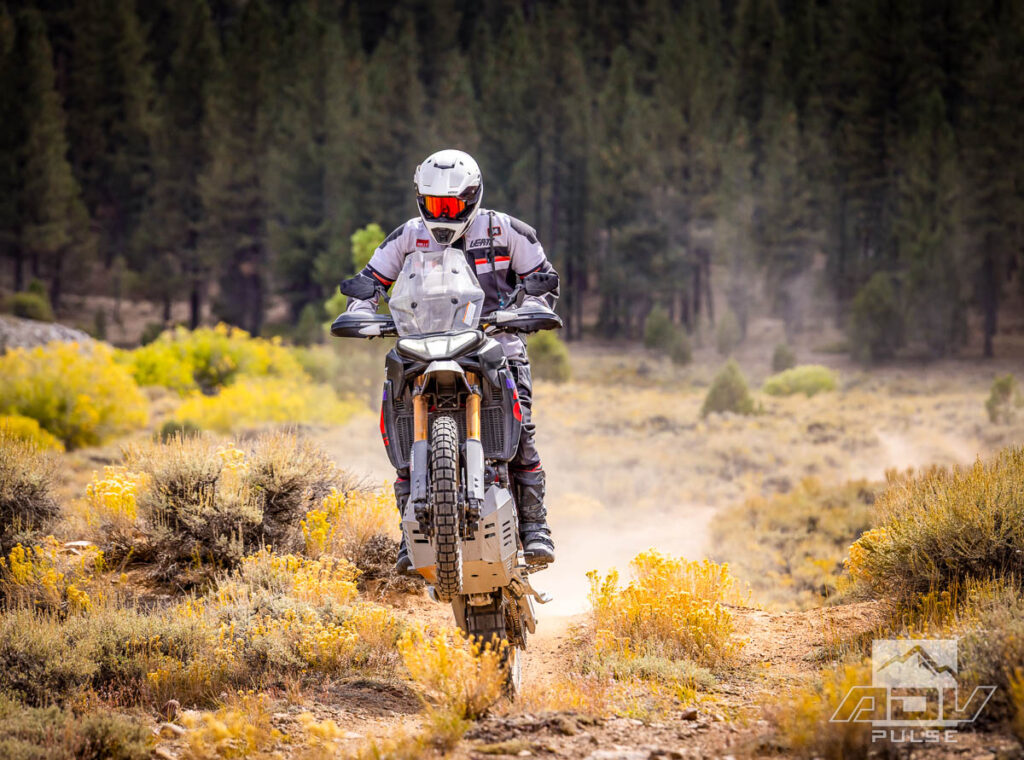
Adding further confidence points to the Tuareg were the stronger, narrower, tube-type wheels on the Rally version when compared to the wider tubeless rims of the Standard 660. Coupled with a more robust skidplate, the 660 Rally is much better suited for whatever might come in those rare instances when you blow through the suspension travel over a rough or higher-speed section of trail.
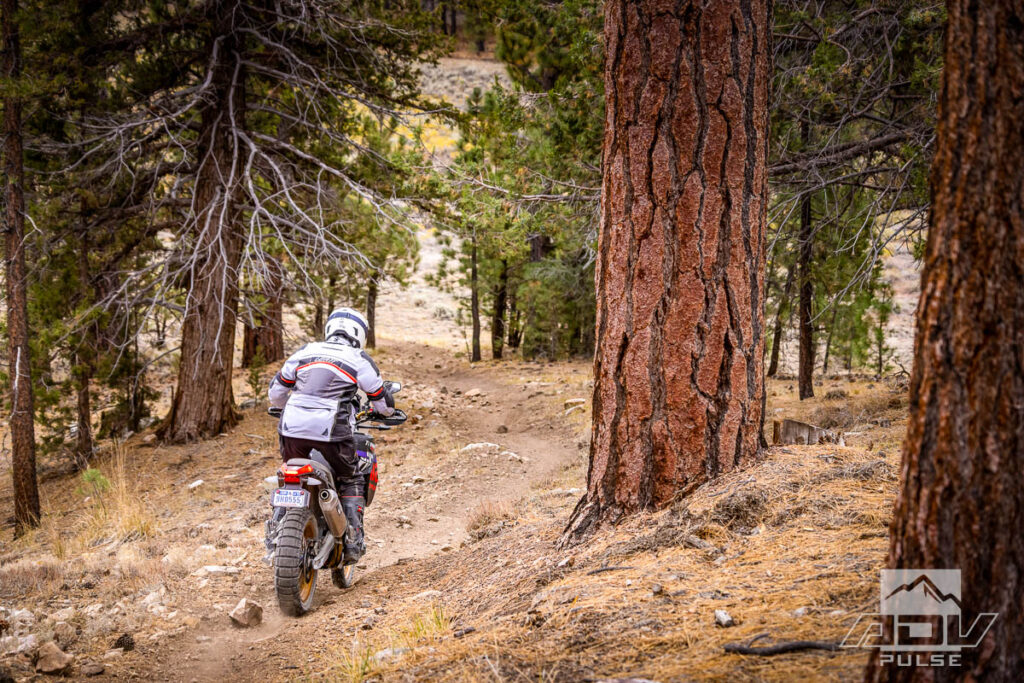
However, this massive amount of bottoming resistance comes at a price. Long stretches of fast-but-rocky roads were a constant reminder that the 660 Rally has quite stiff, straight-rate springs supporting the suspension. Compared to typical adventure bikes, there’s not much suppleness to be found anywhere in the stroke. While it can be a bit of a jarring ride, there’s also a confidence associated with the intense level of feedback through the pegs and bars – you know the bike is always ready for that unexpected big hit in the trail at any time.
The Bottom Line
The Tuareg 660 Rally is a bike designed for rally racers, or those aspiring to be, without the rally budget. Cerutti’s quote earlier in the article regarding development of the 660 Rally production bike specifically said “the goal was to make it as similar as possible to the bike with which we won the Africa Eco Race”. There’s a lot of money saved in those two words, “as possible”.
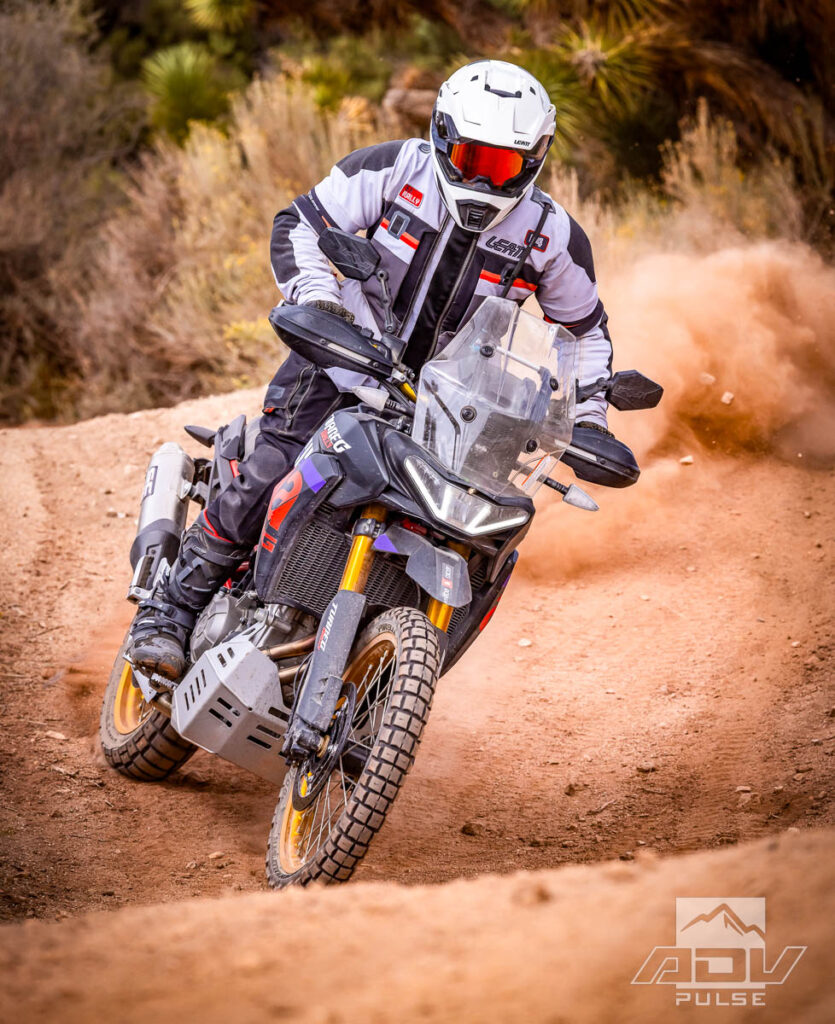
A full race-prep Tuareg 660 like the one Cerutti used to win the AER could set you back as much as $40,000. At $13,799, the production 660 Rally begs the question, how many of us could ride over $26,000 better aboard the race bike versus the production version?
Choosing between the Standard or Rally versions of the Tuareg 660 seems a clear decision, but not an easy one. Many of my adventure rides involve long on and off-road miles, simply getting to the start of a ride. I’ve ridden across many states, as well as across the entire U.S., on a variety of bikes just to arrive at a trailhead. Were I riding to the start of a race, sacrificing a bit of on-road comfort in order to have the Tuareg 660 Rally’s proven race-winning performance available on the course would without question be the preferred decision. However, as an overall adventure machine, I’d likely be inclined to go with the standard version, as the more supple suspension is very welcome in these sorts of mile-eating situations.
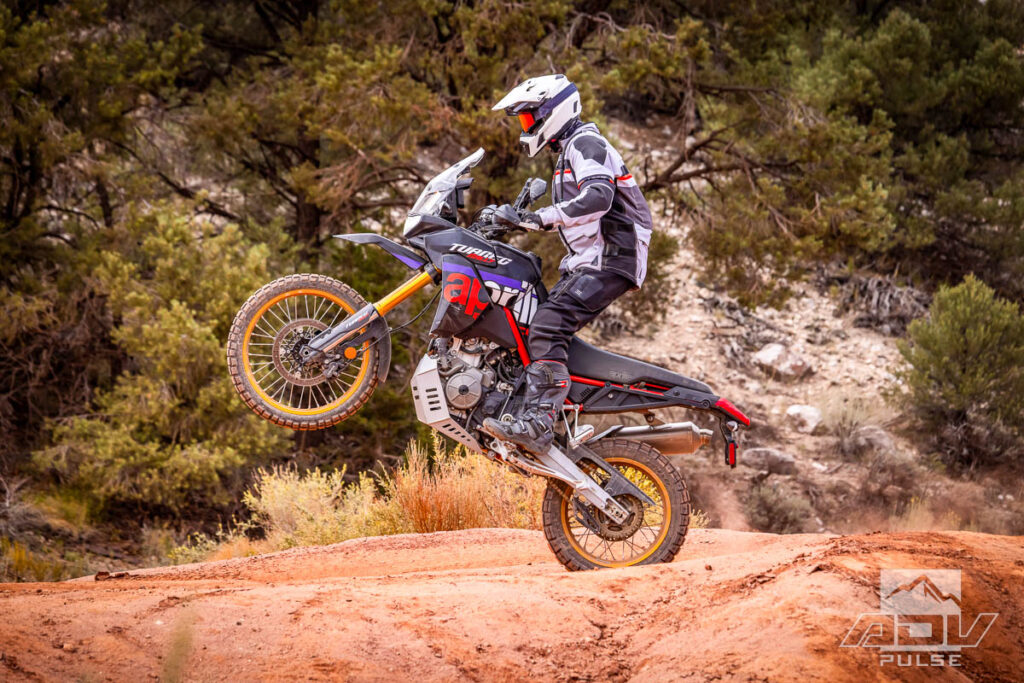
Considering that $12,499 gets you the standard, which is already among the top performing middleweight adventure bikes off-road, and an extra $1,300 gets you as close as one can reasonably expect to proven rally-winning performance, it becomes a question of whether you value comfort or competition more in your adventures.
Tuareg 660 Rally Specs
| Engine: | Parallel twin, 4 valves per cylinder, liquid-cooled with Ride-By-Wire |
| Displacement: | 659 cc |
| Bore x stroke: | 81 x 63.93 mm |
| Compression Ratio: | 13.5:1 |
| Max Power: | 80 HP (59 kW) @ 9,250 rpm |
| Maximum Torque: | 51.6 ft-lbs (70 Nm) @ 6,500 rpm |
| Gearbox: | 6 speed |
| Ignition: | 2 Ø 52 mm throttle body, Ride-by-wire |
| Lubrication: | Wet sump |
| Clutch: | Multi plate wet clutch with assist and slipper system |
| Frame: | Trellis frame and aluminum plates |
| Front suspension: | Kayaba Ø 43 mm USD Off-road tuned fork, fully adjustable, 240 mm wheel travel |
| Rear suspension: | Kayaba Off-road tuned monoshock, fully adjustable, 240 mm wheel travel |
| Front brake: | Double Ø 300 mm floating disc. Brembo calipers |
| Rear brake: | Ø 260 mm disc. Brembo caliper |
| Front wheel: | Heavy-duty spoked wheel 21″ x 1.85″ with inner tube |
| Rear wheel: | Heavy-duty spoked wheel 18″ x 4.00″ with inner tube |
| Seat height: | 35.95 in (913 mm) |
| Fuel tank capacity: | 4.76 gallons (18 liters) |
| Wet weight (90% fueled): | 438.7 lbs (199 Kg) |
| Fuel Consumption: | 54.7 MPG (4.3 l/100 km) |
| Standard Features: | Full LED headlights and indicators with light signature. Bonded 5” TFT dashboard. Engine Maps (AEM), Engine Brake (AEB), Dual-channel ABS (3 maps and Rear Wheel Lift-up Mitigation), Traction Control (ATC), 4 Riding Modes. Cruise Control (ACC). Metal Braided Brake Hoses, Rally High Seat, Specific handlebar, Off-road handguards, High Mudguard, SC-Project slip-on, Off-Road skidplate, Chainguide, Rally sidestand |
| MSRP: | $13,799 USD |
GEAR WE USED
Pants: Leatt ADV Rally 5.5
Jacket: Leatt ADV Rally 5.5
Goggles: Leatt Velocity 4.5
Helmet: Leatt ADV 8.5
Boots: Leatt 5.5 Flexlock
Gloves: Leatt ADV Rally 5.5
Photos By Simon Cudby and Rob Dabney

Author: Jon Beck
Jon Beck is fulfilling a dream of never figuring out what to be when he grows up. Racing mountain bikes, competitive surfing, and touring as a musician are somehow part of what led Jon to travel through over 40 countries so far as an adventure motorcycle photographer, journalist, and guide. From precision riding for cameras in Hollywood, to refilling a fountain pen for travel stories, Jon brings a rare blend of experience to the table. While he seems happiest when lost in a desert someplace, deadlines are met most of the time.Related Stories
Related Stories
 Watch: Testing The Aprilia Tuareg 660 Rally Aprilia’s Tuareg 660 has already proven itself as one of the most capable...
 Mid-Sized ADV Matchup: Aprilia Tuareg 660 vs Yamaha Tenere 700 I’ve been riding and reviewing heavyweight and mid-size adventure bikes for a while...
 Watch: 2022 Aprilia Tuareg 660 Tested Perhaps one of the most intriguing offers in the growing middleweight adventure class...
Popular Stories
Bultaco Staging Comeback With Budget-Friendly 300cc ADV Bike
Bultaco is officially back in the motorcycle busi...
5 Small‑Bore Adventure Bikes That Aren’t Buzzy On The Highway
Small‑bore adventure bikes in the 300–500cc range...
CFMoto’s 450MT Sweeps All Adventure Classes at Red Bull Romaniacs
CFMoto recorded a standout performance at Red Bul...
KTM Announces Specs And Availability Of New 690 Rally Model
KTM is expanding its LC4 lineup with the introduc...
Notify me of new posts via email
If you had the standard model would you swap out the bars and seat for the rally versions?
Personally, probably not. The standard version has a cockpit arrangement that’s pretty good for all-around adventure riding. Plus, the windscreen seemed to work well with the stock seat for my height (5’11”).
I have both bikes and the Rally has lower bars with less reach, which makes sense for an aggressive riding position. I use the Renthal 839 which is even lower with less sweep.