
A Fiery Red‑Rock Maze With Sweeping Views Just Outside Las Vegas
Ride a dramatic sandstone route with age-old petroglyphs in Nevada’s Valley of Fire.
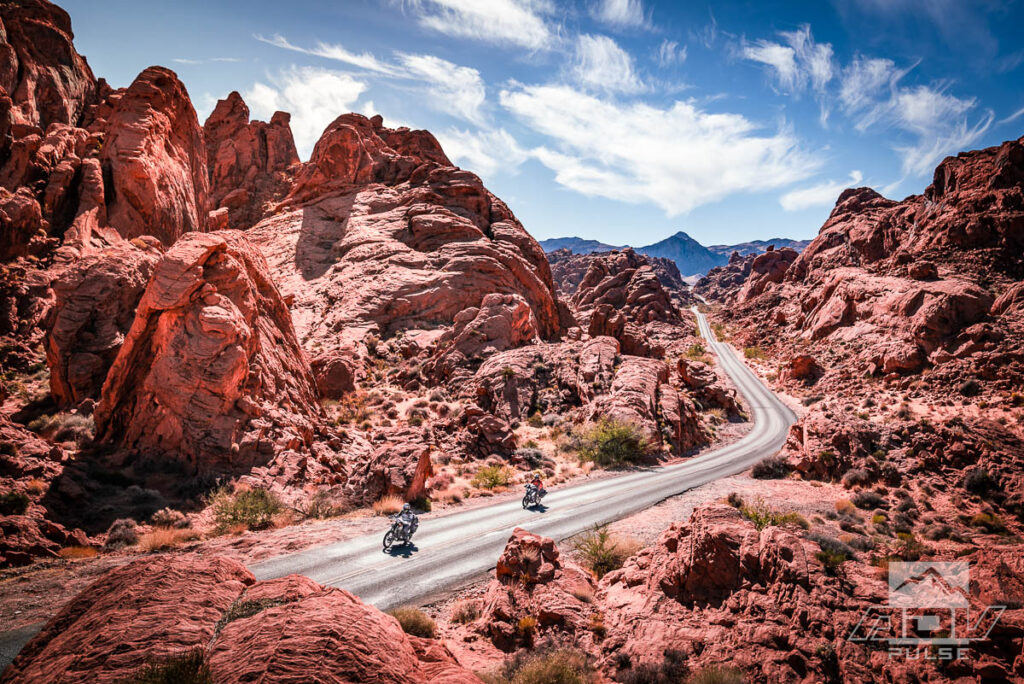
Nevada’s oldest state park sits less than an hour from the Las Vegas Strip, yet it feels worlds removed from neon and noise. For adventure riders looping through the Mojave or wrapping up a longer Southwest tour, Valley of Fire State Park delivers a finale that feels almost staged — 40,000 acres of blazing sandstone, ancient petroglyphs, and quiet desert corridors that glow at sunrise and burn red at dusk.
Rolling in from Lake Mead, the terrain shifts quickly from muted desert tones to a palette that looks supercharged. Brilliant red, pink, and orange formations twist, stack, and jut out of the earth in every direction. Some are smooth as poured concrete, others jagged and chaotic, and still others arranged in tidy, layered bands that look almost architectural.
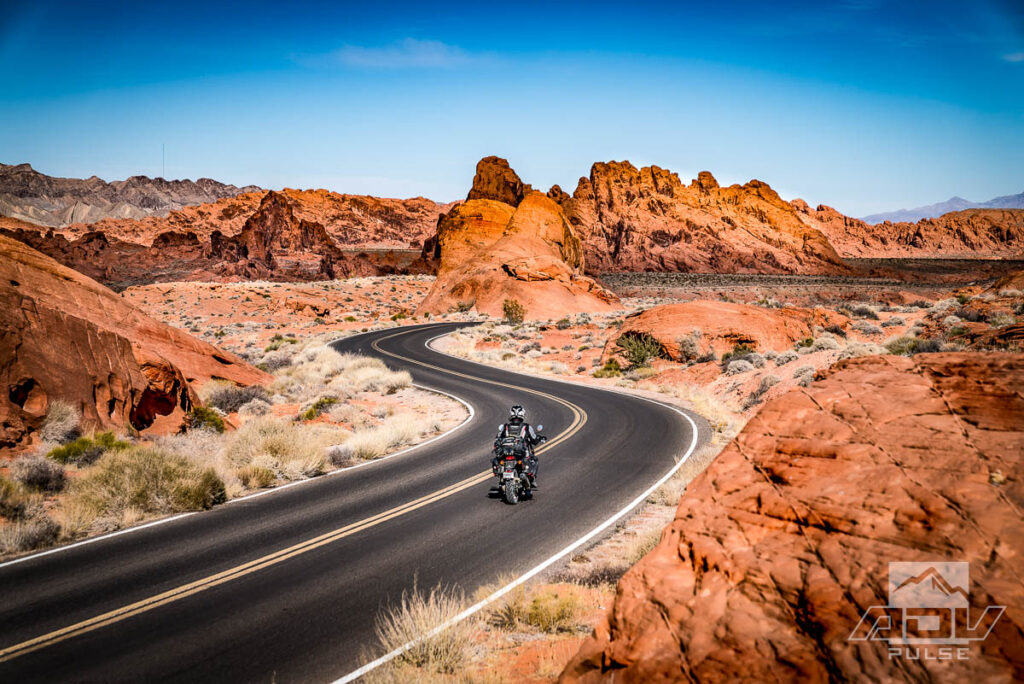
Most of the park is accessed by pavement, but the riding is anything but dull. Sweeping curves, dramatic viewpoints, and short spur roads that tempt you to stop every few minutes. For those willing to stretch their legs, numerous hiking trails lead deeper into slot canyons, arches, and sculpted rock bowls that feel like natural amphitheaters.
History isn’t something you have to search for here; it’s simply part of the landscape. Atlatl Rock is one of the most striking examples, a towering panel of petroglyphs depicting the use of a notched throwing stick that predates the bow and arrow. The artwork is remarkably clear, and the short walk to reach it makes the site accessible to even those wearing off-road boots. Also in the park, you’ll find 225‑million‑year‑old petrified logs sitting preserved with their grain and texture still visible despite having turned to stone long before this desert took its current shape.

But not all of the stories belong to prehistory. One of the park’s most visited features, Mouse’s Tank, is named after an outlaw who used the natural rainwater basin as a hideout in the 1890s. The short hike to reach it winds through a canyon lined with more petroglyphs, some bold, some faint, all reminders of the people who moved through this landscape long before motorcycles ever did.

If you’re the type of rider who prefers a more remote off-road experience, trails along the shores of Lake Mead are just a few short miles away. You can rough-camp right on the water at Stewarts Point, with incredible lake views — far enough from the Las Vegas lights to feel wild and close enough to roll into the park at sunrise when the rocks truly live up to their name. There is also the option of more developed campgrounds inside the park.

Getting There
Getting to Valley of Fire is straightforward whether you’re approaching from Las Vegas or looping in from the east. From the Strip, it’s an easy 45 minutes on pavement, following I‑15 north before peeling off onto Valley of Fire Highway, where the scenery shifts quickly from city outskirts to open desert. Riders coming from the east can take the quieter, more scenic route along Northshore Road. This approach is especially rewarding at sunrise, and it’s also the most convenient if you’re camping in the Lake Mead area. No matter which direction you arrive from, the transition into the park is dramatic, with the red rock formations appearing almost without warning as the road bends into the heart of the valley. Entrance fees for the park are $15 per vehicle ($10 for Nevada plates).
Related Stories
Related Stories
 A Ride Through Nevada’s Vast Red Rock Landscapes Planning an adventure ride and executing one are often two very different things....
 Carrizo Plain: A Quiet, Wide‑Open Escape for Adventure Riders Carrizo Plain National Monument sits between the Temblor Range and the Caliente Mountains,...
 ADV Destinations: Trona Pinnacles, A Sci-Fi Landscape In The Mojave Rising out of the Searles Dry Lake basin like a field of ancient...
Popular Stories

5 Small‑Bore Adventure Bikes That Aren’t Buzzy On The Highway
Small‑bore adventure bikes in the 300–500cc range...

BMW Announces US Pricing And More Details On The 2027 F 450 GS
BMW has released new details for the 2027 F 450 G...

KTM Announces Specs And Availability Of New 690 Rally Model
KTM is expanding its LC4 lineup with the introduc...

Kove Unveils 350 Rally: A Lower, Lighter Alternative To The 450 Rally
Photo: Peak Motorcycles Kove has pulled the co...


Notify me of new posts via email
Beautiful photos and great descriptions of this unique, red-rock landscape. I thoroughly enjoyed this post.