
First Ride: New Continental TKC80² “Gen 2” Dual Sport Tire
We see if Conti raised the bar on this long-time benchmark 50/50 dual sport tire.
Few motorcycle products have a resume as long or as influential as Continental’s TKC80 dual sport tires. Launched in 1985, it arrived at a time when “adventure bikes” were still in their infancy, and a 50/50 tire that could handle both pavement and dirt in equal measure was a novelty. The first time I saw a Continental TKC80 was in the late ’90s, mounted on a BMW R1100GS long before I ever owned an adventure bike. The idea that a big touring machine could wear full knobbies — and actually be ridden off‑road with all that horsepower — stuck with me.
Over the decades, the TKC80 became a top choice for riders heading into the unknown, from the Transdanubia Ride of the ’90s to Long Way Round’s world‑spanning route. For many, it was the first tire that made big‑bike off‑road travel feel possible. And it’s still used as a benchmark by many to measure a new 50/50 tire against.
Continental did make incremental compound and construction updates over the years, and in 2025 introduced a revised carcass, new breaker material, and a fresh manufacturing process aimed at improving durability, wet grip, and overall quality. But the iconic tread pattern — the visual signature of the tire — remained essentially unchanged for four decades.
That continuity ended with the TKC80². For 2026, Continental has re‑engineered the tire from the ground up, keeping the recognizable blocky silhouette but redesigning nearly everything beneath and around it.
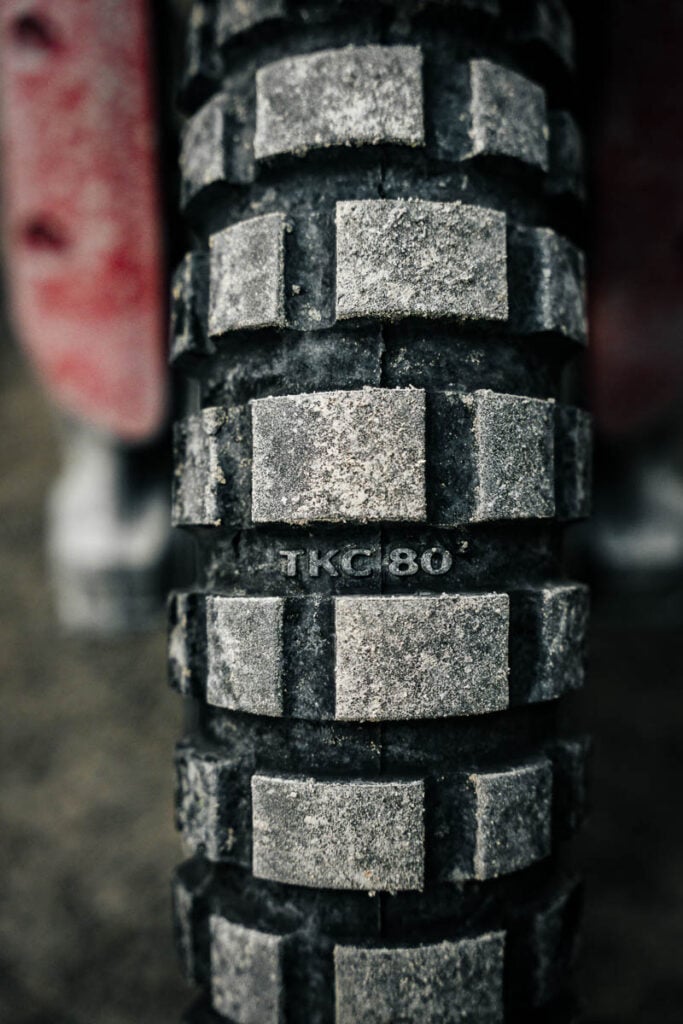
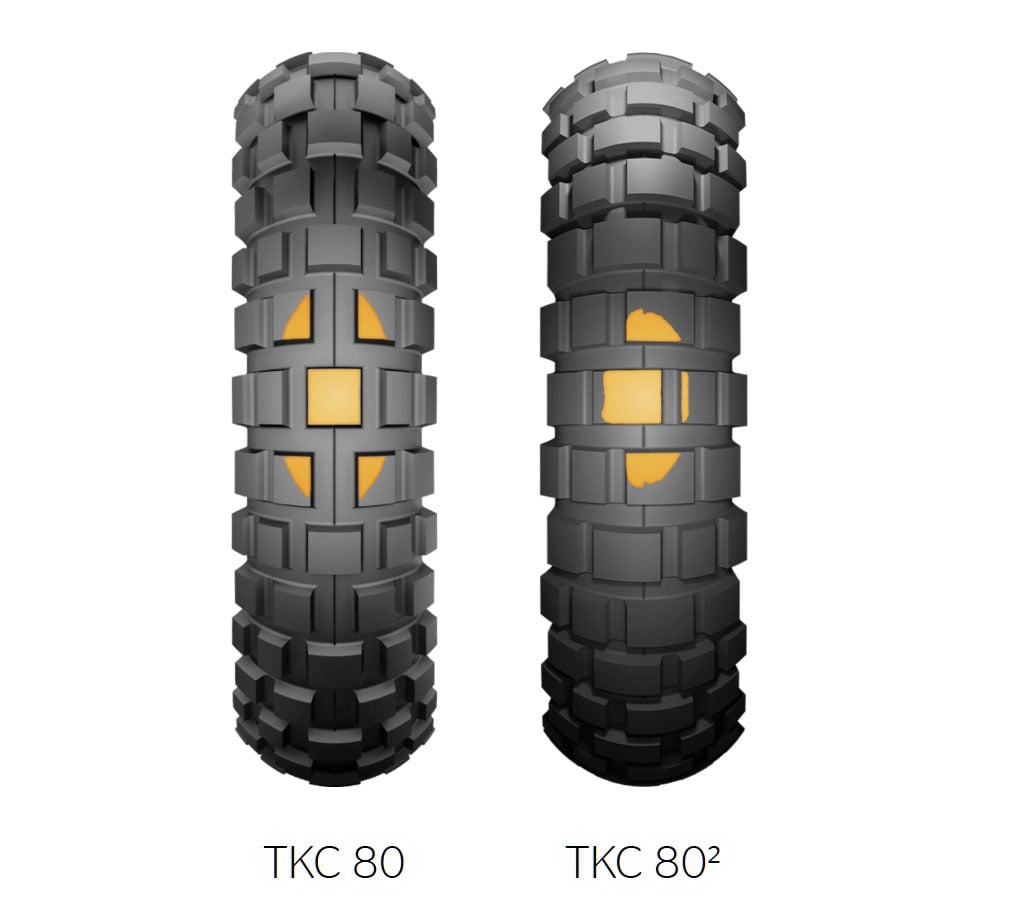
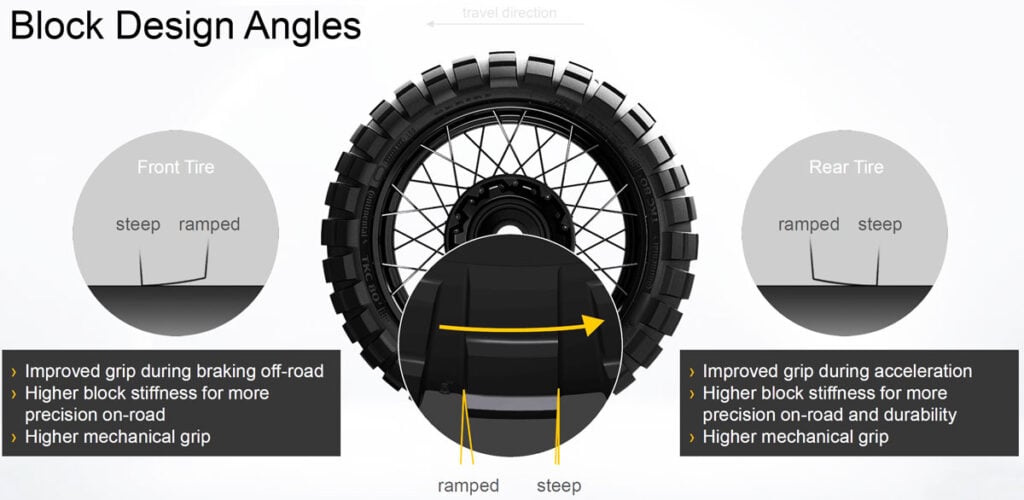
The new tread pattern uses larger blocks arranged in a staggered layout to create more biting edges and a more consistent mechanical interaction with the terrain. Each row now features equal‑length edges and uniform gaps, addressing one of the original TKC80’s limitations in loose surfaces. The shoulder blocks are offset to increase edge engagement in soft terrain, and the blocks themselves now use ramped surfaces — oriented for braking bite on the front and acceleration bite on the rear.
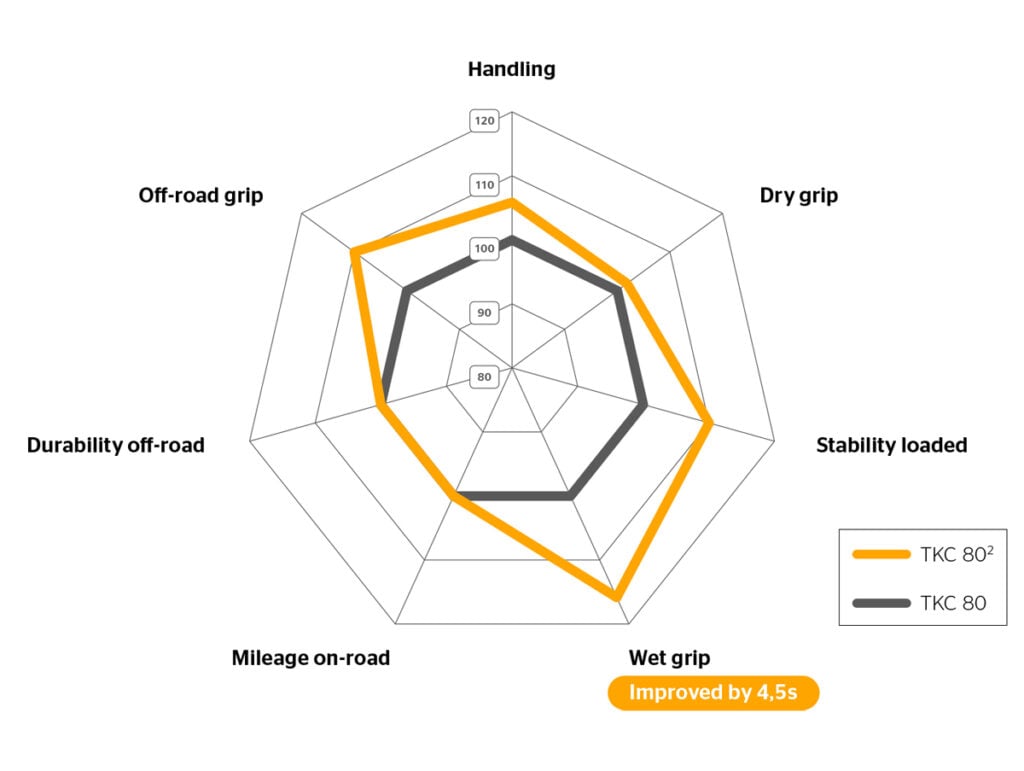
Under the tread, the next-gen TKC80² gets a new bias‑ply carcass tuned specifically for 50/50 use, with increased rubber thickness for better puncture and cut resistance. Continental also reworked the load distribution to reduce irregular wear and improve high‑speed stability, while targeting lower road noise for long‑distance travel. A new compound aims to balance flexibility and stiffness: soft enough to conform to asphalt for better wet and on‑road grip, yet supportive enough to keep the blocks stable off‑road. The footprint has grown by 17% along the centerline, further improving straight‑line stability, reducing road noise, and helping maintain the good wear characteristics.

In short, the second‑generation TKC80 is engineered to deliver the same confidence-inspiring road performance with less noise, while promising improved off‑road capability. Unfortunately, the tire’s longevity hasn’t been upgraded. With the old TKC80, you could typically get anywhere from 2,500 to 4,500 miles out of a rear tire depending on the bike and style of riding. Continental states we can expect similar numbers, which we’ll test in a future long-term review.
How It Performed
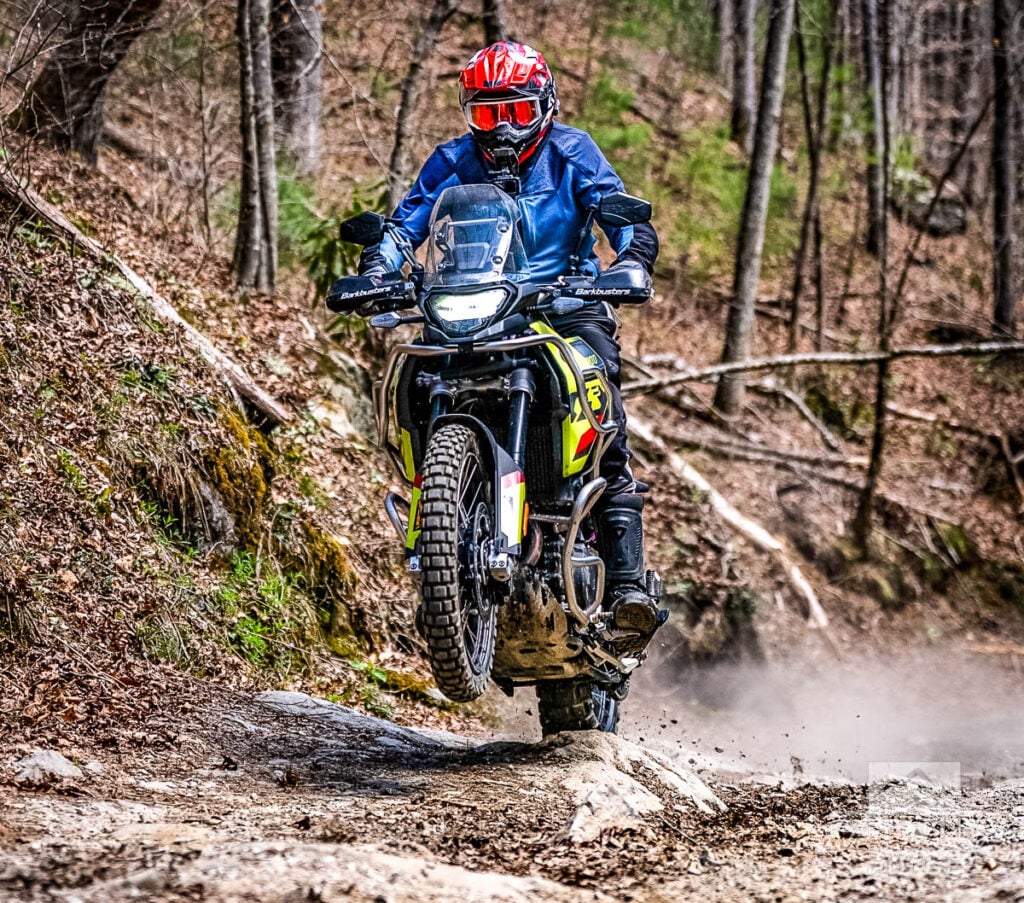
Before diving into the details, it’s worth noting how we approached this test. We began at the BMW Performance Center in Greer, South Carolina — a facility designed specifically for GS rider training, with controlled environments that replicate everything from deep sand to slick mud, loose climbs, rocky descents, graded gravel, as well as a short road-race course. It’s an ideal place to evaluate a tire on repeatable surfaces and isolate how it behaves under different loads and traction demands. After a full day cycling through every terrain feature the center offers, we headed out on a 240‑mile loop through the Blue Ridge Mountains of Northeast Georgia. That second day added real‑world pavement, fast sweepers, forest roads, and mixed conditions, giving us a broad picture of how the TKC80² behaves on both street and dirt.
On the Street
On pavement, the TKC80² maintains the same high grip levels the original was known for, but the feel is noticeably different. The tire feels more planted overall, but with less of the early, predictable slide of the first‑gen TKC80 that let you know when you were pushing the edge.
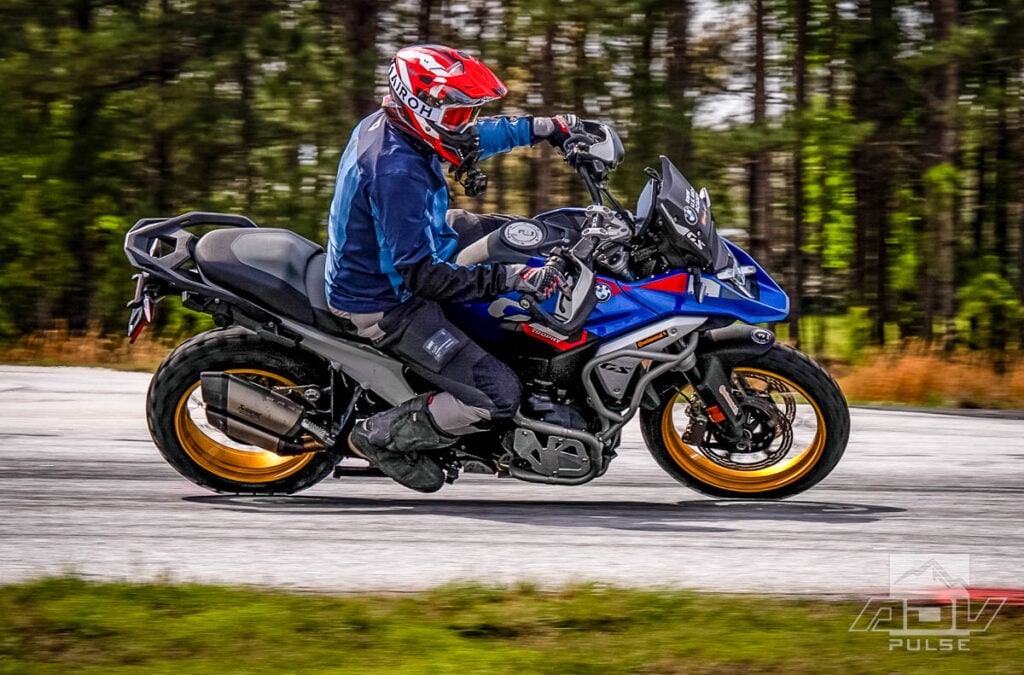
Turn‑in remains natural, and the tire lets you ride a big ADV machine like the R1300GS at a brisk pace without feeling like you need to swap to a more street‑biased option. Straight‑line stability is excellent, and the revised carcass and larger centerline footprint give it a more settled feel over tar snakes, grooves, and cracks. I did feel a small slip crossing a painted centerline, but nothing out of the ordinary for a knobby‑style tire.
One of the most noticeable changes is road noise, or the lack of it. The original TKC80 was never particularly loud, but the TKC80² is exceptionally quiet at highway speeds, to the point where wind and engine noise completely mask any tire sound. Braking stability felt solid, and the tire resisted lockup better than expected for a 50/50 design.
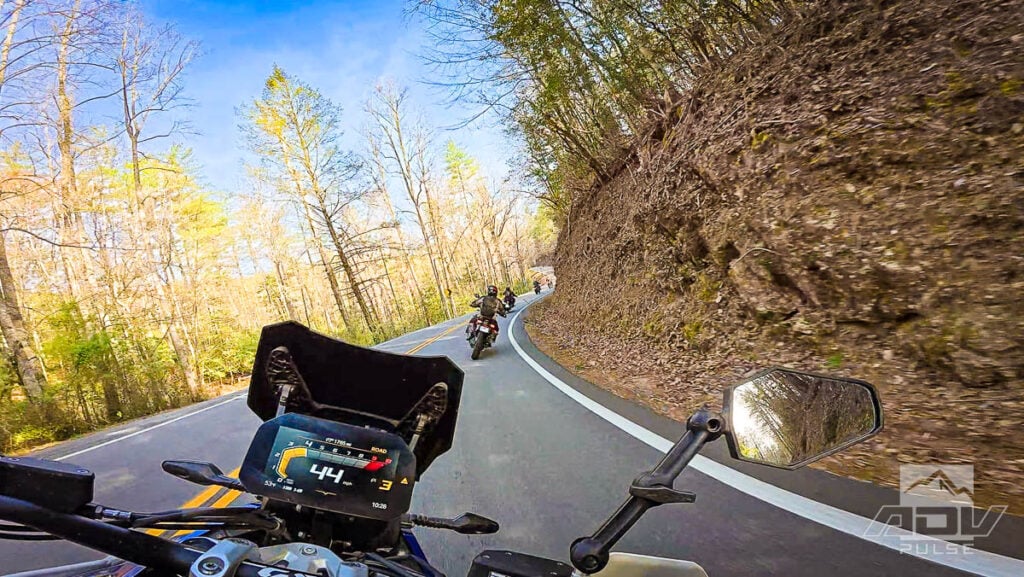
Acceleration grip was strong as well, with less spin than the original TKC80 when driving out of corners with the TC off. Our exposure to wet pavement was limited to scattered damp patches, so I can’t draw firm conclusions yet, though the higher‑silica compound should, in theory, offer better grip on wet asphalt.
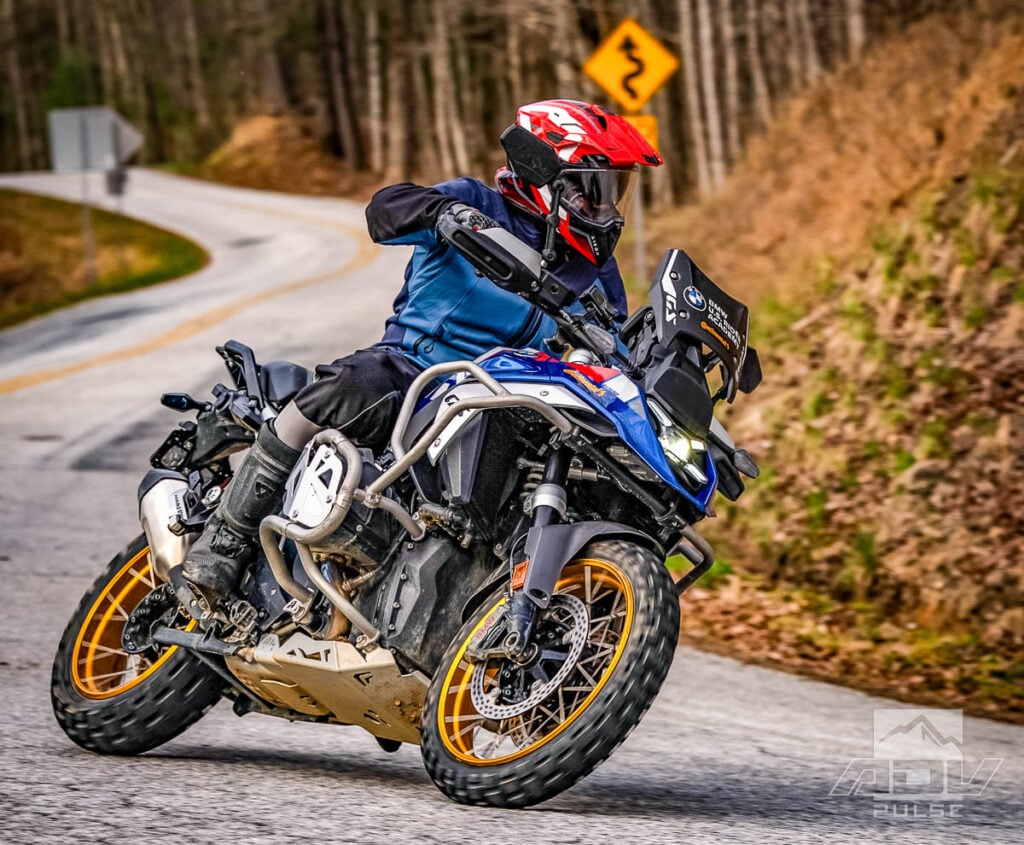
While I’d like to have more time with the tire on the road, my initial feeling from this first test is that the new TKC80² offers similar street performance to the original, along with reduced road noise, but perhaps not as much feel when pushing it to the edge.
In the Dirt
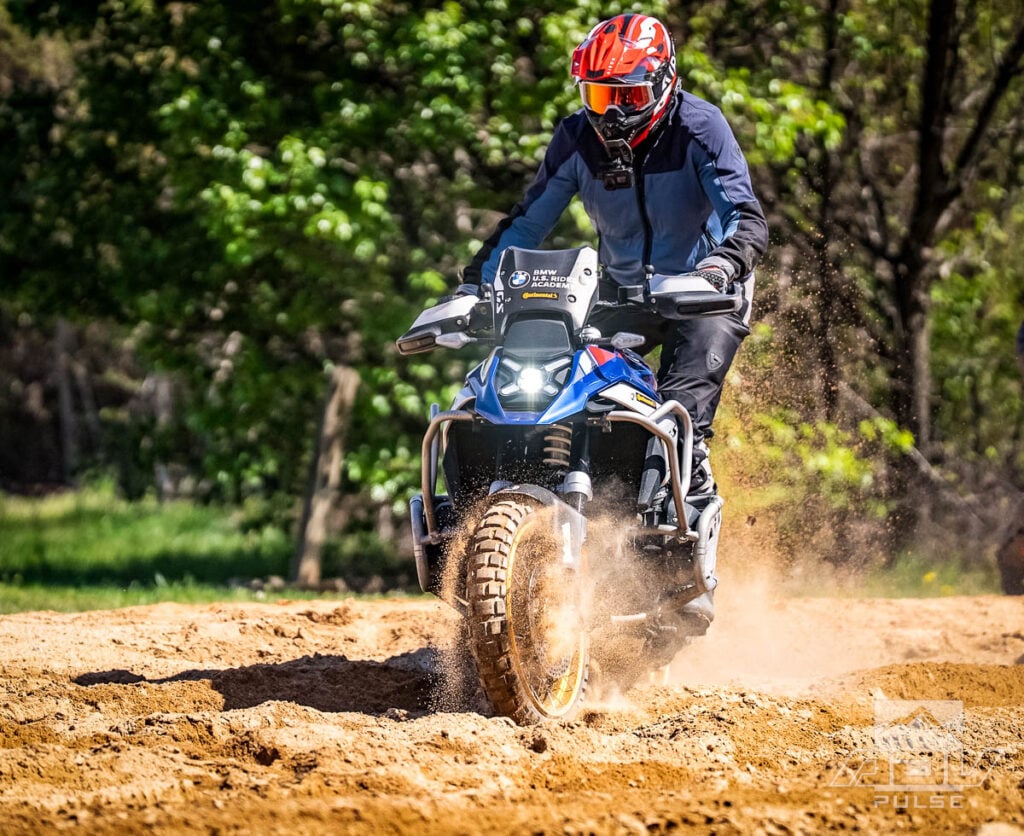
Off‑road, the TKC80² delivered a clear step forward in capability across every surface we encountered. In deep sand, the front stayed composed and predictable, and the rear offered better drive with less spin when taking off or climbing in soft terrain. Loose gravel was one of the biggest surprises. The tire behaved more like a true knobby than the old TKC80, offering significantly more bite and less lateral slip than expected from a 50/50 design. Mud performance was improved as well. Despite the closer block spacing, the tire didn’t load up, and traction through muddy patches and slick, wet terrain was noticeably better than the original TKC80.
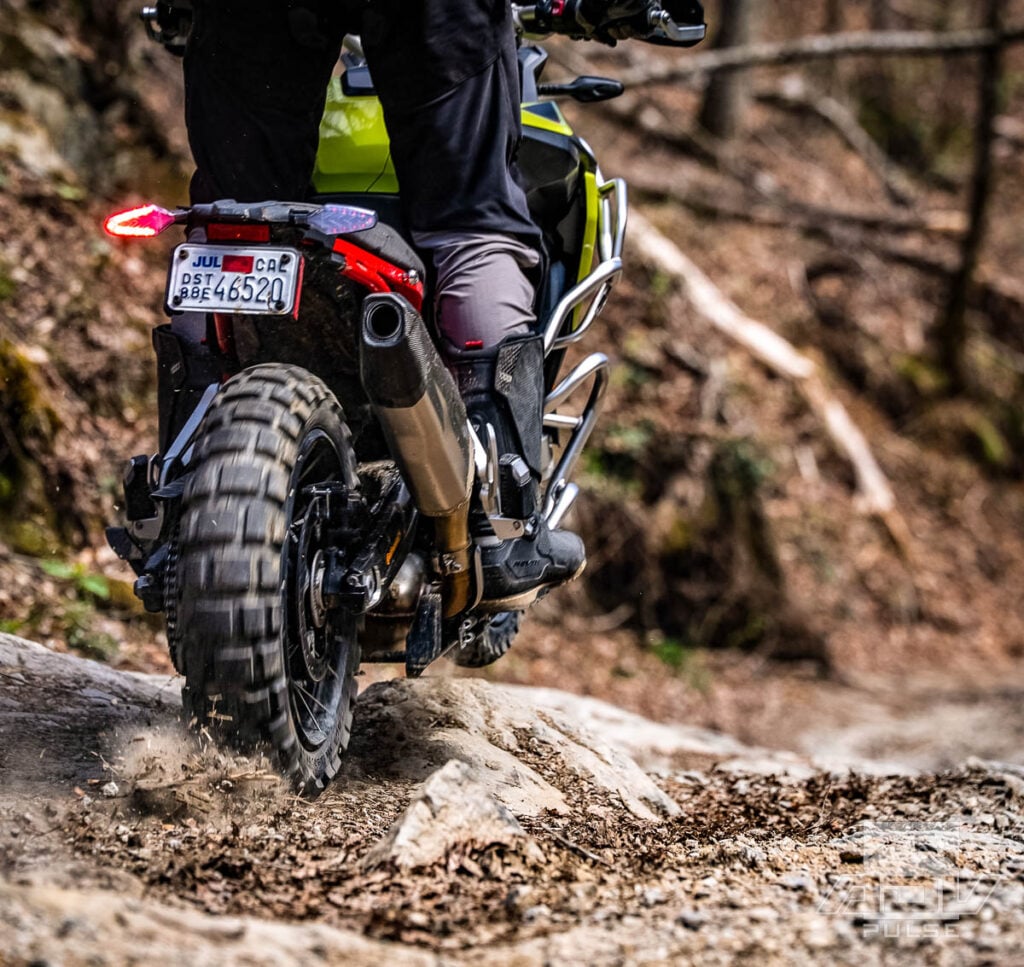
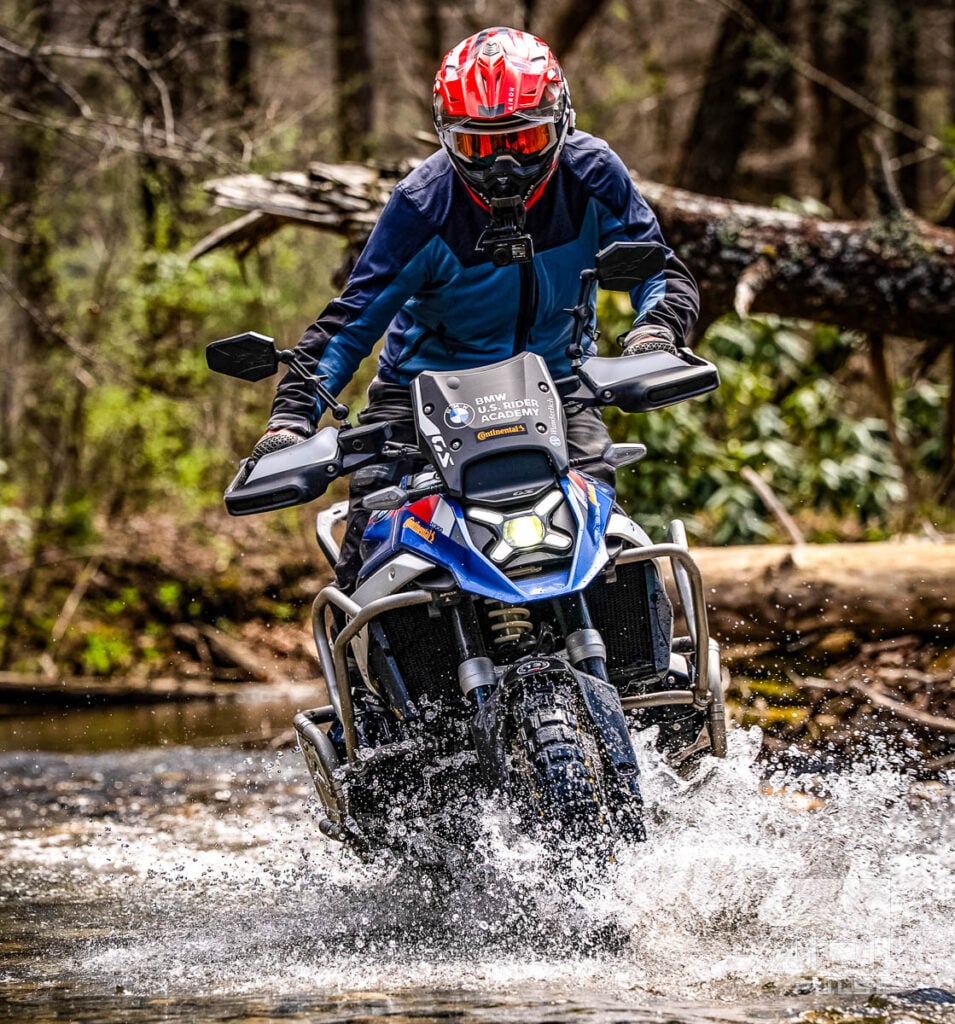
On loose, rocky climbs, the tire dug in more effectively than I was expecting, offering stronger forward drive and a more controlled feel under load — roughly a 10% improvement in grip by my estimation. Steep descents showed similar improvements in performance, with the rear resisting lockup better than expected for this category, even on the big R1300GS. Riding on thick layers of fallen leaves and pine needles with moist soil underneath is something I don’t encounter often as a west coast rider, but the tire had no trouble finding traction on this surface either.
Across all surfaces, the TKC80² felt more composed and predictable, and the new staggered block design seems to have raised the threshold where the original TKC80 began to struggle. More-extreme terrain like deep sand, loose rocks and mud, all felt more manageable on the new version. It’s still not on par with a hardcore knobby tire, but it’s moved more in that direction in how it feels in challenging terrain.
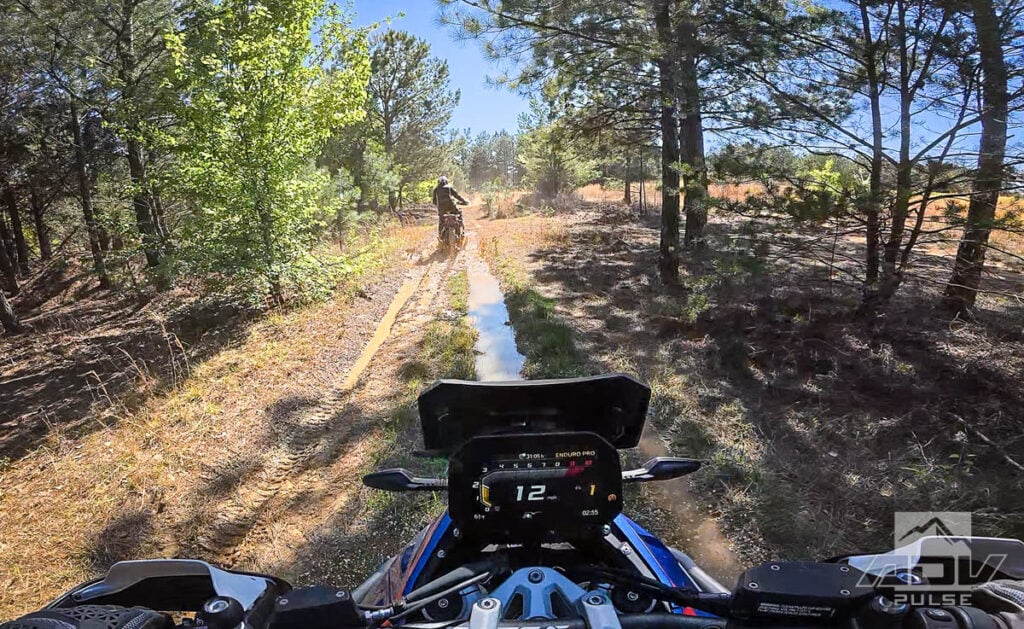
Without more time and perhaps back‑to‑back testing, it’s hard to place the TKC80² precisely among its competitors off-road, but based on this ride it clearly outperforms the original TKC80 off‑road and feels comparable to options like the Heidenau K60 Ranger or Dunlop Trailmax Raid. While nothing in our test exposed any clear weaknesses, slippery gravel was one area where it shined. More miles on familiar trails will undoubtedly be needed to fully evaluate where its limitations lie and where it is most improved.
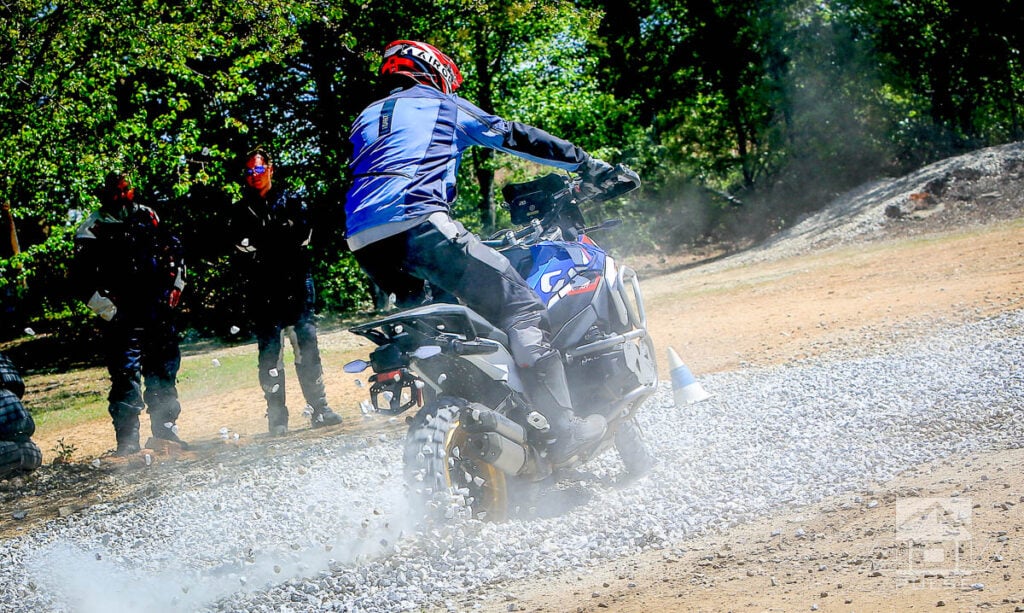
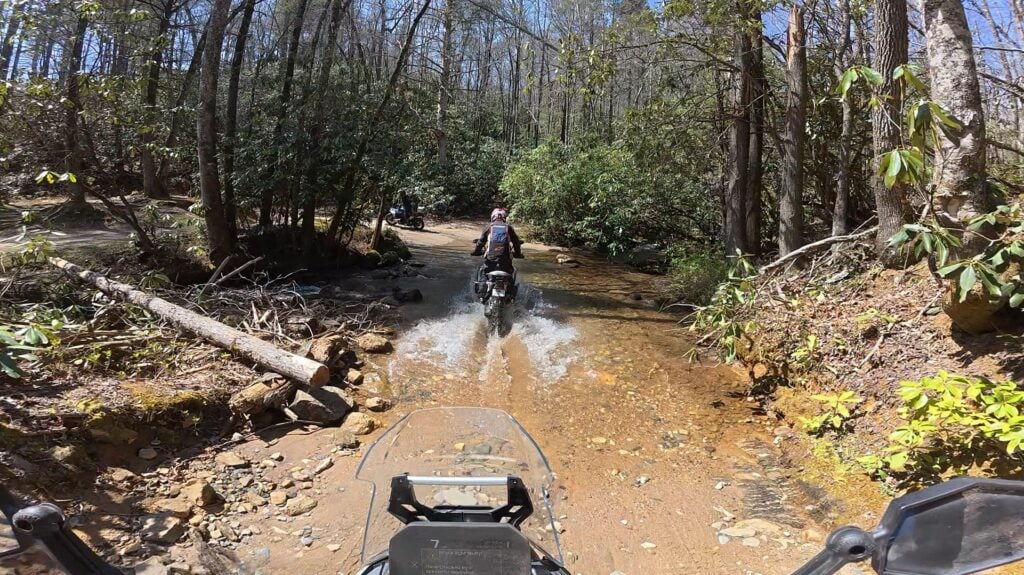
More testing will also be needed to better understand long‑term wear. But after roughly 300 miles of mixed terrain, including rocky sections and pushing the tires on the road course, we saw no chunking and only minor edge chipping. Wear was minimal, and the tires still looked nearly new. Another thing we’ll need to test in the future is whether the new optimized carcass has made tire changes more difficult. We asked the BMW technicians at the performance center and they reported that the TKC80² mounts just as easily as the original.
Our Verdict
The original TKC80 earned its reputation by being the kind of tire you could mount on any adventure bike and trust it could get you through most situations you might encounter on the trail during a typical ADV ride, short of the extremes.
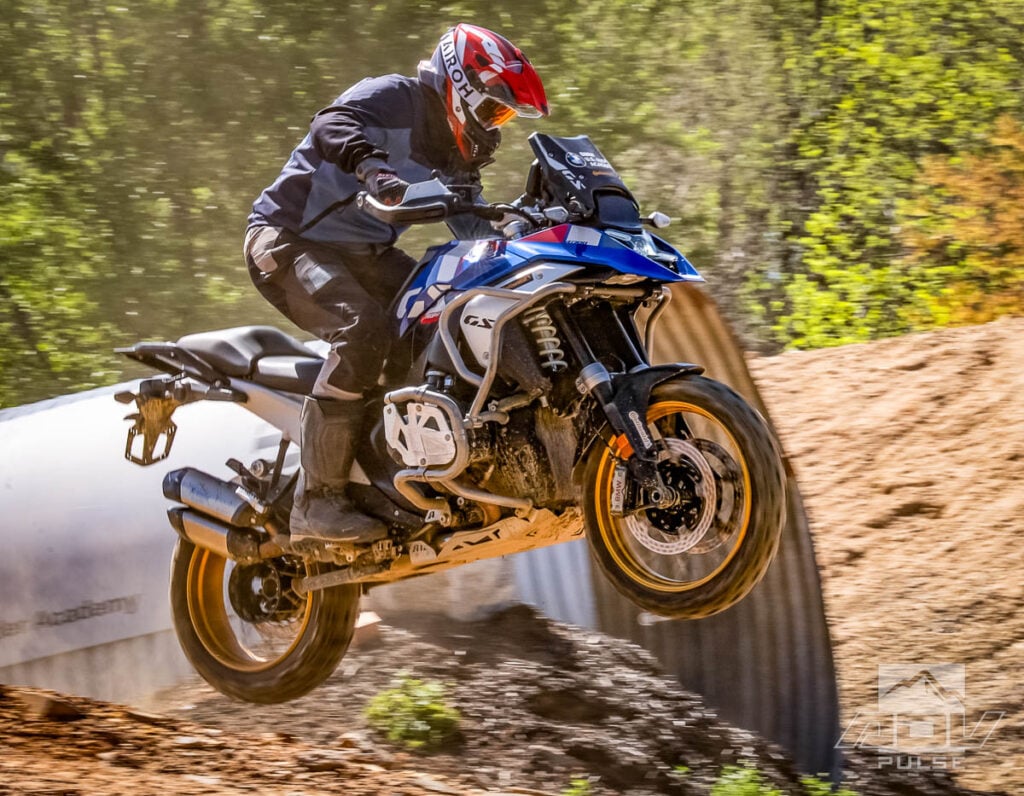
With the TKC80², Continental has pushed the tire’s off-road capability deeper into that “extreme” zone. The added bite, improved stability, and stronger grip accelerating in loose terrain were definitely noticeable.That said, many long‑time TKC80 fans were hoping the next generation would bring a meaningful bump in longevity. With rear tires on big‑bore ADV bikes hovering around the $250 mark — plus the cost or hassle of mounting — even a modest increase in mileage would have gone a long way. The previous‑gen TKC80 already offered solid all‑around performance, so finding a way to extend its lifespan by even 500 miles would have made a noticeable difference for riders trying to squeeze one more trip out of a rear before heading back to the shop or breaking out the tire irons in the garage.
It’s worth noting that Continental is keeping the original TKC80 in the lineup for at least the next five years, with a significant price reduction. Riders can save roughly $50 on a rear and about $40 on a front by sticking with the first‑gen tire.
Who’s It For
The TKC80² is best suited for riders who want balanced performance on both pavement and dirt, but who place a higher priority on off-road traction than squeezing maximum mileage out of a rear tire. It’s a good option for adventure riders who spend most of their time exploring backcountry roads, forest routes, and mixed terrain that can sometimes get spicey, where the added off‑road bite and improved stability can make a noticeable difference. The tire is perfectly comfortable on long highway stretches, but its shorter lifespan means it’s not the most economical option for riders who rack up a lot of commuting or transit miles on the highway just to reach the dirt.
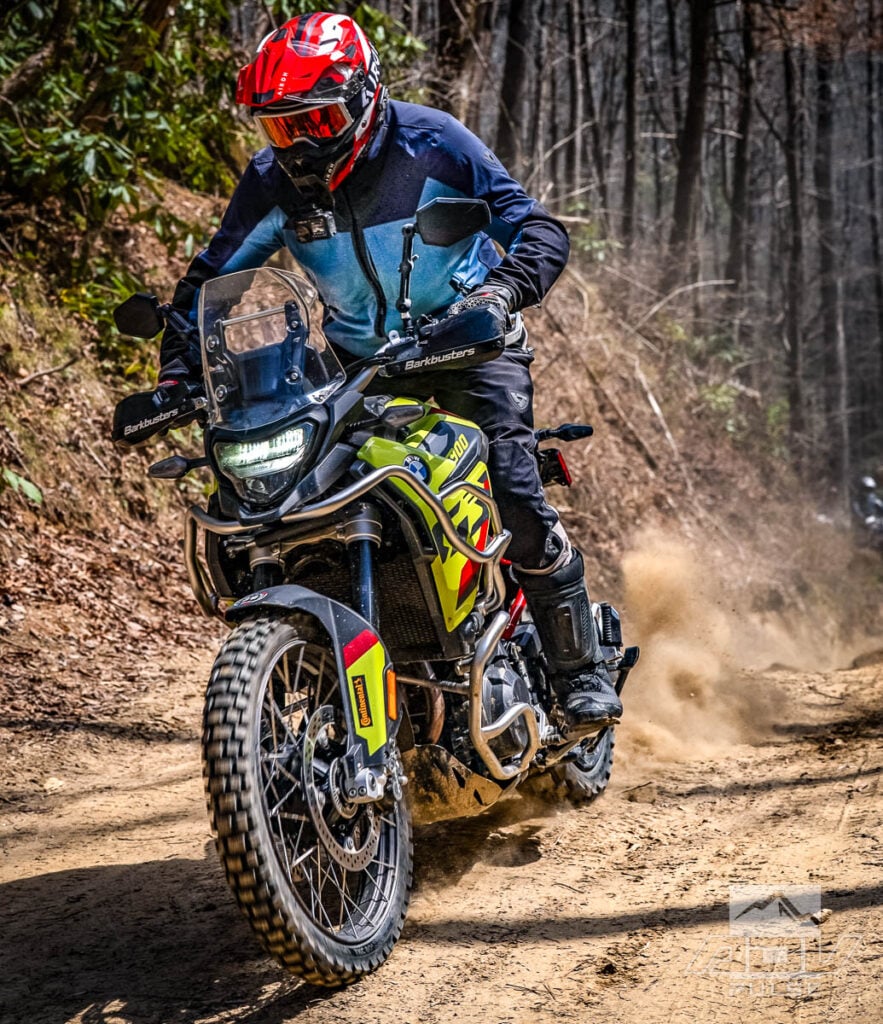
What We Liked
- Noticeable improvement across the board off-road.
- Still a great handling tire on the street.
- More grip on wet surfaces whether it’s asphalt, rocks or gravel.
What Could Be Improved
- Make it last longer.
TKC80² Specs
On-Road/Off-Road Rating: 50/50
Construction: Bias-ply construction
Price: $137-$267 depending on the size.
Sizes Front: 100/90-19, 110/80-19, 120/70-19, 90/90-21
Sizes Rear: 130/80-17, 150/70-17, 170/60-17, 120/90-18, 140/80-18, 150/70-18
Availability: Begins in May with some sizes arriving later in August.
Shopping Options
Photos by Lori Cannon and Neale Bayly

Author: Rob Dabney
Rob Dabney started a lifelong obsession with motorcycles at the age of 15 when he purchased his first bike – a 1982 Honda MB5. Through his 20’s and 30’s he competed in off-road desert races, including the Baja 250, 500 and 1000. Eventually, his proclivity for exploration led him to dual sport and adventure riding. Rob’s never-ending quest to discover what’s around the next bend has taken him on Adventures in Latin America, Africa, Europe, Asia, and throughout the American West. As a moto journalist, he enjoys inspiring others to seek adventure across horizons both near and far.Related Stories
Related Stories
 The Iconic Continental TKC80 Dual Sport Tire Gets Updated For 2025 Earlier this month, Continental showcased their extensive range of tires for the two-wheel...
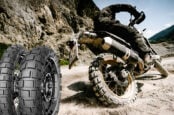 Continental Unveils An All-New TKC80 Dual Sport Tire For 2026 For decades now, the Continental TKC80 has often been used as the measuring...
 Continental Issues Recall On TKC80 And Other Motorcycle Tires Continental Tire America is recalling their popular TKC80 dual sport tire, along with...
Popular Stories

Bultaco Staging Comeback With Budget-Friendly 300cc ADV Bike
Bultaco is officially back in the motorcycle busi...
5 Small‑Bore Adventure Bikes That Aren’t Buzzy On The Highway
Small‑bore adventure bikes in the 300–500cc range...

CFMoto’s 450MT Sweeps All Adventure Classes at Red Bull Romaniacs
CFMoto recorded a standout performance at Red Bul...
KTM Announces Specs And Availability Of New 690 Rally Model
KTM is expanding its LC4 lineup with the introduc...


Notify me of new posts via email
Great article and glad to hear about improvements that come with the new TKC80^2. There have been previous comparisons between the original TKC80 and Anakee Wild. Any thoughts on comparison between the new TKC80^2 and Anakee Wild? Sounds like longevity may still be the main distinguishing factor perhaps?
In my opinion, the Anakee Wild had longer life and was similar but not quite as grippy off-road as the old TKC80. So now that gap in off-road performance will be even greater, while the difference in longevity should remain roughly the same. We’ll have to get in a long-term test to see how many miles we can realistically get out of the new ones. Also, I remember those Anakee Wild tires were very loud. These new TKC80’s were whisper quiet on the road.