
ADV Destinations: Rattlesnake Canyon Desert‑to‑Mountain Corridor
A fast, flowy 4000-ft descent from the ski town of Big Bear to the desert floor.
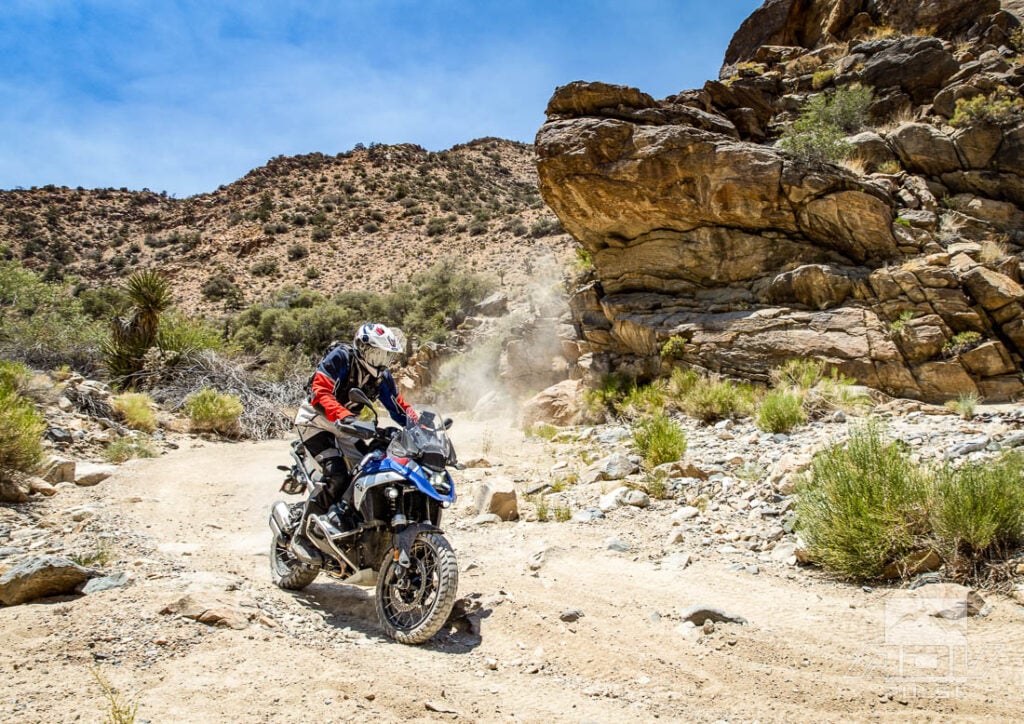
Rattlesnake Canyon is one of those rare backcountry trails that feels like a gateway between two worlds. On one end lies the cool, pine‑scented mountain town of Big Bear Lake; on the other, the vast open desert of Johnson Valley where they run the King of the Motos races. Connecting the two is a rugged corridor carved into the Bighorn Mountains, a place where the terrain shifts dramatically as the elevation drops thousands of feet. For dual sport and adventure riders, it’s one of the most direct and rewarding routes to travel from mountain forests to desert floor, and the ride delivers a blend of scenery, challenge, and pure fun that few trails in Southern California can match.
Rattlesnake Canyon has appeared in several ADV Pulse ride stories over the years, and it’s earned its spot as one of our favorite local trails. The canyon was part of the old Big Bear Run’s storied course, and generations of riders have used it as a proving ground. Its mix of sand, rock, and tight canyon turns with a natural flow makes it just as fun to ride today as it was a century ago when those early races began.
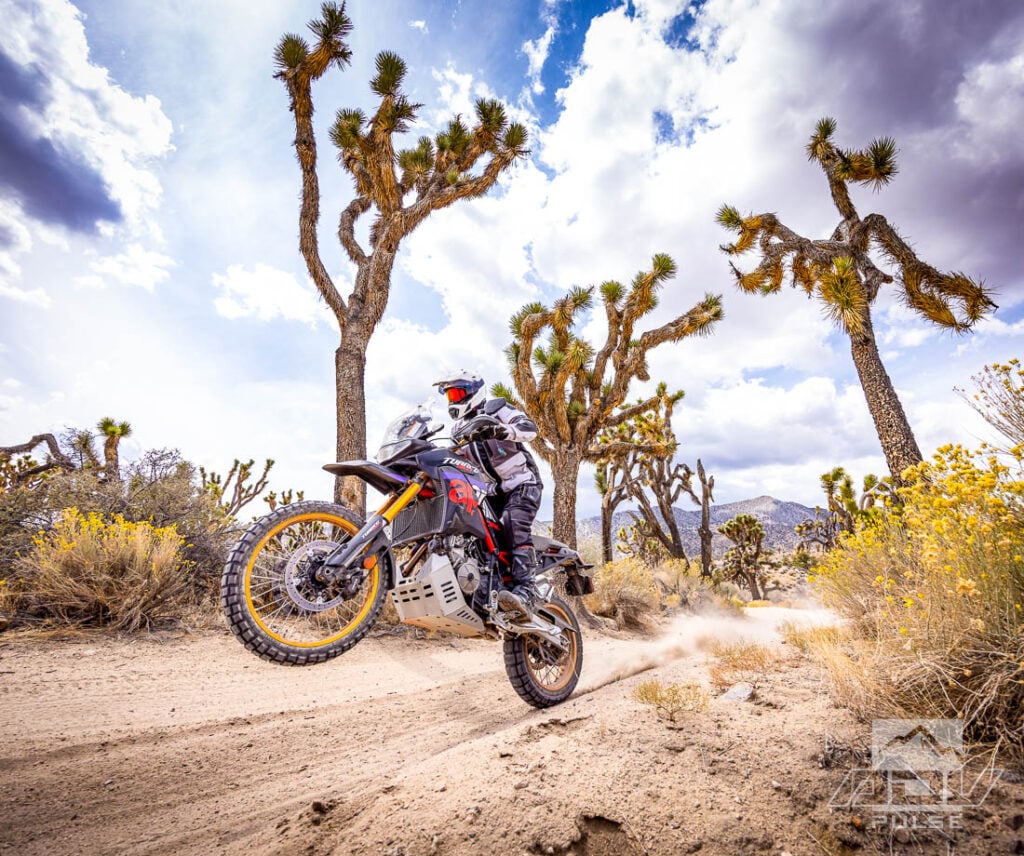
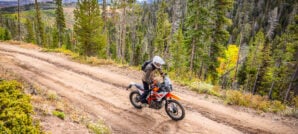
Starting from the Big Bear side, the journey begins at roughly 6,800 feet in the pine forests descending down Burns Canyon Road for about twelve miles. The transition is gradual at first, but the forest soon gives way to high‑desert terrain dotted with pinyon, juniper, and eventually clusters of Joshua trees. By the time you reach the turnoff for Rattlesnake Canyon at around 5,700 feet, the landscape has shifted entirely. The air feels drier, the horizon opens up, and the sense of dropping into a desert ecosystem becomes unmistakable.
The upper section of Rattlesnake Canyon begins as a wide sandy wash, an undulating doubletrack that mixes sand with rocky outcrops and just enough twists to keep you on your toes. It’s the kind of terrain that feels playful on a light dual sport and an exciting challenge on a big‑bore ADV. Before the canyon tightens, riders will find a few dilapidated cabins and an old windmill to explore—physical remnants of mid‑20th‑century homesteading activity that appear frozen in time. They offer a glimpse into the area’s past and add a sense of mystery to the ride.
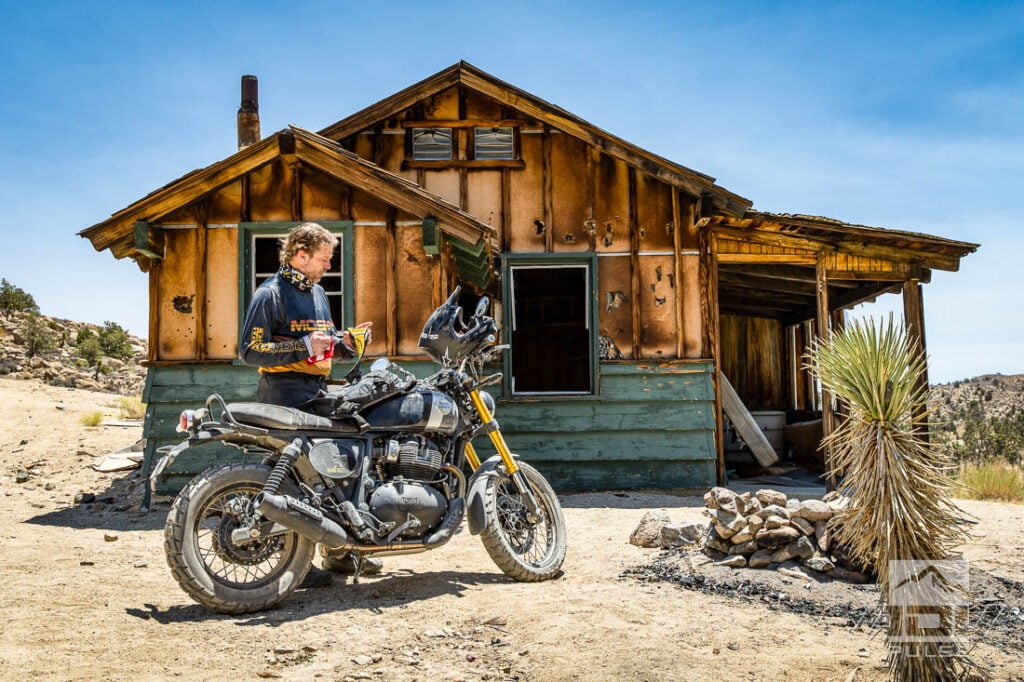
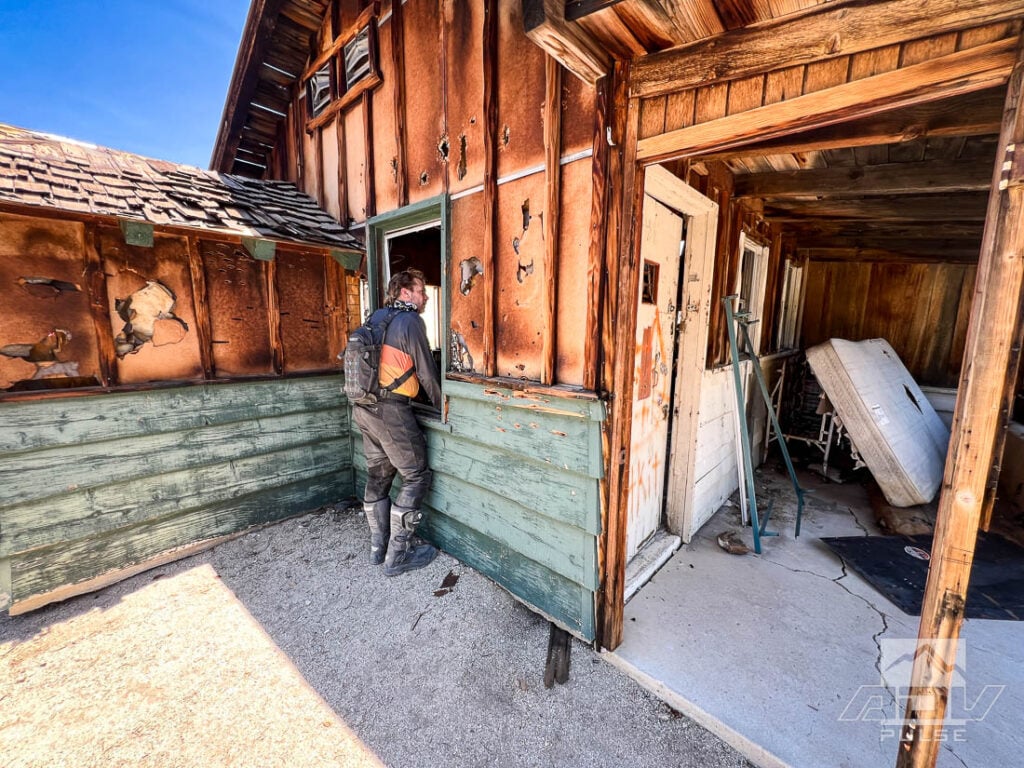
As the trail continues its descent, the canyon walls begin to rise and the wash narrows into a more technical corridor. Here the sand can deepen, especially where it piles against the rock walls in the turns, while other stretches become rocky and uneven. The constant variation keeps the ride engaging, and after storms or during wetter months, water may flow directly down the trail or cross it in shallow streams. Offshoots branch into steeper, more extreme enduro‑style tracks for those seeking an extra challenge, though the main route can get tricky in sections as well.
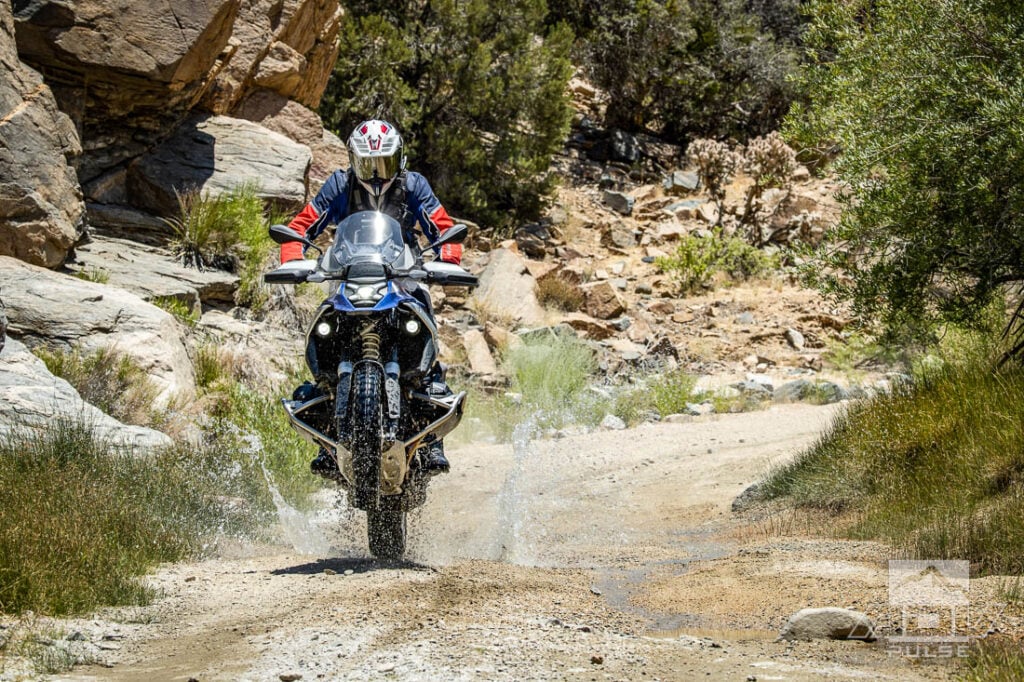
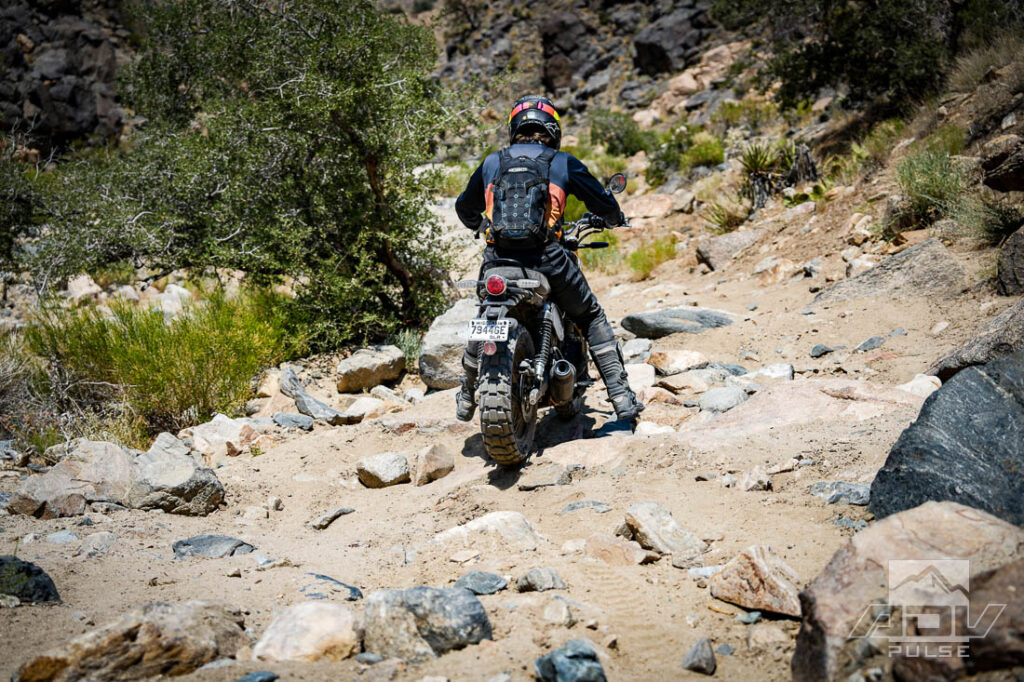
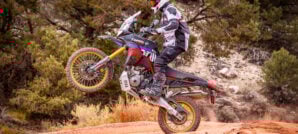
The middle of Rattlesnake Canyon is where it earns its reputation. The combination of scenic canyon walls, deep—but not too deep—sand, rocky shelves, and tight bends creates a rhythm that feels both challenging and incredibly fun. It’s a place where riders can practice throttle control, balance, and momentum in deeper sand, without being too punishing the entire time. The canyon’s natural curves and elevation drop give the ride a sense of flow, and the scenery becomes more dramatic as the walls close in around you.
Eventually the canyon begins to open, and the terrain shifts once again. The sand wash widens, the rock walls recede, and the views stretch out toward Lucerne Valley. The trail becomes faster and firmer, allowing riders to pick up speed as they approach the desert floor. Vegetation thins until only scattered scrub brush remains as you descend into a vast open basin. By the time you reach Old Woman Springs Road at roughly 3,000 feet, you’ve traveled about eighteen miles from the top of the canyon, dropped nearly 4,000 feet and crossed multiple ecosystems in a single ride.
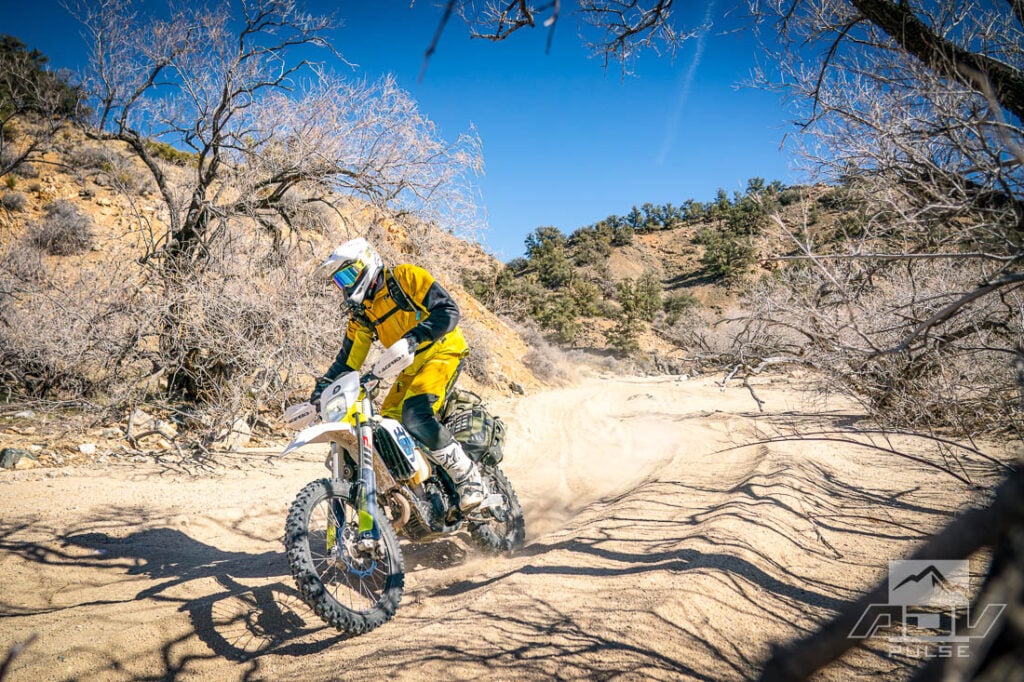
While there are certainly more scenic canyons in the Southwest, few offer the pure riding enjoyment of Rattlesnake Canyon. Its blend of terrain, its historical touches, and its role as a natural connector between two of Southern California’s best ADV playgrounds make it a must‑ride for anyone exploring the region. Whether you’re linking it into a larger multi‑day route or simply looking for a memorable day ride, the canyon delivers a satisfying mix of challenge, flow, and backcountry atmosphere.
Timing your visit can make a big difference. Winter and spring are ideal, when cooler temperatures and a bit of moisture help firm up the sand and improve traction. Summer heat in the lower canyon can be extreme, and flash floods can reshape the wash dramatically. Snow and ice near the top can also appear in winter, so checking conditions before you go is always wise.
Getting There and GPS Tracks
Rattlesnake Canyon can be ridden in either direction, but many riders prefer starting from the Big Bear side by taking Burns Canyon Road (Forest Route 2N02) east from Baldwin Lake. After about twelve miles, the turnoff for Rattlesnake Canyon appears as the terrain shifts into high desert. From there, the trail descends roughly eighteen miles to Old Woman Springs Road near Lucerne Valley. GPS tracks for the route can be found in both our LA2AZ route and our Big Bear Run features along with additional connections and points of interest in the area.
Photos by Kevin Wing, Simon Cudby and Ely Woody

Author: Rob Dabney
Rob Dabney started a lifelong obsession with motorcycles at the age of 15 when he purchased his first bike – a 1982 Honda MB5. Through his 20’s and 30’s he competed in off-road desert races, including the Baja 250, 500 and 1000. Eventually, his proclivity for exploration led him to dual sport and adventure riding. Rob’s never-ending quest to discover what’s around the next bend has taken him on Adventures in Latin America, Africa, Europe, Asia, and throughout the American West. As a moto journalist, he enjoys inspiring others to seek adventure across horizons both near and far.Related Stories
Related Stories
 ADV Destinations: Trona Pinnacles, A Sci-Fi Landscape In The Mojave Rising out of the Searles Dry Lake basin like a field of ancient...
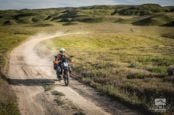 Carrizo Plain: A Quiet, Wide‑Open Escape for Adventure Riders Carrizo Plain National Monument sits between the Temblor Range and the Caliente Mountains,...
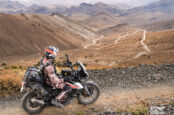 Cerro Gordo: The Ghost Town Perched 9,000 Feet Above Death Valley Perched on a windswept ridge in the Inyo Mountains, Cerro Gordo is a...
Popular Stories

Bultaco Staging Comeback With Budget-Friendly 300cc ADV Bike
Bultaco is officially back in the motorcycle busi...
5 Small‑Bore Adventure Bikes That Aren’t Buzzy On The Highway
Small‑bore adventure bikes in the 300–500cc range...
CFMoto’s 450MT Sweeps All Adventure Classes at Red Bull Romaniacs
CFMoto recorded a standout performance at Red Bul...
KTM Announces Specs And Availability Of New 690 Rally Model
KTM is expanding its LC4 lineup with the introduc...

Notify me of new posts via email