
Royal Enfield Himalayan 750: The Bigger Himi Riders Asked For?
We test the Indian brand’s more-powerful and sophisticated midsize ADV.
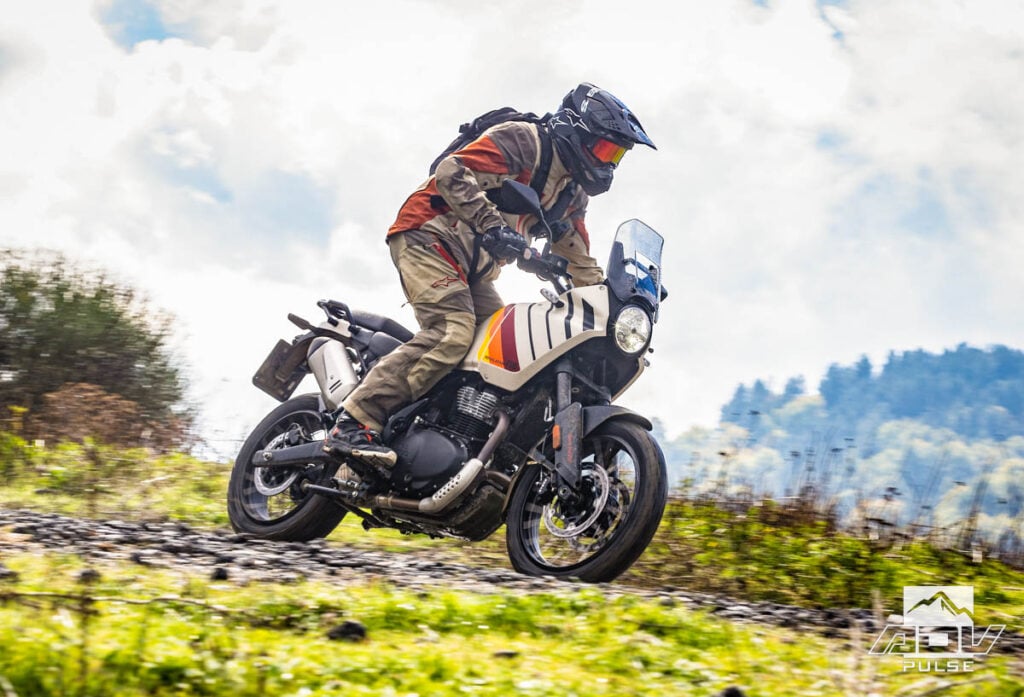
Ten years ago Royal Enfield introduced the original Himalayan 411, a motorcycle that helped make adventure riding accessible to a new generation of riders. While its appeal wasn’t in outright performance, the little Himalayan earned a loyal following thanks to its versatility, simplicity, and surprising off-road capability – all for the low initial MSRP of $4,500.
As the platform evolved into the more powerful and capable Himalayan 450, many riders began asking the same question: what would a larger, more refined twin-cylinder Himalayan look like? One that could better handle extended highway travel and longer-distance adventures. The answer has arrived in the form of the all-new Himalayan 750.
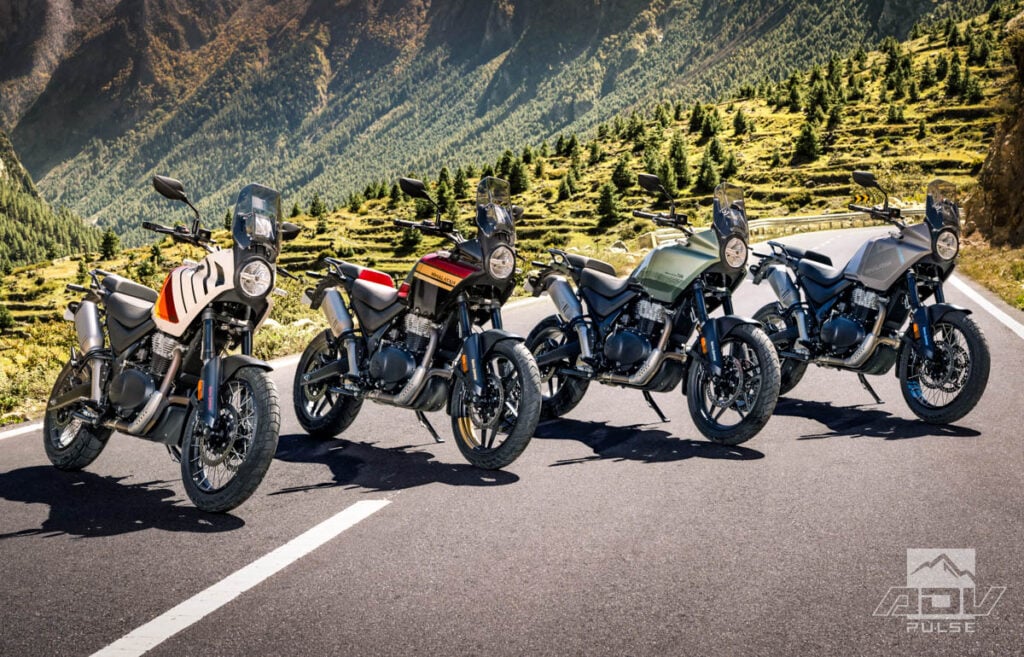
Royal Enfield’s newest adventure bike isn’t just a larger-displacement version of the Himalayan 450. It introduces an entirely new 743cc parallel-twin platform, the most sophisticated electronics package the company has ever offered, fully adjustable suspension, cruise control, and a host of other features never before seen on a Royal Enfield.
The real question wasn’t whether Royal Enfield could just add more power and build a more comfortable touring machine, but could they do it while keeping the same formula that made the original Himalayan a success. To find out, we traveled to Sicily, Italy, for the international launch where we got some seat time on the new Himalayan 750, tackling mountain roads, highways, and rocky backcountry routes in cold, rain-soaked conditions along the slopes of 11,165-foot Mount Etna.
What You Get
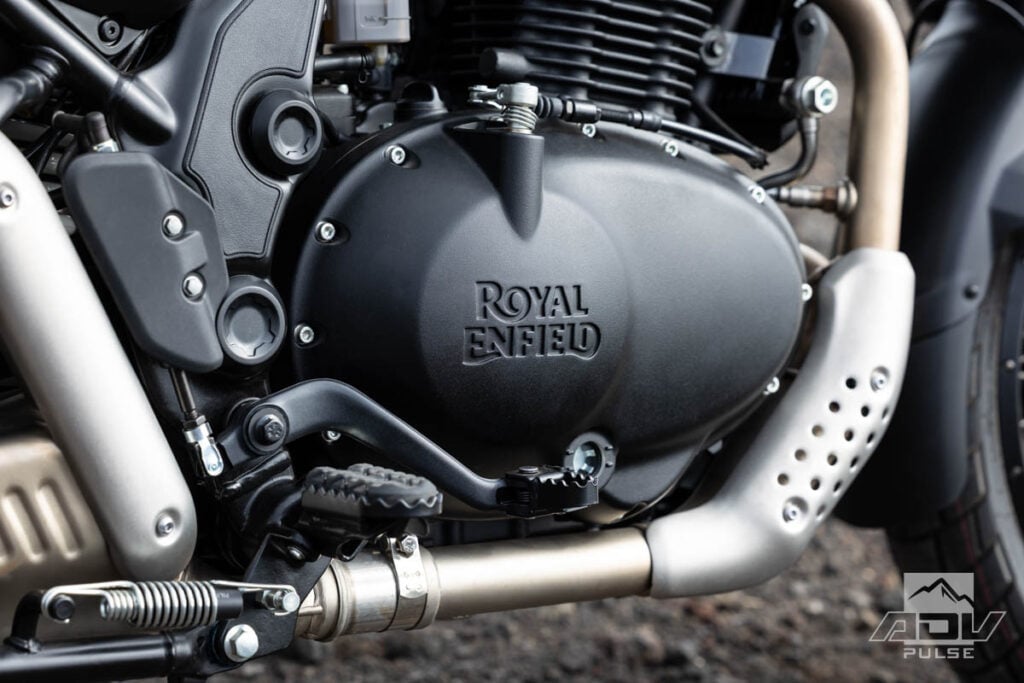
Powering the Himalayan 750 is a new 743cc air/oil-cooled parallel-twin producing 54 horsepower and 46.5 lb-ft of torque. While the numbers may seem modest compared to some middleweight competitors, the engine is tuned to prioritize usable low to midrange power. Royal Enfield claims 90 percent of peak torque is available from just 3,500 rpm, emphasizing strong midrange pull over top-end output.
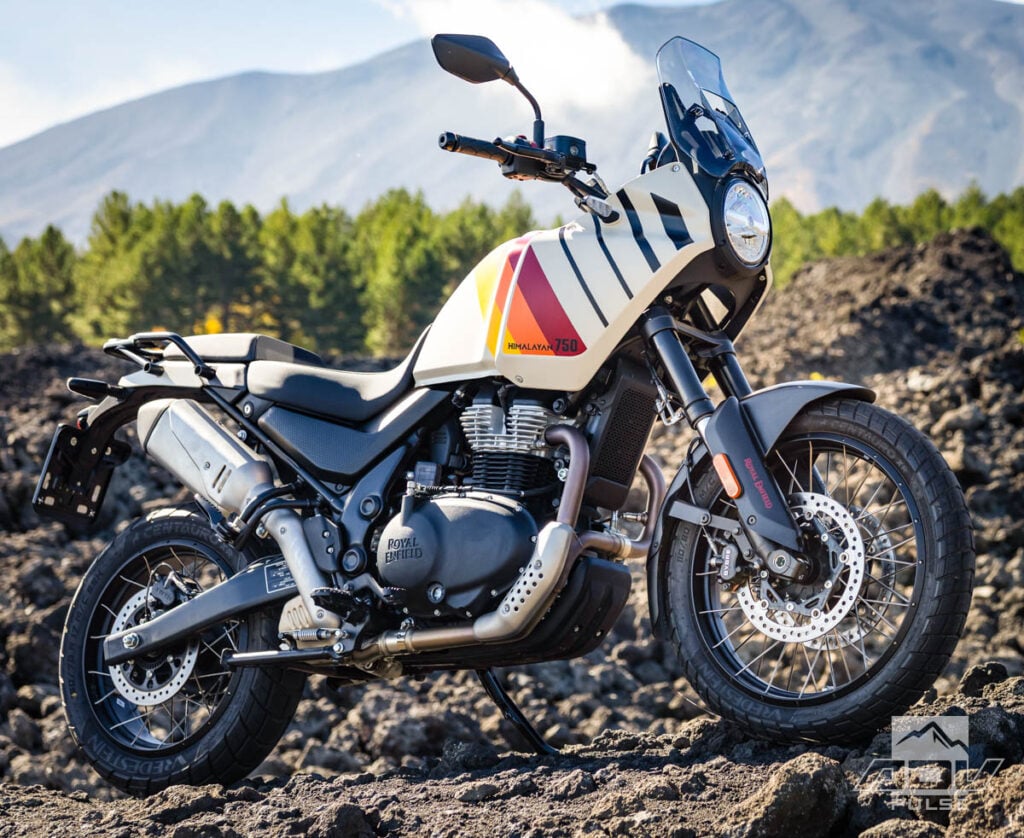
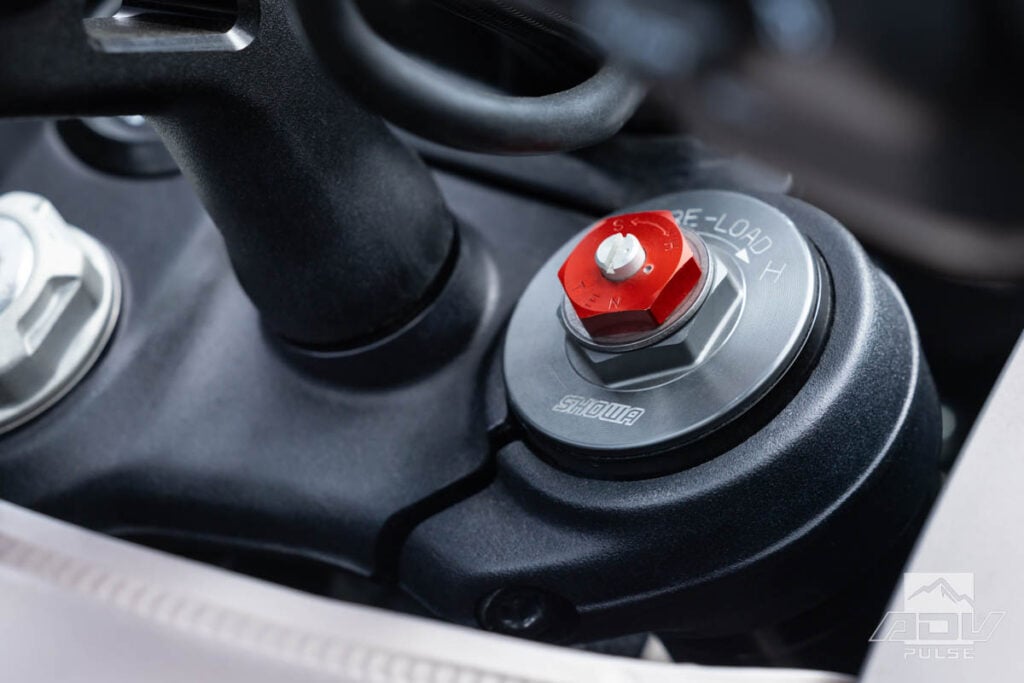
The engine serves as a stressed member in a new box-section spine frame, allowing engineers to position it lower in the chassis for improved weight distribution. The bike rides on a 19-inch front and 17-inch rear wheel combination, available in either tubeless spoked or cast versions depending on trim level. Suspension duties are handled by fully adjustable 43 mm Showa USD forks with 7.5 inches of travel, paired with a Showa rear shock featuring rebound damping and remote preload adjustment with 6.9 inches of travel.
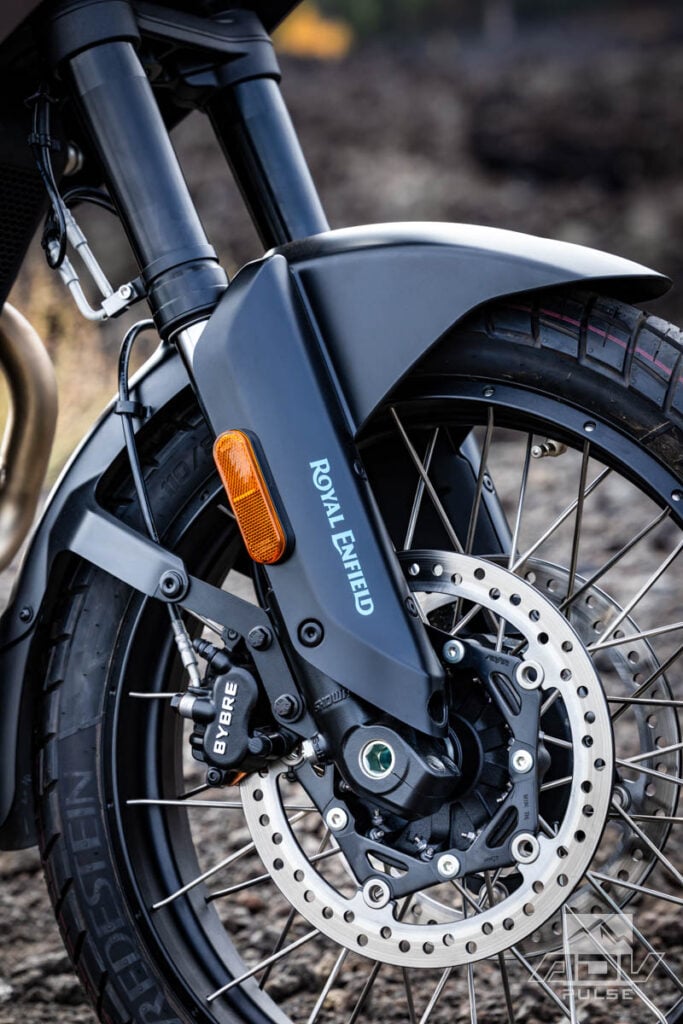
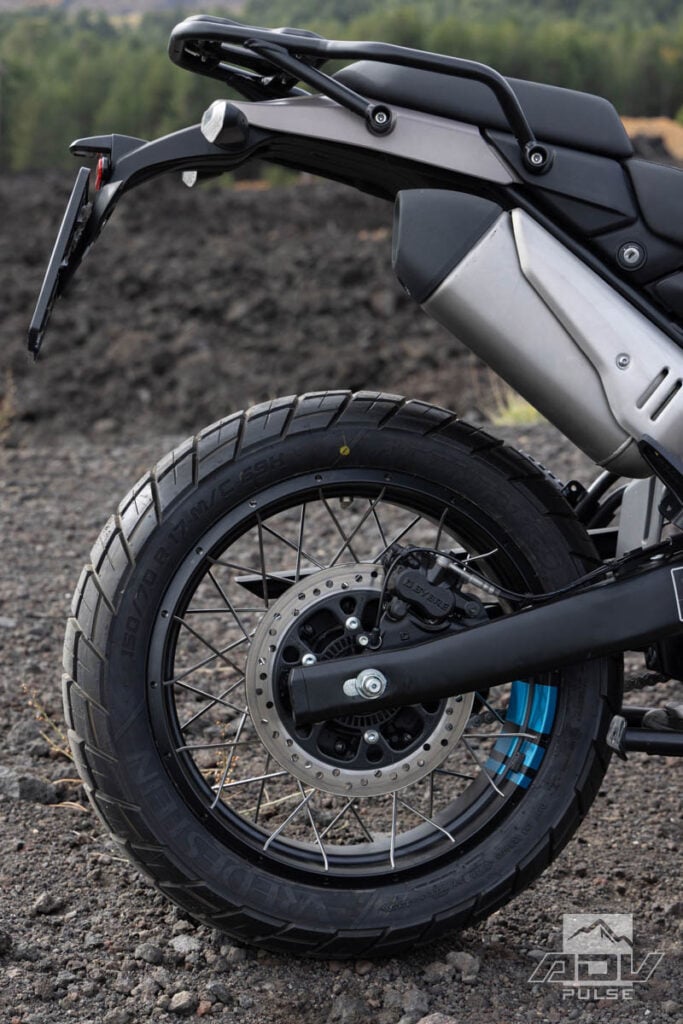
Braking receives a major upgrade as well compared to its 450 sibling. The Himalayan 750 becomes the first Royal Enfield production motorcycle to feature dual front disc brakes, utilizing twin ByBre calipers.
The electronics package has also seen advancements. A six-axis IMU enables lean-sensitive traction control and cornering ABS, while riders can choose from Road, Road Sport, Rain, Trail, and Custom ride modes. The Custom mode allows adjustment of throttle response, ABS intervention, and traction-control settings to suit rider preference.
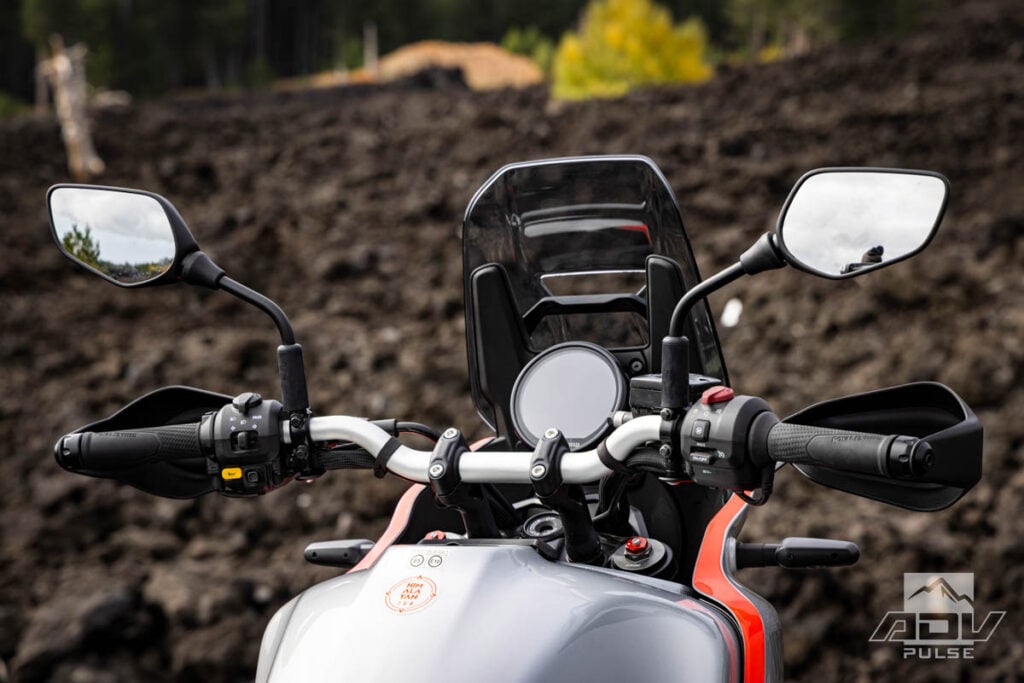
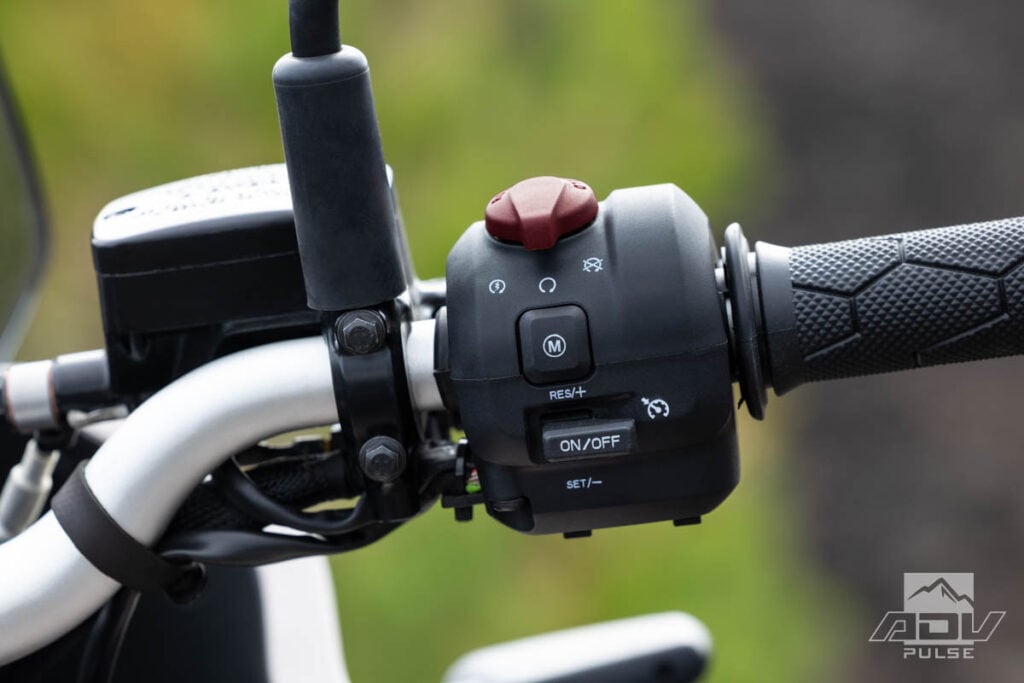
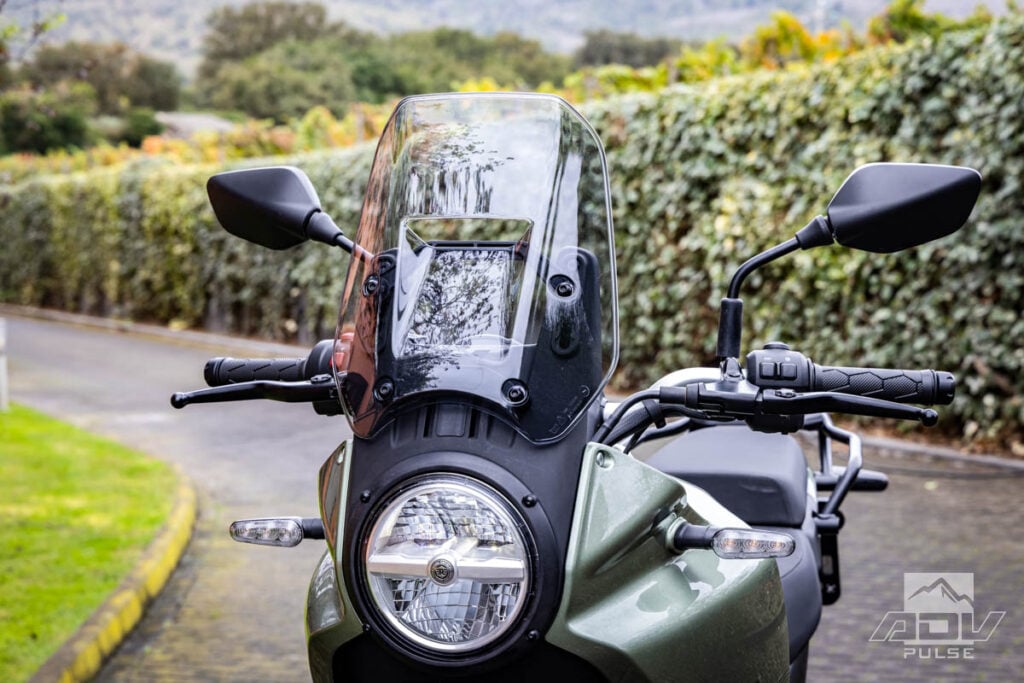
Touring and convenience features are plentiful as well. Standard equipment includes cruise control, tire pressure monitoring, a key-based immobilizer, self-canceling turn signals, and emergency brake-light functionality. Riders also get a 4-inch TFT display with smartphone connectivity, navigation, and access to Royal Enfield’s connected-bike features. An adjustable-height windscreen rounds out the package, allowing riders to tailor wind protection for varying conditions and longer days in the saddle. Lighting comes from a new 7-inch LED headlight designed to provide a wider beam pattern for improved visibility.
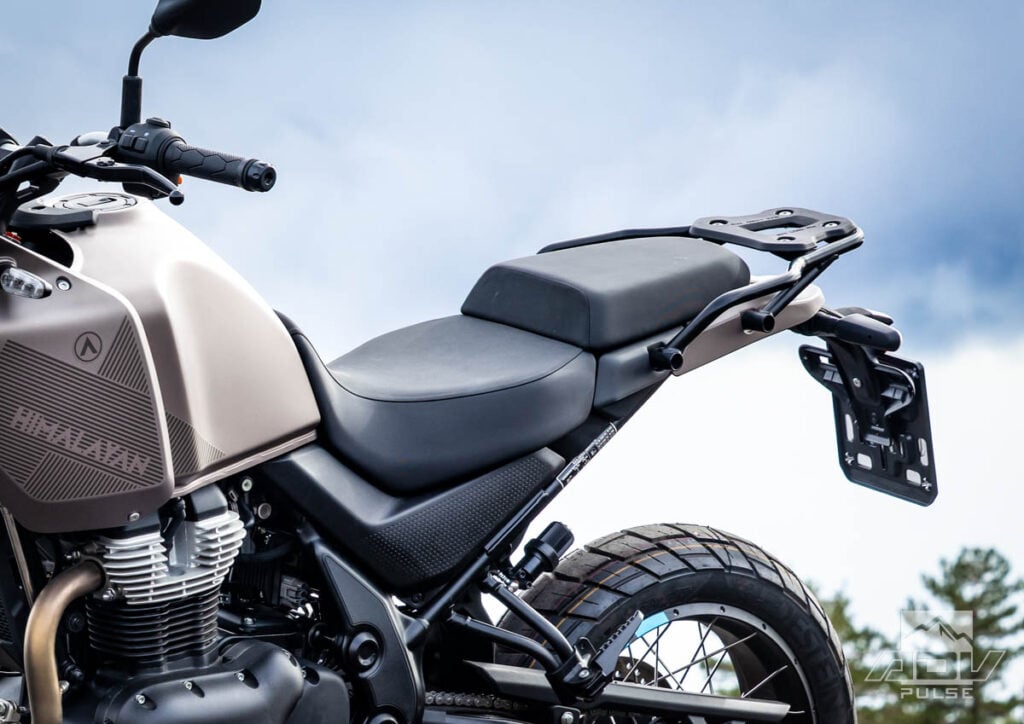
Despite all the added features and tech, the Himalayan remains approachable with a low 32.1-inch seat height, narrow ergonomics, and a relaxed riding position.
On The Street
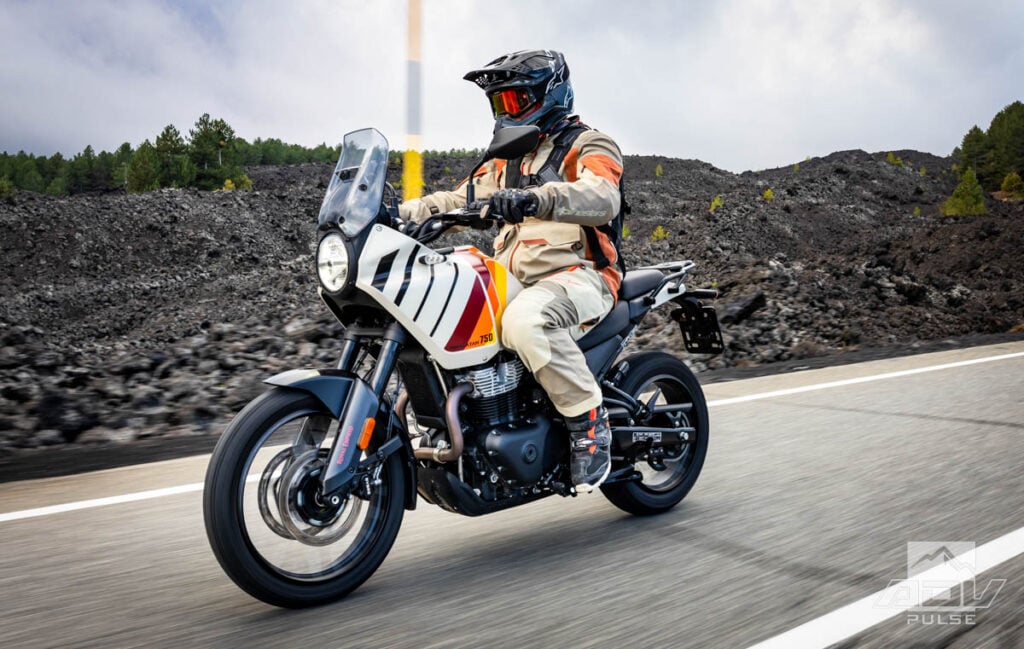
The first thing you notice when sitting on the bike is how approachable the Himalayan 750 is. Despite its middleweight displacement, the motorcycle feels compact between your legs thanks to its slim tank and narrow waist. The low seat height allows even shorter riders than average to get solid footing at stops. As a taller rider at 6-foot-2, I could appreciate the roomy cockpit and comfortable reach to the handlebars. I never felt cramped, although the low seat does create some extra knee bend that could become noticeable on longer days on the highway. The tall seat option would definitely be on my list of upgrades.
Highway performance is one of the areas where the Himalayan 750 clearly separates itself from its 450cc sibling. While the single-cylinder Himalayan 450 performs better than you’d expect, the twin-cylinder 750 Himalayan engine is much smoother, and has the ability to maintain highway speeds without feeling strained. Cruising between 75 and 80 mph feels relaxed, and unlike its smaller 450 sibling, there is enough reserve power available to pass slow moving vehicles without advanced planning. Then there’s the advantage of cruise control, which was easy to use and performed glitch free.
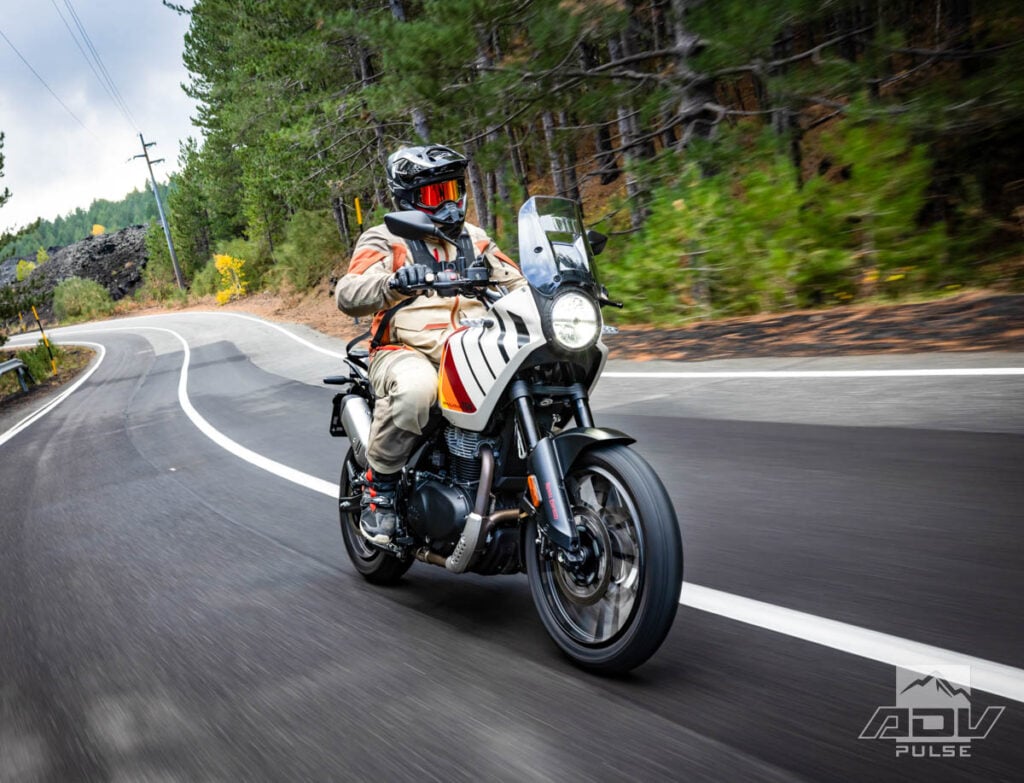
The bike’s windscreen is a well thought out design. The adjustment mechanism works great with one hand and provided excellent wind protection during our test. Combined with cruise control, a comfortable seat, and a vibration-free engine, the new model feels well-equipped for traveling long distances on the highway.
The engine itself sounds good and has distinctive character. Rather than delivering aggressive acceleration, it focuses on smooth, predictable power. Initial throttle response is fairly soft, making the bike unintimidating for newer riders stepping into the middleweight category. Once into the midrange, however, the engine pulls strong and offers enough performance to keep things entertaining on both highway and back roads.
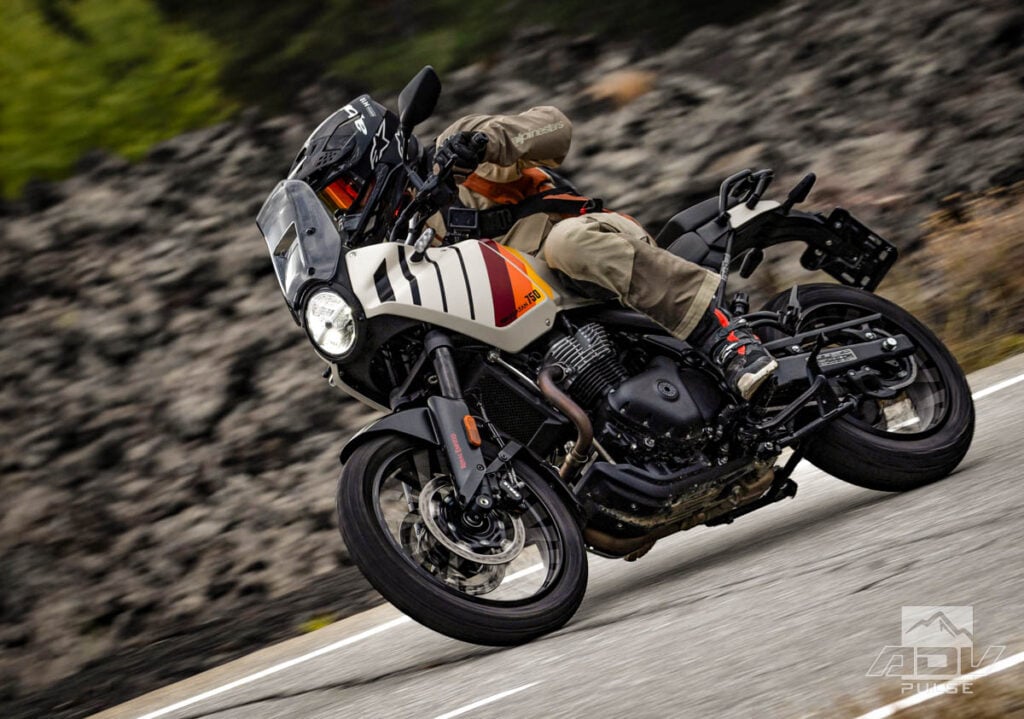
If there is one criticism, it is that the rev limiter arrives rather abruptly. The engine feels as though it still has useful power available near the top of the rev range, but the limiter intervenes before the power naturally tapers off. An extra 500 to 1,000 rpm on the rev limiter would allow the rider to accelerate through the gears, without having to be as precise with shift points.
When the roads become twisty, the 750 feels right at home. Its 19-inch front wheel contributes to a more agile and flickable feel than a traditional 21-inch off-road setup. Handling is stable, predictable and confidence-inspiring, which was especially appreciated on the wet roads with scattered leaves and dirt-covered corners.
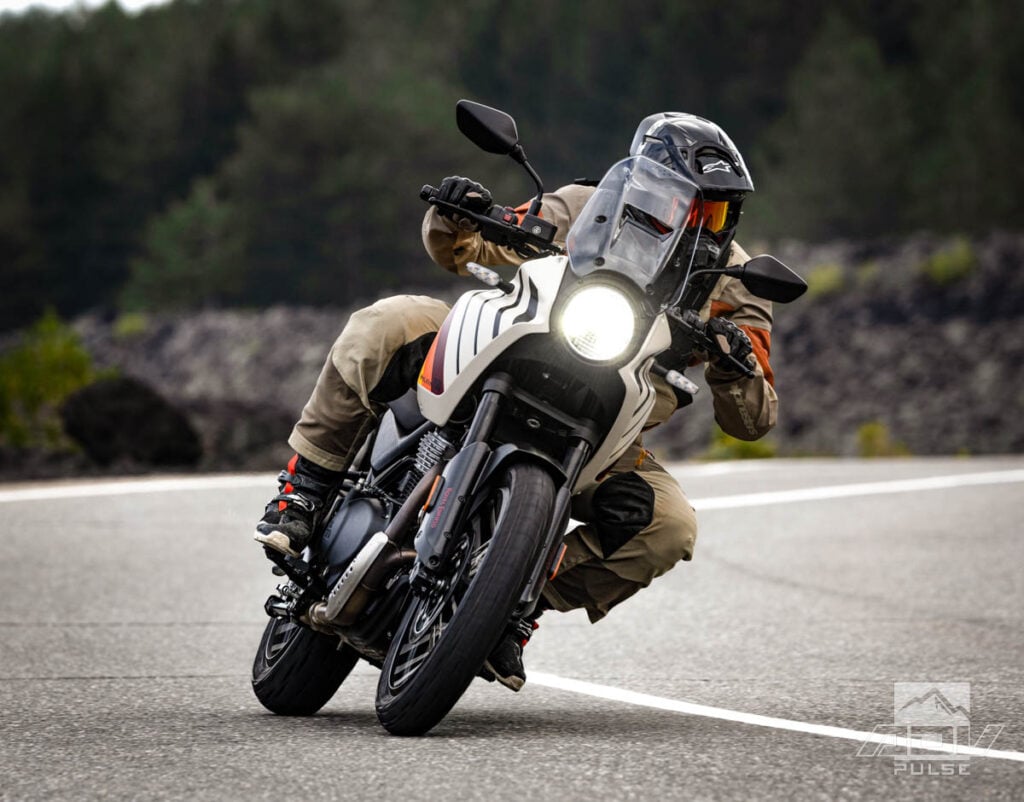
With the rider mode set to Rain, the bike never felt nervous or unsettled. As my confidence grew, it became clear that the chassis offers a high level of grip and stability, despite the less than ideal conditions. Eventually the roads began to dry, allowing us to pick up the pace and explore the bike’s ‘Road Sport’ mode. While it’s certainly capable of being ridden aggressively, it doesn’t encourage it.
Instead, the Himalayan feels happiest being ridden at about 85% of the limit. Beyond that, it lacks the feedback and precision of more performance-oriented machines. Instead, this bike rewards smooth inputs and a relaxed riding style. It encourages riders to enjoy the sites around them rather than chase an adrenaline rush.
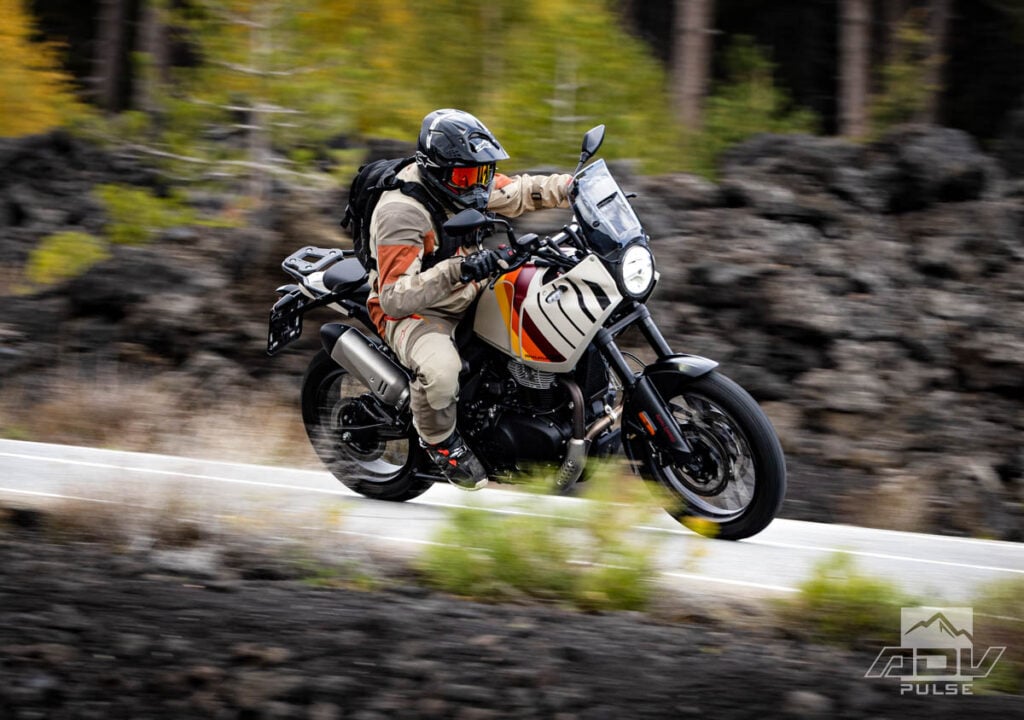
Braking performance was a highlight though. The dual front discs provide strong stopping power with excellent feel at the lever, while the cornering ABS operates in the background without leaving you feeling like you left some performance on the table.
In The Dirt
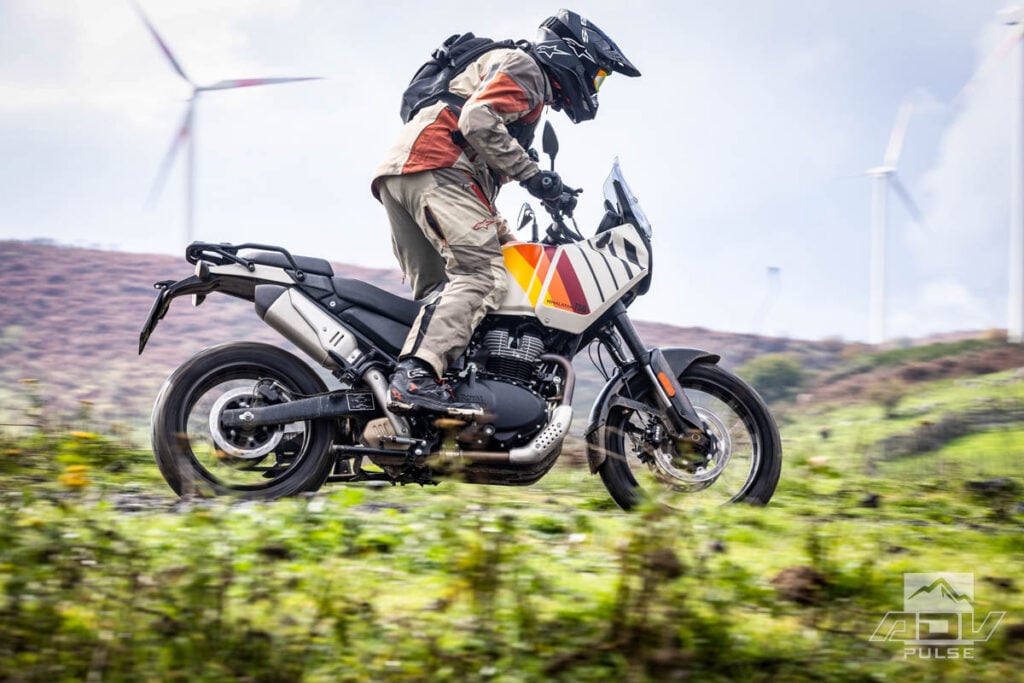
While the Himalayan 750 leans further toward the touring side of the spectrum than the 450 model, Royal Enfield hasn’t forgotten the bike’s adventure roots. Standing ergonomics are excellent, with a natural handlebar position, a tank that remains narrow between the knees, and a roomy riding position that stays comfortable during extended periods on the pegs.
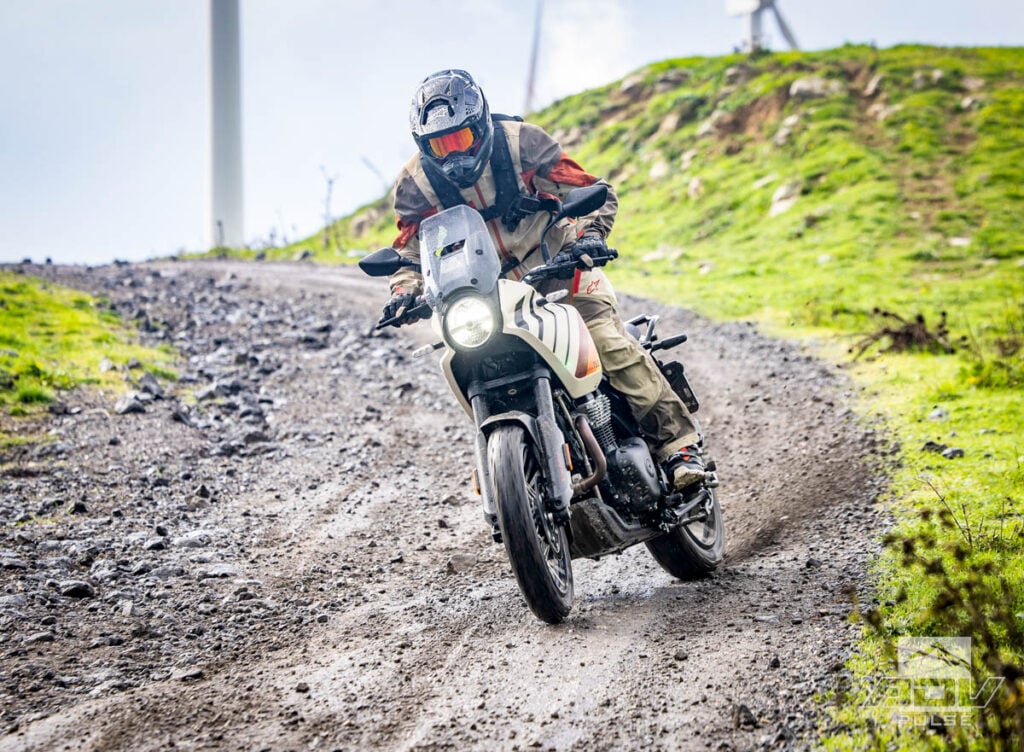
Suspension performance proved to be one of the bike’s biggest surprises. Travel numbers are modest by modern adventure-bike standards, but numbers only tell part of the story. The Showa components are well dialed in, soaking up rocks, washboard sections, potholes, and medium-sized impacts with confidence. The suspension remains plush over smaller chatter while providing enough support to handle larger hits. While we didn’t encounter any truly technical terrain, there were plenty of rocky drop-offs, ditches, and water bars that allowed us to explore the bike’s capabilities. At no point did I experience any harsh bottoming or suspension clunks, and it felt more than capable of handling large holes in the trail or launching a foot or two off the ground without a hard landing.
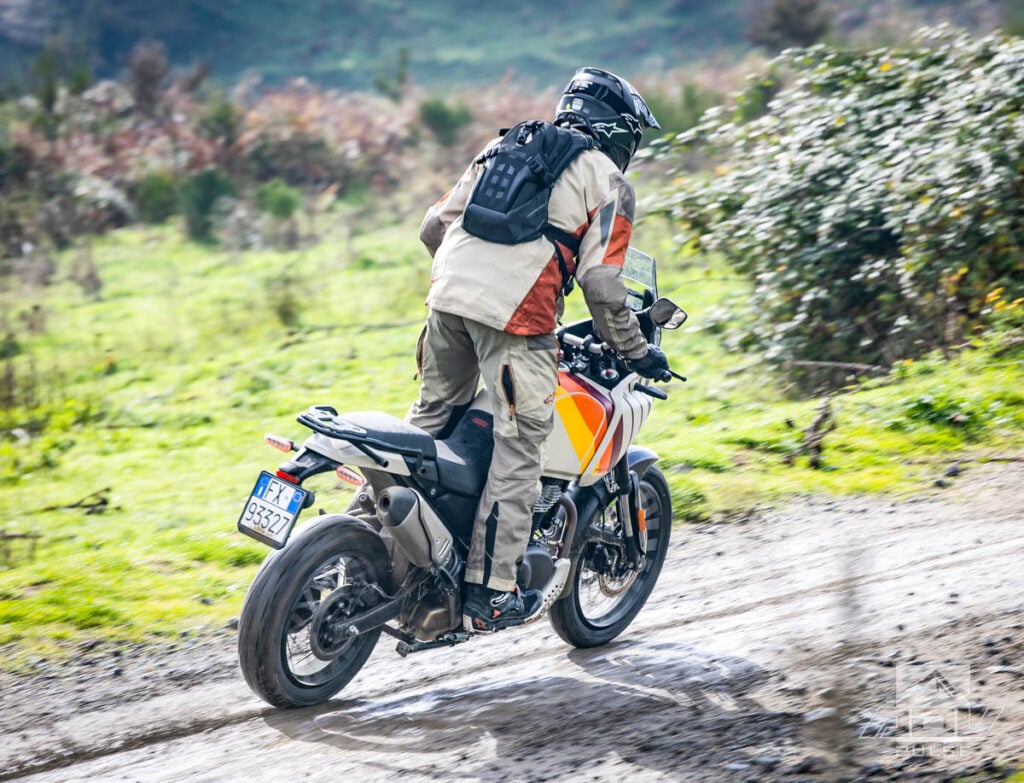
Handling on dirt roads is equally confidence inspiring. Although the Himalayan weighs nearly 500 pounds, it carries its weight low and avoids feeling top-heavy. The relatively compact 59.9-inch wheelbase further contributes to the bike’s maneuverability, making it easy to pick a line through rocky sections or execute a turn-around on a narrow trail.
Trail mode proved to be an excellent baseline setting for typical adventure riding. It disables rear ABS, reduces traction-control intervention, and utilizes a softer throttle map that helps maintain traction in loose conditions. The electronics provide just enough assistance without feeling intrusive or restrictive, while the engine’s smooth throttle response and tractable power delivery make the bike easy to manage on slippery surfaces and approachable for less experienced riders.
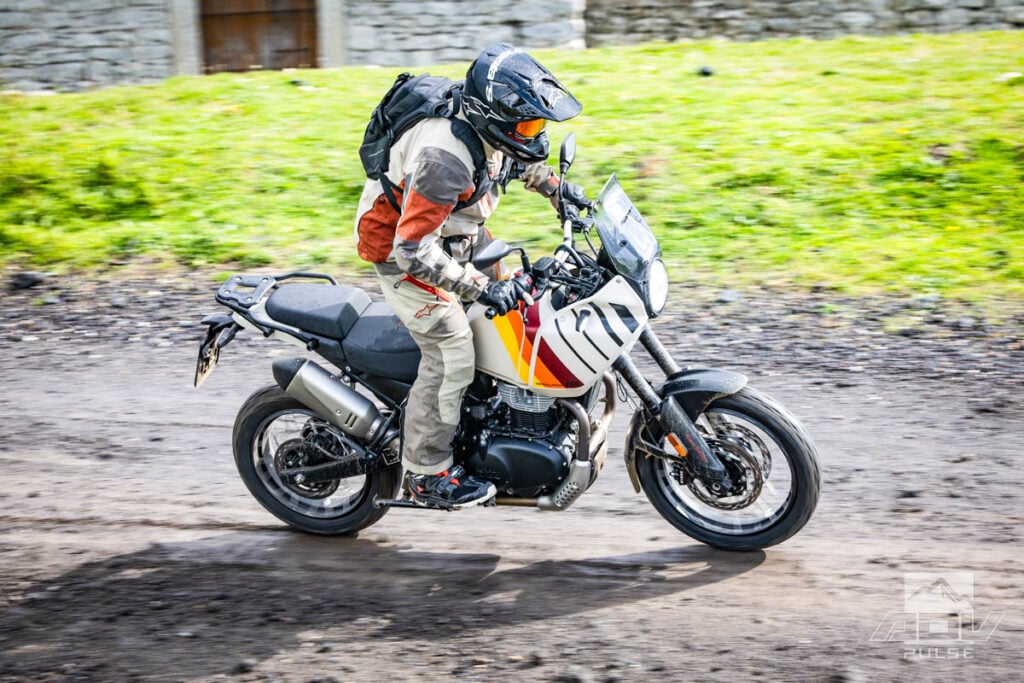
Front ABS remains active at all times, which was appreciated given the slick, muddy conditions we encountered during the ride. On the terrain we tested, the system never felt intrusive, though we didn’t encounter any loose, steep descents that would have allowed for a more thorough evaluation. Overall, the dual-disc setup delivered good feel and control in the dirt, with braking performance that inspired confidence.
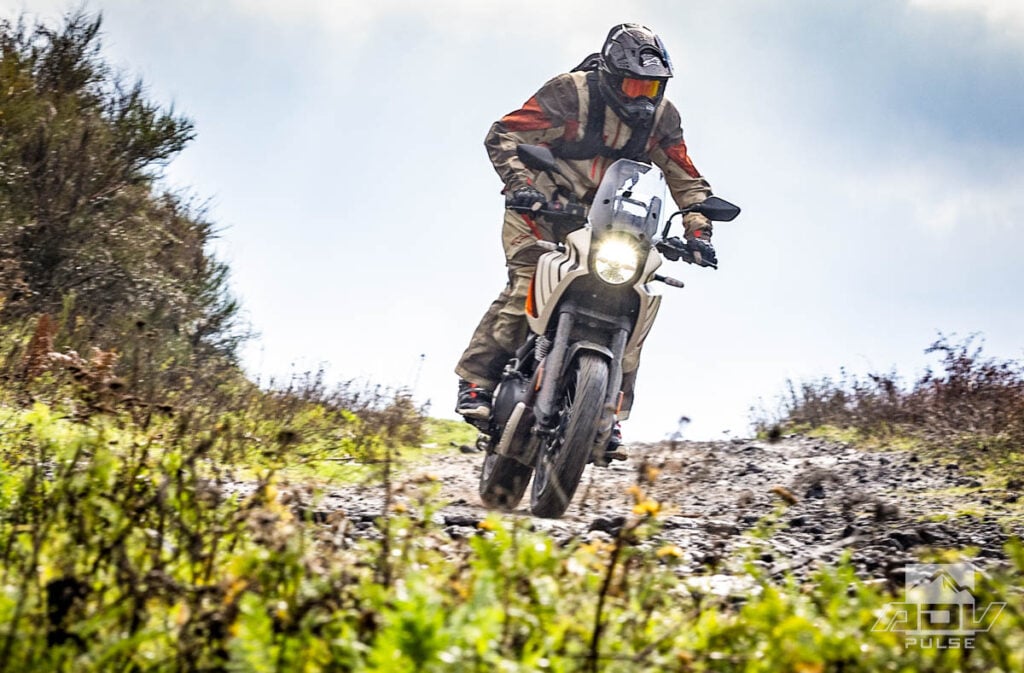
I also spent some time experimenting with the Custom mode, selecting the more aggressive throttle map and disabling traction control entirely. Doing so noticeably changed the bike’s character in the dirt, making it easier to ride aggressively and explore the limits of available traction. There’s enough power on tap to lighten the front wheel over obstacles and steer with the rear tire through corners, but it still requires some effort to provoke big power slides. Riders looking for a serious off-road machine should keep their expectations realistic.
Compared to the Himalayan 450, the 750 isn’t as easy to manage in tighter trails, technical terrain, or more aggressive enduro-style riding. The 450 remains the better choice for riders who prioritize outright off-road agility or regularly venture down trails of unknown difficulty.
The 750 instead targets the type of adventure rider who splits their time between pavement and dirt, tackling BDR-style routes, forest roads, and backcountry travel where comfort and versatility are valued just as highly as outright off-road capability.
My biggest complaint is with the electronics interface, specifically customizing settings and switching ride modes on the fly. It feels like an area that could benefit from further refinement. The button sequences required to access certain menus aren’t always intuitive, and at times the prescribed inputs simply refused to work as expected. I also found it frustrating that some ride modes couldn’t be selected while riding, depending on the current setting.
When an error occurred, the on-screen messages often lacked clear guidance, and occasionally instructed me to cycle the key. That’s not exactly convenient when you’re trying to keep pace with your group. Fortunately, this seems more like a software issue than a hardware limitation, and it’s the type of thing that could potentially be addressed through future updates. On the plus side, once you’ve configured the electronics to your liking, the Himalayan 750 remembers those settings indefinitely. Turn the bike off and come back a week or even a month later, and your custom ride-mode preferences remain exactly as you left them.
The Bottom Line
Rather than chasing class-leading horsepower or attempting to compete directly with the most aggressive middleweight adventure bikes on the market, Royal Enfield has focused on creating a machine that is approachable, comfortable, and enjoyable to ride across a wide range of terrain. It delivers the highway comfort, passing power, refinement, and touring capability many Himalayan owners have been asking for while retaining the easygoing character and timeless styling that helped make the original model so popular.
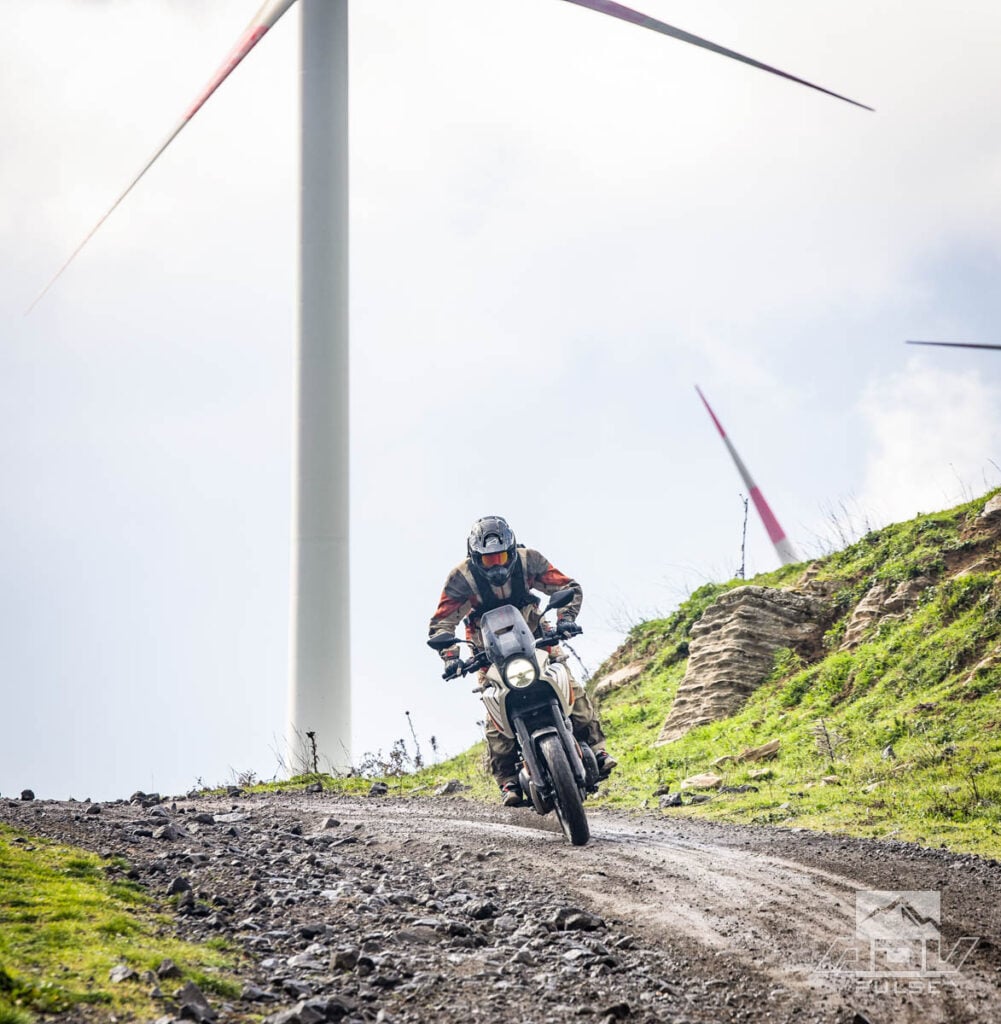
Despite its larger engine and increased weight, the Himalayan 750 never feels intimidating. Riders stepping up from a Himalayan 411 or 450 will find a motorcycle that feels significantly more powerful but still very familiar and approachable. It rides smaller than its dimensions suggest and inspires confidence both on the pavement and in the dirt thanks to its tractable engine, balanced chassis, and low center of gravity.
The electronics interface still needs some refinement, and riders seeking sharp-edged performance may find the soft power delivery lacking compared to more performance-oriented competitors. Likewise, those who prioritize technical terrain and more aggressive off-road riding will likely still gravitate toward the lighter and more agile Himalayan 450.
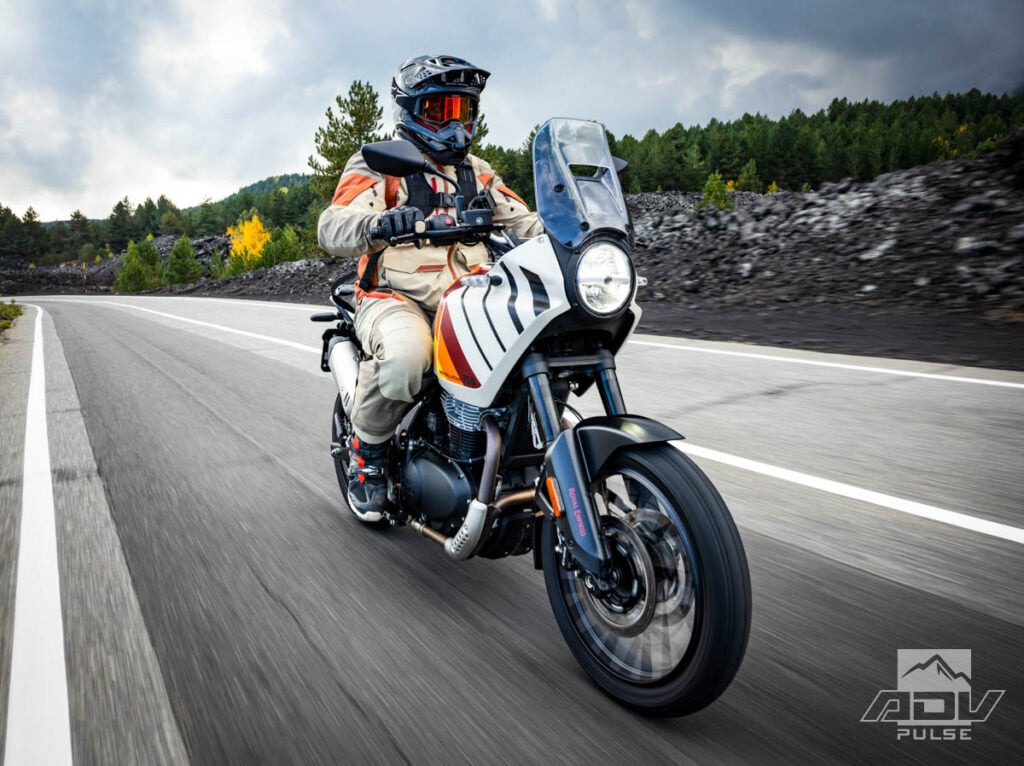
But for adventure riders looking for a charming motorcycle that can comfortably cover highway miles, tackle backcountry routes, carry luggage for extended travel, and do it all with a price tag that won’t break the bank, the Himalayan 750 will be a compelling option in the middleweight ADV class. In that respect, Royal Enfield has accomplished exactly what it set out to do: expand the Himalayan lineup without losing sight of what made the original so appealing in the first place.
2027 Himalayan 750 Specs
| Engine Type: | Air-oil cooled inline twin cylinder, 4 stroke, SOHC |
| Bore x Stroke (mm): | 83.5 x 67.8 mm |
| Displacement: | 743 cc |
| Compression Ratio: | 9.5:1 |
| Max Power: | 54 hp (55 PS) @ 7,000 rpm |
| Max Torque: | 46.5 lb-ft (63 Nm) @ 5,000 rpm |
| Idle RPM: | 1300 rpm |
| Starting System: | Electric |
| Lubrication: | Wet sump, forced circuit |
| Fuel Injection: | Electronic FI, Single bore, Ride by Wire |
| Engine Oil Grade: | Full synthetic 10W-50 |
| Clutch: | Wet multi-plate, slip and assist |
| Gearbox: | 6 speed constant mesh |
| Frame Type: | Box section spine frame with pressed steel outriggers, engine as a stressed member. |
| Front Suspension: | Showa USD 43 mm. Cartridge-type, adjustable for damping, compression and rebound. |
| Front Wheel Travel: | 7.5 in (190 mm) |
| Rear Suspension: | Showa monoshock with linkage, adjustable preload and rebound. |
| Rear Wheel Travel: | 6.9 in (175 mm) |
| Wheelbase: | 59.9 in (1522 mm) |
| Rake: | 27.9° |
| Trail: | 4.8 in (121.5 mm) |
| Ground Clearance: | 8.1 in (205 mm) |
| Length: | 86.0 in (2185 mm) |
| Width: | 33.1 in (840 mm) |
| Height: | 57.1 in (1450 mm) |
| Seat Height: | 32.1 in (815 mm) |
| Kerb Weight (90% fuel/oil): | 491.63 lb (223 kg) |
| Dry Weight: | 429.9 lb (195 kg) |
| Payload: | 428 lb (194 kg) |
| Fuel Capacity: | 4.7 gal (17.8 L) |
| Front Wheel: | 19″ x 2.5″ cast-alloy or spoked tubeless rim |
| Rear Wheel: | 17″ x 4.25″ cast-allow or spoked tubeless rim |
| Front Tire: | 110/80 R19 |
| Rear Tire: | 150/70 R17 |
| Front Brake: | Twin 280 mm floating discs, 2-piston floating caliper 28×28 mm |
| Rear Brake: | Disc Brake 255 mm, 2-piston floating caliper 28×28 mm |
| ABS: | Dual Channel (defeatable at rear) cornering ABS. |
| Battery: | 12 V, 8 Ah VRLA |
| Head Lamp: | 22 W (low) 38.5 W (high) |
| Turn Signals (Front): | 2.63 W |
| Turn Signals/Tail (Rear): | .5 W to 3 W |
| License Plate Lamp: | 2.5 W |
| Display: | 4.0″ TFT with Wi-Fi, BT connectivity. Navigation, phone and music control. |
| Ride Modes: | 5 configurable ride modes (Road, Road Sport, Rain, Trail, Custom) |
| Traction Control: | Lean-sensitive. Configurable settings for each mode (Low, Medium, High, Off) |
| Cruise Control: | Yes |
| Immobilizer: | Key based Immobilizer |
| Charging: | Dual USB-C: 1 Fast-Charging (27W) and 1 Standard (10W) |
| Safety: | Self-canceling turn signals and emergency brak lamp. |
| App Connectivity: | Royal Enfield app with Wingman 2.0 in-app riding companion. 4G connectivity and GPS |
| Fuel Efficiency | 53.4 mpg (22.7 km/l) |
Gear We Used
• Helmet: Alpinestars Supertech M10
• Jacket: Alpinestars Maxdura Drystar XF
• Pants: Alpinestars Maxdura Dual
• Jersey: Alpinestars Maxdura Dual
• Boots: Alpinestars Tech 7 Enduro Drystar
• Gloves: Alpinestars Pro-Dura

Author: Rob Dabney
Rob Dabney started a lifelong obsession with motorcycles at the age of 15 when he purchased his first bike – a 1982 Honda MB5. Through his 20’s and 30’s he competed in off-road desert races, including the Baja 250, 500 and 1000. Eventually, his proclivity for exploration led him to dual sport and adventure riding. Rob’s never-ending quest to discover what’s around the next bend has taken him on Adventures in Latin America, Africa, Europe, Asia, and throughout the American West. As a moto journalist, he enjoys inspiring others to seek adventure across horizons both near and far.Related Stories
Related Stories
 2026 Kawasaki KLE500: An Upgraded Versys-X Or A Modern KLR650? I remember being on a trip in Europe years ago, spotting a Kawasaki...
 Royal Enfield Himalayan 650cc Twin Spied In Near Production Form Rumors have been swirling around for years about a super-sized Royal Enfield Himalayan...
 Riding the New Himalayan 450: A First-Gen Owner’s Impressions Imagine this: Months of sleepless nights consumed by thoughts of exploring vast canyons...
Popular Stories
Yamaha Reveals A Tenere 400 Concept Ahead Of EICMA
Yamaha pulled the wraps off a new Tenere 400 ...
BMW Announces US Pricing And More Details On The 2027 F 450 GS
BMW has released new details for the 2027 F 450 G...
Honda Adds Africa Twin Enduro Sports to New CRF1150L Range
Honda has unveiled a completely redesigned Afri...
Kove Unveils 350 Rally: A Lower, Lighter Alternative To The 450 Rally
Photo: Peak Motorcycles Kove has pulled the co...


Notify me of new posts via email