
KTM’s Mystery Twin ADV Resurfaces: Is This The 490 Adventure?
Fresh spy shots reveal continued development of a smaller, lighter, twin-cylinder ADV.
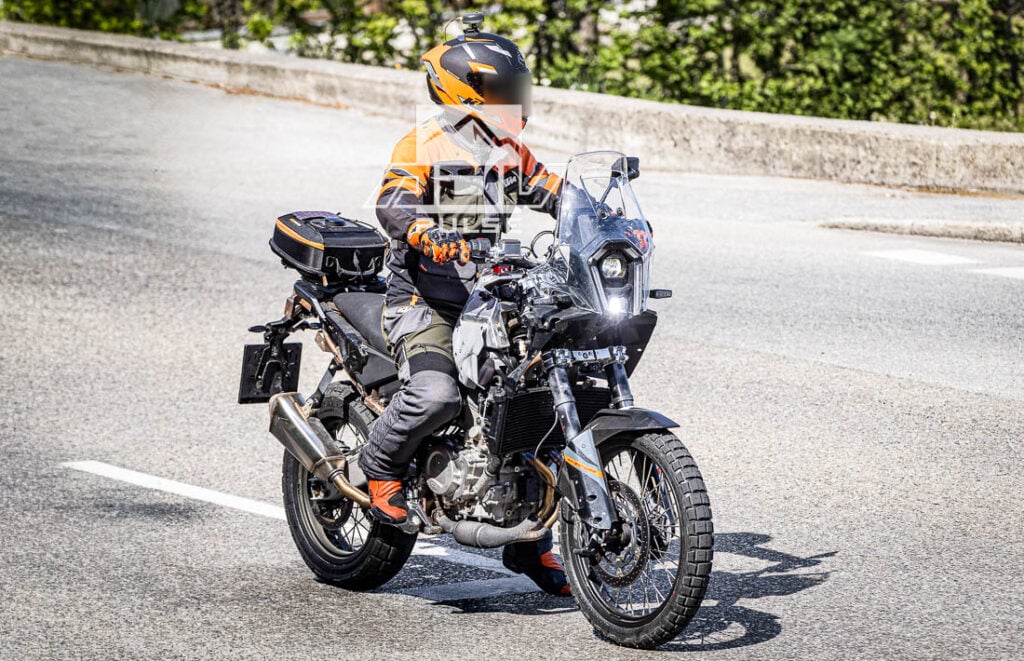
KTM’s mystery small‑displacement parallel‑twin platform has resurfaced in a new round of spy shots, giving us another glimpse at how the Adventure variant is developing. We first spotted this twin machine last summer, when an early test mule appeared with rough bodywork, borrowed components, and a prototype engine. Now, nearly a year later, the bike has returned to public view with a handful of updates — enough to indicate that development is progressing, even if the machine seems far from production‑ready.
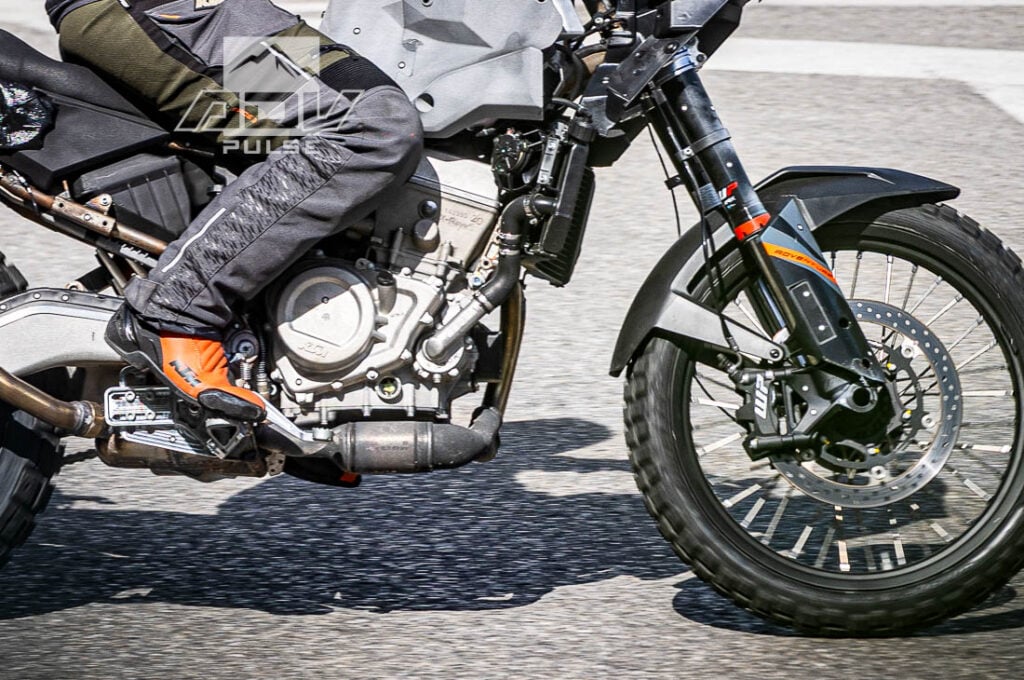
At first glance, the overall silhouette hasn’t changed much. The prototype still carries the same engine casings of the previous prototype, the same borrowed 390 Adventure R fairing, and the same 21/18‑inch wheel combo suspended by WP components. The small‑diameter exhaust tubing again points to a lower‑displacement twin, and the frame matches generally what we saw previously. Even the rear license plate holder, front fender, and hacked‑up side panels appear to be the same interim pieces KTM used on the earlier prototype.
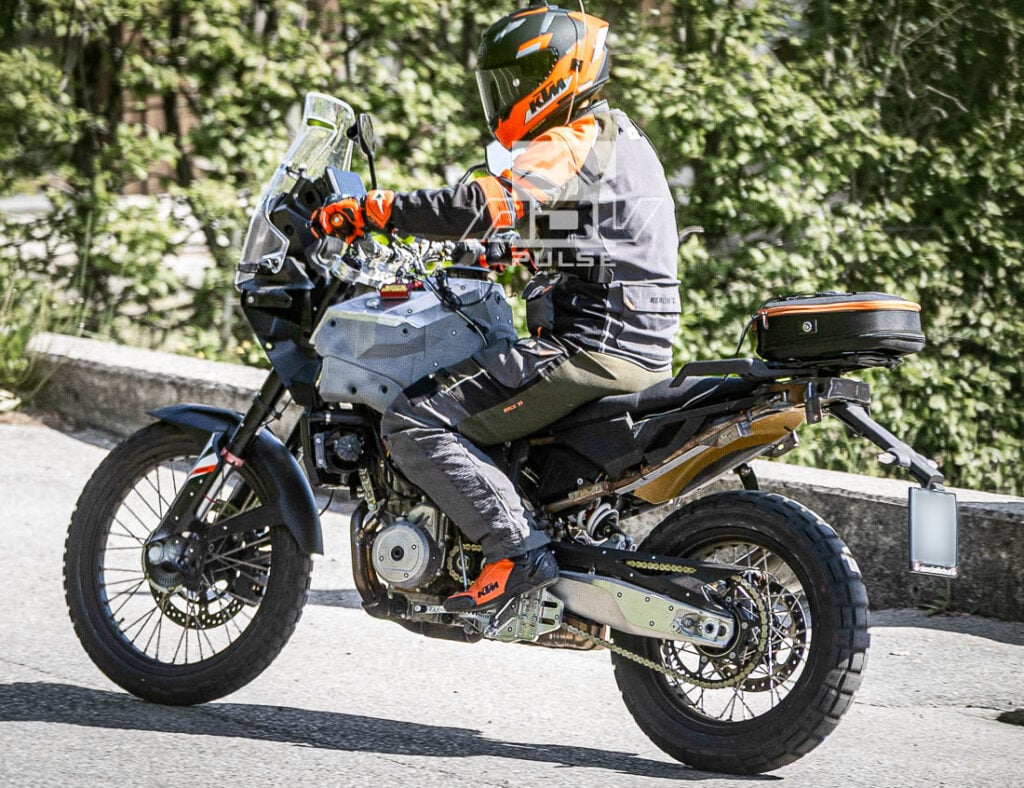
But a closer look reveals some differences. The most obvious update is the new WP‑branded radial‑mount four‑piston front brake — a notable shift from the generic test hardware seen before, and a sign that KTM is now working with production‑intent components. The fuel tank has also changed shape, losing some of its previous height in favor of a wider, still‑crude form that suggests KTM is experimenting with packaging and weight distribution. The bike also appears to ride slightly higher than before, hinting at a taller suspension travel model.
Seeing the left side of the bike for the first time also reinforces what we reported last year: this is a new platform, not a derivative of the engine co-developed with CFMoto for the Ibex 450 or any of KTM’s LC8c twin variants. The frame layout, engine cases, and overall packaging are unique, aligning with KTM’s broader strategy of developing a small twin that will underpin an entire family of models, including a new Duke series and this Adventure variant. Displacement is expected to fall somewhere between 400 and 600cc, with output in the 55–75 horsepower range and a 270‑degree crank layout similar to the LC8c.
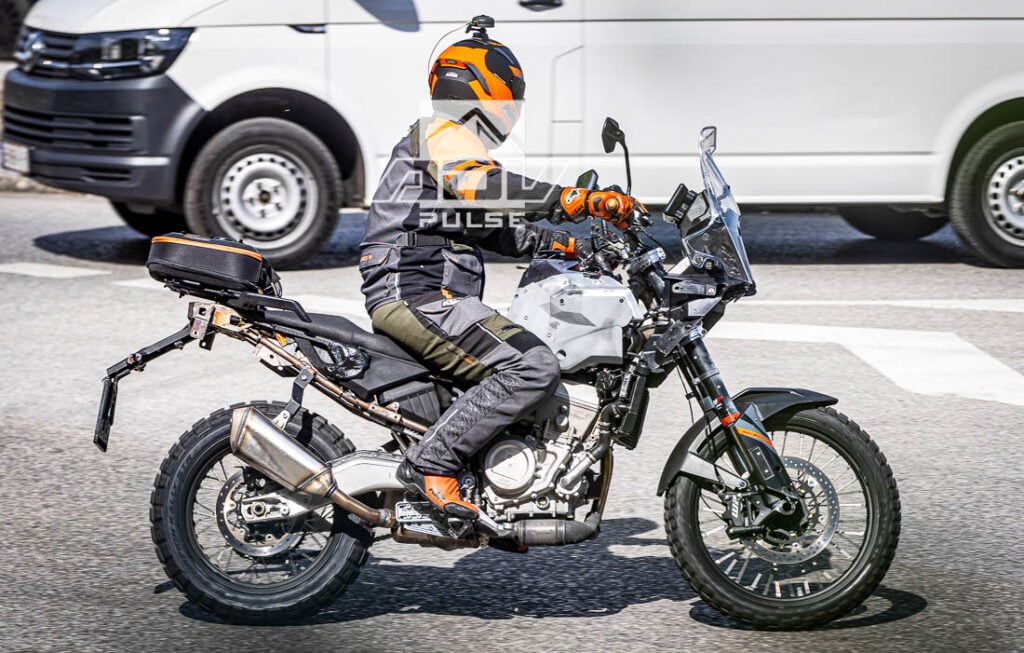
Despite the crude bodywork and placeholder components, the direction is becoming clearer. KTM appears to be targeting a lighter, slimmer, more-manageable twin than the 790 Adventure, with suspension travel and wheel sizing that echo the 390 Adventure’s dirt‑friendly stance. The use of WP brakes — a new in‑house product line already appearing on the 390 Duke — further suggests KTM is consolidating component development across its platforms.
Globally, this displacement class is becoming increasingly important, particularly in emerging markets where riders are outgrowing 300‑class machines but aren’t ready to step into the weight and cost of a 800cc+ machine. For KTM, a small‑twin Adventure could become a key pillar in its economic recovery, filling a long‑standing gap in the lineup and giving the brand a more competitive presence in emerging markets.
For now, the prototype remains clearly deep in the development cycle. But with each new sighting, KTM’s intentions come into sharper focus. Whether it ultimately becomes the 490 Adventure, the 590 Adventure, or something else entirely, one thing is certain: the middleweight twin many KTM fans have been waiting for is no longer a rumor — it’s taking shape on the road.KTM’s mystery small‑displacement parallel‑twin platform has resurfaced in a new round of spy shots, giving us another glimpse at how the Adventure variant is developing. We first spotted this twin machine last summer, when an early test mule appeared with rough bodywork, borrowed components, and a prototype engine. Now, nearly a year later, the bike has returned to public view with a handful of updates — enough to indicate that development is progressing, even if the machine seems far from production‑ready.
At first glance, the overall silhouette hasn’t changed much. The prototype still carries the same engine casings of the previous prototype, the same borrowed 390 Adventure R fairing, and the same 21/18‑inch wheel combo suspended by WP components. The small‑diameter exhaust tubing again points to a lower‑displacement twin, and the frame matches generally what we saw previously. Even the rear license plate holder, front fender, and hacked‑up side panels appear to be the same interim pieces KTM used on the earlier prototype.
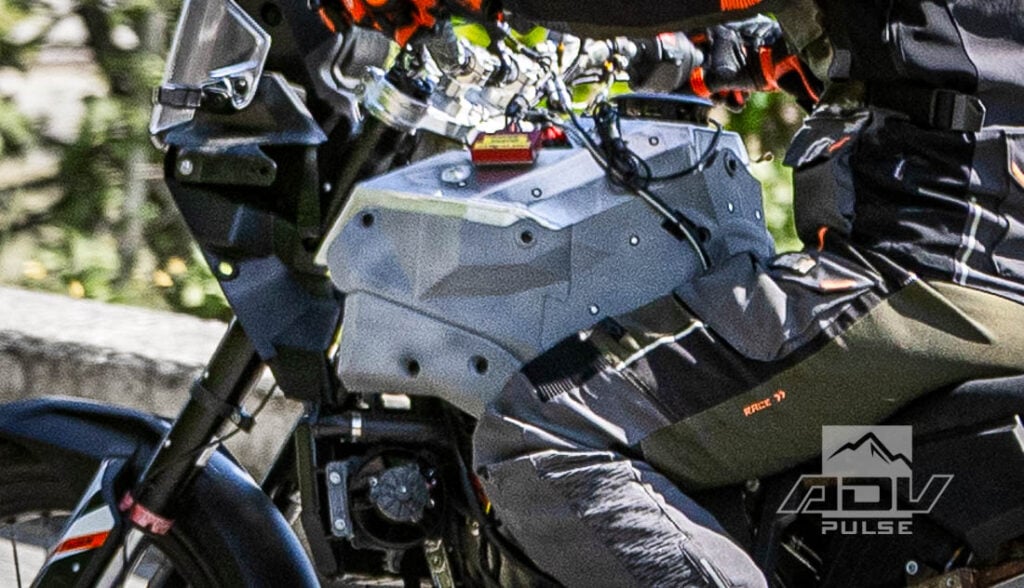
But a closer look reveals some differences. The most obvious update is the new WP‑branded radial‑mount four‑piston front brake — a notable shift from the generic test hardware seen before, and a sign that KTM is now working with production‑intent components. The fuel tank has also changed shape, losing some of its previous height in favor of a wider, still‑crude form that suggests KTM is experimenting with packaging and weight distribution. The bike also appears to ride slightly higher than before, hinting at a taller suspension travel model.
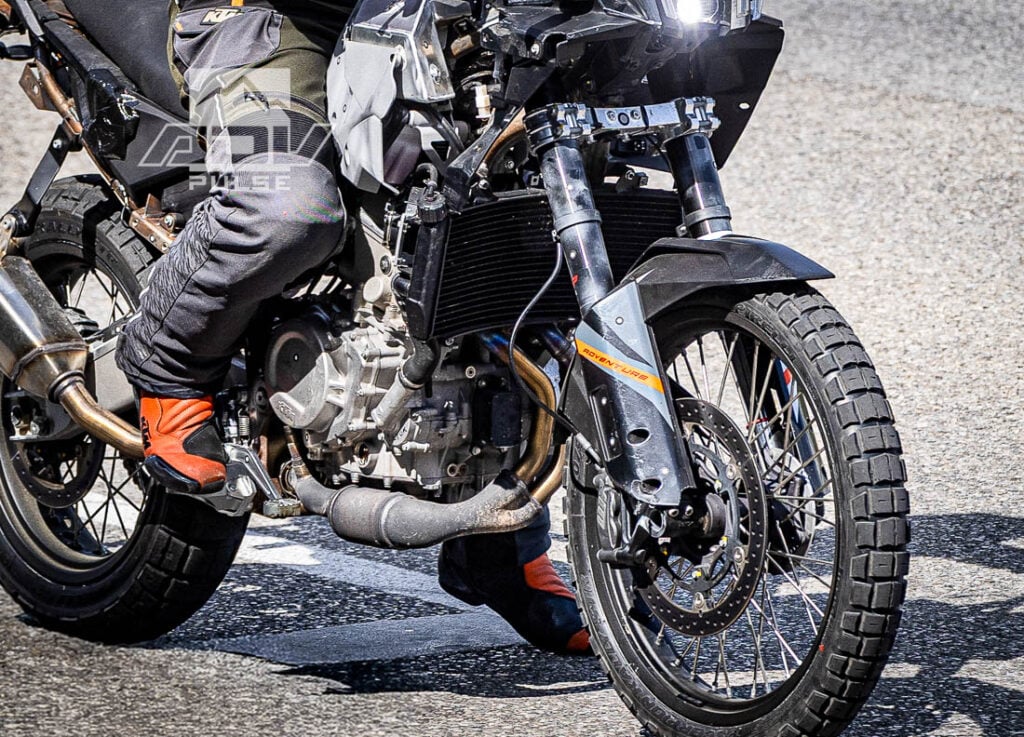
Seeing the left side of the bike for the first time also reinforces what we reported last year: this is a new platform, not a derivative of the engine co-developed with CFMoto for the Ibex 450 or any of KTM’s LC8c twin variants. The frame layout, engine cases, and overall packaging are unique, aligning with KTM’s broader strategy of developing a small twin that will underpin an entire family of models, including a new Duke series and this Adventure variant. Displacement is expected to fall somewhere between 400 and 600cc, with output in the 55–75 horsepower range and a 270‑degree crank layout similar to the LC8c.
Despite the crude bodywork and placeholder components, the direction is becoming clearer. KTM appears to be targeting a lighter, slimmer, more-manageable twin than the 790 Adventure, with suspension travel and wheel sizing that echo the 390 Adventure’s dirt‑friendly stance. The use of WP brakes — a new in‑house product line already appearing on the 390 Duke — further suggests KTM is consolidating component development across its platforms.
Globally, this displacement class is becoming increasingly important, particularly in emerging markets where riders are outgrowing 300‑class machines but aren’t ready to step into the weight and cost of a 800cc+ machine. For KTM, a small‑twin Adventure could become a key pillar in its economic recovery, filling a long‑standing gap in the lineup and giving the brand a more competitive presence in emerging markets.
For now, the prototype remains clearly deep in the development cycle. But with each new sighting, KTM’s intentions come into sharper focus. Whether it ultimately becomes the 490 Adventure, the 590 Adventure, or something else entirely, one thing is certain: the middleweight twin many KTM fans have been waiting for is no longer a rumor — it’s taking shape on the road.
Photos by Bernhard M. Höhne
Related Stories
Related Stories
 KTM 990 Adventure Spied In Near‑Production Form KTM introduced the first 990 Adventure a little more than 20 years ago....
 Spy Shots Reveal KTM’s Next‑Gen 790 Adventure Nearing Production KTM’s middleweight adventure platform looks poised for a significant evolution, as new spy...
 KTM 690 Rally Spotted in Near-Production Form KTM’s “Adventure” models have become one of the brand’s defining pillars, but the...
Popular Stories
Bultaco Staging Comeback With Budget-Friendly 300cc ADV Bike
Bultaco is officially back in the motorcycle busi...
5 Small‑Bore Adventure Bikes That Aren’t Buzzy On The Highway
Small‑bore adventure bikes in the 300–500cc range...
KTM Announces Specs And Availability Of New 690 Rally Model
KTM is expanding its LC4 lineup with the introduc...
BMW Announces US Pricing And More Details On The 2027 F 450 GS
BMW has released new details for the 2027 F 450 G...
Notify me of new posts via email