
KTM Probed For Alleged Sales Of ‘Uncorked’ Street-Legal Enduros
Reports of non-compliant dealer mods prompt closer look at sales practices.
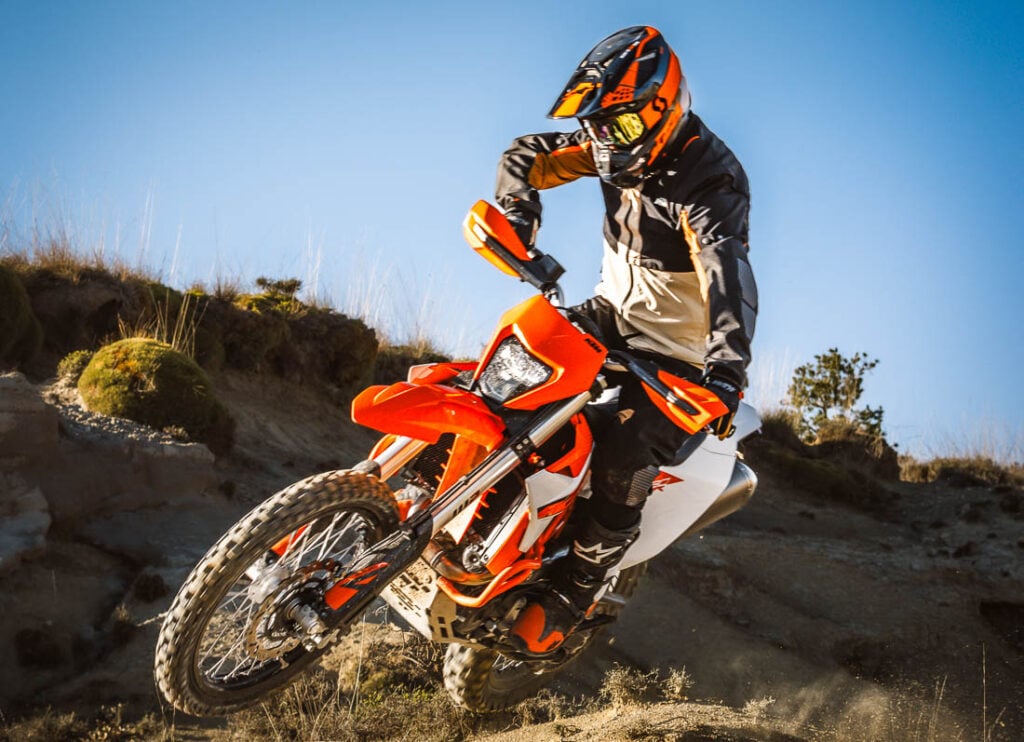
European regulators are taking a closer look at KTM after a media investigation alleged that the company’s street‑legal enduro models were being sold in derestricted form while still receiving registration for public‑road use. The reports, coordinated by several major outlets across seven countries, documented multiple KTM dealers offering EXC‑type models with emissions equipment removed, full‑power maps installed, and assurances that the bikes could still be plated despite no longer matching their Euro 5 homologated configuration. The findings prompted Germany’s Federal Motor Transport Authority (KBA) to open an inquiry into whether the practice represents a systemic compliance issue within KTM’s distribution network or a pattern of dealer‑level modifications that slipped through national registration systems.
The allegations involve at least 16 KTM enduro models — including GASGAS and Husqvarna variants — machines built for off‑road competition but certified for road use in their restricted, homologated form. According to the investigation, several dealers were willing to deliver the bikes already configured for off‑road use, a setup that can significantly increase emissions and noise output. Some of the derestricted machines reportedly exceeded legal emissions limits by a wide margin, raising questions about how they were being registered without triggering compliance checks. Because the behavior was documented across multiple countries and at numerous dealerships, regulators are treating the issue as potentially broader than isolated misconduct.
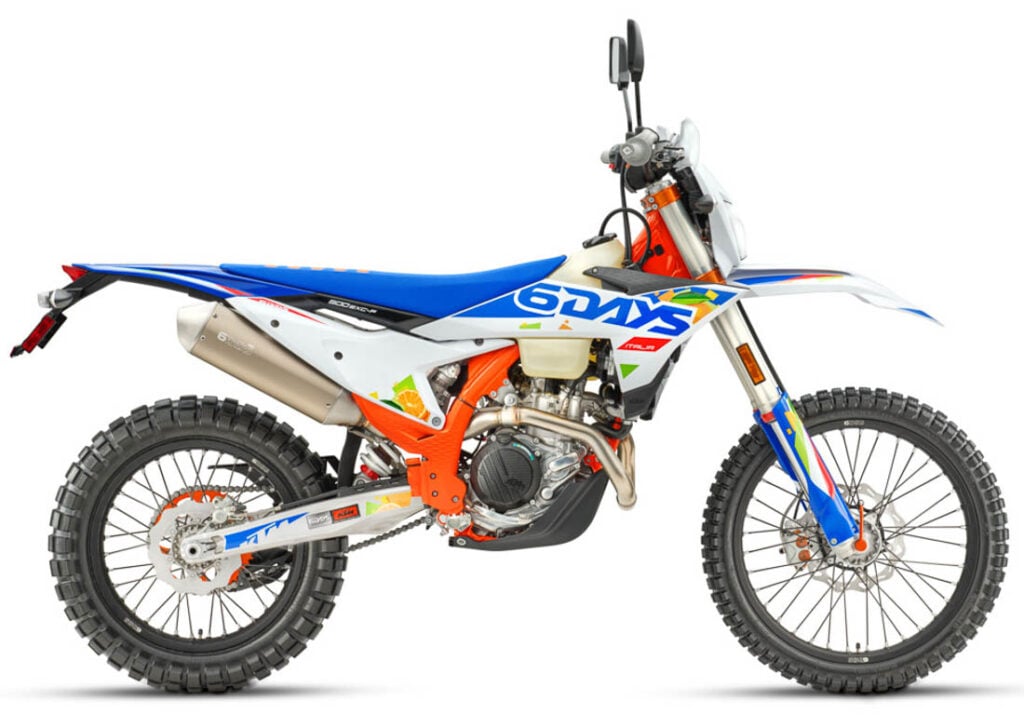
KTM has now issued an official response, firmly rejecting the suggestion that it is placing illegal motorcycles on the market. The company states that all KTM, Husqvarna, and GASGAS enduro models leave the factory in a fully road‑legal, Euro‑compliant configuration and that this dual‑use approach — homologated for public roads but fundamentally designed as sports machines — is standard across the industry. KTM says that any conversion for competition or off‑road use occurs only after purchase and only at the customer’s request, and that buyers are explicitly informed that road approval expires once a bike is configured for racing. The company also emphasizes that these models must meet FIM competition requirements, which necessitate a configuration different from the homologated street version, and that this dual‑homologation structure is not unique to KTM.
KTM’S OFFICIAL STATEMENT
KTM AG firmly rejects the allegations made in recent media reports that KTM is placing illegal motorcycles on the market. The KTM Group sells its motorcycles exclusively in compliance with applicable European regulations.
The reporting is based on a fundamental misunderstanding: At their core, enduro models are sports machines that, in their homologated delivery condition, are also permitted to be ridden on public roads. This dual-use capability is intentional, necessary, and standard across the industry: In order for enduro machines to participate in official competitions, they must be delivered in a homologated condition in accordance with the regulations of the International Motorcycling Federation (FIM). This is neither a KTM-specific practice nor a procedure that would give KTM any undue competitive advantage over its peers. All KTM-, Husqvarna-, and GASGAS-branded enduro models leave our factory exclusively in a road-legal, homologated condition.
At the customer’s request, these machines can be configured by the authorized dealer for competition and off-road use after purchase. Buyers of our enduro machines are expressly informed that road approval expires upon conversion for competition use, and that the vehicle may no longer be used on public roads.
The enduro models sold in Europe account for approximately 3% of KTM’s global sales.
The emissions issues raised in the reports also warrant an objective assessment: According to the German Federal Environment Agency, motorcycles account for approximately 0.3% of total CO₂ emissions in Germany. Enduro competition models represent only a small fraction of this. Their annual mileage is many times lower than that of street motorcycles, as they are used for only a few hours per year in sport and training activities.
Under EU Regulation 2018/858, manufacturers found to have intentionally circumvented emissions rules can face penalties of up to €5 million. Some countries also allow criminal proceedings in cases where manufacturers are found to have knowingly enabled emissions cheating, though no regulator has suggested such action at this stage.
For now, the KBA has not announced any findings, and KTM has not indicated whether it plans to adjust dealer oversight or documentation procedures in response to the investigation. The situation remains fluid, with regulators working to determine whether the issue stems from gaps in national registration systems, inconsistent dealer practices, or a misunderstanding of how dual‑use enduro models are homologated and configured.
Related Stories
Related Stories
 KTM 690 Rally Review: The LC4 ADV Bike Returns After Nearly 20 Years From the late ’90s through the 2000s, one of the seminal machines that...
 KTM 990 Adventure Spied In Near‑Production Form KTM introduced the first 990 Adventure a little more than 20 years ago....
 KTM Brings Exclusive 450 Rally Replica Model To North America KTM has announced that it is bringing the 2027 450 Rally Replica to...
Popular Stories
Bultaco Staging Comeback With Budget-Friendly 300cc ADV Bike
Bultaco is officially back in the motorcycle busi...
5 Small‑Bore Adventure Bikes That Aren’t Buzzy On The Highway
Small‑bore adventure bikes in the 300–500cc range...
KTM Announces Specs And Availability Of New 690 Rally Model
KTM is expanding its LC4 lineup with the introduc...
BMW Announces US Pricing And More Details On The 2027 F 450 GS
BMW has released new details for the 2027 F 450 G...

Notify me of new posts via email