
Chasing Adventure On Zero’s DSR/X: Are Electric ADV Trips Realistic?
Testing the travel capability of the electric brand’s ADV touring model.
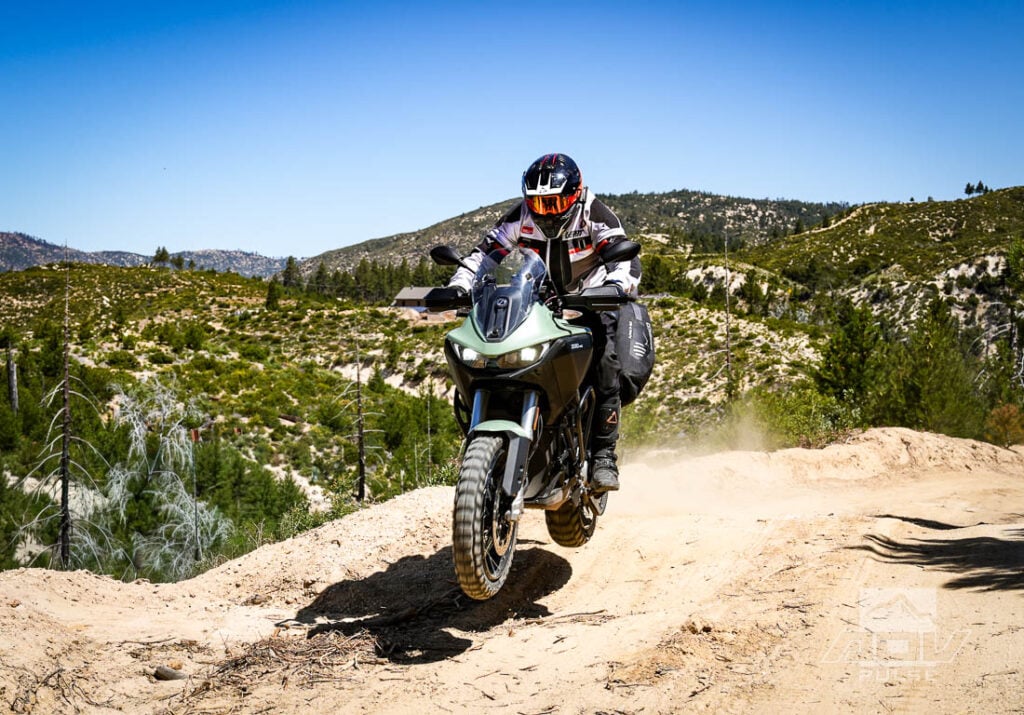
Let’s get this out of the way: the biggest challenge with electric motorcycles is still range. And when you’re heading into the middle of nowhere, the one thing you absolutely need is the range to get back. Typically, an ADV bike offers around 200 miles of range and can be refueled in minutes. Gas is everywhere and you can even carry extra.
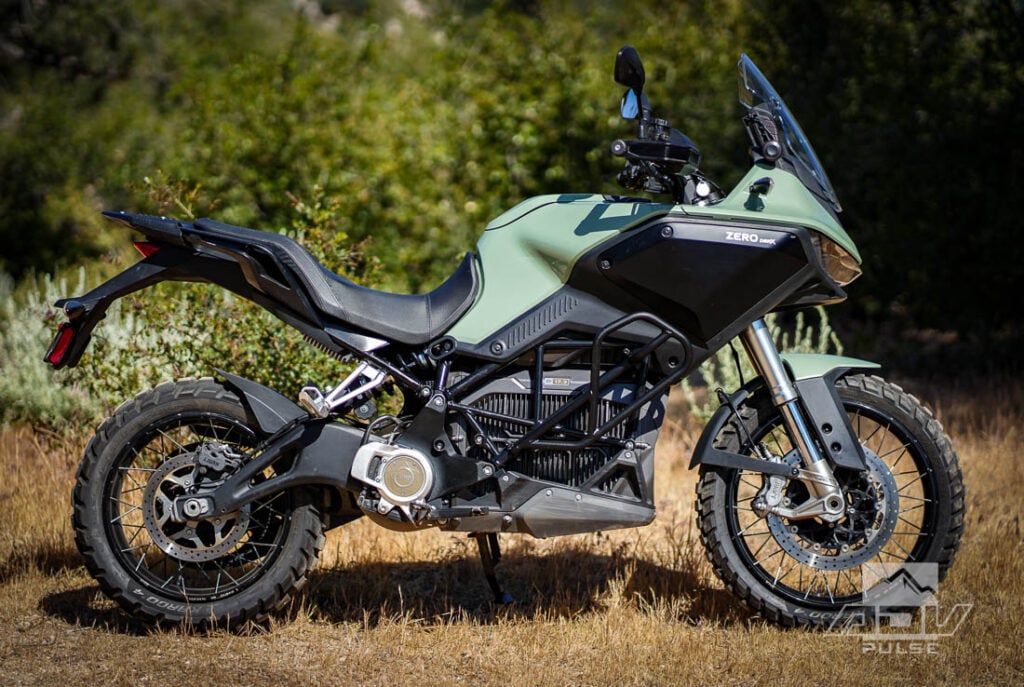
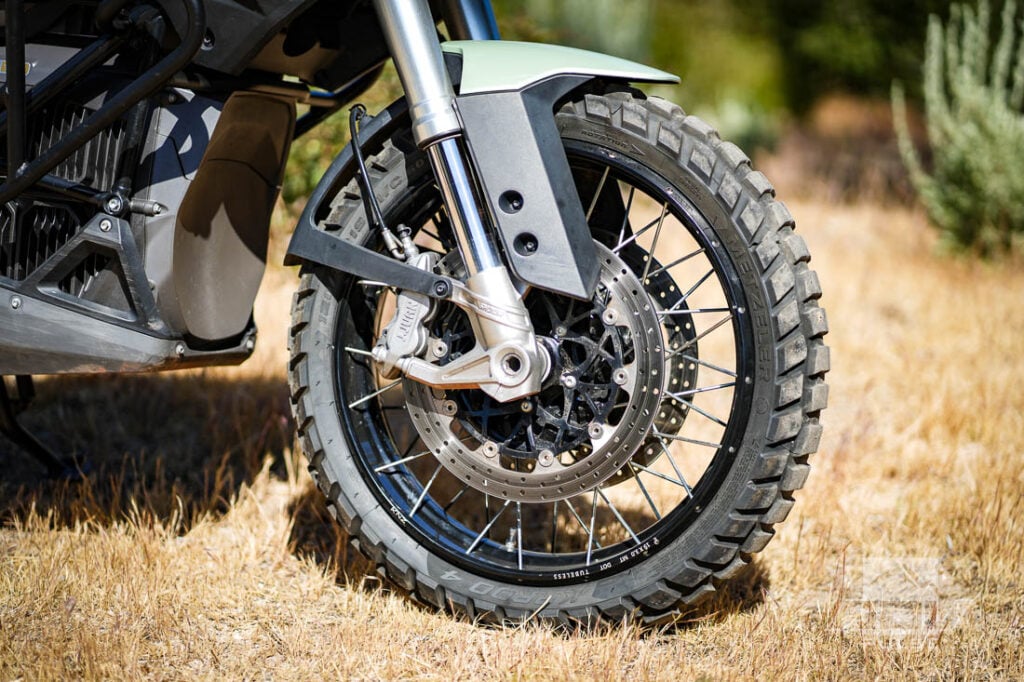
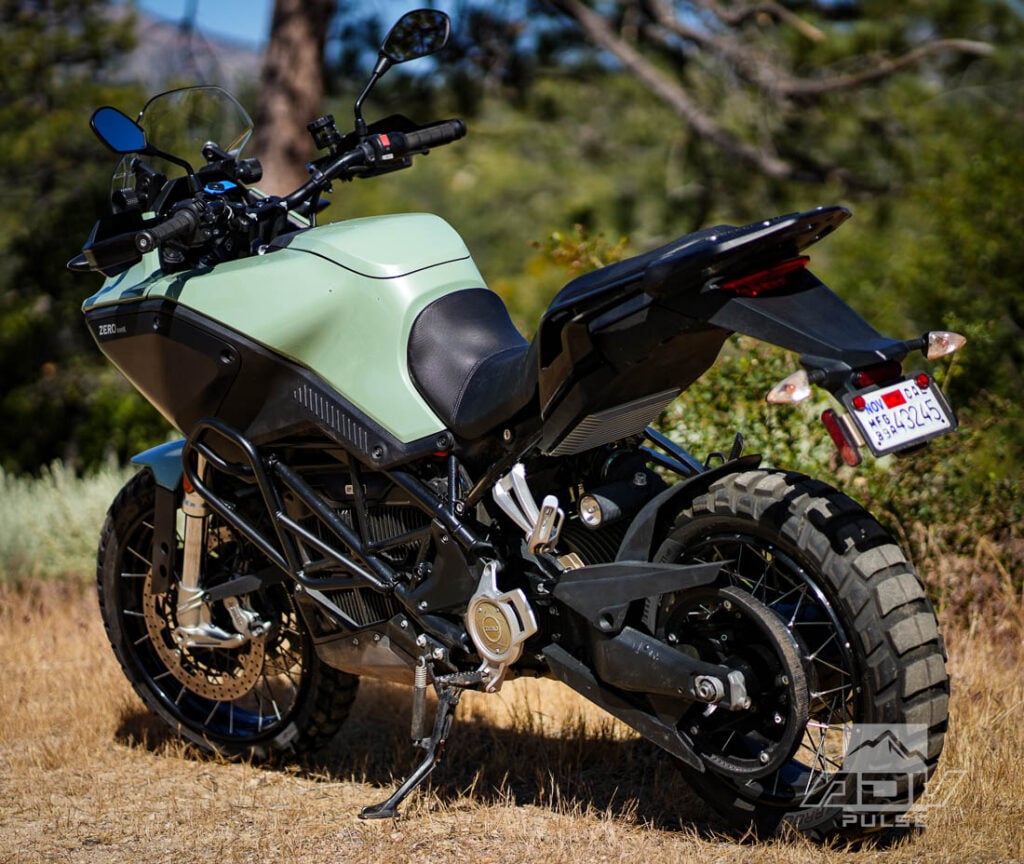
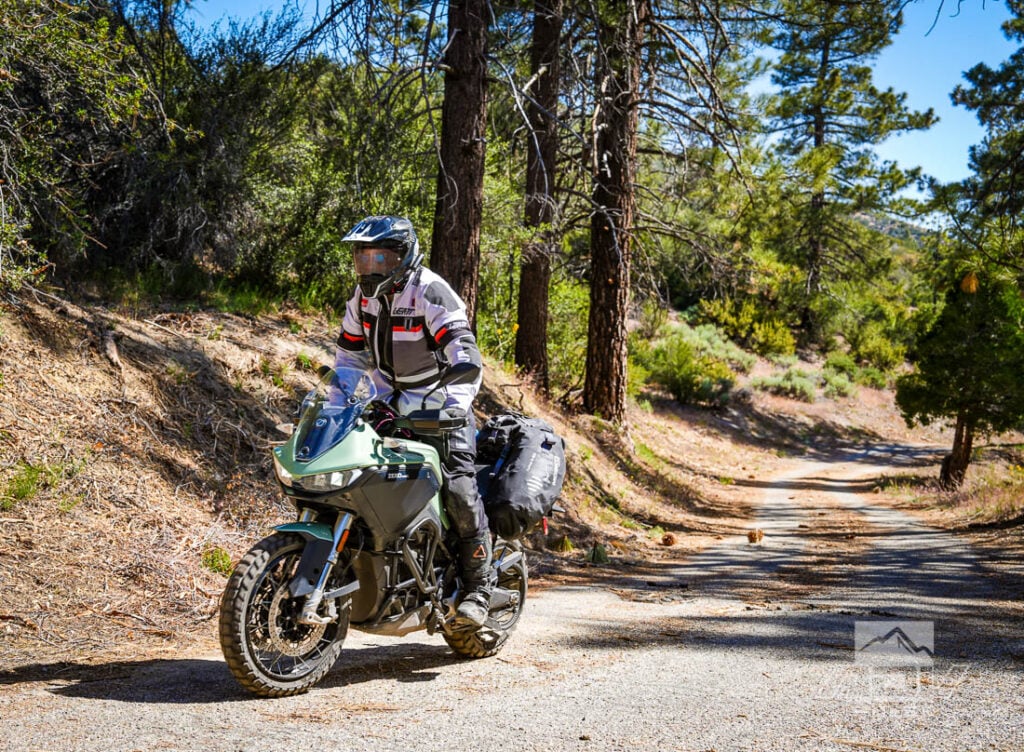
Electric motorcycles? Not so much. Most tap out at less than 80 miles of mixed riding, and “refueling” can take an hour or more. That’s part of the reason there are almost no electric adventure bikes on the market. One of the few claiming this category is the Zero DSR/X with a claimed range better than most electric motorcycles, rolling on a 19-inch front with tubeless spoked wheels, and equipped with a luggage rack, heated grips, and a lockable trunk.
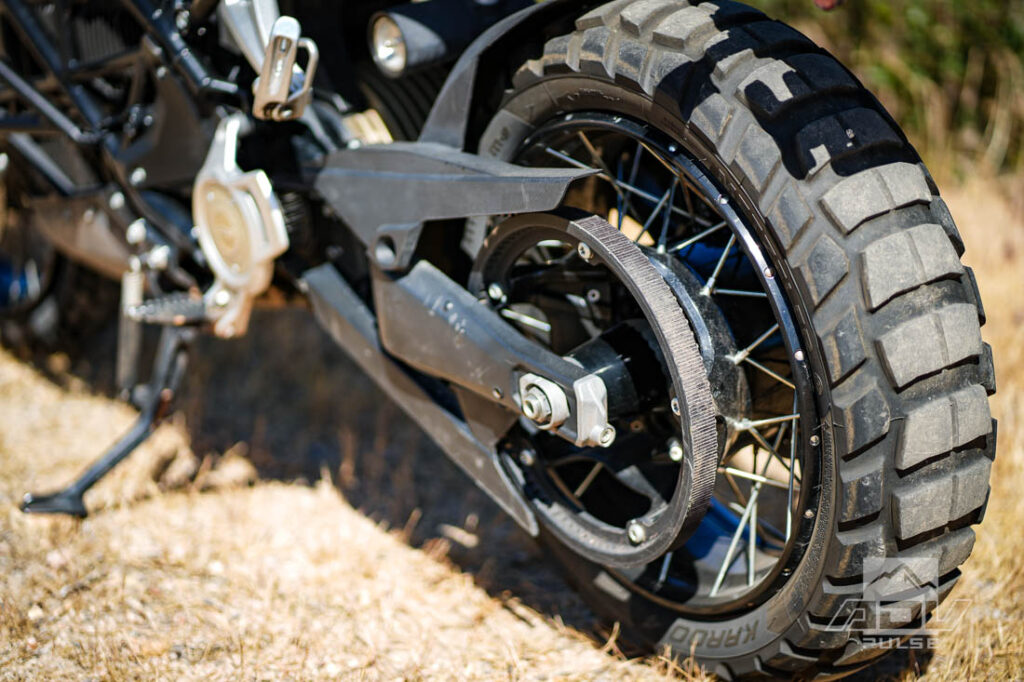
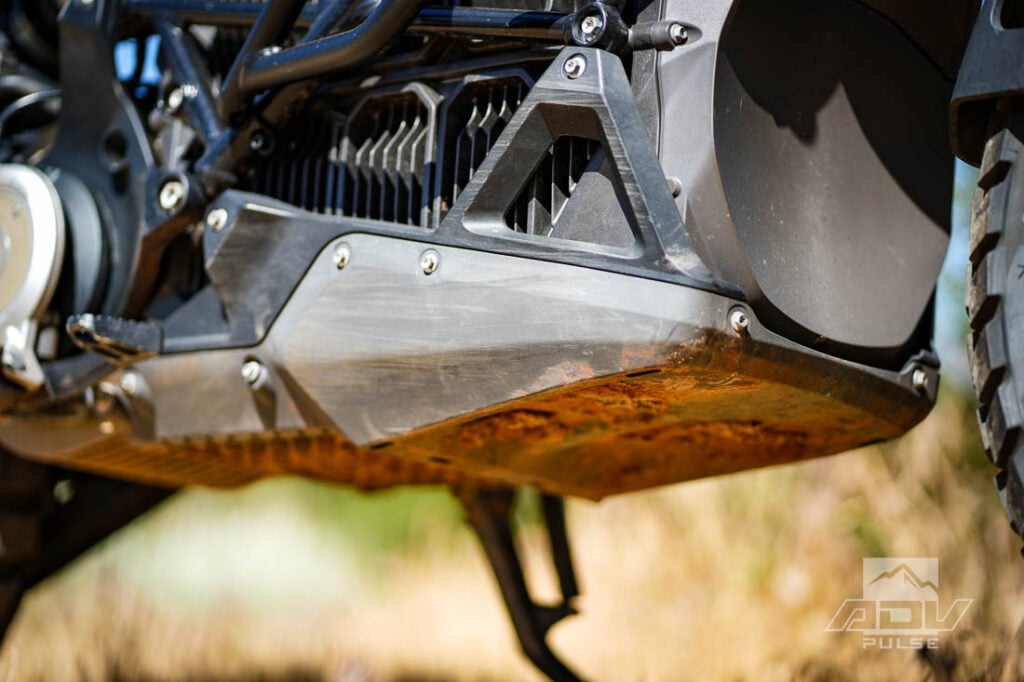
Suspension includes a fully adjustable 47mm fork and piggyback shock with 7.48 inches of travel, both by Showa. Brakes are J.Juan units — dual 4‑piston radial-mount calipers up front on 320mm discs and a 265mm disc with a 2-piston floating caliper in the rear. Seat height is 32.6 inches stock, with optional seats either raising it to 34.1 inches or dropping it to 31.7 inches. Standard tires are street-biased Pirelli Scorpion Trail II, though our test unit arrived with Metzeler Karoo 3s, a welcome upgrade for off‑road traction. At 544 pounds it’s on the heavy side, sitting in the same weight class as a BMW R1300GS or KTM 1390 Super Adventure. But the weight on electric bikes is typically carried down low with no fuel tank up top.
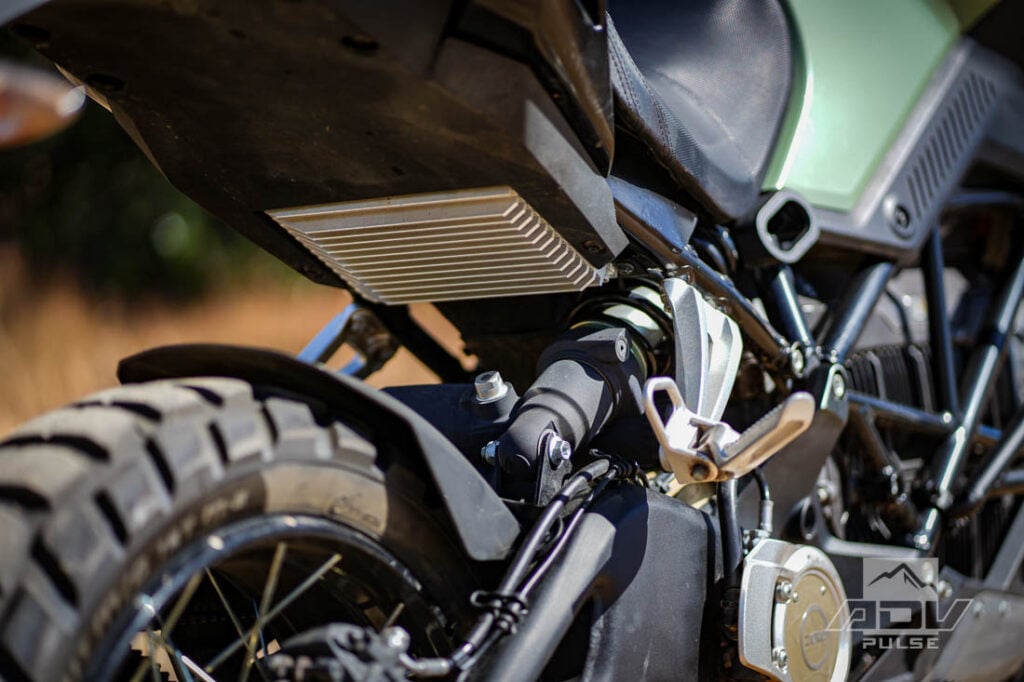
Electronic rider aids are quite extensive. Bosch MSC brings cornering ABS, traction control, linked braking, hill‑hold, and drag torque control (an electronic slipper clutch that manages rear‑wheel slip under deceleration). You also get Park Mode (forward and reverse crawl) and a regen system that feeds energy back into the battery on deceleration and braking.
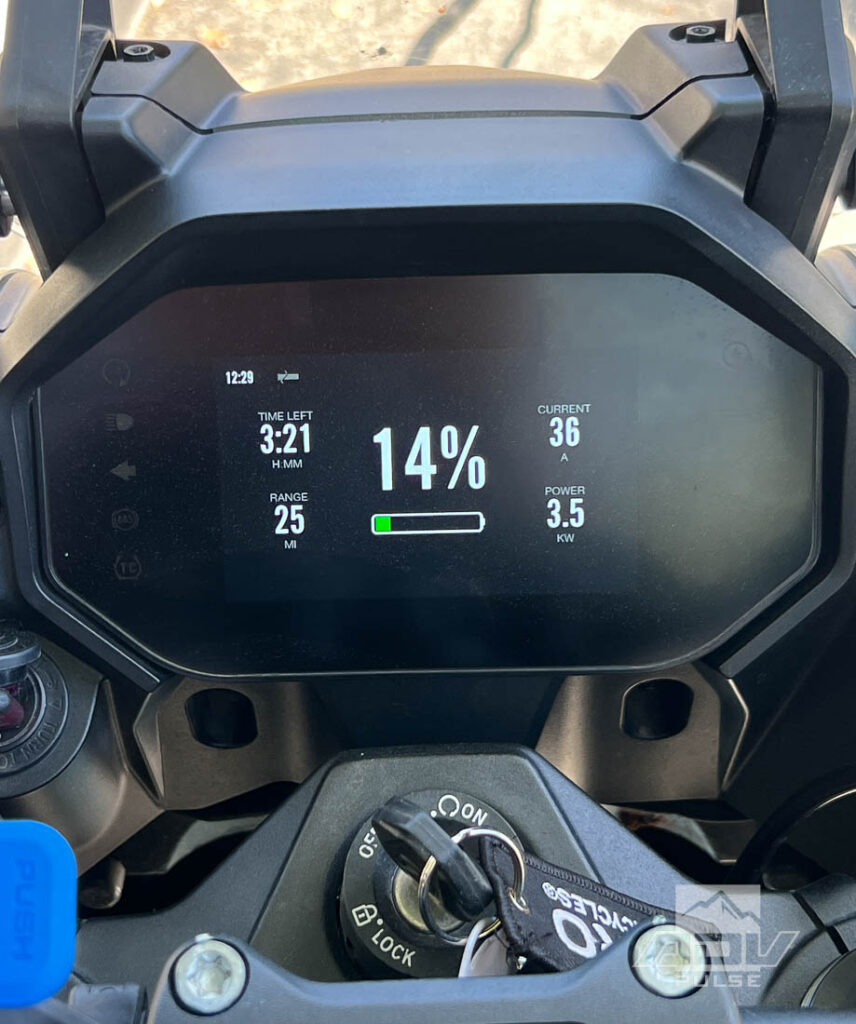
Ride modes include Standard, Eco, Rain, Sport, and Canyon. While the first four modes are self explanatory, “Canyon” mode offers full power like Sport but with stronger regen and engine‑braking feel.
Charging and Range
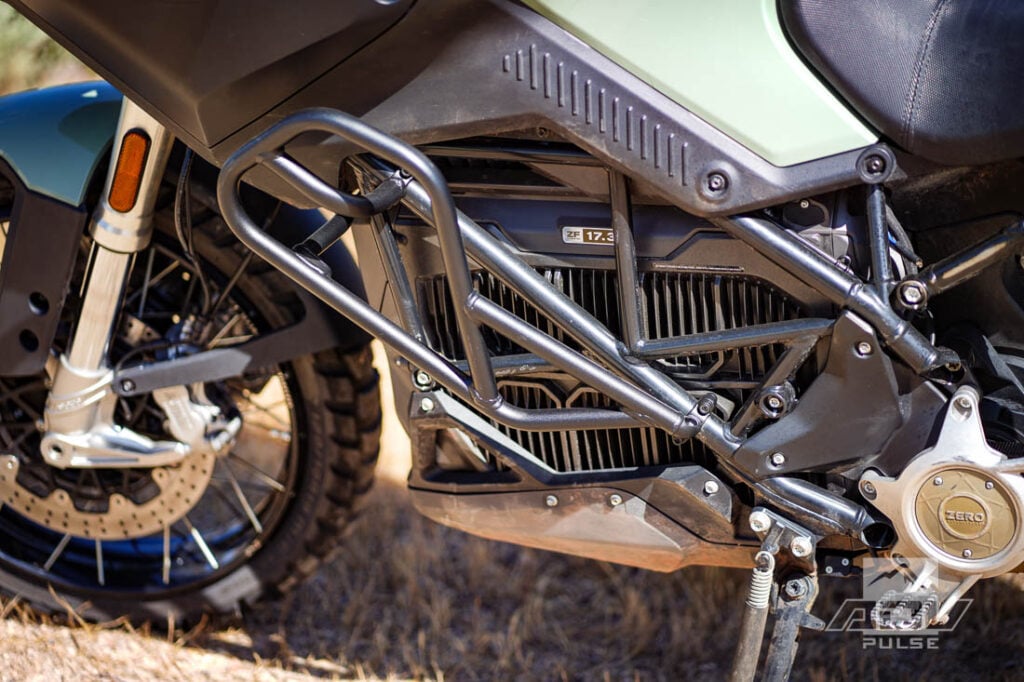
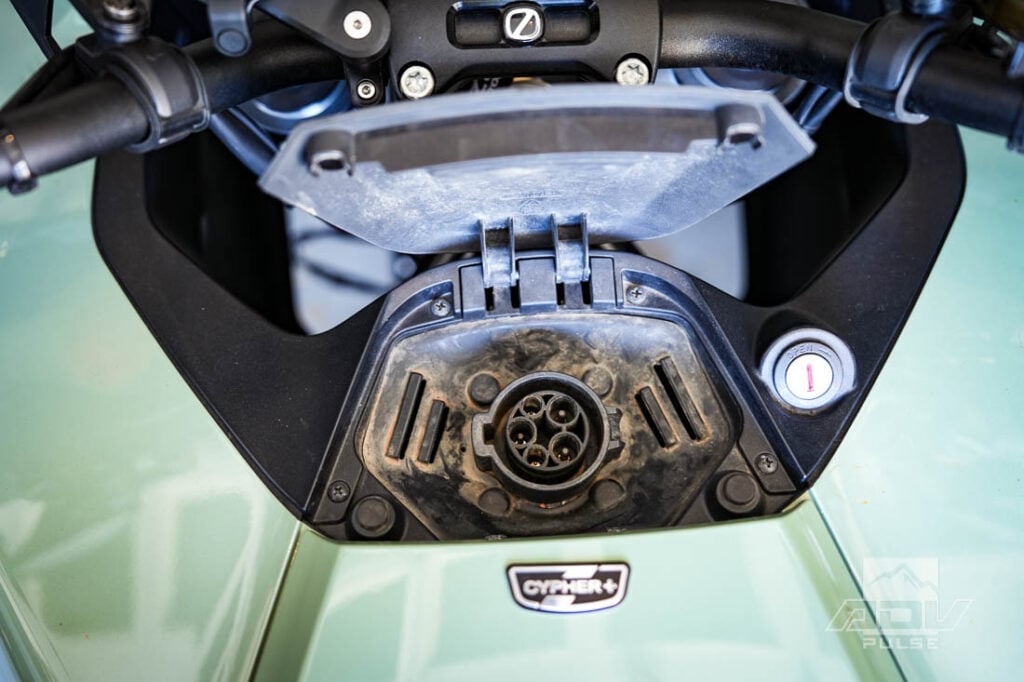
With the included Level‑1 charger, the DSR/X pulls 1.3 kW from a standard 120V home outlet, taking 11.1 hours to charge the 17.3 kWh battery from 0-95%. Using a J1772 connector, the Level‑2 charge bumps that to 6.6 kW and cuts the time to 2.2 hours. Zero also offers a $1,500 Rapid Charger upgrade that nearly doubles the rate to 12.6 kW, bringing 0-95% down to 1.1 hours.
Why doesn’t Zero list times to 100%? Because charging isn’t linear all the way to max capacity. Charging starts off at full speed, then the rate tapers off to protect the battery. It’s a lot like blowing up a balloon — as you approach full capacity, that final 5% takes more effort.
Zero offers several “Cypher III+” optional upgrades that can be installed at a Zero dealer. These factory upgrades can add up to several thousand dollars. However, unlike some other Zero models, the DSR/X comes fully loaded with every one of them as standard equipment: extended range, heated grips, faster charging, boosted performance, and parking mode. The extended‑range feature (not to be confused with the Power Tank range extender) adds roughly 10% more usable capacity (about 20% more range), but you must manually activate it each time you want to use it.
As far as performance, the Z-Force motor puts out 100 horsepower and an impressive 169 ft.-lbs. of torque. That’s 59 ft-lbs more torque than the KTM 1390 Super Adventure. Zero claims 179 miles city, 107 miles highway, and similar numbers off‑road. That’s relatively good range for an electric motorcycle but is it enough for real adventure? Let’s find out…
The Plan: A Simple Overnight ADV Trip
I live near the beach in Los Angeles, which means the nearest mountains — and the best ADV terrain — are on the other side of the city at least 35 miles away. The closest option is the Angeles National Forest, which offers twisty pavement, scenic fire roads, and several campgrounds, making it an ideal first trip for this electric adventure bike.
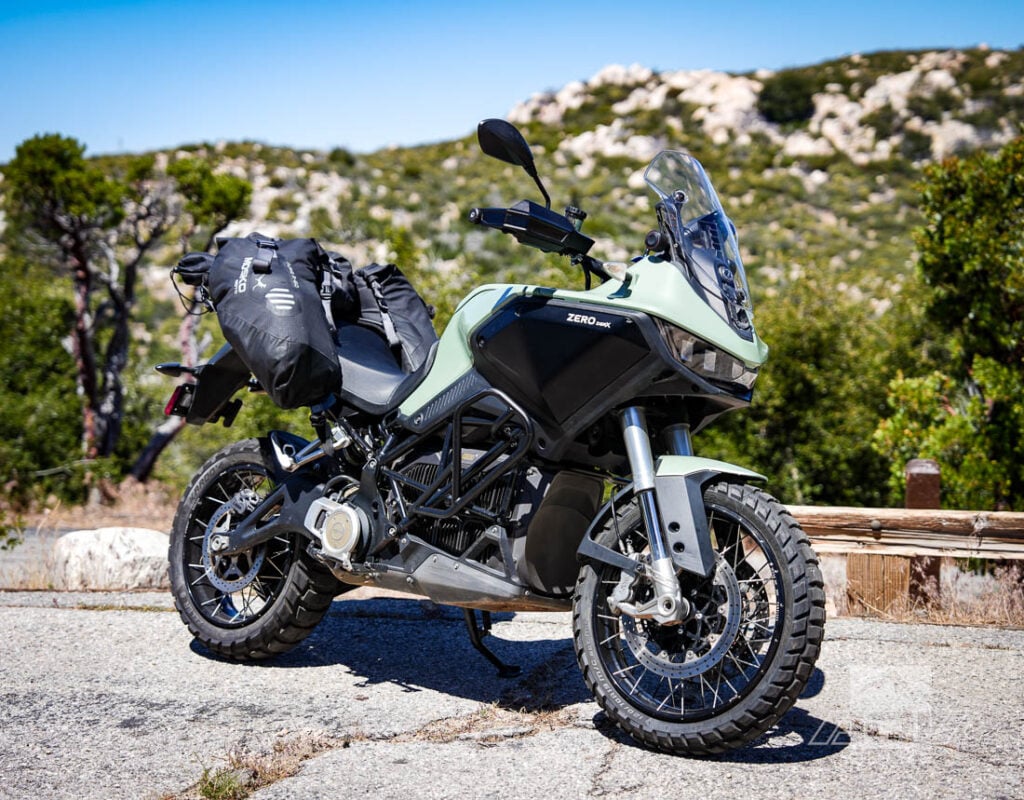
The challenge, of course, is that once you’re up there, there’s nowhere to charge. So the plan had to be simple and well executed: ride to the base of the mountains on the freeway, top off the battery to 110% using the extended‑range feature, then head into the forest for a night of camping and exploration. The next day, I’d descend back down the mountain, grab just enough juice to get home, and call it a fun two‑day adventure.
It wasn’t meant to be a massive expedition — just a realistic overnight trip that mixed twisty pavement, forest roads, and a night under the stars. The kind of trip many ADV riders would consider a “basic” or “starter” adventure. But with an electric motorcycle, even a simple plan requires a bit of strategy and planning.
Charging Up & Heading Out
I left early on Saturday, cruised through downtown LA riding in ECO mode. At highway speeds, the DSR/X is stable and composed. Riding at 70–75 mph is comfortable, though you can watch the battery percentage drop fast. Passing power is immediate, and the bike surges forward with a smooth, turbine‑like rush even in ECO mode. Wind protection is decent for a mid‑sized screen and it’s adjustable by hand. The seat is also comfortable and there’s room to move back and forth even though it’s a cutout-style seat.
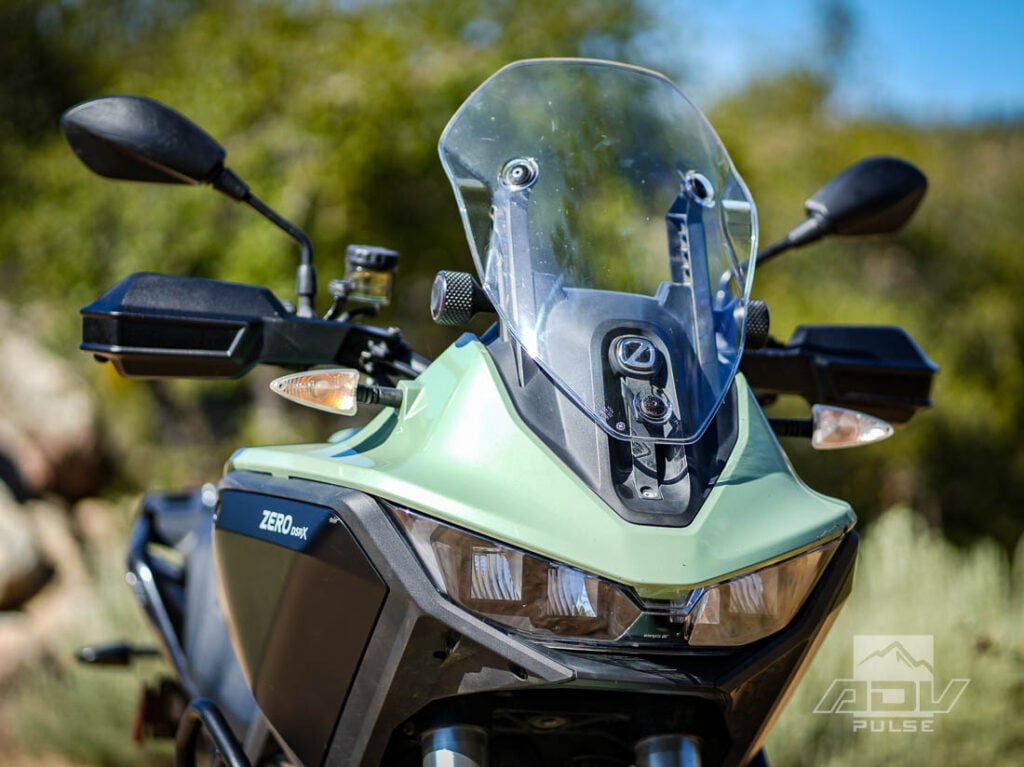
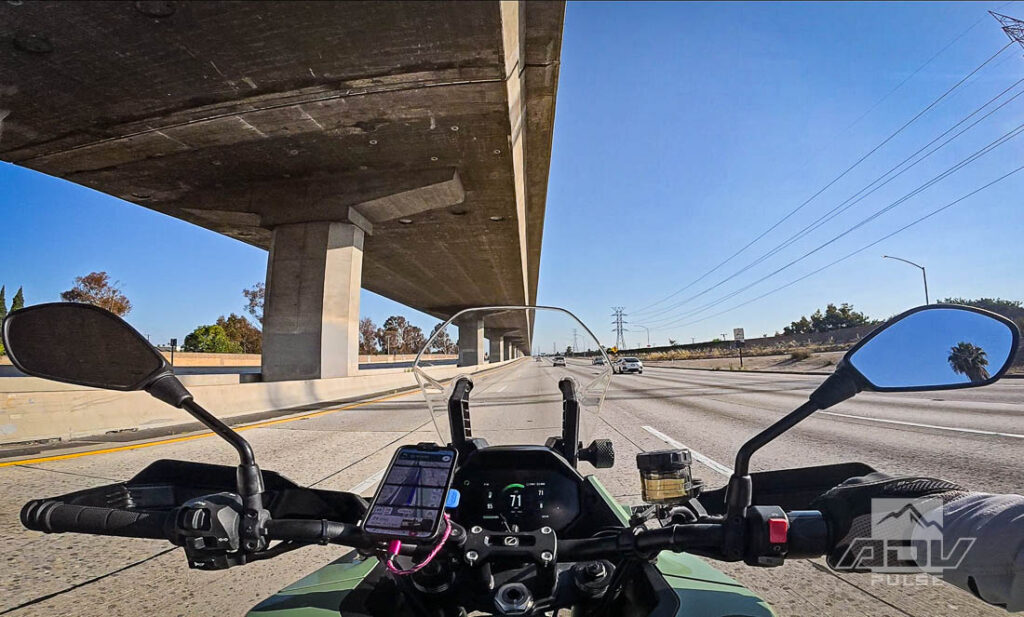
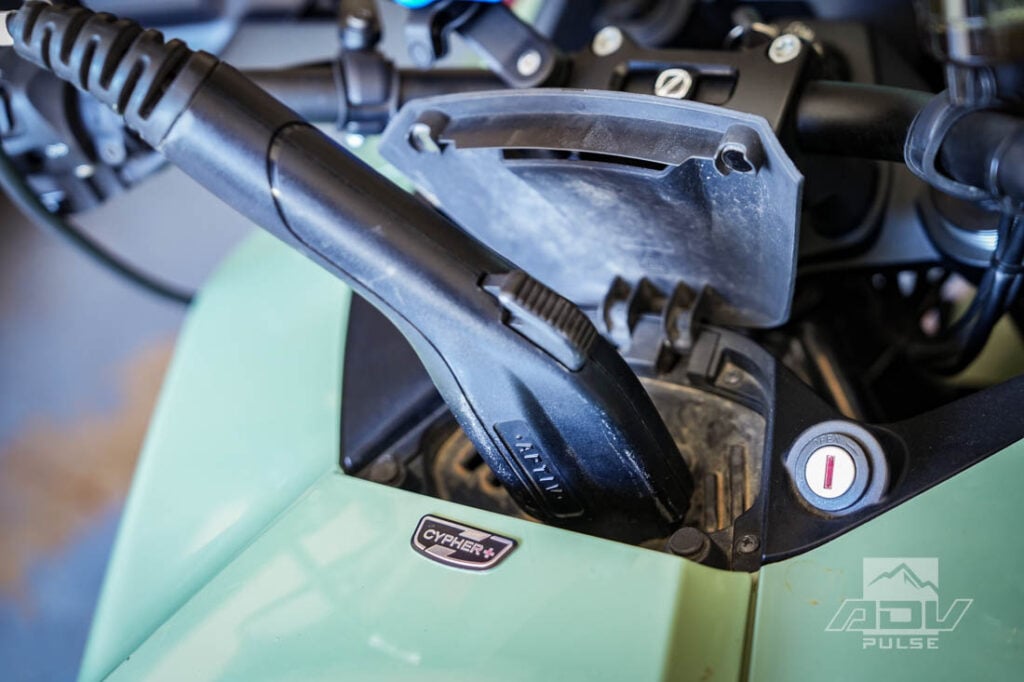
After about 35 miles of navigating LA traffic, I reached my ChargePoint station with 62% battery remaining. Once plugged into the built-in J1772 connector, I grabbed an awesome machaca and eggs breakfast across the street. You can also use Tesla Supercharging stations with an optional adapter plug, but the rate of charging isn’t any faster.
By the time I finished eating, the bike was already at 100%, but I needed the full 110% for maximum range so I walked a short distance to grab some supplies at the liquor store. That last 10% trickles in slowly and after 1 hour and 10 minutes total, I was topped up and ready to go.
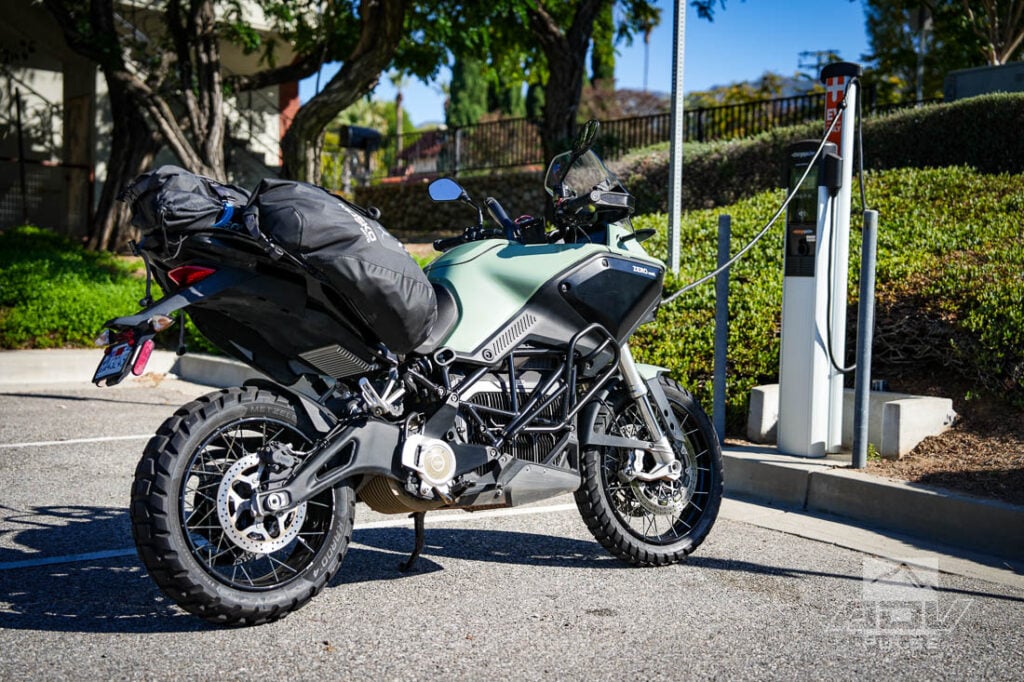
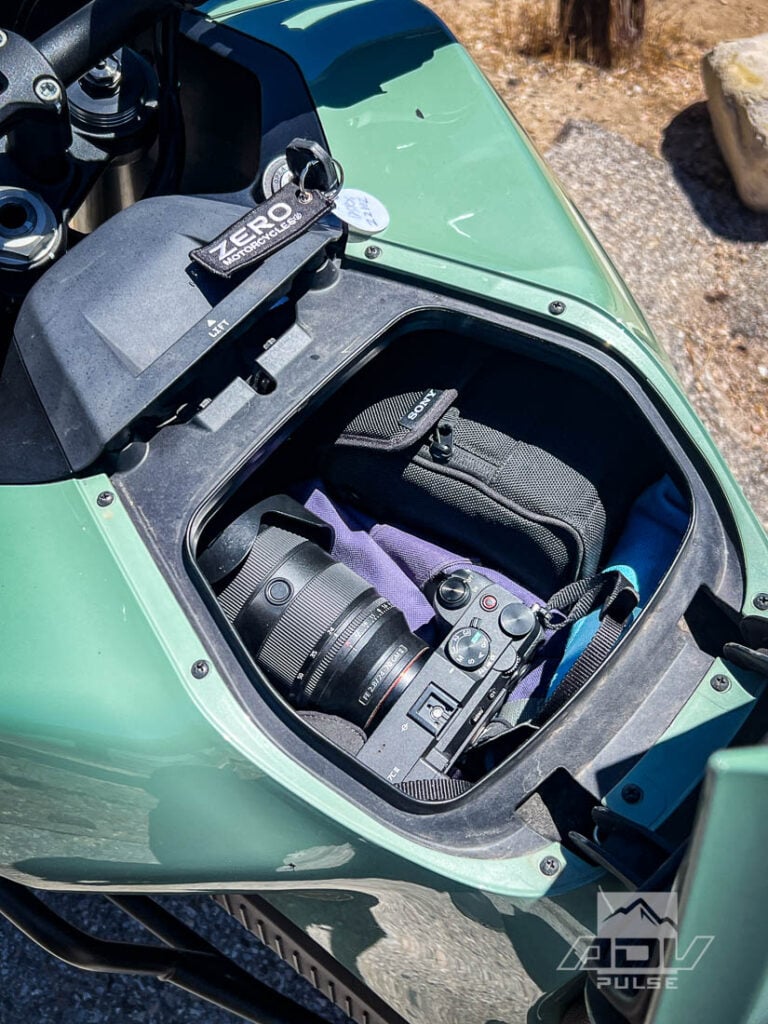
With a full charge and a set of Mosko Alpine 60L soft bags loaded with camping gear, I headed up Highway 2. The DSR/X is smooth, quiet, and deceptively quick on a twisty road. The ergonomics lean sporty — slightly rearset pegs and a stretched‑out low bar. I liked the front trunk that was large enough for carrying my camera gear, a luxury you don’t typically get on gas-powered ADV bikes. And the fact that you can lock the truck is also nice on a bike that may be left unattended while charging.
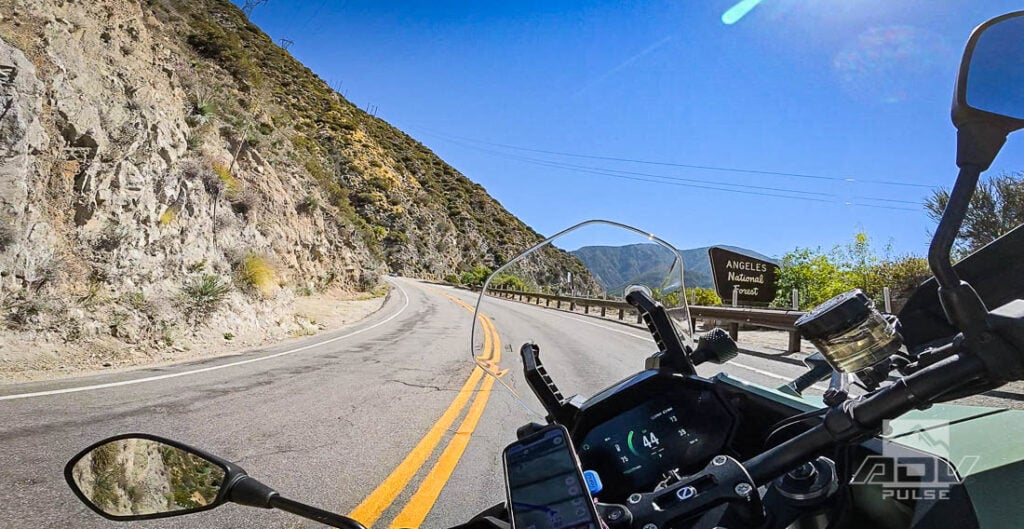
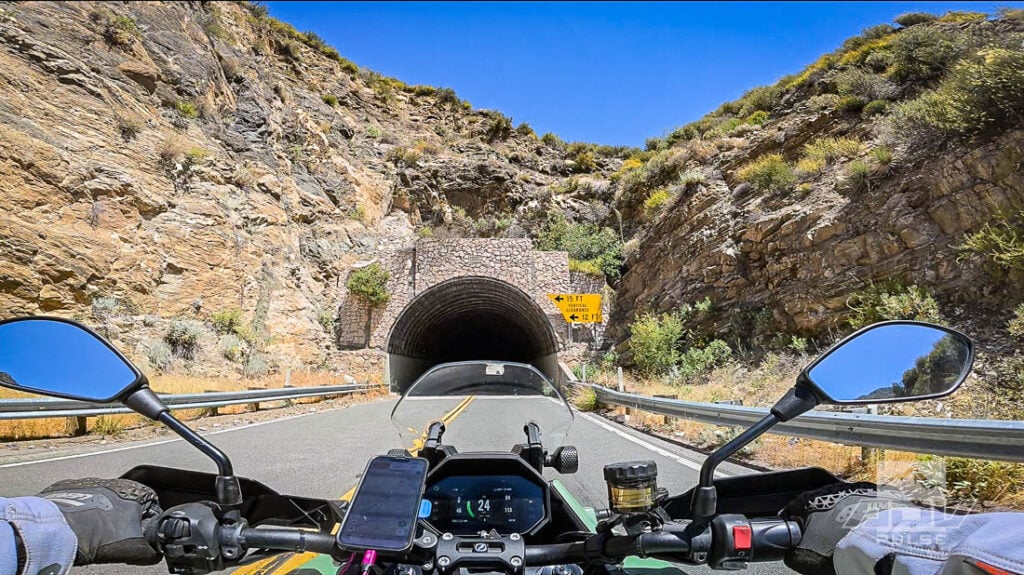
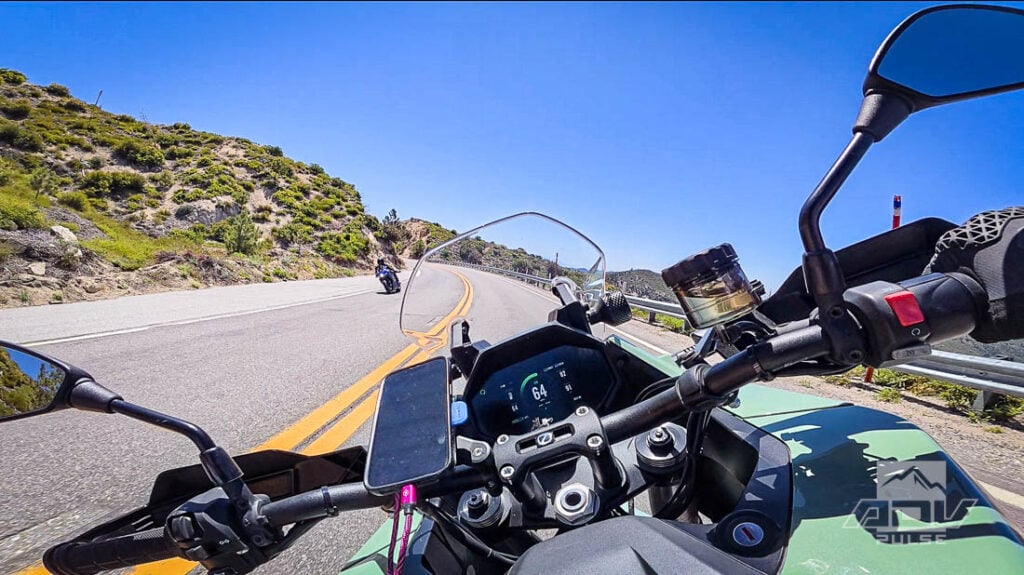
Highway 2 is a world-class twisty road for motorcycles: endless curves, sweeping views, and a steady climb from 1,000 to 7,000+ feet. I kept the pace relaxed to preserve range, resisting the urge to chase the sportbikes passing me by. For the time being it was nice just enjoying the views and fresh air, watching the terrain change from scrub brush to forest.
Hitting The Dirt
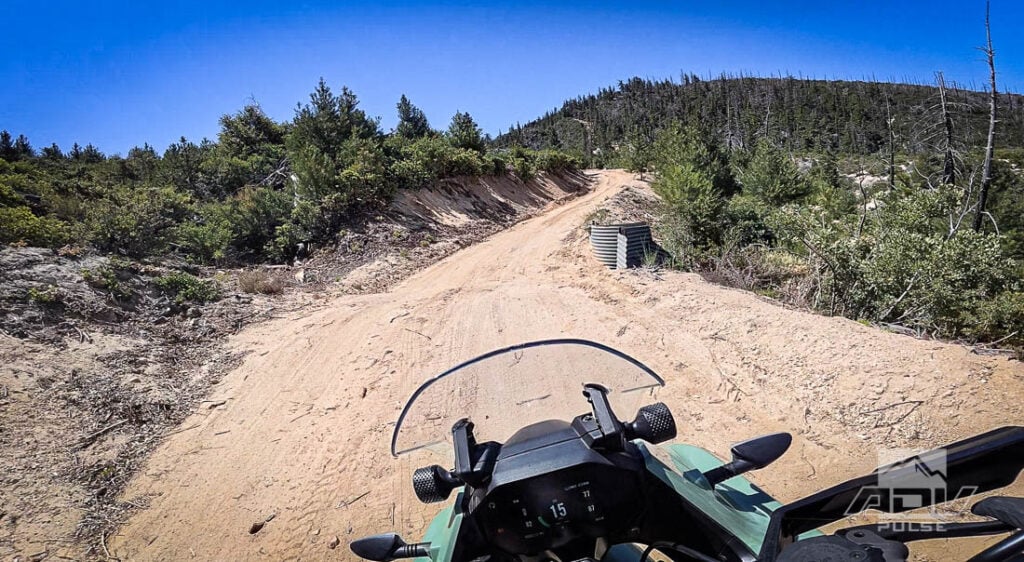
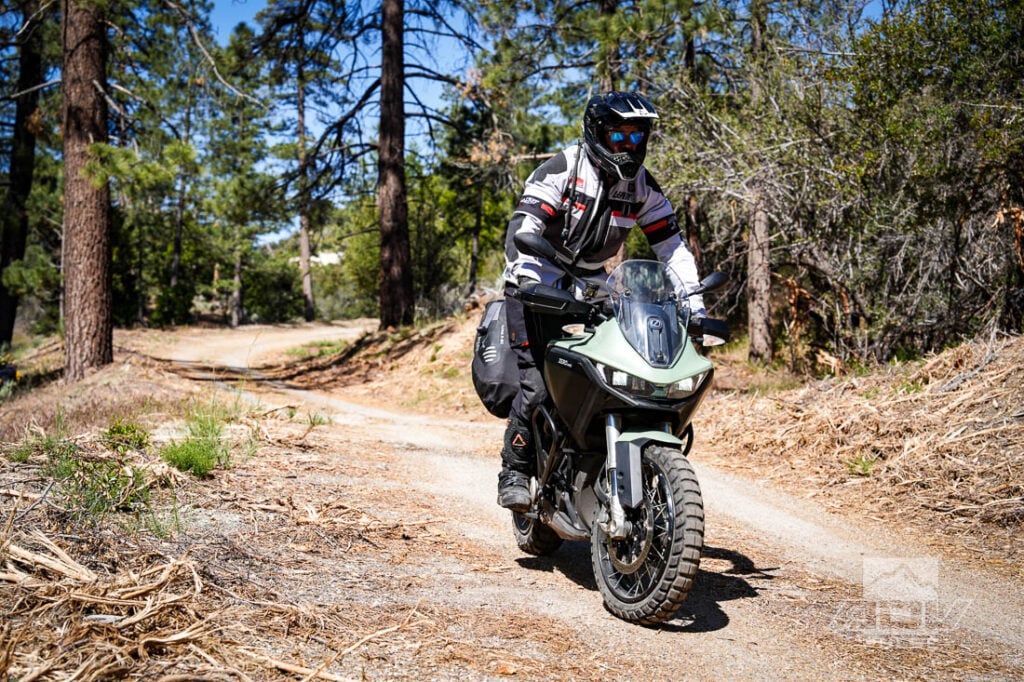
After about 20-miles of asphalt, I hit my first dirt section, a short 3.5‑mile loop near Mt. Mooney. The DSR/X handled the smooth fireroad with tight switchbacks well — stable, predictable, and surprisingly nimble for a 544‑pound machine. After securing a campsite at Chilao campground, I decided to settle in, enjoy the scenery, and save the exploring for the next morning. A short hike down to the creek and an evening campfire with a full moon capped off a perfect day.
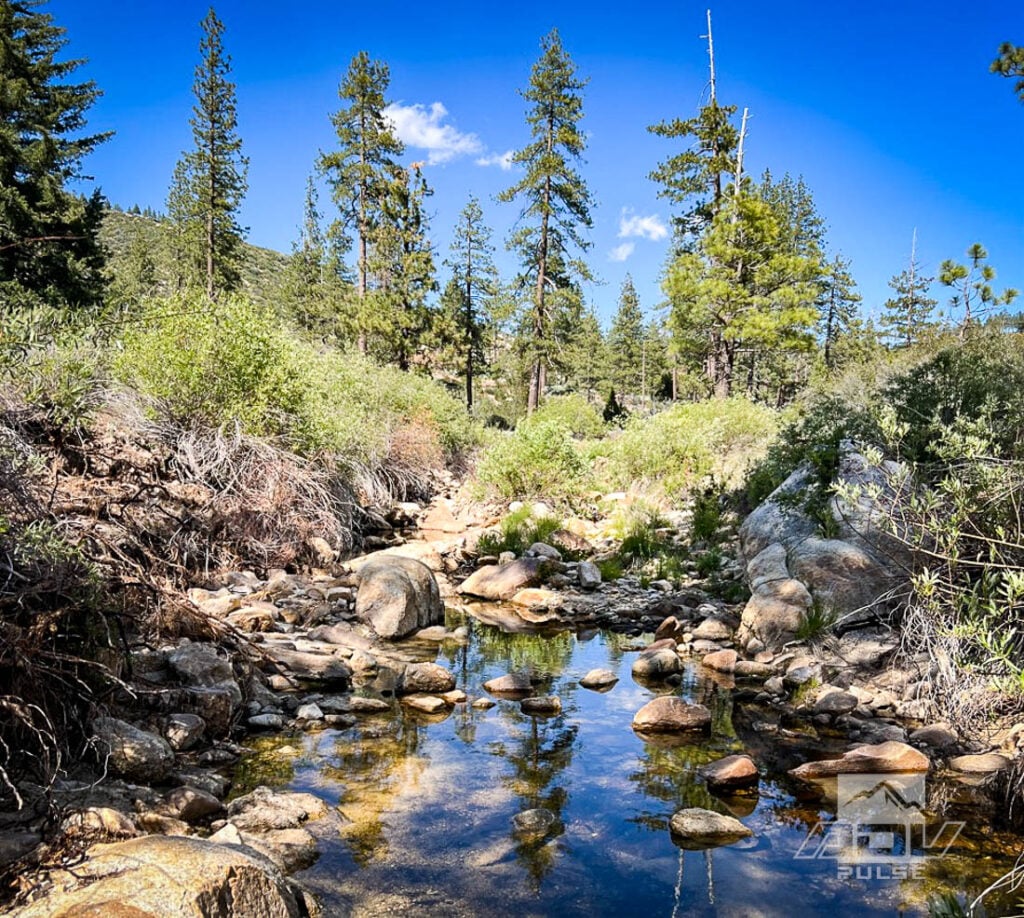
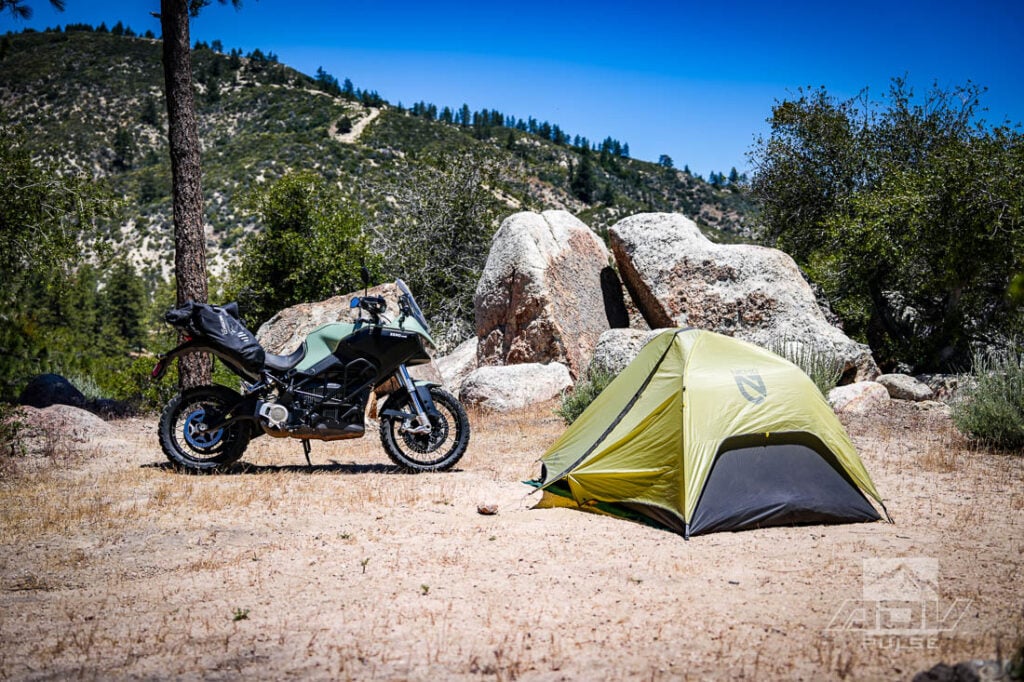
The next day, I hit the dirt again. The DSR/X impressed me more than expected. On a rocky, chewed‑up climb out to a lookout spot, it stayed composed, tracked straight, and didn’t mind changing lines through ruts and deep holes. The suspension is plush but offers good stability, and I even found a waterbar jump that let me get both wheels off the ground. I tried this jump several times to test the limits. It has good hold up front and rear, and it didn’t bottom out until I really pushed it. The Showa suspension is quality stuff and even before any adjustments, it seemed fairly dialed in for my 210-pound frame plus luggage.
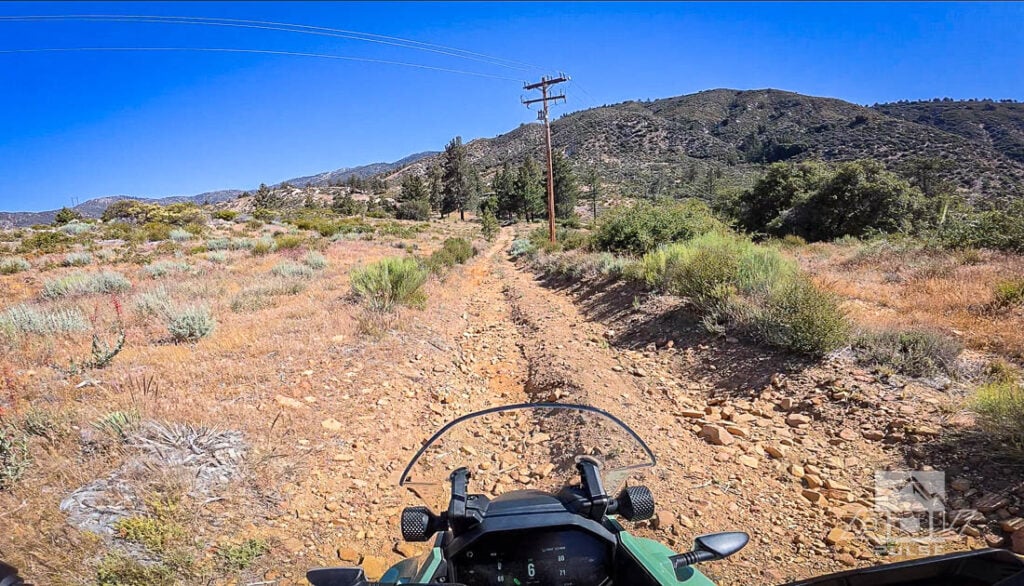
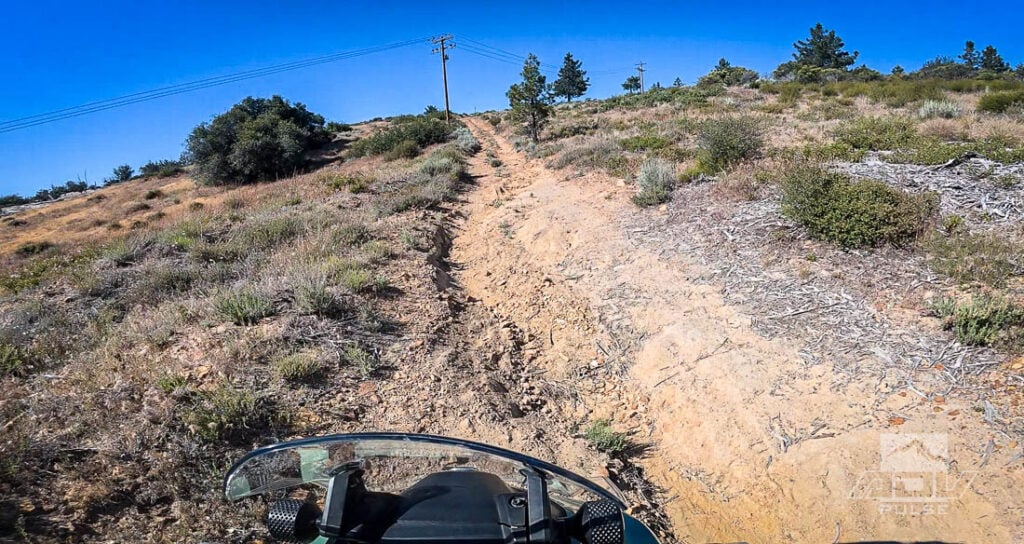
This isn’t a hardcore off‑road machine of course, but for a 550‑pound ADV, it’s easier to guide down rough trails than many gas bikes in this weight class. With its battery and most of the weight sitting low on the bike, it gives it a more nimble feel than you’d expect. I continued exploring for another 20 miles of dirt, including a stop at the nearly empty Horse Flats Campground — a hidden gem I’ll have to return to.
A Bit Of Range Anxiety
Back on pavement, I decided to indulge a bit and enjoy the DSR/X’s sportier side. In Sport mode, it’s punchy and stable, with strong brakes, though the front lever felt a bit spongy in the initial pull like it needed a bleed. With no engine noise, vibration or gear changes, the bike flows through canyon sweepers with an almost effortless smoothness, and you can lean it deep into turns with good peg clearance. All you hear is wind noise. Without the engine revs guiding your sense, it can make it harder to identify when you’re pushing the limit.
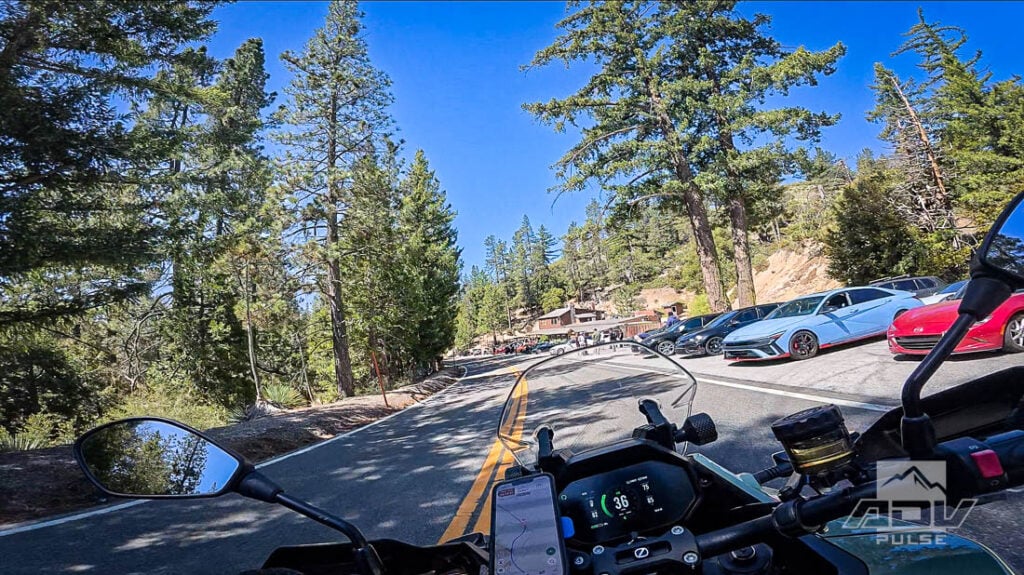
After getting absorbed in the thrill of speed, I realized I missed a turn, which ended up adding an extra 20 miles to my route. Not a big deal on a gas bike but with the limited range of an e-motorcycle, I hadn’t accounted for this mistake. By now my battery had dropped to 27% and I was still quite a ways away from civilization. Back to ECO mode…The regen going back down in elevation helped, but not as much as I hoped — at 50–60 mph, you’re still on the throttle going downhill.
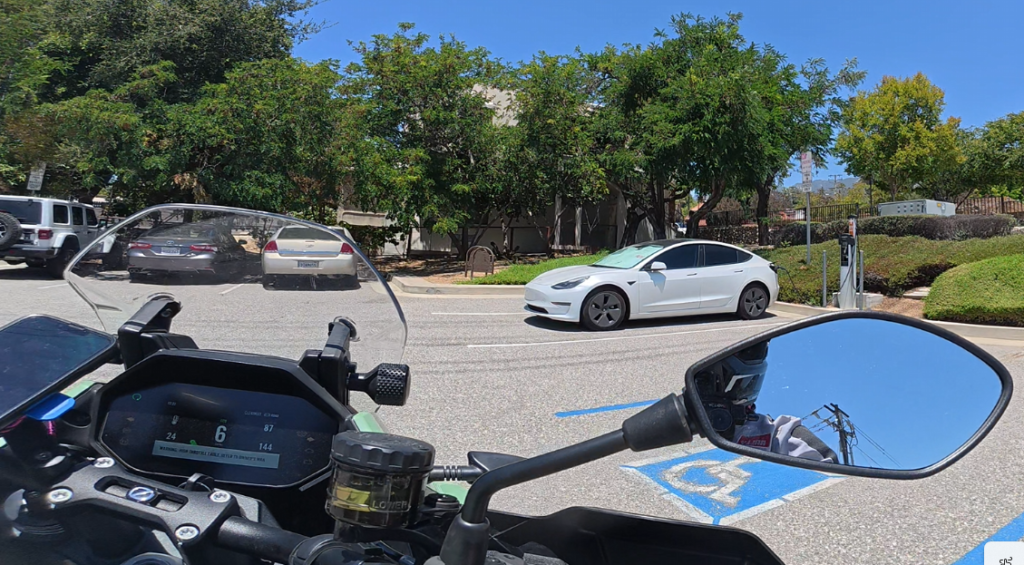
I reached the charger with about 15% battery left… only to find a Tesla occupying the station. After a tense search on the ChargePoint app, I found a free charger just 0.8 miles away which was a relief. After plugging in, I grabbed a quick lunch to-go, which I ate in the park so I could keep an eye on the bike and my gear. Charging up to 60% on other Level-2 charger took just under an hour, which was more than enough to get home.
As an electric‑motorcycle newbie, I definitely felt a little anxious during this trip – learning how charging stations work, estimating charge times, and planning the route around them. It required more forethought than on a gas bike, and I found myself making different choices because of it. I imagine that with more time and familiarity with the routine, this all becomes second nature though. On a typical trip, I probably would have eaten breakfast at home and headed straight for the mountains after a quick fuel stop. Instead, I scheduled a charging break into the morning and ended up exploring a new town and trying out a local eatery. What originally seemed like an inconvenience actually became part of the adventure.
Total electricity cost for the entire trip, including the initial charge up at home (based on my electricity bill), was $8.40. A comparable gas bike would have burned about $22.50 on premium unleaded in California averaging 40 mpg. Not a huge savings, but if you’re using the bike for daily commuting, cutting your transportation expenses by almost a third can be significant – perhaps hundreds or even thousands of dollars over a year, not to mention the lower cost of maintenance that electric bikes are known for. But with an MSRP of $22,995 USD, the initial buy-in price doesn’t really justify buying a DSR/X for cost savings. You’re more likely to buy it because you like the electric experience and the tech, or perhaps you’re doing it for the environment, but it’s debatable whether you can arguably hard to justify doing it purely on cost.
So… Is It A “Real” Adventure Bike?
Sure — but there are caveats.
The DSR/X can absolutely deliver a simple overnight ADV experience. It’s smooth, quiet, capable on dirt, fun on pavement, and cheap to operate. But range and charging infrastructure still shape what kind of adventures you can realistically do. If you live somewhere like Denver, Salt Lake City, or Flagstaff — where world‑class trails sit 20–30 miles from town — the DSR/X makes a lot more sense. Charge at home, ride all day, return home and sleep in your own bed. If you live in an area where the trails are two to three hours away or more, you’d have some real challenges to make it work.
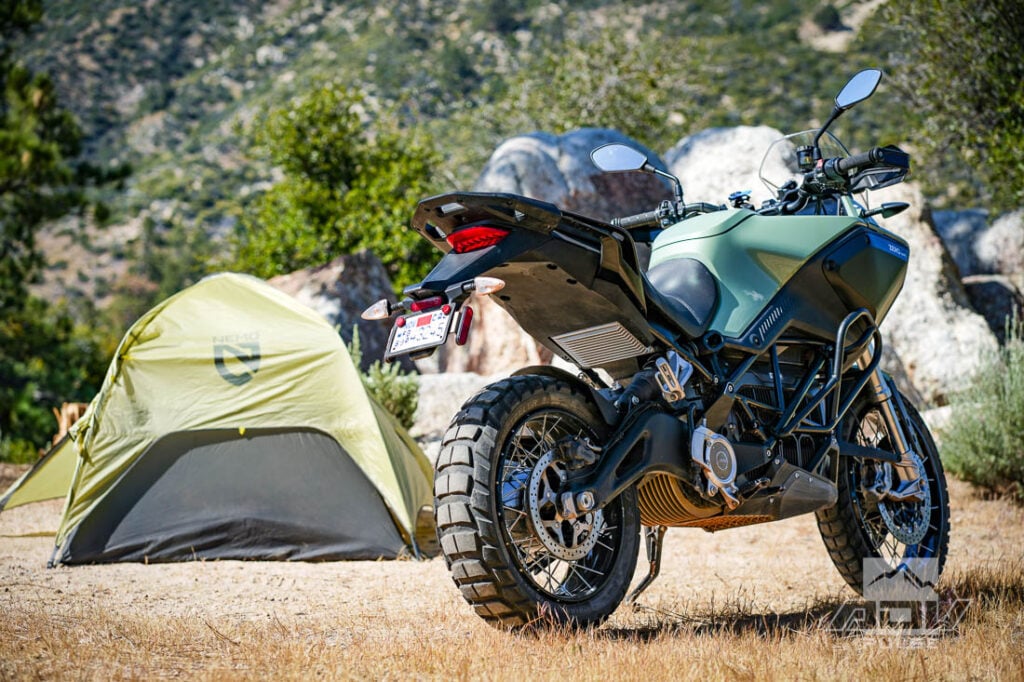
Where I live on the coast of Southern California, the closest trails aren’t too far but many of the best riding areas — Big Bear, Lake Arrowhead, Idyllwild, Frazier Park, Ojai, — sit 90 to 100 miles away. That’s where the DSR/X starts to feel constrained. That doesn’t mean adventure is off the table though. Even in stock form, I can think of three or four local overnight trips in the Angeles National Forest or Orange County’s Saddleback Mountains that I could do on the DSR/X with a single one‑hour charge at the base of the mountains. Ride, explore, camp, and return the next day with another quick top‑off.
And with the Rapid Charger, the possibilities expand significantly. A one‑hour stop in the foothills of the San Bernardino Mountains or Los Padres National Forest would open up the opportunity to explore some of those premiere backcountry destinations in SoCal. You could also potentially stay a few days, getting recharged in town during a meal before heading back into the wild. It won’t give you the confidence or convenience of a 250‑mile range GSA, but a rapid charger-equipped DSR/X does open the door to a much wider radius of adventures without long, inconvenient recharging wait times. We’ll have to give that a go in a future test.
While the tech is still progressing, the DSR/X is arguably the most developed electric adventure platform currently available. Perhaps we’ll see a new version in the future that combines the extended range of the Power Tank with the rapid charger as standard equipment. That would really boost its usability. Until then, the DSR/X is a bike that can deliver on adventure. Maybe not quite as long and as far as some would like but with a little planning and perhaps some modifications to your routine, extended trips are possible.
Zero DSR/X Specs
| Range City: | 179 miles (288 km) |
| Range Highway: | 107 miles (172 km) @ 55 mph |
| Peak Torque: | 169 ft-lb (229 Nm) |
| Peak Power: | 100 hp (75 kW) @ 3,500 rpm |
| Top Speed (max): | 112 mph (180 km/h) |
| Top Speed (sustained): | 100 mph (161 km/h) |
| Motor: | Z-Force 75-10X enhanced thermal efficiency, passively air-cooled, torque optimized interior permanent magnet AC motor |
| Controller | High efficiency and power dense, 900 Amp, 3-phase AC controller with regenerative deceleration |
| Power Pack: | Z-Force Li-Ion intelligent integrated |
| Max Capacity: | 17.3 kWh |
| Nominal Capacity: | 15.1 kWh |
| Charger Type: | 6.6 kW integrated |
| Charge Time (Standard 110V): | 7.0 hours (20-80%) / 11.1 hours (0-95% charged) |
| Charge Time (Level 2): | 1.4 hours (20-80%) / 2.2 hours (0-95%) |
| 6 kW Rapid Charger (220-240V) | 43 minutes (20-80%) / 1.1 hours (0-95%) |
| Transmission: | Clutchless direct drive |
| Final Drive: | 90T / 22T, Gates Carbon Drive Moto X9 belt, Mudport Wheel Sprocket |
| Front Suspension: | Showa 47mm Separate Function Cartridge Forks with adjustable spring preload, compression, and rebound damping |
| Rear Suspension: | Showa 46mm piston, piggy-back reservoir shock with adjustable tool-less spring preload, compression, and rebound damping |
| Front Suspension Travel: | 7.48 in (190 mm) |
| Rear Suspension Travel: | 7.48 in (190 mm) |
| Front Brakes: | Bosch Advanced MSC with Combined Braking (eCBS), Vehicle Hold Control (VHC) and Off-Road mode, dual J-Juan radial 4-piston calipers with radial master cylinder, 320x5mm discs |
| Rear Brakes: | Bosch Advanced MSC with Combined Braking (eCBS), Vehicle Hold Control (VHC) and Off-Road mode, J-Juan 2x25mm piston floating caliper, 265×4.5mm disc |
| Front Tire: | Pirelli Scorpion Trail II 120/70-19 |
| Rear Tire: | Pirelli Scorpion Trail II 170/60-17 |
| Front Wheel: | 3.00 x 19 |
| Rear Wheel: | 4.50 x 17 |
| Wheelbase: | 60.0 in (1,525 mm) |
| Seat Height: | 32.6 in (828 mm) |
| Accessory, Low: | 31.7 in (805 mm) |
| Accessory, Tall: | 34.1 in (865 mm) |
| Rake: | 25° |
| Trail: | 4.3 in (109 mm) |
| Curb Weight: | 544 lb (247 kg) |
| Carrying Capacity: | 555 lb (252 kg) |
| Equivalent Fuel Economy (city): | 398MPGe (0.59 l/100 km) |
| Equivalent Fuel Economy (highway): | 188 MPGe (1.25 l/100 km) |
| Typical Recharge Cost | $1.93 |
| MSRP: | $22,995 |
| Standard Warranty: | 2 years |
| Power Pack Warranty: | 5 years/unlimited miles |
Gear We Used
- Pants: Leatt ADV Rally 5.5
- Jacket: Leatt ADV Rally 5.5
- Goggles: Leatt Velocity 6.5
- Helmet: Leatt 9.5 Carbon
- Boots: Leatt ADV Hydradri 8.5
- Gloves: Leatt ADV Rally 5.5
- Luggage: Mosko Moto Alpine 60L
- Tent: Nemo Osmo Hornet

Author: Rob Dabney
Rob Dabney started a lifelong obsession with motorcycles at the age of 15 when he purchased his first bike – a 1982 Honda MB5. Through his 20’s and 30’s he competed in off-road desert races, including the Baja 250, 500 and 1000. Eventually, his proclivity for exploration led him to dual sport and adventure riding. Rob’s never-ending quest to discover what’s around the next bend has taken him on Adventures in Latin America, Africa, Europe, Asia, and throughout the American West. As a moto journalist, he enjoys inspiring others to seek adventure across horizons both near and far.Related Stories
Related Stories
 BDR and Zero Join Forces To Grow E-Powered Adventure Riding Along with the launch of the new DSR/X electric adventure motorcycle, BDR and...
 Zero Launches All-New 2023 DSR/X Electric Adventure Motorcycle Zero Motorcycles has dropped cover on the all-new 2023 DSR/X ― a bike...
 2022 Zero FXE Electric Motorcycle First Ride Review Concept designs — whether we’re talking bikes, cars, you name it — rarely...
Popular Stories
Bultaco Staging Comeback With Budget-Friendly 300cc ADV Bike
Bultaco is officially back in the motorcycle busi...
5 Small‑Bore Adventure Bikes That Aren’t Buzzy On The Highway
Small‑bore adventure bikes in the 300–500cc range...
CFMoto’s 450MT Sweeps All Adventure Classes at Red Bull Romaniacs
CFMoto recorded a standout performance at Red Bul...
KTM Announces Specs And Availability Of New 690 Rally Model
KTM is expanding its LC4 lineup with the introduc...
Notify me of new posts via email
Thanks for highlighting the DSR/X. I’ve had a very similar experience with the bike. For those who can afford it, it may end up being the secondary ADV bike in the garage, but that misses the point a bit. The real value is in the riding experience itself. It’s incredibly easy to ride, surprisingly fun, and the instant torque never gets old. The current limitations around range and charging are real, but they feel more like technology constraints than motorcycle constraints. As battery and charging infrastructure continue to improve, bikes like the DSR/X have a bright future. To me, it already shows what electric adventure riding can be, even if the rest of the ecosystem is still catching up.
Thank you! I agree, it’s a totally different experience riding one of these and they are a lot of fun off-road. I saw you rode a DSR/X across the CABDR North. A true testament to the long-distance travel capability of this machine, especially in such remote backcountry. Looks like each section is about 90-125 miles long, so seems like you could charge up each night for the next day. Zero is definitely leading the way on the e-ADV segment. Hope to see more brands jump in to continue to push the limits of the tech in the coming years.