
2026 Norton Atlas First Ride Review
The historic British brand begins a bold new chapter with its first adventure bike.
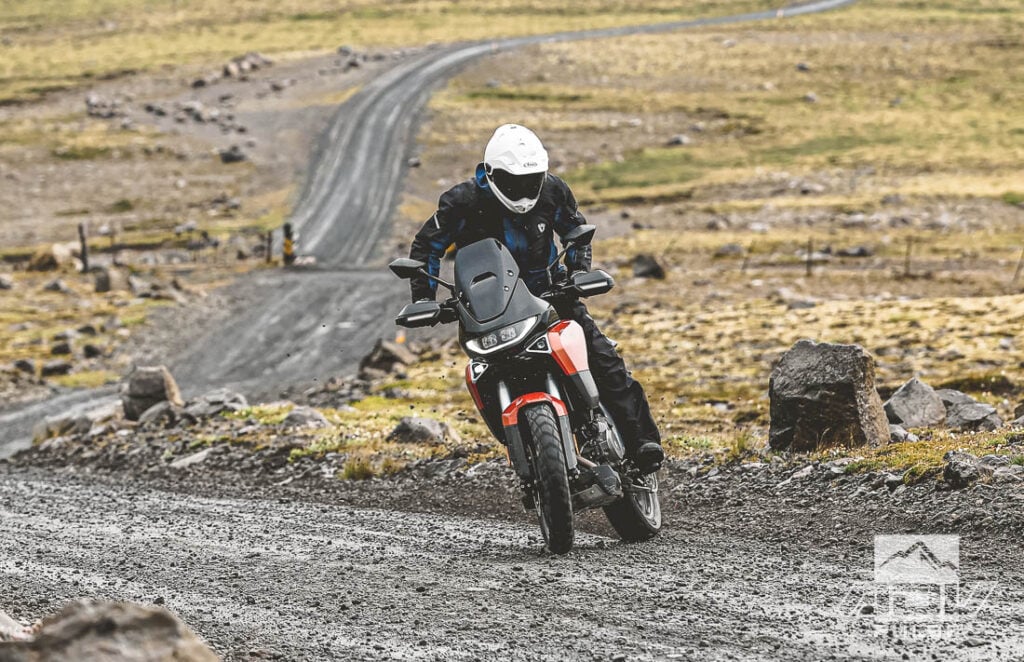
Among all the adventure bikes announced in 2025, none seemed to raise more questionmarks than the Norton Atlas. A brand long associated with British cafe racer heritage suddenly stepping into the ADV segment was an unexpected turn, but not an entirely unprecedented one. Norton’s past includes the P11, one of the most competitive big‑bore desert sleds of the 1960s.
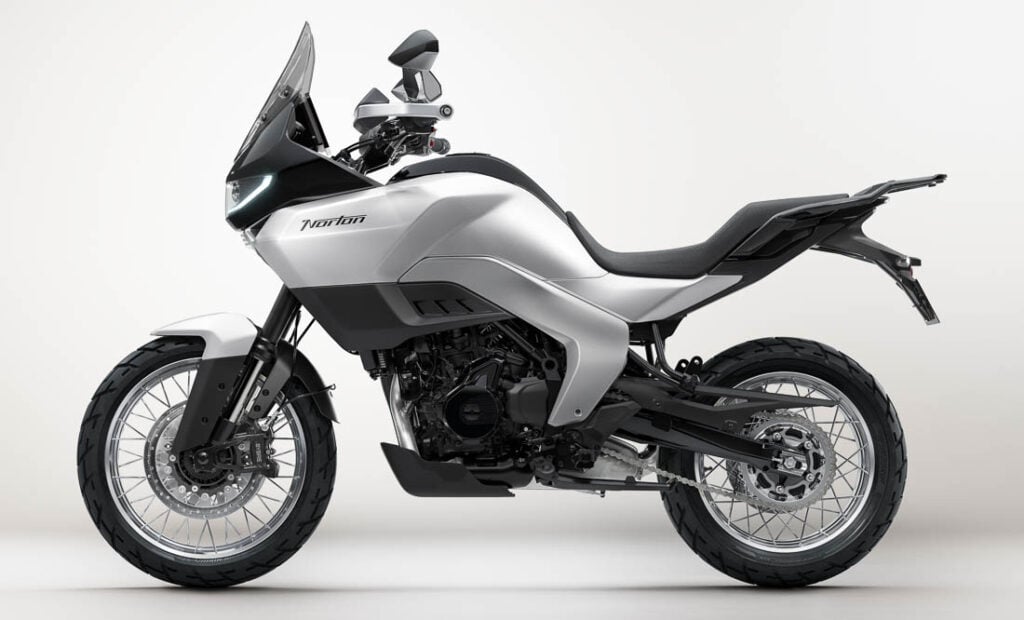
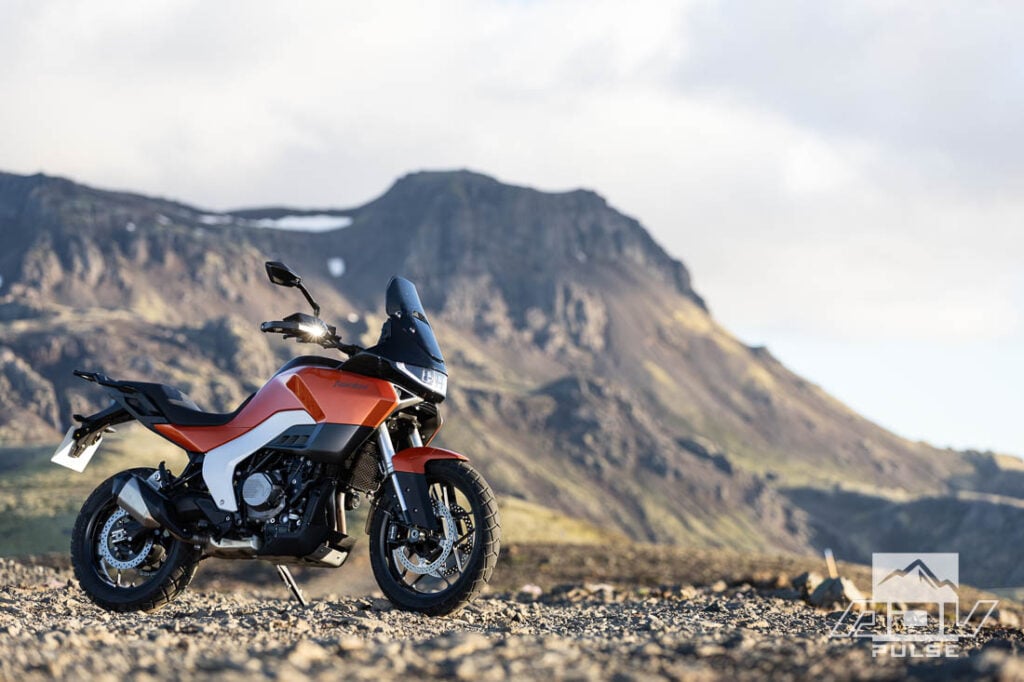
It was the Atlas’ unique design though that made the biggest statement. With nearly every new adventure bike model these days gravitating towards hard-edged Dakar Rally aesthetics, Norton chose more swoopy lines with a hint of 90s adventure bike styling. This was a clear departure – and a polarizing one judging by the early online commentary.
Then there’s the company’s complicated brand identity. Norton dominated the 50s and 60s with engineering innovation, racing success and iconic models like the Manx, Dominator and Commando before collapsing with the rest of the British motorcycle industry in the 70s. The brand regrouped after bankruptcy in the 80s, and once again in the 2000s, before being purchased in 2020 by Indian manufacturing giant TVS.
So what should we expect to get from this latest resurgence and an all-new adventure bike? Another budget-friendly middleweight? A road-biased tourer in ADV clothing? Perhaps just an exercise in styling? A trip to Iceland for the international press launch promised some clarity.
What You Get
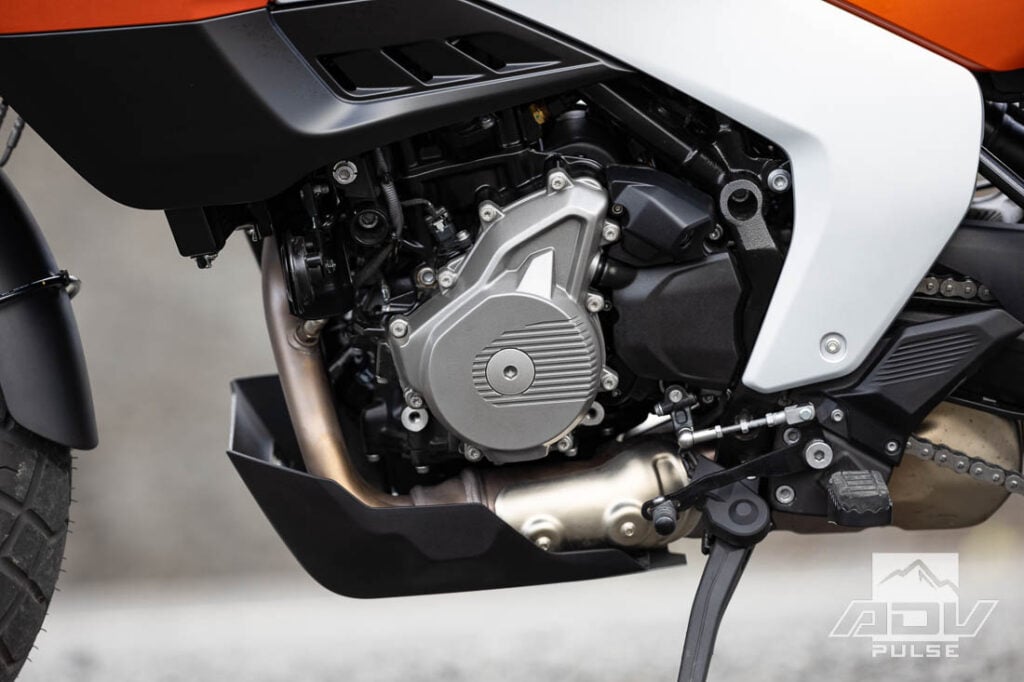
To better understand where the Atlas fits into the ADV landscape, let’s take a look at its hardware. Power comes from a 585cc parallel twin engine sporting a 270º crank putting out 69 horsepower and 42 ft-lbs of torque. Norton says they focused heavily on engine character — broad, accessible torque and a lively feel — along with durability features like an optimized oiling system and plasma‑lined cylinder walls. The motor is paired with a cassette‑style 6‑speed gearbox, a slipper clutch, and a standard up/down quickshifter.
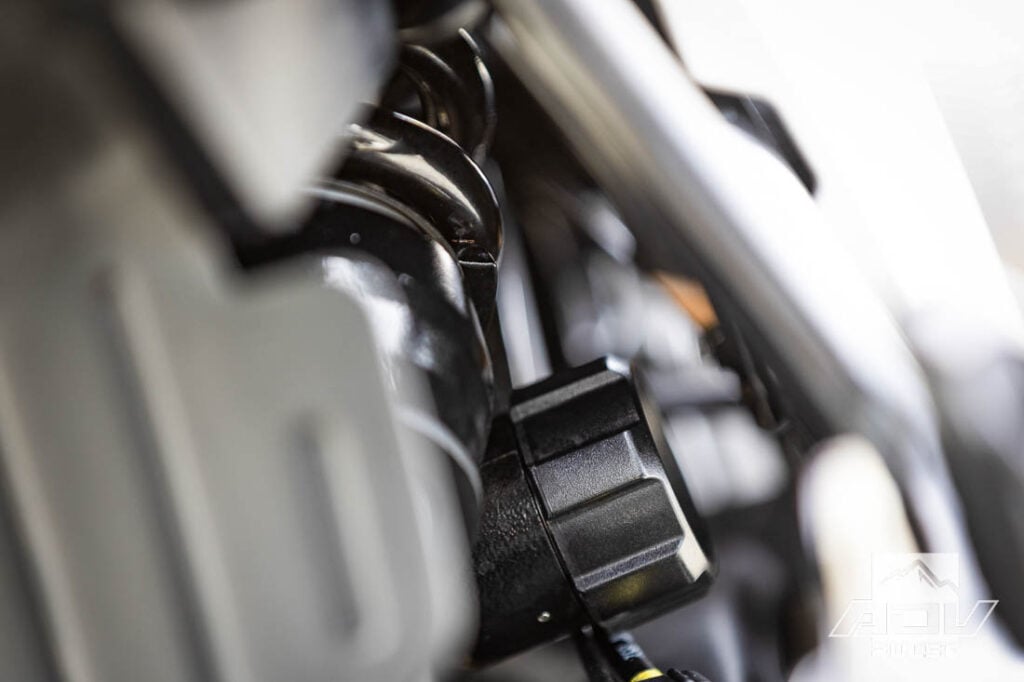
The chassis centers around a steel-trellis frame used as a stressed member, suspended by KYB components front and rear. The 43mm front fork is fully adjustable, while the rear shock has adjustable rebound and a hand-crank preload adjuster. Norton also included an anti-bottoming valve in the shock to smooth out harder hits. Suspension travel is 7 inches, which contributes to its 8.7 inches of ground clearance and 33.3-inch seat height.
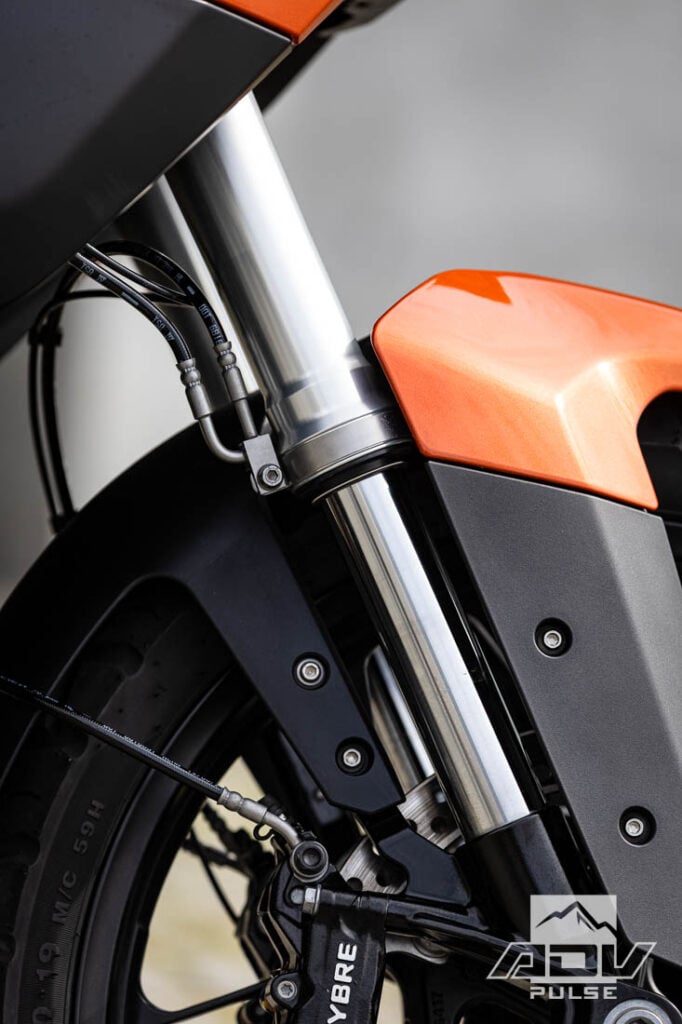
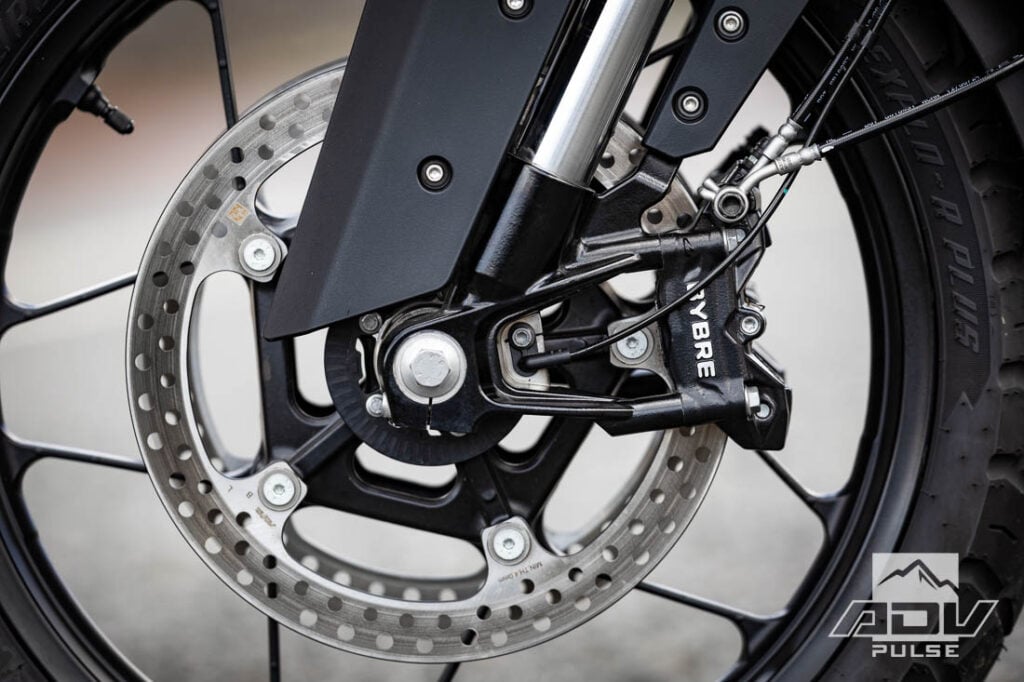
Wheel sizes are 19/17 inches with cast aluminum rims as standard, but these can be replaced with spoke wheels in the same sizes as an option. Braking is handled by radial‑mount ByBre Brembos on twin 310mm semi‑floating front discs, plus a 270mm rear disc, all fed by steel‑braided lines. Combined with a 57.7‑inch wheelbase, 25.7º rake, and the smaller wheel combo, the Atlas clearly aims for agility and quick steering.
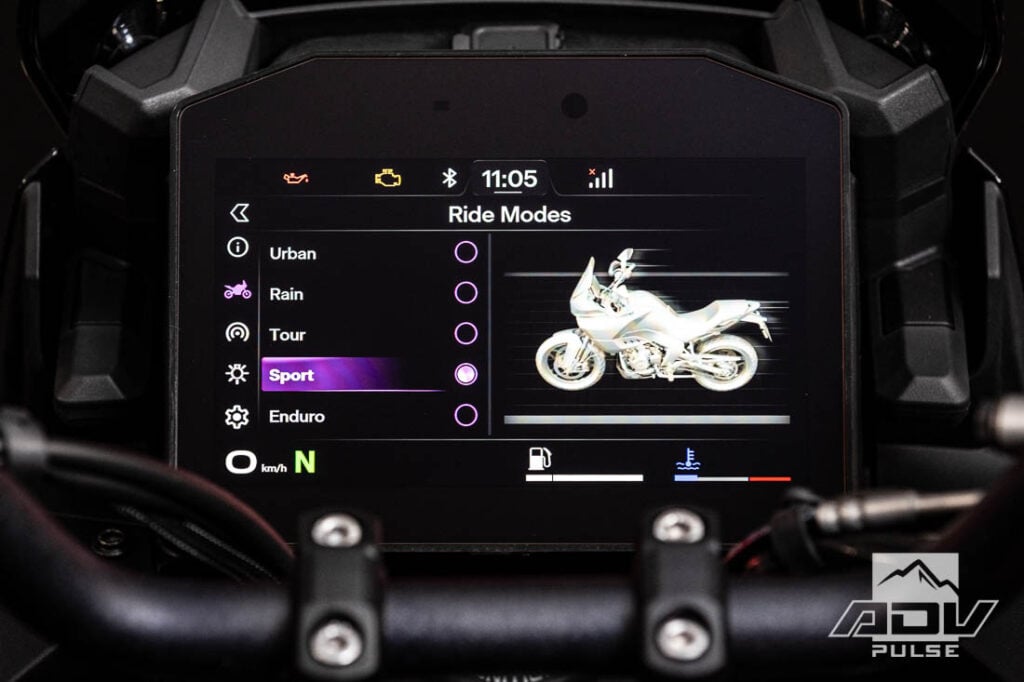
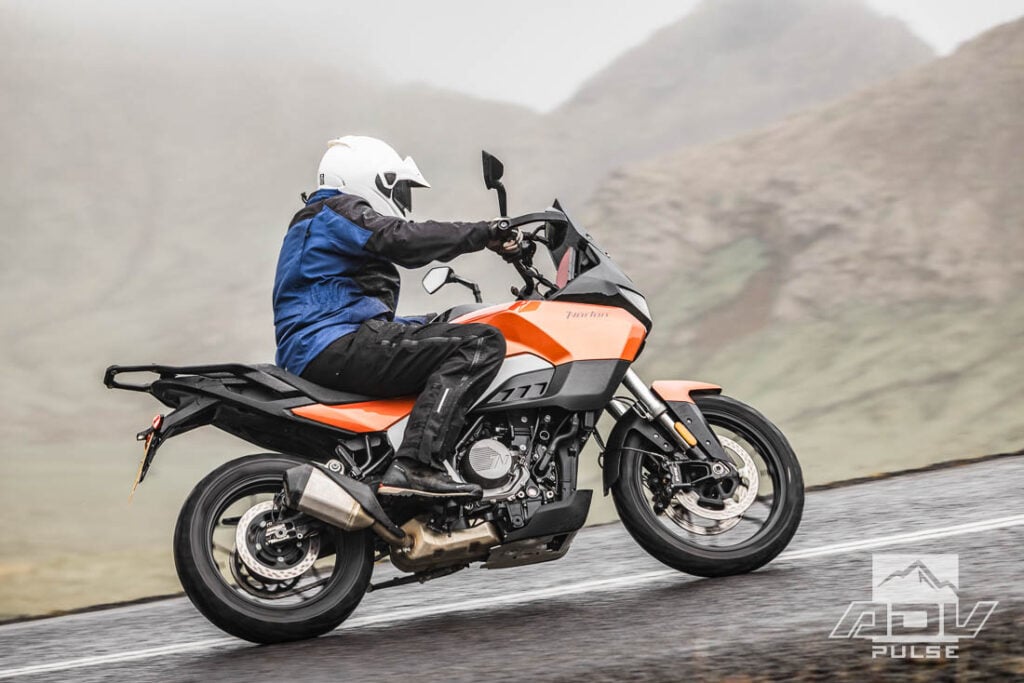
Electronics on the up‑spec ‘Apex’ trim offer a full suite of rider aids, including five ride modes: Rain, Urban, Touring, Sport, and Enduro. Each mode is specifically tuned for throttle response, engine braking, traction control, wheelie control, and ABS. A 6‑axis IMU supports lean‑aware ABS, TC, and even the standard Cruise Control. The Apex package also adds Hill Hold Control and Combined Braking.
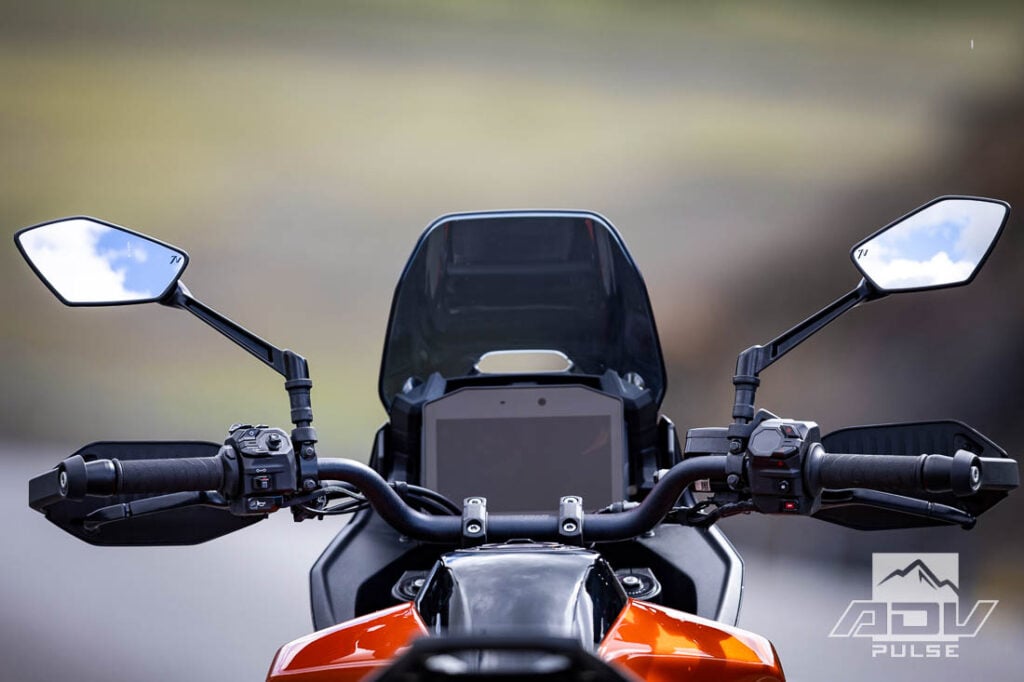
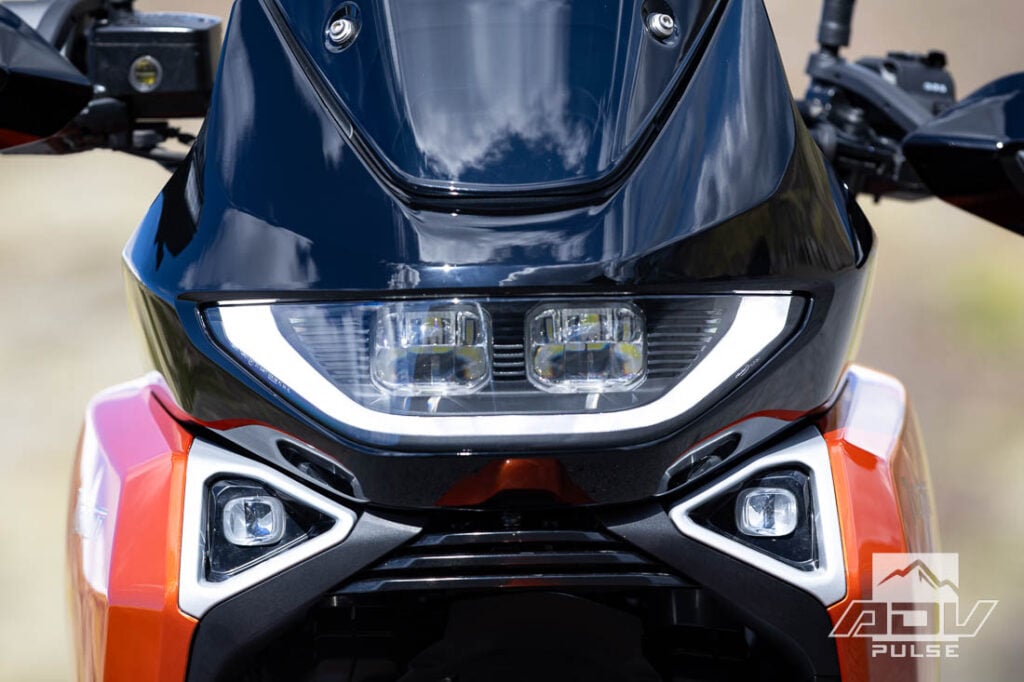
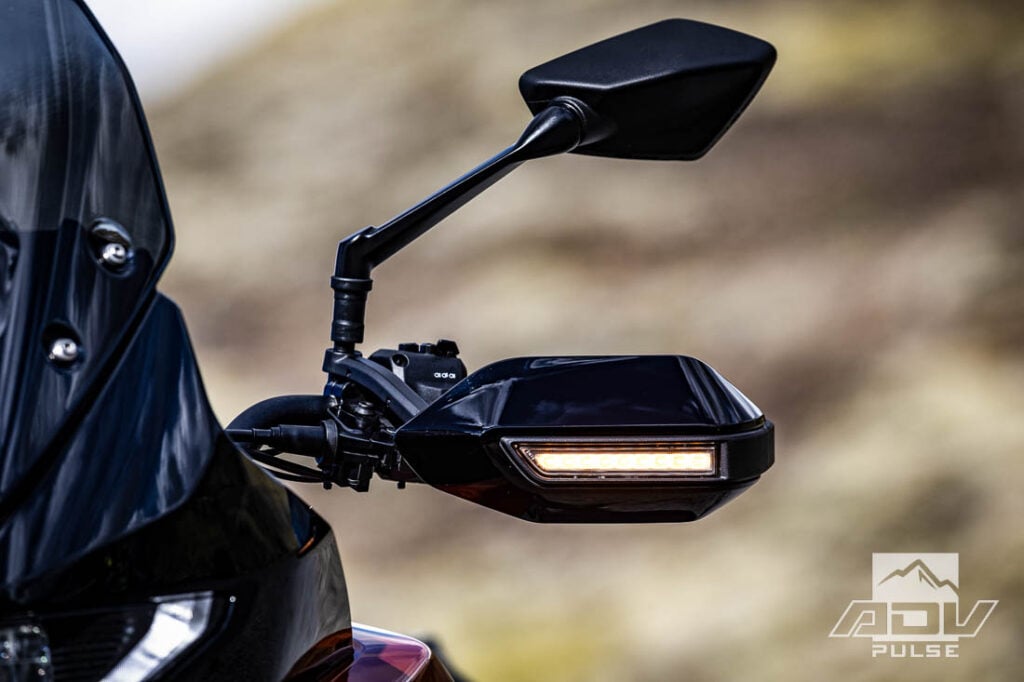
Beyond the basics, there is plenty of nice equipment that comes standard like a keyless ignition, wrap-around handguards with integrated turn signals, 27W USB-C fast charging port, 8” touchscreen TFT display, and LED lighting all around. Apex models add a push‑button adjustable windscreen, heated grips, TPMS, cornering lights, basic sump protection, a rear rack, and something called a puddle lamp that illuminates the ground when you drop the sidestand at night. Fully outfitted, the Atlas Apex weighs 423 pounds, without any fuel in its 4-gallon tank.
On-Road Performance
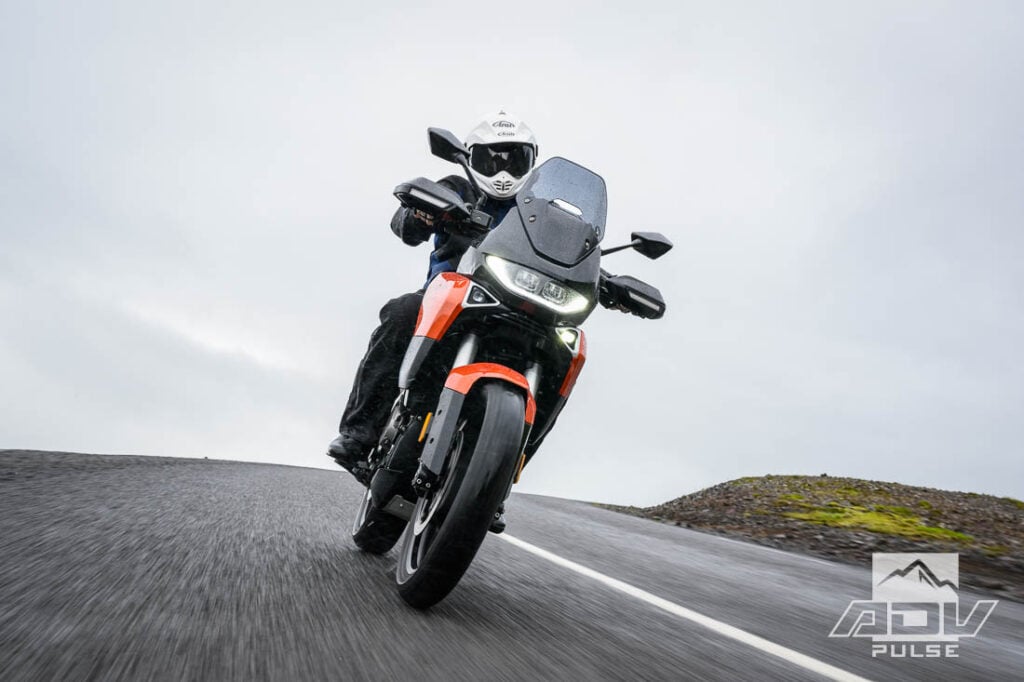
After a night where the sun dipped below the horizon for only a few hours, we were kickstands up at 8 a.m. for a cold, rainy start to our ride. It’s rare on short press launches to truly put Rain mode through its paces, but this time we’d be spending most of the ride there. I was happy to find that any big twists of the throttle in Rain mode were smoothed out to a nice and easy pull, and there was no wheelspin allowed, intentional or not.
Rolling through town I did notice one idiosyncrasy: the rear turn signals aren’t very bright. In the rain and fog, I could barely see the rider ahead signaling unless I was within about ten meters. I wouldn’t be surprised if U.S.‑bound bikes end up with oversized DOT‑approved indicators.
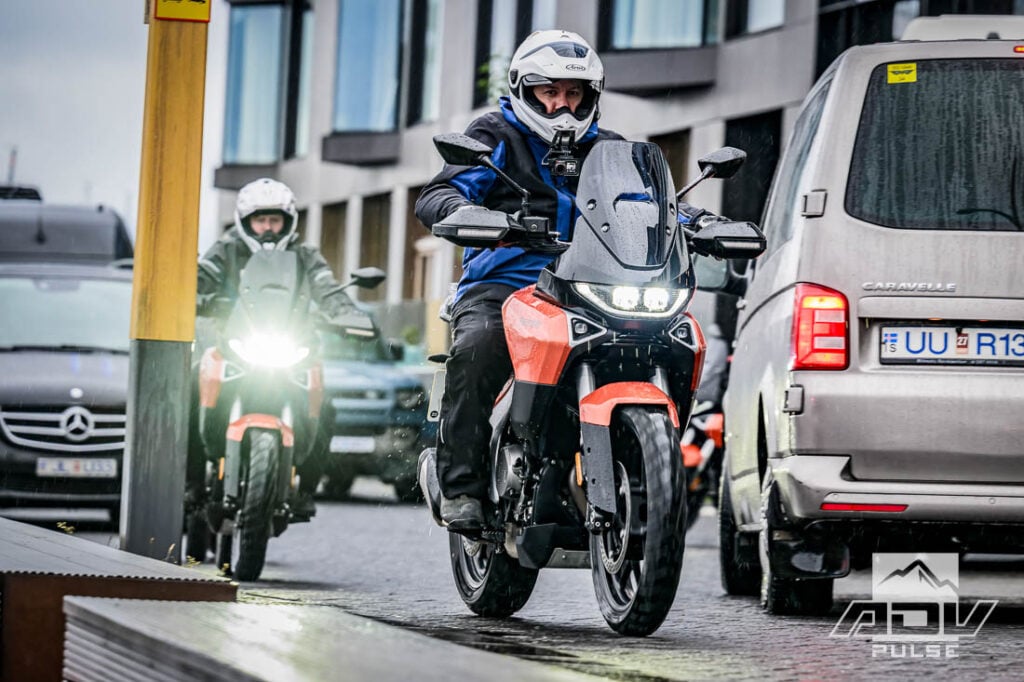
Despite the nasty weather (especially for a Southern California native), I slowly gained confidence in the traction once we arrived in the countryside. To feel the full power without intervention, I simply pushed the traction control button on the left handlebar switch cluster to disable it, then switched it into Sport mode. This gave it a significant boost in pep – enough to pop the wheel up a little, switching into second gear on power alone. Impressive for a sub‑600cc machine with tall gearing, though the short wheelbase likely plays a role.
Holding it wide open, the Atlas accelerates harder than you’d expect from a 585cc twin. Triple‑digit speeds come easily, and the engine revs with a lively feel. Norton engineers mentioned they spent a lot of time making sure the engine was quiet so the exhaust note stands out, and it worked. The overall character reminds me a bit of the Aprilia Tuareg 660’s powerplant, but with less punch. It would absolutely give a V‑Strom 650 or Moto Morini X‑Cape 650 a run for their money though.
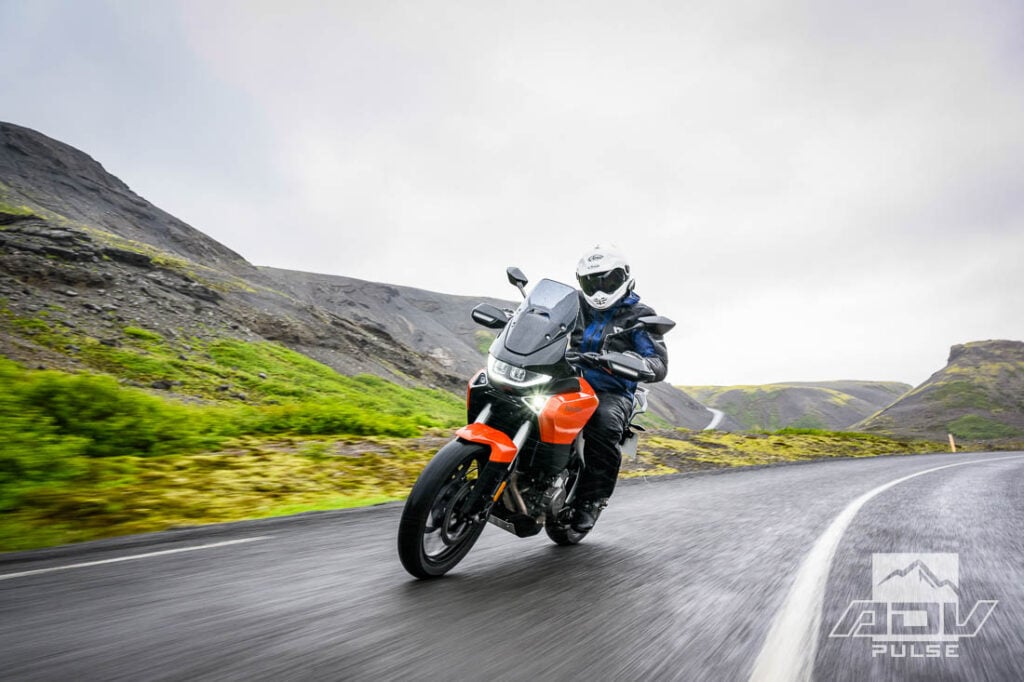
Shifting is silky smooth, requiring almost no effort to click into gear. The quickshifter worked flawlessly for me, though a couple of testers reported issues. My suspicion is that the lever’s very light activation pressure may have played a role.
The big 8‑inch touchscreen is excellent for navigating menus and supports Bluetooth pairing for music, calls, and navigation. You get turn‑by‑turn text directions, though not a full map. Once you’re rolling, all adjustments are handled through the thumb controls to keep your eyes forward. Cruise Control and most configuration changes are managed on the left switch cube, while ride modes are toggled with the Mode button on the right.
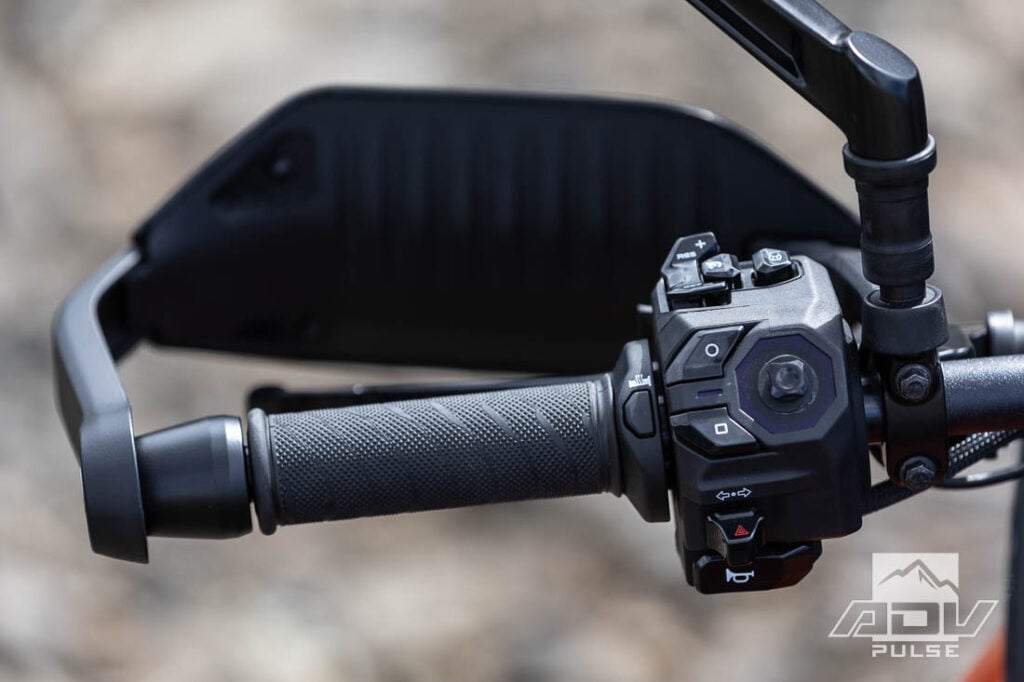
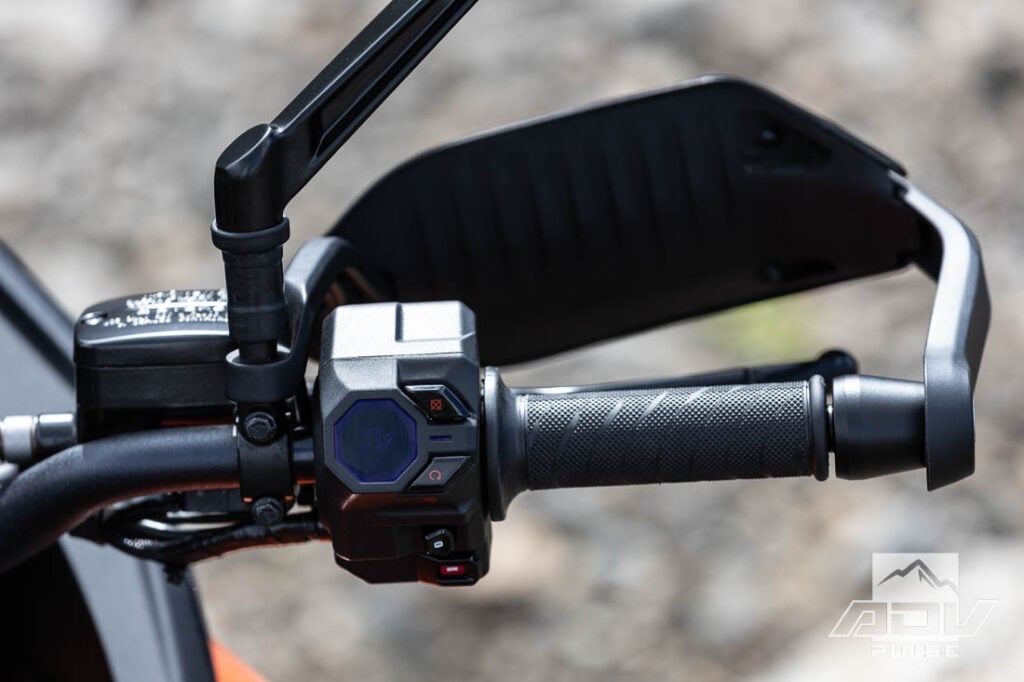
Switching modes at a stop is instantaneous, but on the move you have to cycle through them, closing the throttle to confirm each time, then repeat again until you reach the mode you want. It’s not a major issue, but it does become an annoyance when you’re trying to jump two or three modes ahead.
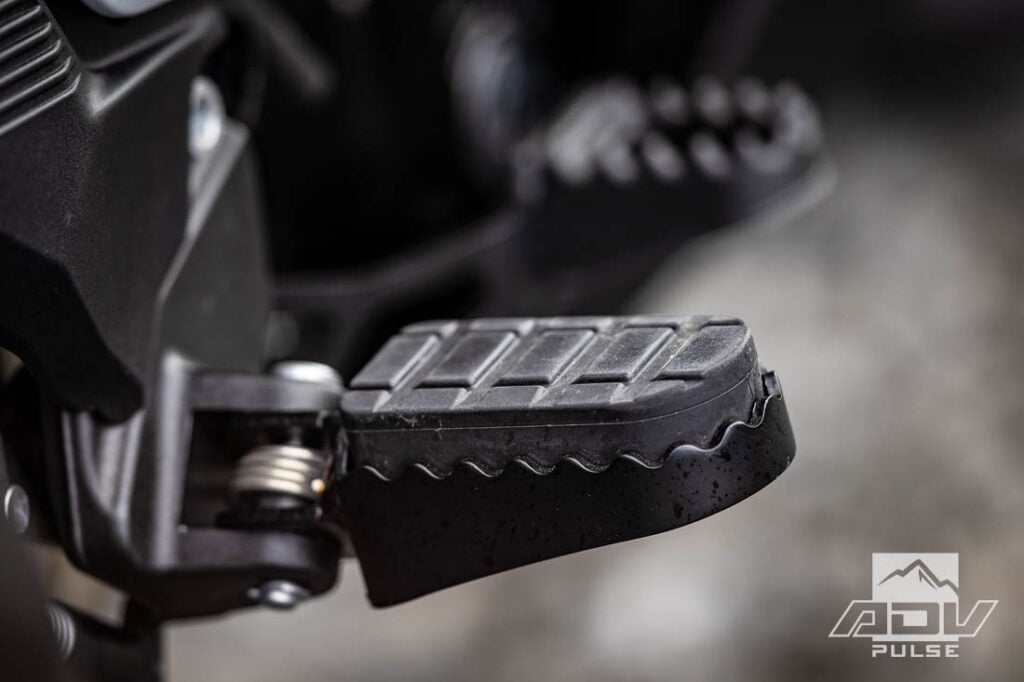
Cruising down the highway at 80 mph, the Atlas feels very smooth, with only a faint hint of vibration. It stays smooth across a wide RPM range as well. Our test bikes had the rubber footpeg covers installed, so I didn’t get a chance to evaluate how much feedback comes through the pegs without them. With them installed, there were no vibes transferred.
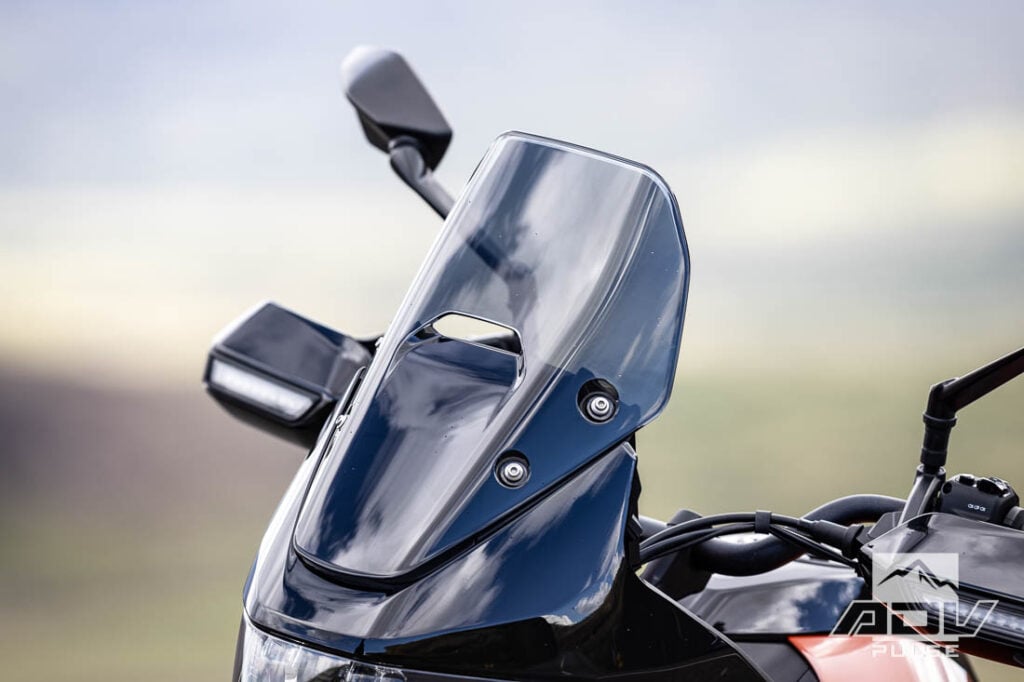
Wind protection from the adjustable screen is solid. In the high position, it sent airflow just over my helmet (I’m 6’2″) while keeping the wind coming from the sides relatively calm too. It’s enough coverage to stay comfortable on longer stretches without obstructing your view. Adjustments require two hands, but with cruise control engaged, it’s no problemo.
Heated grips were a welcome touch, adding comfort in the 55°F weather. They aren’t the hottest I’ve used though. In truly freezing conditions they might take the edge off but most likely they’d be inadequate.
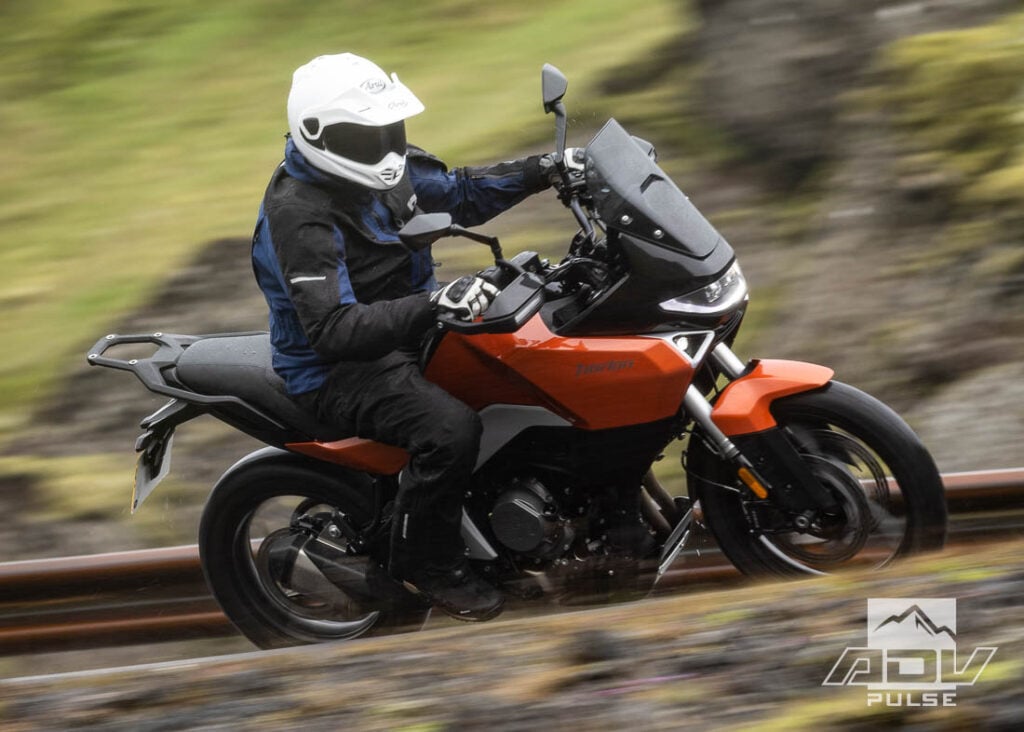
Seat comfort was good during highway stints. With my 34‑inch inseam, my knees feel slightly cramped, though not uncomfortably so. Removing the rubber footpeg covers would drop your feet about half an inch, opening the cockpit a bit. Overall ergonomics seem well‑sorted: the bike doesn’t feel undersized, bar reach is natural, and the tank is narrow between the knees. It all points to a compact machine that still works well for longer journeys.
While the seat height isn’t aggressively low, shorter riders shouldn’t have trouble getting both toes down when maneuvering at slow speeds. Combined with the short wheelbase, smaller wheels, and relatively light feel, the Atlas is easy to shuffle around parking lots or thread through tight city streets. I also appreciated how the Hill Hold Control works. Some systems lock the bike for a fixed number of seconds before releasing, which can be frustrating if you want to roll backwards. The Atlas holds indefinitely and releases the moment you twist the throttle.
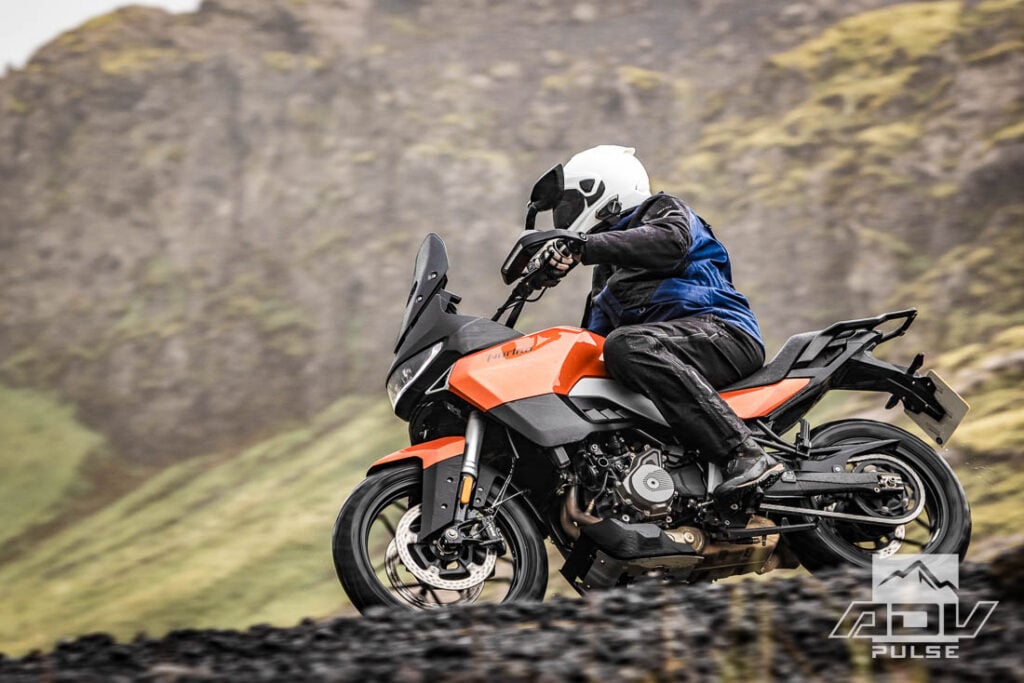
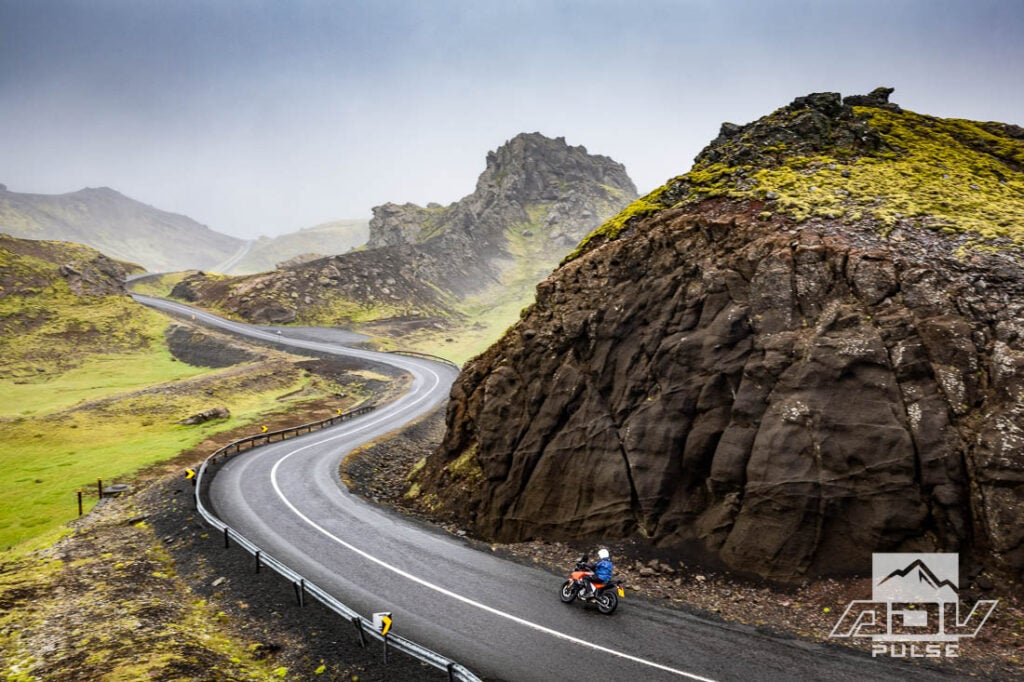
Heading into twistier asphalt, the rain and strong winds didn’t want to let up, so there are some caveats here. I didn’t ride anywhere near as hard as I would in the dry, but I pushed enough to get a sense of the bike’s character. Handling is nimble and sporty, as expected from a middleweight with a steep rake and 19/17 wheelset, and it responds well to aggressive inputs. I did notice some dive on corner entry and squat on exit — more than expected from 7 inches of travel. The initial stroke feels very plush, which is great for off‑road, but street‑focused riders may want to stiffen the damping settings for the street.
Braking performance from the ByBre units was less impressive. They’re fine for standard braking, but lacked bite during harder pulls. Perhaps it was the lean‑sensitive ABS overly intervening on the wet pavement, but I expected a more progressive feel from radial‑mount calipers. We’d need some dry‑weather testing to know for sure.
In The Dirt
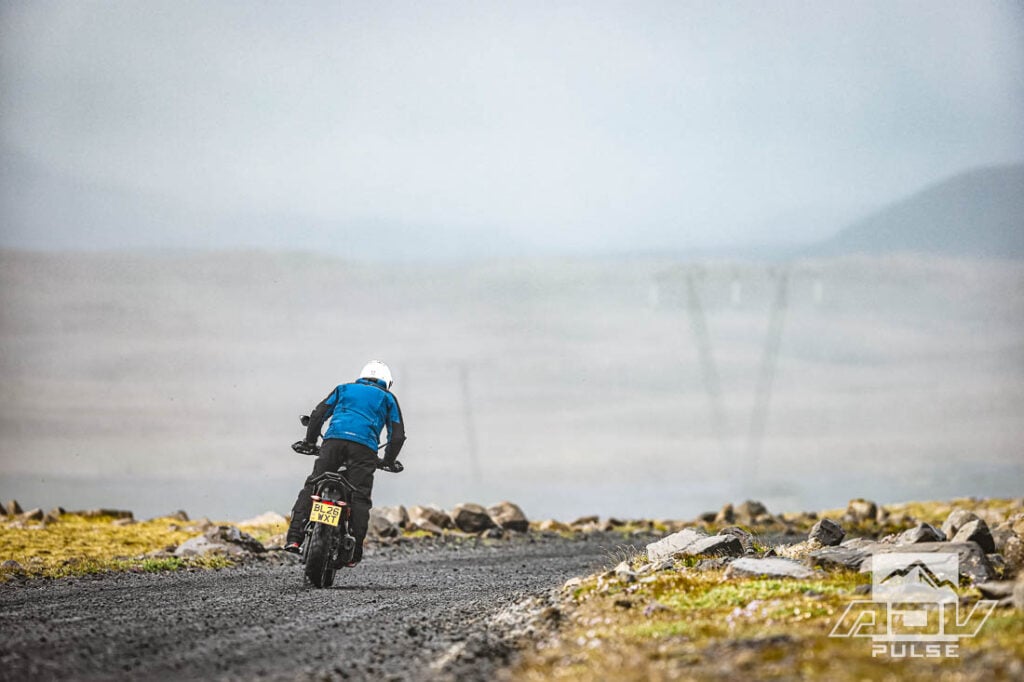
Unfortunately, our time in the dirt was short, and the terrain wasn’t particularly technical. The dirt tracks were mostly smooth, but the volcanic pumice lined roads were slick enough that traction management became a bit of a challenge at higher speeds. At least the rain finally let up, so we weren’t riding through a cereal bowl of cocoa puffs.
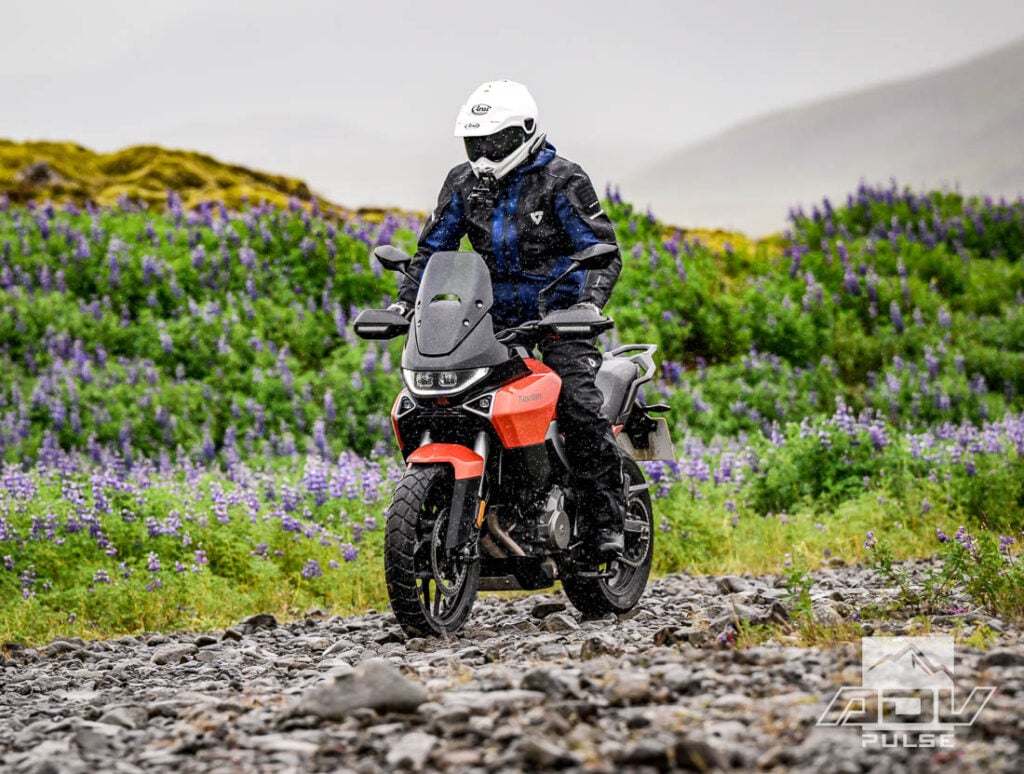
Switching into Enduro mode disables traction control and rear ABS completely, giving you full freedom to slide the bike around. Front ABS is also specifically tuned to allow minor slips in loose terrain. Most of the trail was mellow enough to sit down and dirt‑track through corners, and the Atlas’ plush suspension, cushy seat, and relaxed ergonomics make seated cruising on dirt roads easy for hours. In more aggressive off‑road situations, though, the stepped seat would make it harder to shift your weight backwards or forwards.
The standing position is well‑sorted for taller riders like myself (6’2″). It doesn’t feel cramped, bar height is good, and the tank is slim enough to squeeze it securely with your knees. The rubber footpeg covers can be removed with tools, but when I tried it they were stubborn. Since we needed to keep moving, I left them on. Even with the rubber covers and wet conditions, I still had decent control in the dirt — partly because of the Atlas’ overall size and mass. It feels smaller than a Yamaha Tenere 700, more in line with bikes like the Kawasaki KLE500, Honda NX500, or Royal Enfield Himalayan 450, and a step up from a KTM 390 Adventure R.
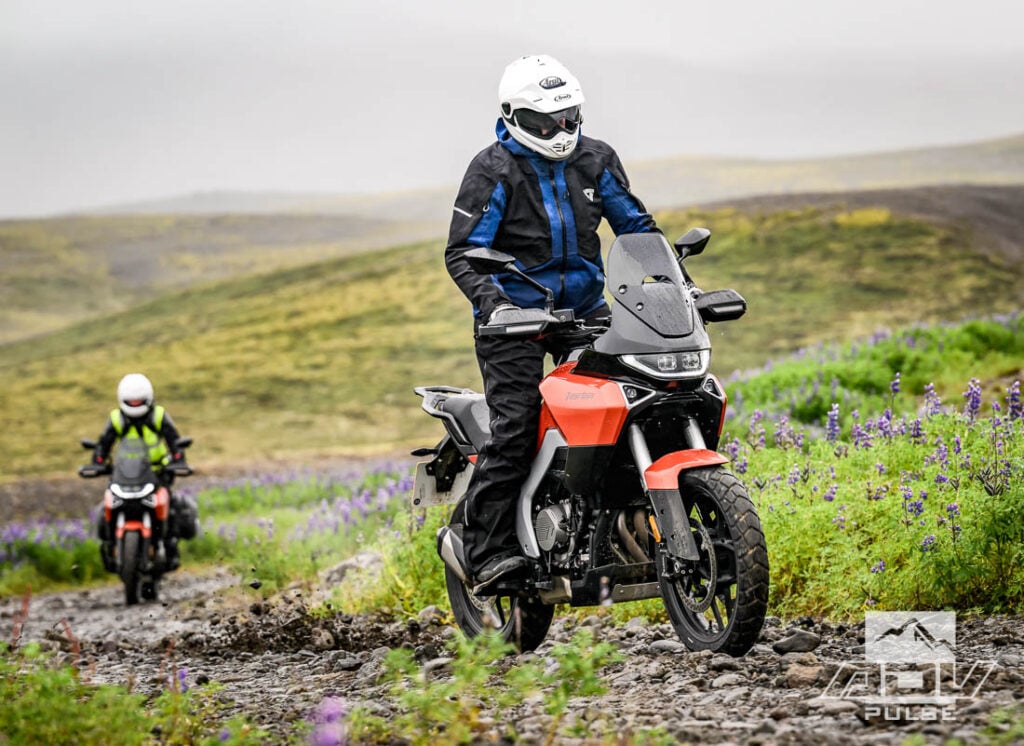
With its sporty nature, smaller wheels, and short wheelbase, the Atlas is a lot of fun on twisty dirt roads. It’s light enough that you can flick the tail out and still feel like you can reel it back in if it gets too sideways. Power delivery is smooth and predictable with TC off — no surprises, just a controllable, playful feel. ABS also worked well on the slippery volcanic pebbles, never causing any choppy intervention or runaway train feel.
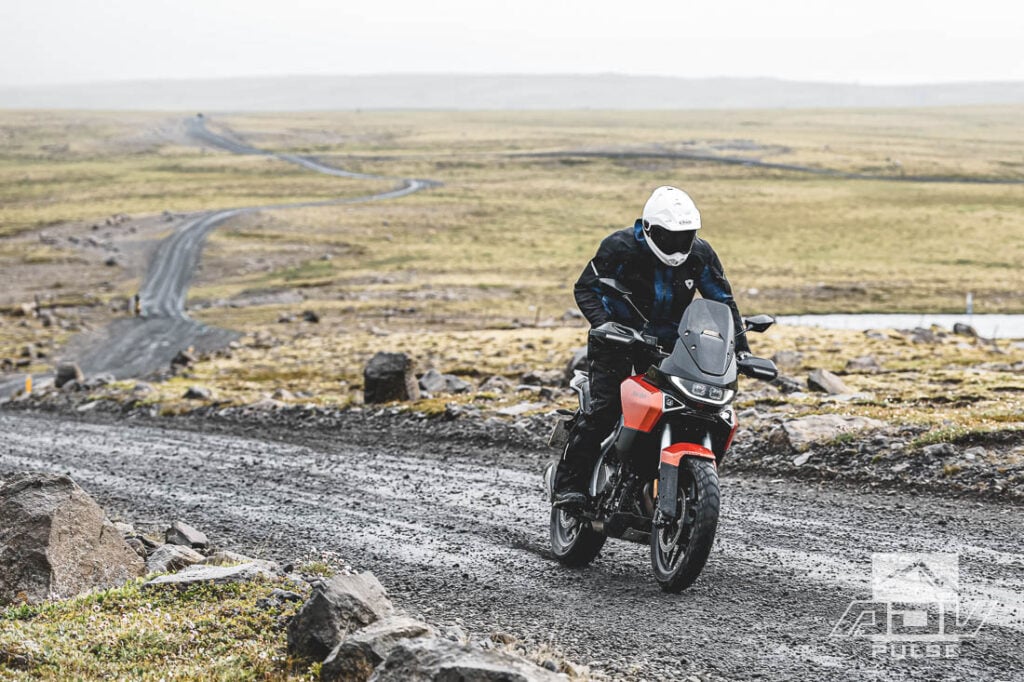
As an experienced off‑road rider, I appreciated that switching into Enduro mode automatically disables traction control. But less experienced riders would likely prefer to have at least a low level of TC to build confidence. Most premium electronic packages let you tailor traction control, engine braking, and throttle maps within your off‑road mode or a custom mode. The Atlas doesn’t offer any of that customization. Norton says they were aiming for a simpler interface, but in today’s premium segment, adjustability is expected. To me, it felt more like a decision made to streamline development and get the bike to market sooner.
We didn’t encounter any big hits to truly test the suspension, and going off trail in Iceland is illegal, so I wasn’t about to push my luck. On the larger potholes and dips we did find, the suspension absorbed impacts well with no clunks or harsh feedback — it gave the impression of quality components, and it’s nice knowing there’s a range of adjustability too. One quirk I noticed was with the rear shock’s hand‑crank preload adjuster. In theory, it’s great not needing tools, but I couldn’t get my hand inside the body panel to reach it. The fit is so tight you’d need kid‑sized hands or a tool to detach the side panel.
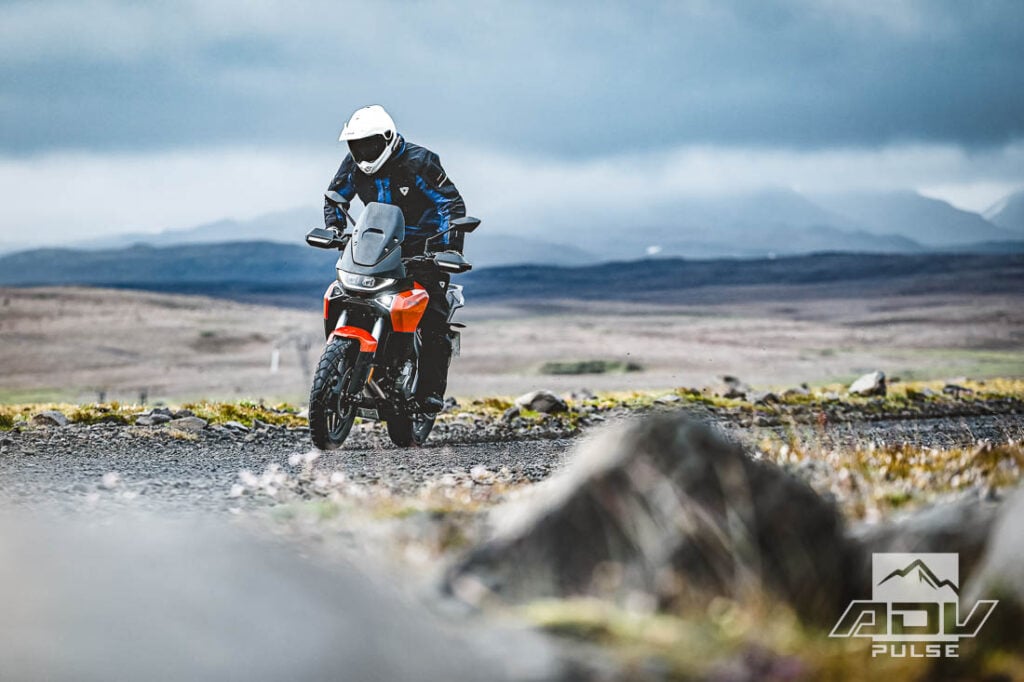
While the Atlas performed well on easy off‑road terrain, the jury is still out on its true dirt capability. On smaller chop, the suspension soaked up bumps nicely, which is exactly what you want from a light‑duty adventurer like this. But we’ll need to test it in harsher conditions — and with the spoked wheel option — once we can get a loaner stateside.
Durability-wise, the Atlas appears well put together with solid fit and finish, but it definitely leans toward a street‑bike feel. I’d hate to see what happens in a real crash with those tightly fitted body panels and bulky street mirrors with integrated turn signals. I didn’t spot any loose bolts or quality issues, but again, we weren’t pushing the bike hard off‑road. The one annoyance that seemed like it could be a malfunction was with the key fob. You expect the bike to wake up automatically when you get within a few feet, but the Atlas won’t power the dash until you press the unlock button on the key fob. Having to dig through pockets after your helmet and gloves are already on gets old fast.
The Bottom Line
So where does this new middleweight adventurer fit into the increasingly crowded 400cc to 600cc market? With nearly every manufacturer now getting into this space, competition is fierce.
It’s clear the Atlas isn’t trying to be a budget entry. It comes with solid fit and finish, a long list of top-shelf features, and a surprisingly comprehensive electronics package — something you don’t often see in this displacement range. Many bikes in this class aim to be approachable and end up feeling a bit boring. The Atlas manages to stay unintimidating while still offering an aggressive edge, and a character‑rich engine that sounds great. It carries a sense of prestige with the Norton name, and its unique styling sets it apart. Like a proper British machine, the closer you look, the more you appreciate the small details and thoughtful touches.
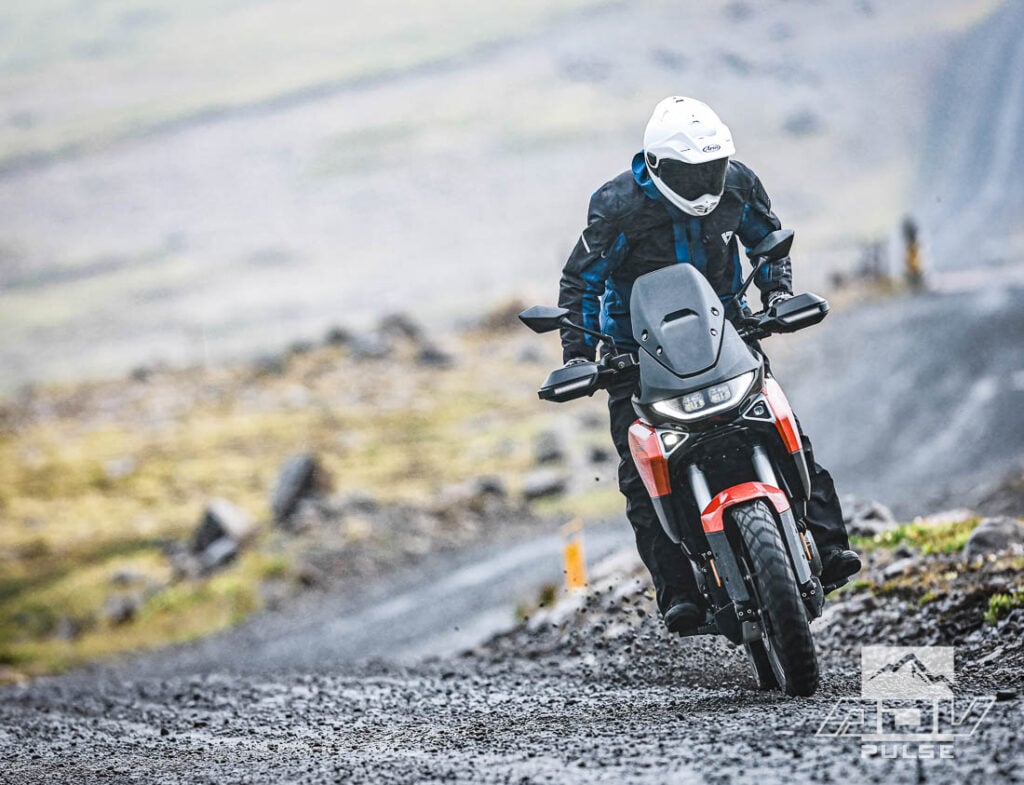
It’s also clearly not an off‑road‑focused ADV. This is a light‑duty adventurer, built for gravel roads and mild trails. The suspension shows promise that it could do more, but we’ll need to get it out in tougher terrain to understand its true capability. One misstep in the roll out of this bike, in my opinion, is the decision not to equip the Atlas with spoked wheels as standard — or at least on the press bikes we tested. Without them, many riders will dismiss it as a street‑biased machine before giving it a chance. Norton does offer a street variant of the Atlas called the ‘GT’ that has less suspension travel and 17” cast wheels front and rear. Personally, I think Norton should have spaced out the two models a little more by giving the Atlas a 21/18 spoked wheelset and an even more suspension travel.
For many adventure riders, though, aggressive off‑road performance isn’t a priority. And perhaps that’s exactly what Norton’s research showed when they designed this bike. The riders who remember Norton’s glory days are older now, and most aren’t interested in wrestling a 500‑plus‑pound ADV through deep sand. The Atlas’ small, nimble chassis and 19/17 wheel combo make it a great tool for exploring backcountry roads — dirt or asphalt — without unnecessary bulk.
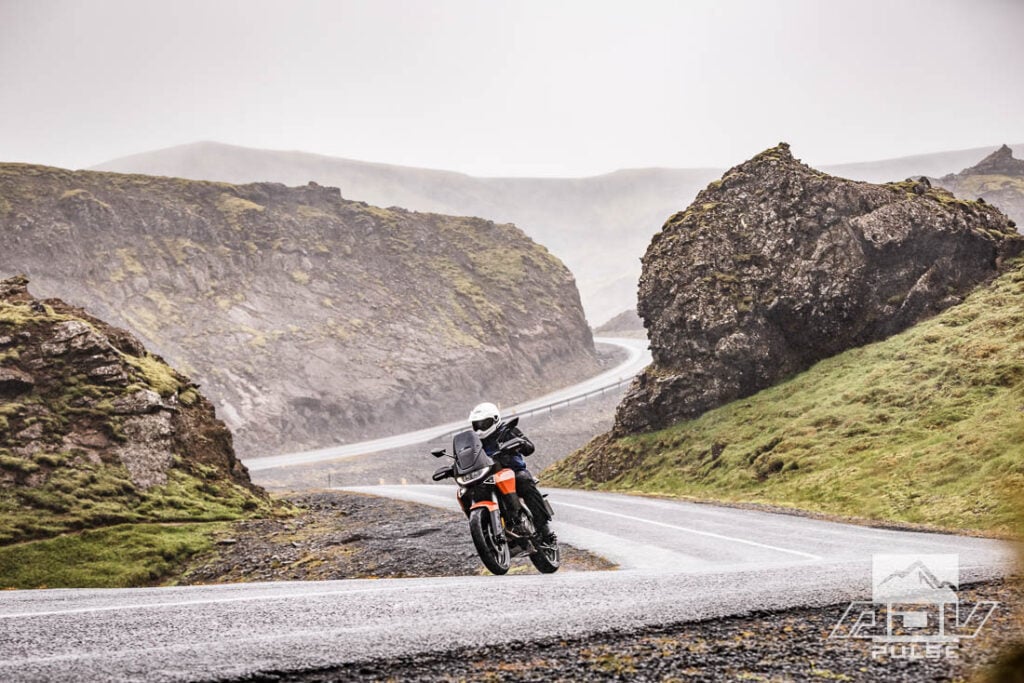
Younger riders looking for something different and rooted in heritage may also find the Atlas compelling. Most bikes in this class are bare‑bones on tech and conservative in their design. The Atlas brings full modern electronics and a distinctive aesthetic. We don’t yet know U.S. pricing, but if Norton can keep it reasonable, it could deliver a premium experience in a more compact, less expensive ADV package.
After years of financial freefall, Norton is serious about carving out a unique space in the adventure segment and beyond. When Norton fell into administration in 2020, one of the last remaining employees was current head designer Simon Skinner, who had weathered years of turbulence. During the launch, Skinner recalled early conversations with TVS leadership. They told him they already build millions of motorcycles a year — they didn’t buy Norton to chase volume. They wanted to rebuild the brand, restore its identity, and finally give it the financial stability it always deserved. This may be the first time in 128 years Norton has had the solid financial footing it needs to thrive.
To me this doesn’t feel like a profit play, slapping a historic badge on a cheap product. It feels like a genuine attempt to reestablish Norton as a prestige brand. And while the Atlas is positioned as more of an entry‑level machine, Norton has already proven they can build something far more sophisticated with their first statement piece under TVS — the 206‑horsepower V4 Manx R superbike, priced north of $50,000 in Signature trim and built entirely in Europe. Norton plans to launch two new models per year moving forward, so we’ll be keeping a close eye on what rolls out next from their Solihull, UK headquarters. As far as availability of the Atlas, US pricing will be announced this summer with the first bikes rolling out to dealerships sometime in the 4th quarter of 2026.
Atlas Apex Specs
| Engine Type: | Liquid‑cooled 585 cc DOHC parallel twin, 270º crank |
| Bore × Stroke: | 78 mm × 61.2 mm |
| Compression Ratio: | 12.2 : 1 |
| Fuel System: | Multi‑point sequential fuel injection, ride‑by‑wire throttle |
| Max Power: | 69 hp (70 PS / 51.5 kW) @ 9,300 rpm |
| Max Torque: | 57.5 Nm (42 ft‑lb) @ 7,300 rpm |
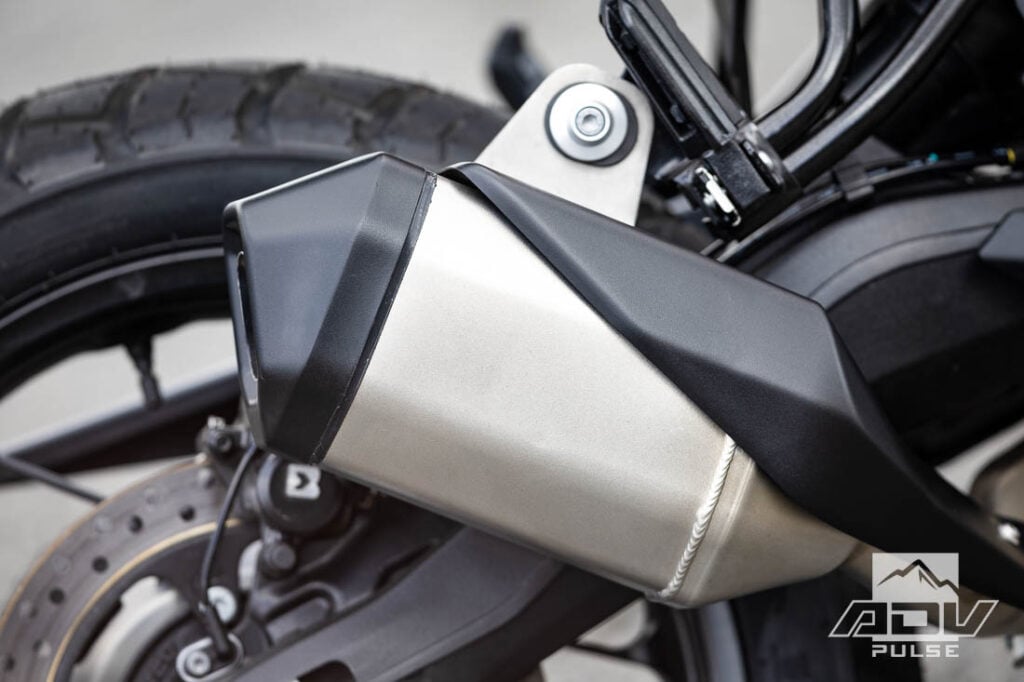
| Exhaust: | Steel 2-into-1 system with upswept silencer |
| Gearbox: | 6-speed with bi-directional up/down Quick Shift |
| Clutch: | Cable-operated Assist & Slip multiplate wet clutch |
| Final drive: | X-ring 116 Chain, 16T Front Sprocket, 47T Rear Sprocket |
| Gear ratios: | 1st: 16.445, 2nd: 12.268, 3rd: 9.447, 4th: 7.647, 5th: 6.514, 6th: 5.678 |
| Frame: | Steel trellis |
| Swingarm: | Cast aluminum |
| Seat: | One‑piece rider & pillion |
| Front Suspension: | KYB 43 mm USD forks, 7″ (180 mm) travel, fully adjustable |
| Rear Suspension: | KYB monoshock RSU, 7″ (180 mm) travel, adjustable rebound damping & hydraulic preload |
| Front Brakes: | 2 × 310 mm floating discs, radially‑mounted ByBre calipers |
| Rear Brake: | 270 mm disc, ByBre caliper |
| Front Wheel / Tyre: | Cast (Spoked Optional) 19 in × 3.00 in / Eurogrip Explo R Plus 110/80 ZR19 |
| Rear Wheel / Tyre: | Cast (Spoked Optional) 17 in × 4.50 in / Eurogrip Explo R Plus 150/70 ZR17 |
| Wet Weight (no fuel): | 423.2 lbs (192 kg) |
| Fuel Tank Capacity: | 15.4 L / 3.39 gal (Imp) / 4.07 gal (US) |
| Seat Height: | 845 mm (33.3 in) |
| Ground Clearance: | 220 mm (8.7 in) |
| Wheelbase: | 1,465 mm (57.7 in) |
| Rake / Trail: | 25.7º / 101.7 mm |
| Service Interval: | 12 months / 6,000 mi / 10,000 km |
| Warranty: | 36 months – Unlimited km (UK/EU) / 30,000 mi (USA) / 50,000 km (India) |
| Fuel Consumption: | 23 km/L (65 mpg Imp / 54 mpg US) |
| Emissions Compliance: | EURO 5+, Bharat Stage VI, California & US spec |
| Color Options: | Matrix Black, Trophy Silver, Verona Green, Sinopia Orange, Glacier Blue |
| Pricing: | UK: £9,450; EU: €10,525; USA: $TBD |
Gear We Used
• Helmet: Arai XD-5
• Jacket: REV’IT! Tectonic H20
• Pants: REV’IT! Tectonic H2O
• Boots: REV’IT! Discovery GTX
• Gloves: REV’IT! Dominator GTX

Author: Rob Dabney
Rob Dabney started a lifelong obsession with motorcycles at the age of 15 when he purchased his first bike – a 1982 Honda MB5. Through his 20’s and 30’s he competed in off-road desert races, including the Baja 250, 500 and 1000. Eventually, his proclivity for exploration led him to dual sport and adventure riding. Rob’s never-ending quest to discover what’s around the next bend has taken him on Adventures in Latin America, Africa, Europe, Asia, and throughout the American West. As a moto journalist, he enjoys inspiring others to seek adventure across horizons both near and far.Related Stories
Related Stories
 Norton Releases Specs Of New Twin-Powered 585cc ADV Models Norton is stepping into the adventure‑touring world for the first time with the...
 Kawasaki Unveils KLX300 XPL With Added Comfort And A Retro Look Kawasaki is expanding its small‑bore dual‑sport lineup for 2027 with the introduction of...
 BMW Announces US Pricing And More Details On The 2027 F 450 GS BMW has released new details for the 2027 F 450 GS, adding fresh...
Popular Stories
Bultaco Staging Comeback With Budget-Friendly 300cc ADV Bike
Bultaco is officially back in the motorcycle busi...
5 Small‑Bore Adventure Bikes That Aren’t Buzzy On The Highway
Small‑bore adventure bikes in the 300–500cc range...
KTM Announces Specs And Availability Of New 690 Rally Model
KTM is expanding its LC4 lineup with the introduc...
BMW Announces US Pricing And More Details On The 2027 F 450 GS
BMW has released new details for the 2027 F 450 G...
Notify me of new posts via email
Wasn’t too sure about the styling from the press release pictures, but it looks a bit better ” out in the wild”
Very true. It looks a lot better out there in the wild. It’s definitely growing on me.
I’ve added it to advspecs.com
Hey Rob, great review and coverage. I was invited to go but couldn’t due to my ongoing recovery from surgery. Looks like it was a great trip, if a bit damp. Good looking bike and I like the feature set. Let’s hope TVS/Norton can work some magic with a new Commando! Ride safe!!
Hey Bill. Good to hear your recovery is going well. Yeah, awesome trip to Iceland but it was so fast it didn’t really feel like we got to explore the island much. Will have to go back for a deeper dive and maybe some of those hot springs next time. Norton says their launching 2 new models per year moving forward, so we could be seeing that Commando soon! Good luck with your continued recovery!