
Tenere 700 World Raid: Yamaha’s Long-Range Adventurer Has Arrived
The up-spec T7 finally hits U.S. shores with more range, suspension & versatility.
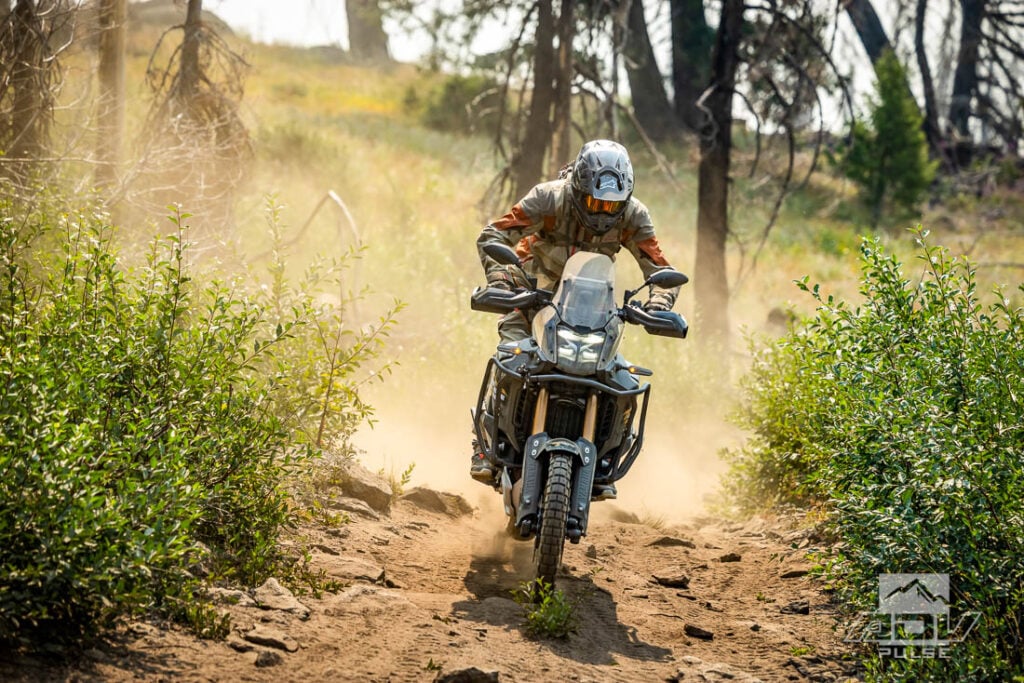
I remember riding the Tenere 700 off-road for the first time back in 2019 thinking, “this feels a lot like a rally bike.” It was light, slender and agile for a twin-cylinder ADV, with excellent enduro ergos. However, out in the open desert of Southern California, where we tested it against a KTM 790 Adventure R, its limits showed up quickly. Blasting through our 2.3-mile test loop that’s littered with big whoops, G-outs and rocky sections, the suspension quickly hit the bump stops. The T7 couldn’t be ridden with the same level of aggression through the big hits and ended up coming in seven seconds slower than the 790R.
I also remember being surprised by the top-heavy feel of the Tenere, especially considering its lighter weight and undersized 4.2-gallon fuel tank – barely enough for 175 miles of range when ridden aggressively. The T7 had a lot of things going for it though: nimble handling, a smooth, reliable engine, Japanese build quality, and an introductory $10k price tag. But the limited suspension, fuel range and top-heavy feel were holding it back from being the complete package.
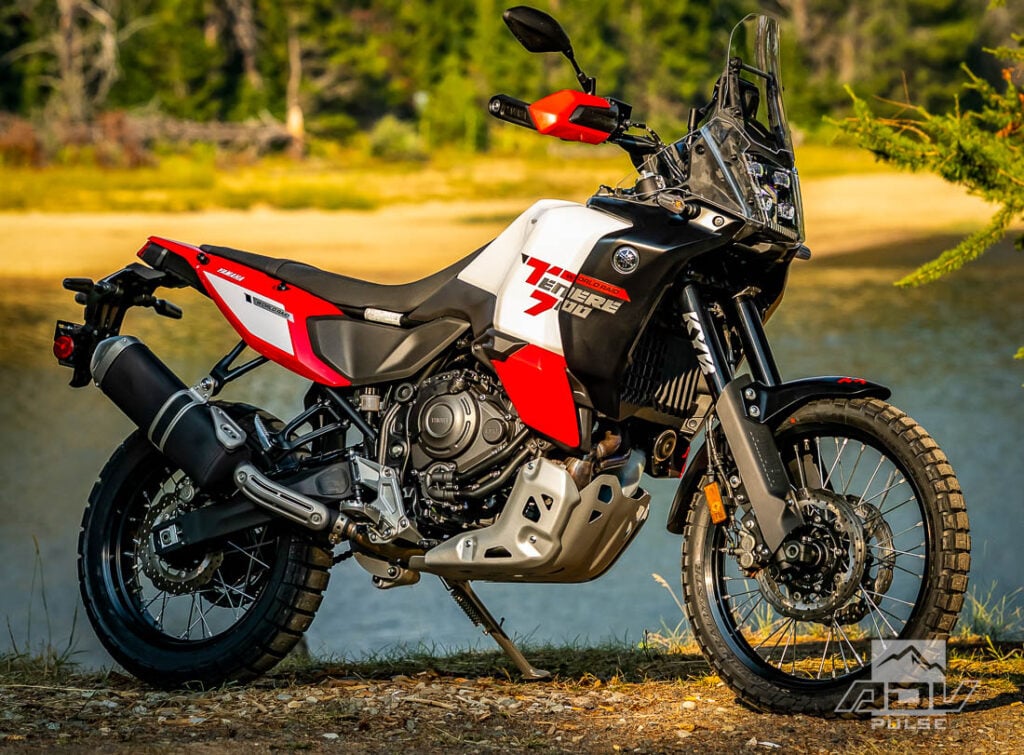
Fast forward a few years and Yamaha seemed to address those points with the announcement of the Tenere 700 World Raid model. It came with new KYB suspension that was revalved, stiffened and longer travel, plus a redesigned fuel tank boosted capacity by 2 gallons while also carrying the weight lower on the bike. It also picked up some premium equipment like a TFT dash, 3-mode ABS, a taller windscreen, improved sump protection, steering damper, and more.
Was this the complete package we’d been waiting for? Unfortunately, we had to keep waiting to find out. The World Raid was launched only overseas, which was kind of a head scratcher considering the standard T7 was a top seller here in the U.S. Who knows what goes into these corporate boardroom decisions, but now, four years later, the World Raid is finally coming to the States for the first time, along with a range of upgraded equipment.
What You Get
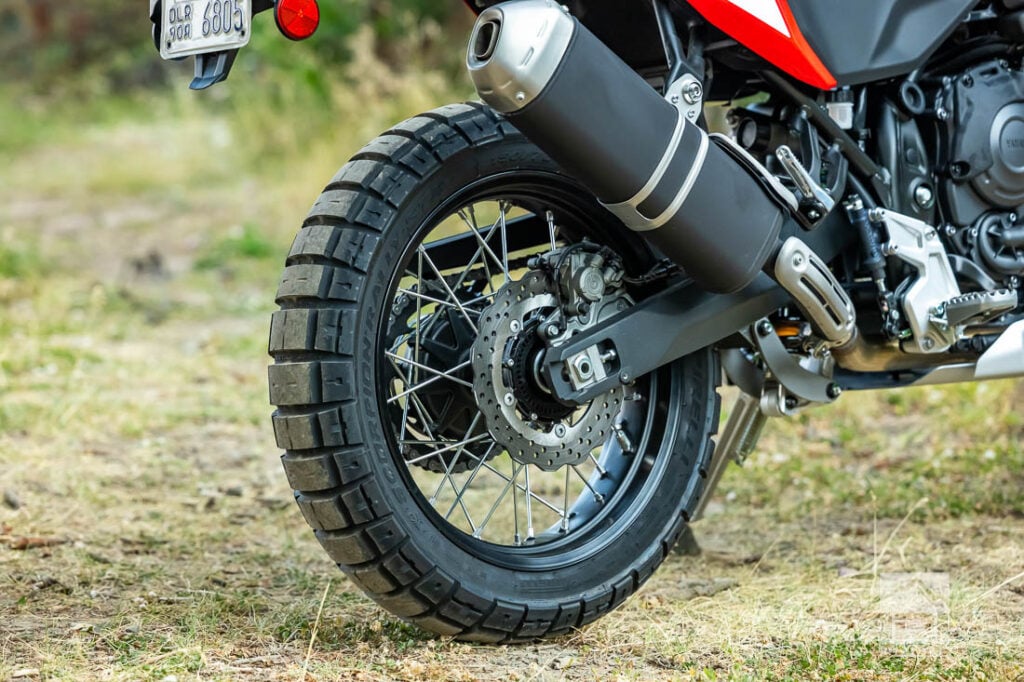
Let’s start with what the Tenere 700 and World Raid share. Both are built on the same platform featuring the torquey, workhorse 689cc parallel-twin engine called the CP2 that puts out 72 horsepower and 50 ft-lbs of torque. This engine serves as a stressed member in a double-cradle steel tube frame suspended by fully-adjustable KYB components, with a 21-inch spoked wheel in front and an 18-inch out back. Both bikes have a large color TFT, traction control, ride modes, and ABS but the World Raid gets even more advanced electronics. And while the standard T7 did get updates to improve the CG and bump absorption, the World Raid takes a more-aggressive approach with its upgrades, along with up-spec’d touring and off-road equipment.
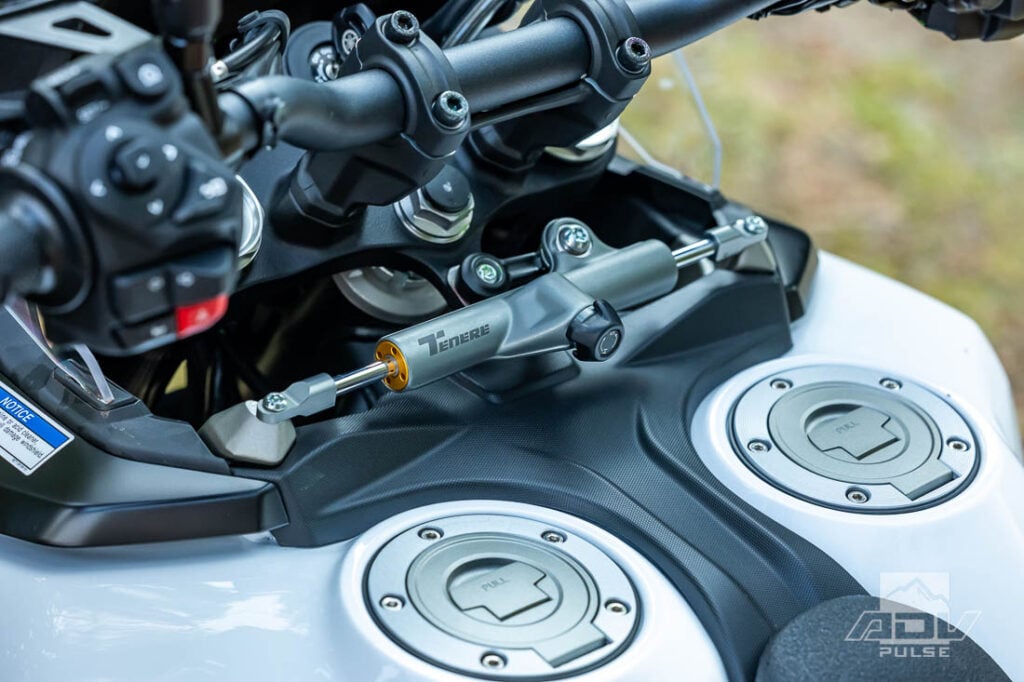
Fuel capacity has been increased by 2.1 gallons, giving the bike a range of roughly 300 miles. Adding more fuel to a bike already known for having a top-heavy feel isn’t always advisable, so Yamaha engineers had to rethink the design. The result is a fuel tank that sits about six inches lower than the standard model’s, dropping the added weight down lower on the chassis. It also splits the fuel into two tanks to reduce side-to-side sloshing that can throw off handling, and the dual filler caps give it that rally bike look as well.
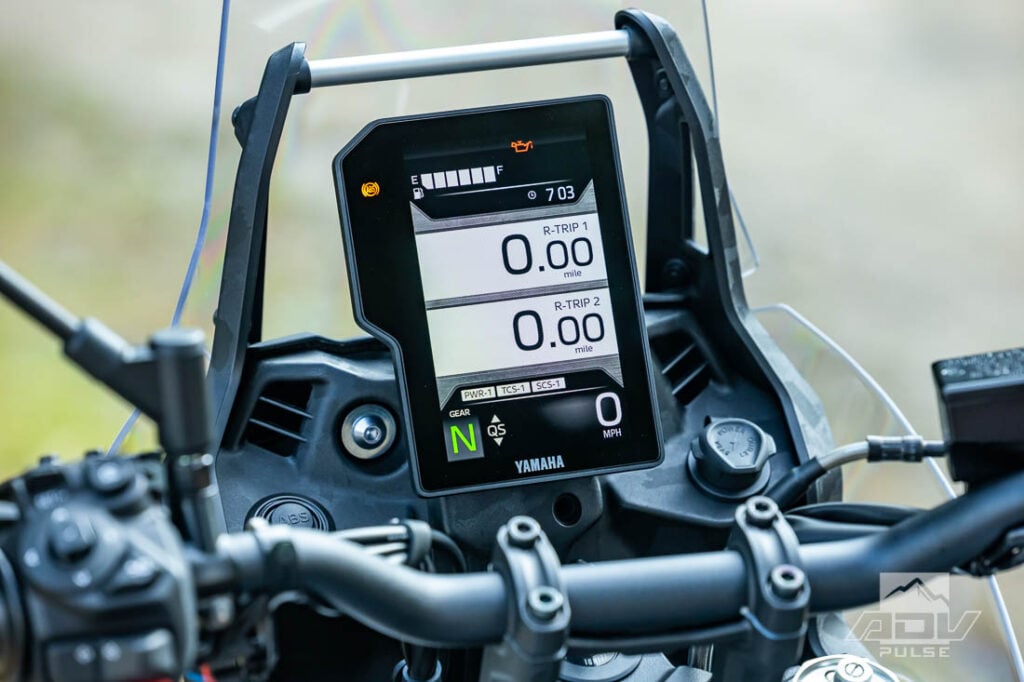
On the electronics side, the standard T7 gained ride-by-wire throttle along with various ride modes, traction control and ABS settings last year. The World Raid takes it a step further by adding a 6-axis IMU that feeds telemetry data to the TC and ABS systems. This allows these systems to improve smoothness and safety by adjusting for lean angle. There’s also a new rider aid called Slide Control (SCS), which helps improve the efficiency of the traction control system. By monitoring how far the rear wheel is pitched out relative to the front wheel, it can adjust the TC more precisely to keep things under control.
All rider aids can be configured through a left-hand joystick control and the vertically-oriented 6.3” TFT display. There’s off-road (rear off) and street ABS (front and rear), off-road and street TC, off-road and street SCS, and two power maps (Sport and Explore). ABS, TC and SCS can all be disabled completely but only when stopped. Turning TCS off also disables SCS automatically.
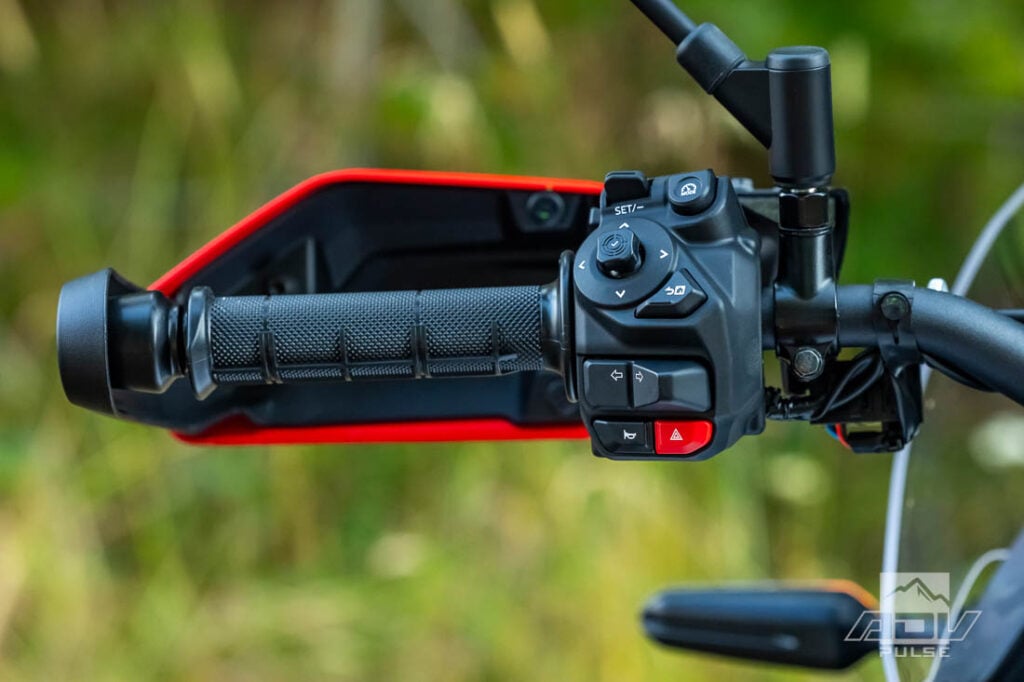
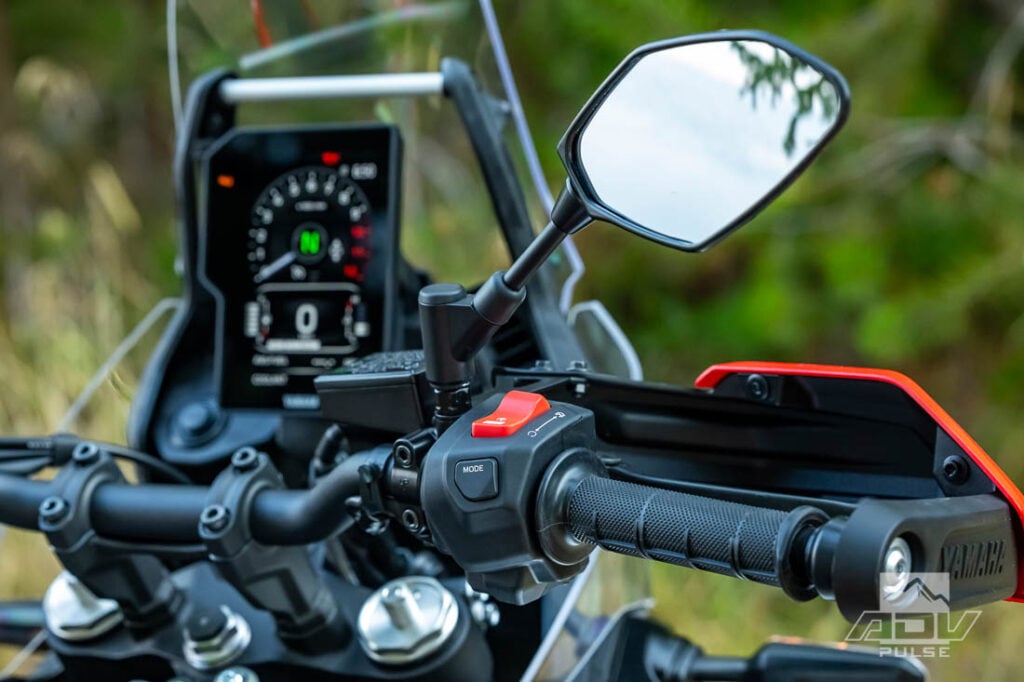
Cruise Control also comes standard on the bike, as well as a feature from the world of rally racing called Yamaha Variable Speed Limiter (YVSL). Cruise Control works as expected with left-hand controls to set, reset or adjust your target speed, and the speed limiter lets you set a maximum speed the bike cannot exceed between 31 and 99 mph, no matter how much you twist the throttle. This would be a handy tool when rolling through small towns with known speed traps, allowing you to avoid constantly checking the speedo.
For off-road riders, the biggest upgrade has to be the suspension. The World Raid gets an additional 0.8 inches of travel front and rear, which bumps up ground clearance by half an inch. This gives it 9.7 inches of total travel in front and 8.7 inches in the rear, along with 10 inches of ground clearance and a 35.0-inch seat height. The World Raid also receives a beefier 46mm fork, up from the standard model’s 43mm, for improved stability. In addition, Yamaha optimized spring and damping rates for better bump absorption at both ends. Off-road handling is further improved by a 16-position adjustable steering damper, and larger skid plate offers more coverage for rocky terrain.
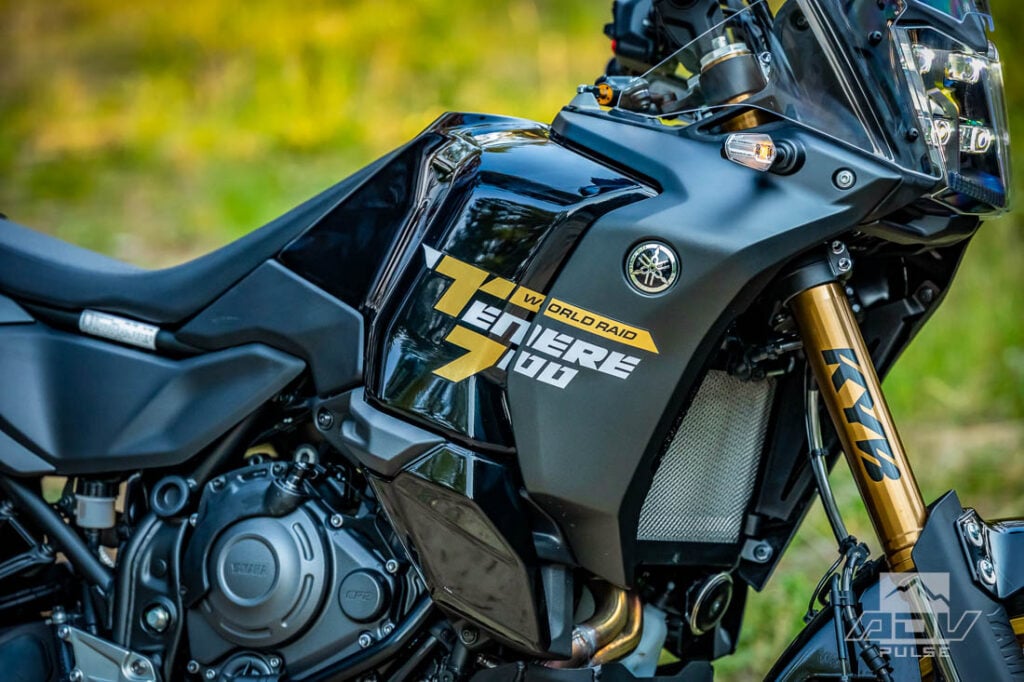
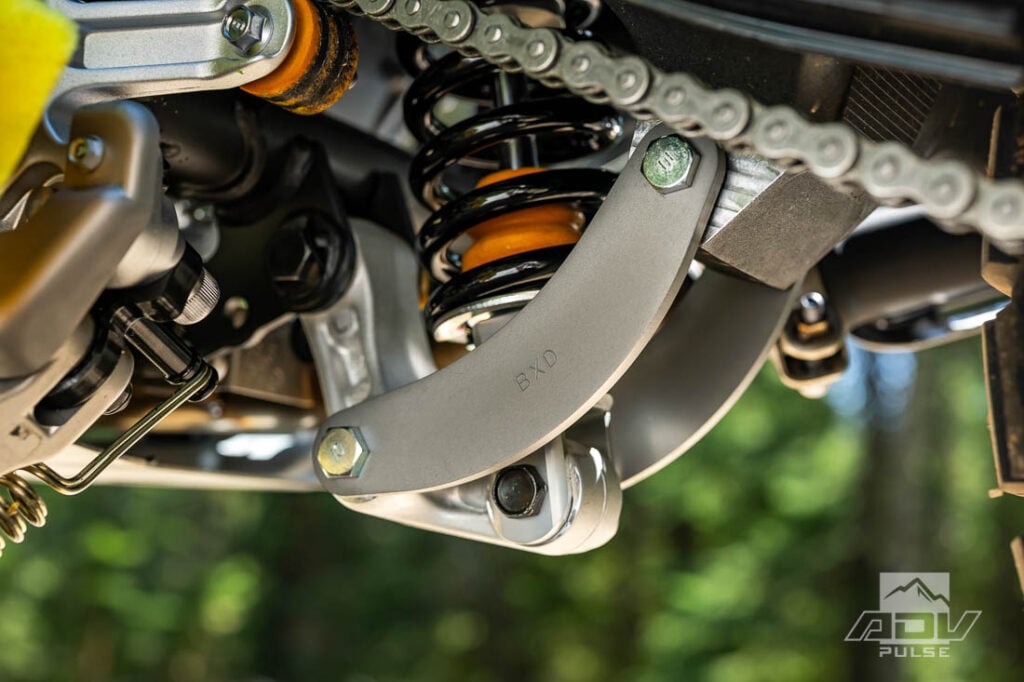
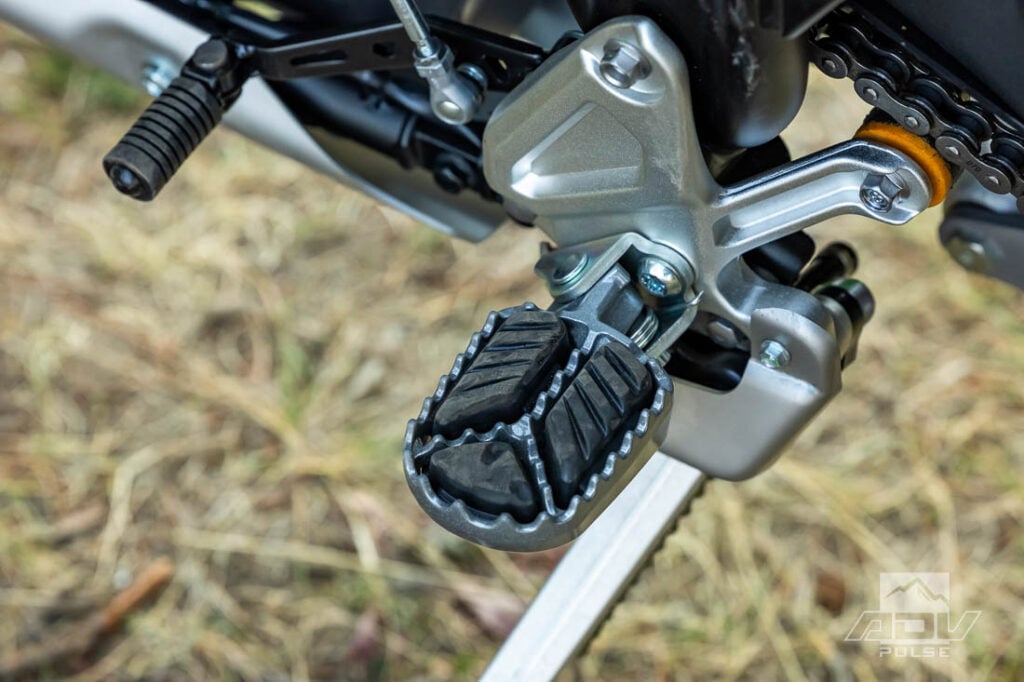
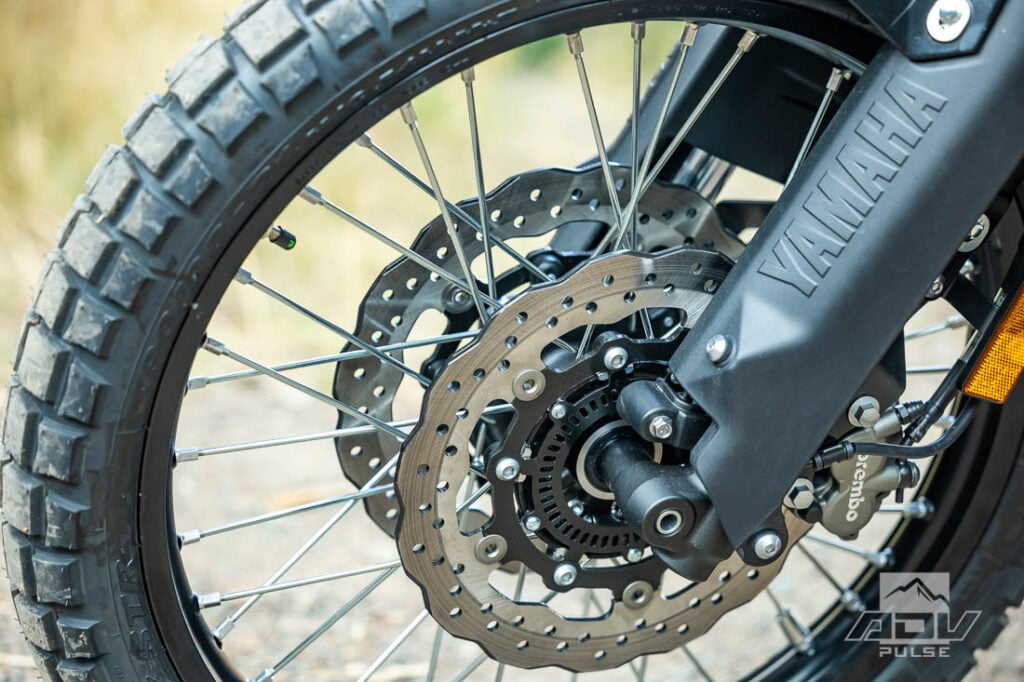
Other equipment upgrades include steel-braided front brake lines for improved feel and a slightly taller windscreen. And like the standard model, it comes with full wraparound hand guards, oversized footpegs, a one-piece enduro seat, and LED lighting throughout. The bike we tested also came prepped with the optional up/down quickshifter and crash bars.
Despite the extensive list of upgrades, Yamaha still managed to keep the price of the World Raid reasonable with only a $2,000 bump in MSRP. The only question left is how does it ride?
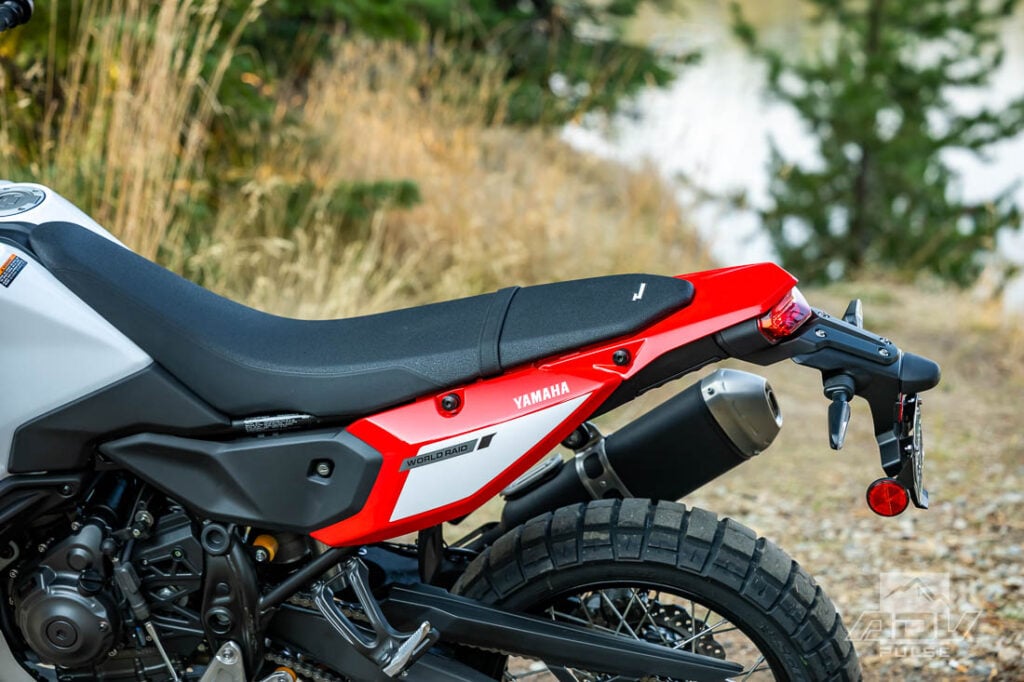
We headed to Central Idaho to find out for the U.S. press launch of the World Raid. With a total of three days and 400 miles of riding, we had plenty of seat time to get acquainted with the new machine. Day one was all street with a mixture of highway and city driving. Day two took us on smooth dirt roads and twisty asphalt, then day three finally got us into more technical off-road terrain.
On The Street
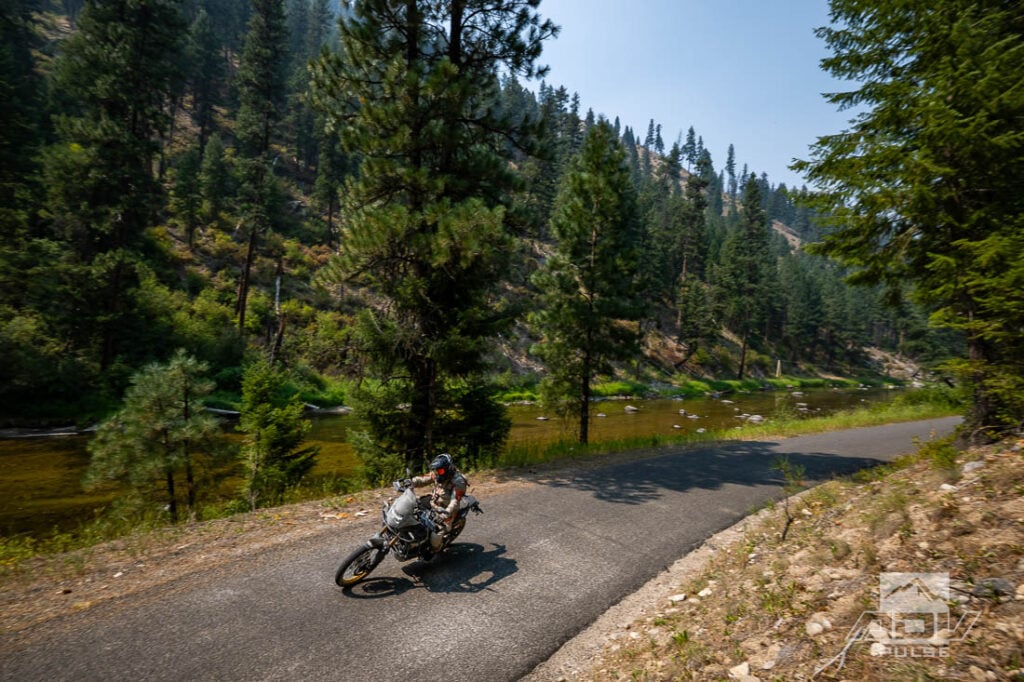
Riding in the saddle, the World Raid feels familiar to anyone who has spent time on the standard T7. The reach to the bars is comfortable and it has a nice upright seating position. With its taller suspension, you notice you’re sitting about a half inch higher off the ground than the standard but the distance from seat to pegs feels the same. The knee bend is a tad cramped for taller riders like myself at 6’2” tall, but still comfortable. For longer highway journeys, I’d opt for a taller seat. But for average height riders, it’s likely spot on.
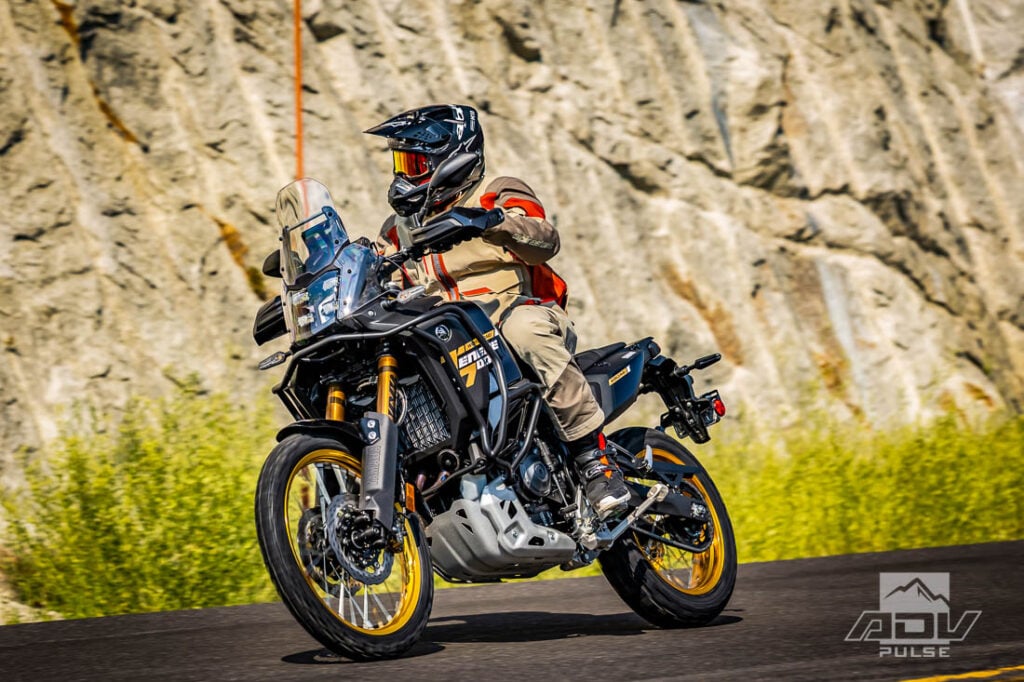
The padding on the one-piece seat is thin but proved comfortable on the highway, and I never felt sore throughout the trip. The windscreen sits roughly an inch higher than the standard model’s and does a good job of directing the wind over you head and shoulders, without feeling oversized or obstructing your view. Merging with traffic or passing cars, the acceleration is solid. It’s no rocketship but it’s more than adequate for normal driving, with just enough grunt to keep things exciting.
The CP2 engine remains extremely smooth at highway speeds, with no significant vibes at the bars or footpegs. It’s a great platform for long-distance cruising and the new Cruise Control and larger tank only expand the versatility of the machine for riders looking to do bigger trips.
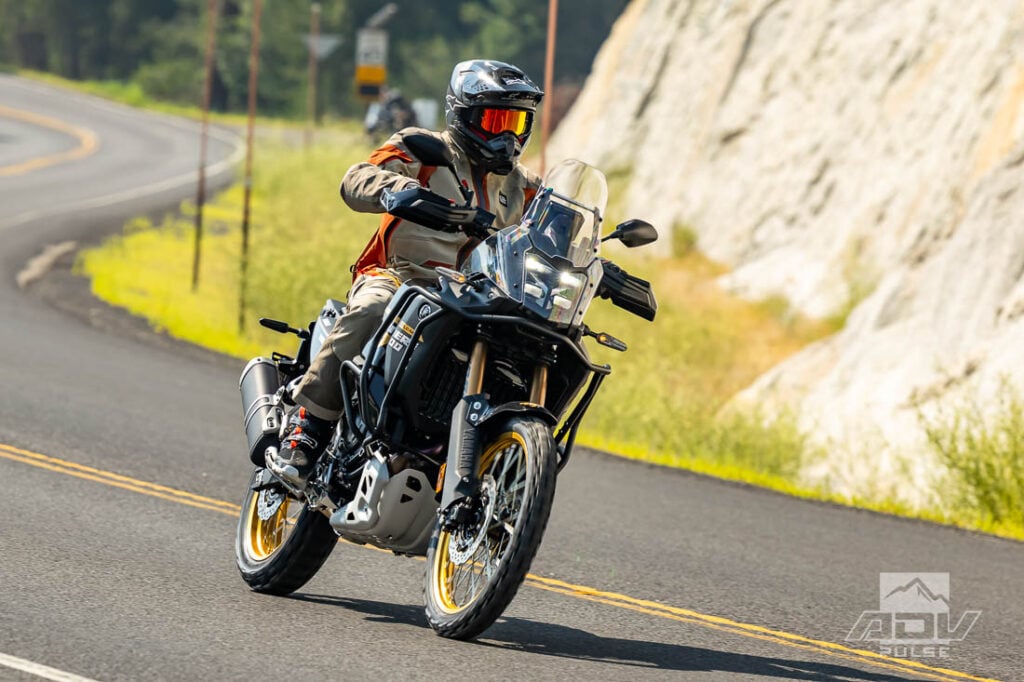
As for the ride modes, I primarily kept it in the Sport fuel map to get the full power. Explore is very smooth, but feels a bit too muted on the street. I would probably reserve it for casual highway rides, carrying a passenger or wet conditions.
In the twisties, the World Raid still retains a fun, athletic feel. It’s light, maneuverable and rails around turns confidently. Despite the longer-travel suspension, it stays composed under hard braking and acceleration,without minimal dive or squat. I did notice that the wider tank splays the knees out quite a bit though if you slide all the way forward to weight the front tire. However, after talking to a few test riders in the 5’10” range, they said their knees fit perfectly inside the tank’s cutouts, so this is likely just an issue for taller riders.
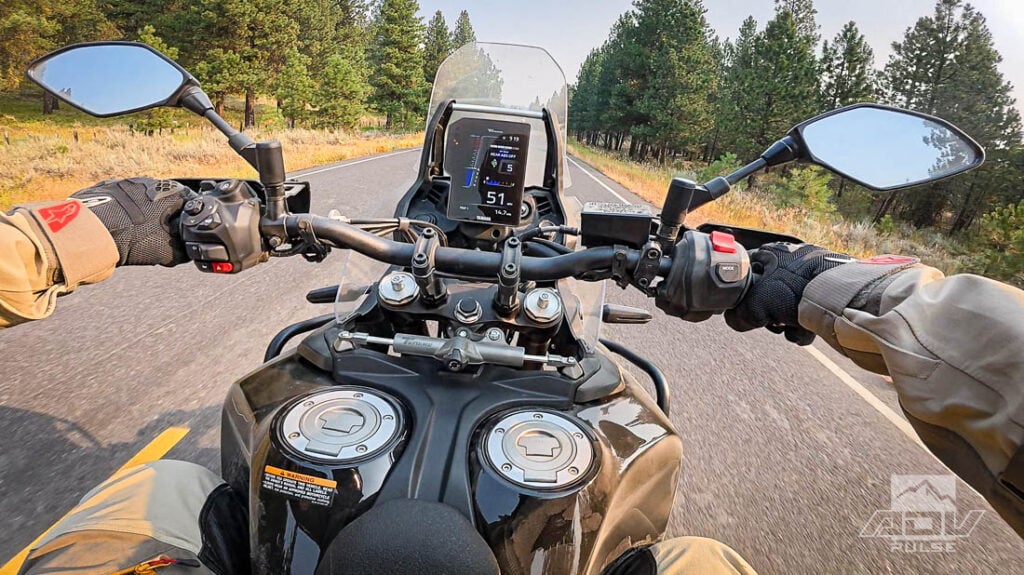
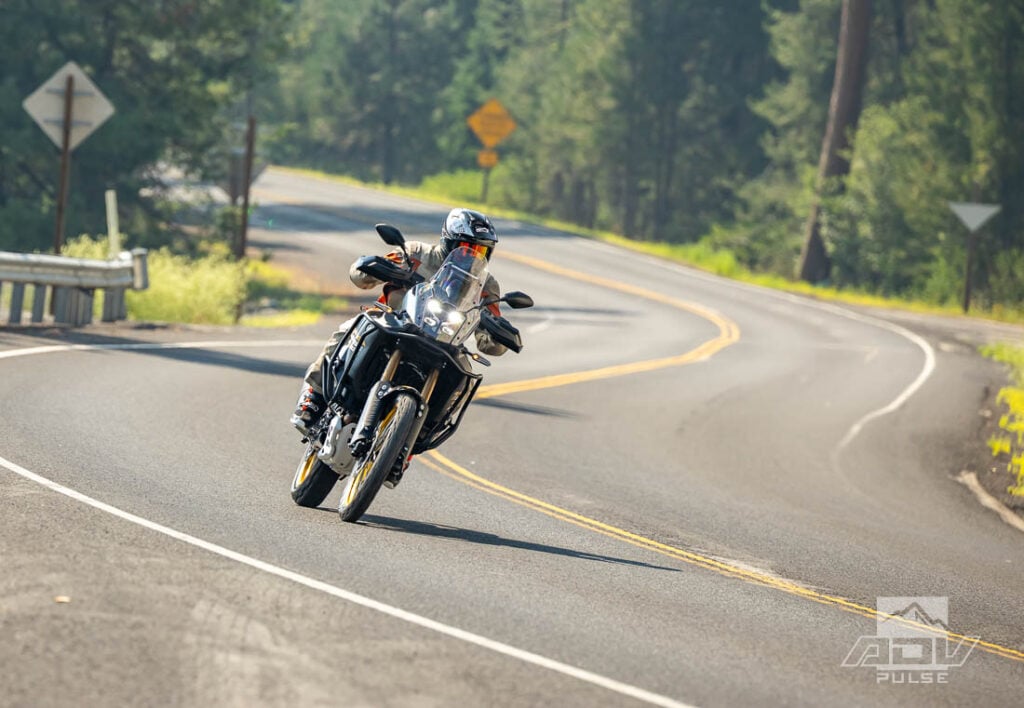
The new steel-braided lines paired with 282mm twin discs and Brembo calipers offered noticeably stronger braking bite, with less lever effort required and improved feel. Plus the lean-sensitive ABS offers additional confidence when braking late into corners. The vague rear brake feel from early T7s was also absent. I left TC and SCS in street mode, but honestly, with the smooth power delivery of CP2 powerplant, it’s not a big difference if you turn them both off on pavement.
Range was impressive on our street day. We covered 120 miles of asphalt, including significant highway sections, and the bike had about 60%-70% of its fuel left, so getting 300 miles of range does seem entirely realistic.
In The Dirt
The stand up ergos on the T7 have always been solid and the World Raid doesn’t change that. From the bar position to the peg height, it feels like you’re riding a rally bike or big enduro. The tank stays thin between the knees and the bulged area at the front of the tank never interferes with rider movement in the standing position. The pegs are extra wide for stock units, giving extra leverage and support. I like how the rubber inserts rise through the holes in the pegs rather than sitting on top. You still get some bite from the serrated edges while the rubber inserts dampen the vibes. Although with the smooth engine, there really isn’t much vibration to dampen.
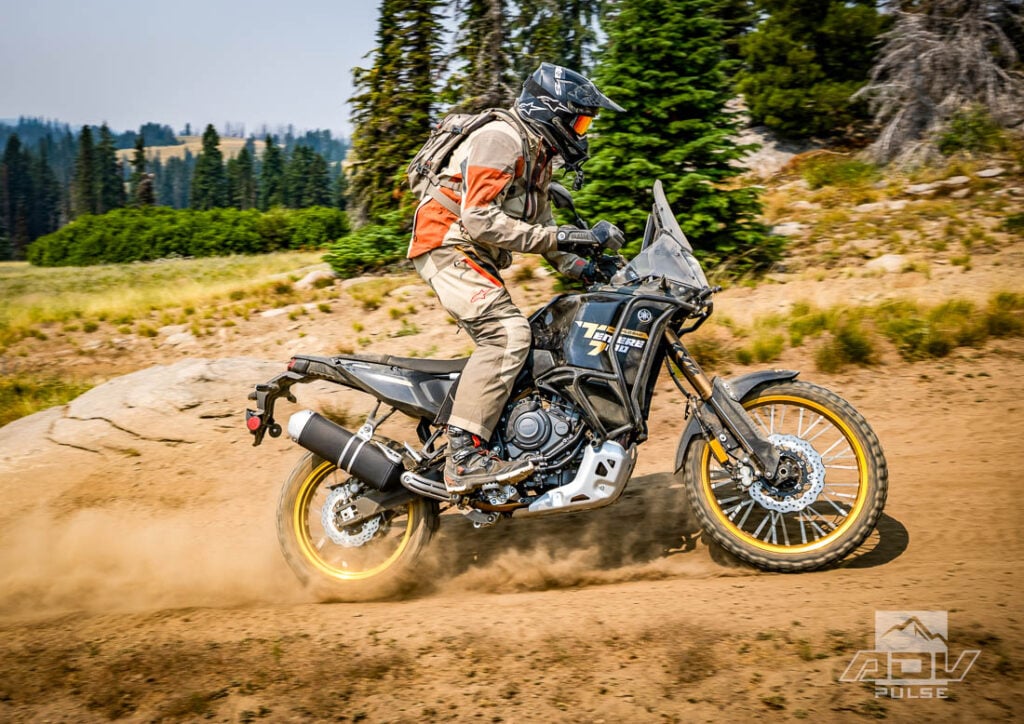
From the cockpit, the taller windscreen and wider tank make the bike feel like it has grown compared to the standard T7. And with a full tank of gas, it has gained some 20 pounds. Even so, overall maneuverability and agility haven’t changed much.
In the seated position, the seat-to-tank junction is fairly flat, and the tank height looks almost comically low. Sitting down for motocross-style turns, the tank bulge does feel a little awkward for longer-legged riders, so I tended to sit back a little in the seat to avoid splaying the knees. Not ideal for body positioning but workable if you’re not trying to go race pace.
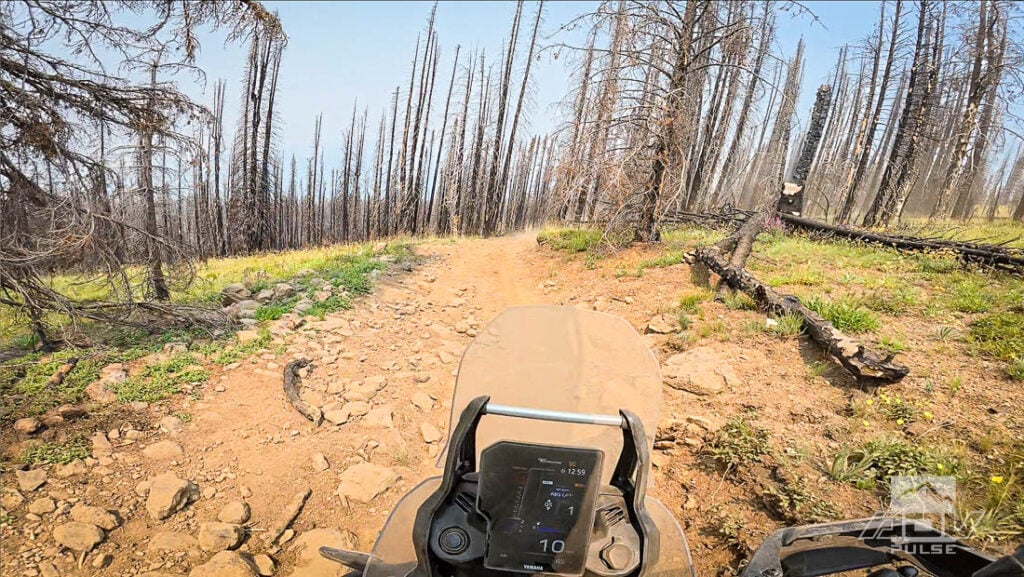
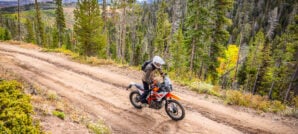
Through tighter terrain, the World Raid is a nimble handler, and at 485 pounds fully fueled, its weight is on the lighter side of the spectrum for the ADV class. You can lean it over or whip it around on a tight trail and there’s none of that top-heavy feel the pre-2025 T7’s are known to have. You can feel the weight if you tip it way over to its side, but it’s a pretty low angle before it hits the point of no return. After getting familiar with it I was able to make half donut turns on a tight trails, without feeling concerned about dropping it. I also nearly tucked the front in on a silty switchback at one point but managed to recover from it – a testament to the bike’s lower CG.
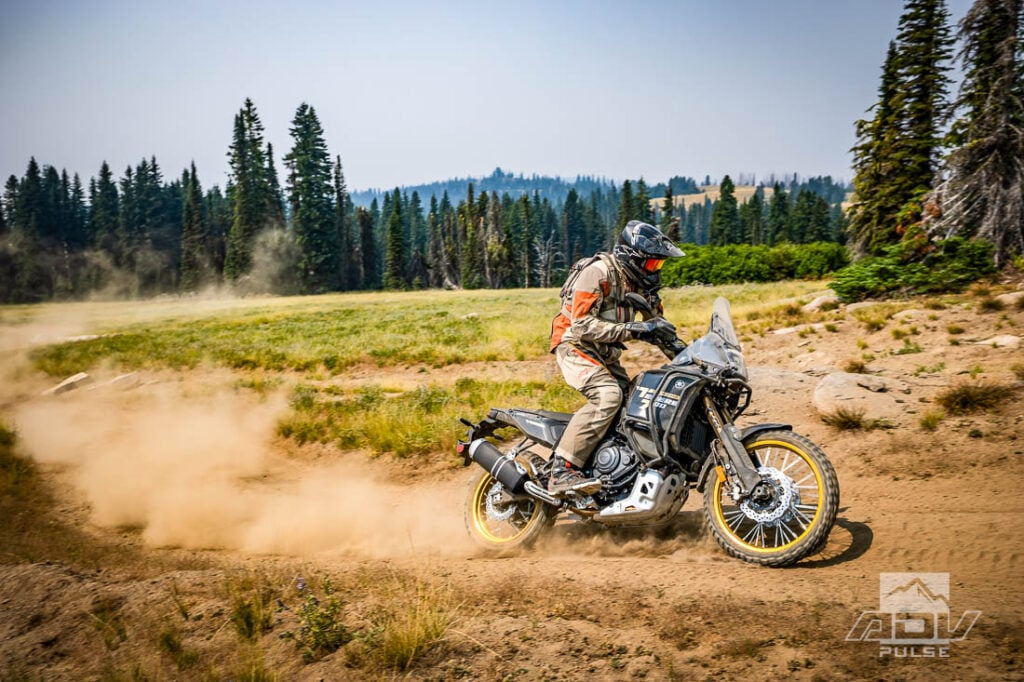
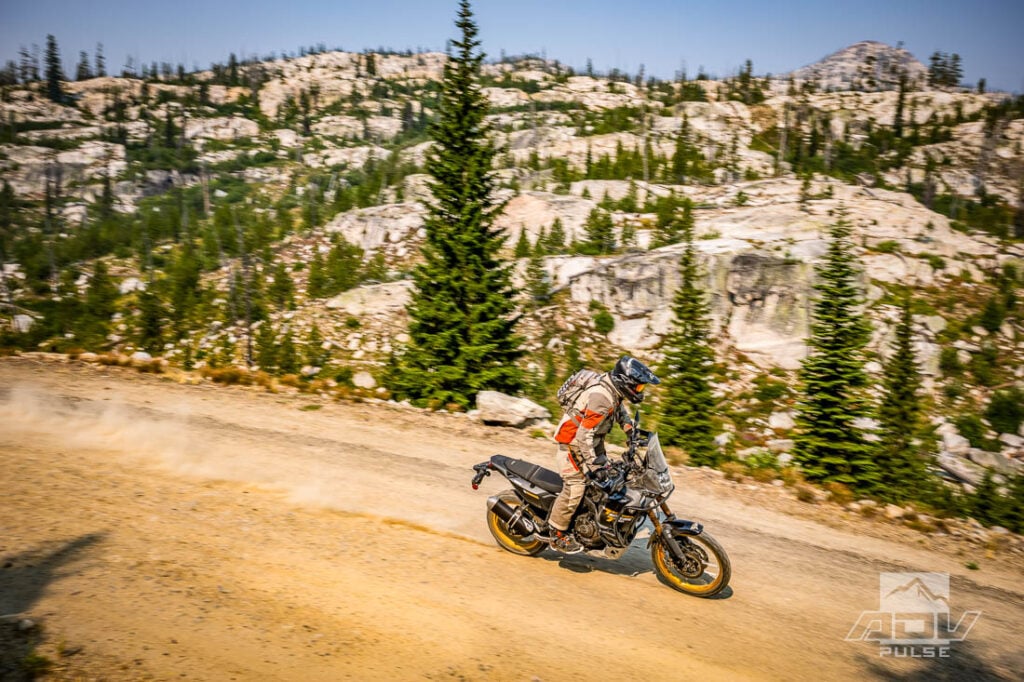
On smooth, graded dirt roads, I experimented with the off-road ABS and Slide Control (TCS 2 + SCS 2). This lets you give it a fist full of throttle coming out of turns that produces a smooth, predictable slide with a “fun” amount of rear kick out. The electronics continue to monitor wheel spin and pitch though, to ensure you aren’t having too much fun though. Dropping it into SCS 1 (street slide control) allows just a small amount of slide before it catches, and it does it without a harsh cut off. It’s a great way to start getting comfortable with sliding the bike. Start with level 1, then go to 2, then turn it off completely as you get progressively more confident. I mostly used the Sport throttle map (PWR 1) for a snappier response. The Explore mode (PWR 2) seemed a little too mellow with a bit of a delay for my tastes, but it might work well in loose conditions and for new off-road riders, it’s a good place to start.
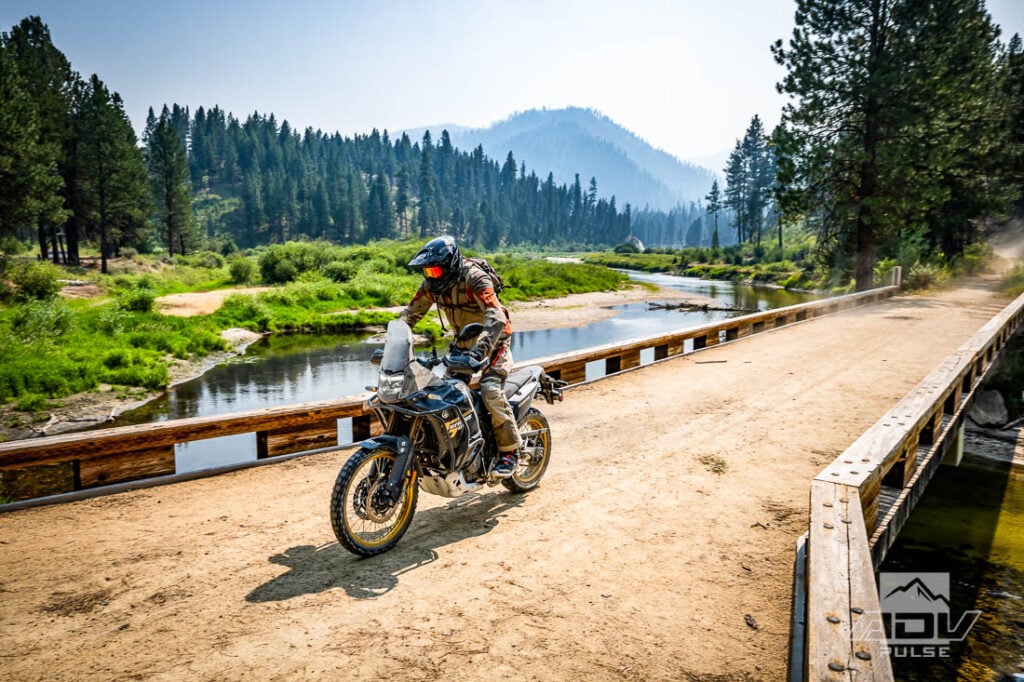
Overall, the electronics package has a bit of a learning curve. Understanding what PWR, TCS and SCS do and how to combine them in different ways, isn’t as intuitive as some other systems I’ve used. Personally, I’d prefer if they integrated the slide control into the TC and added more levels of adjustment for simplicity.
ABS is more straightforward though: Street, Off-Road and Off. Many adventure bikes these days don’t allow you to turn off the front ABS, so it’s nice that you can still do that on the T7s. Riding off-road with the Off-Road ABS setting worked well almost all the time. I felt confident in the front wheel ABS but one time in a silty, rocky downhill section, I did blow a turn when it got confused. In all but the trickiest terrain though, I’d still prefer to leave it on. The steel-braided lines haven’t had any negative impact on the braking either. Overall the power and feel were more than adequate for the dirt.
The big ABS button also makes switching settings easy. Hold it down for a few seconds to shut it off completely and a quick press turns it back on. This button does more than just shut the ABS off though, it works like street / dirt toggle. If you hold it down coming from street mode, it switches to your last off-road setting, even if you had your TC off it remembers the settings. So each time you transition from street to dirt, you can just push the big button on the dash to switch to your preferred off-road settings. This only works if you come to a complete stop though. Power maps, TCS, and SCS modes can all be changed while riding, but turning them on or off requires a complete stop.
I did encounter a few quirks that caused some frustration early on with the electronics. Initially, I had trouble changing certain modes while riding, but it requires that you roll off the throttle first – and unlike some systems, it doesn’t warn you. It just dims the features that are currently inactive. You also can’t jump directly from Street TC to Off, you need to first go to Off-Road before you can hold the button down to switch it Off. Not the easiest system to learn, but the big ABS button does help simplify things once you get your settings dialed.
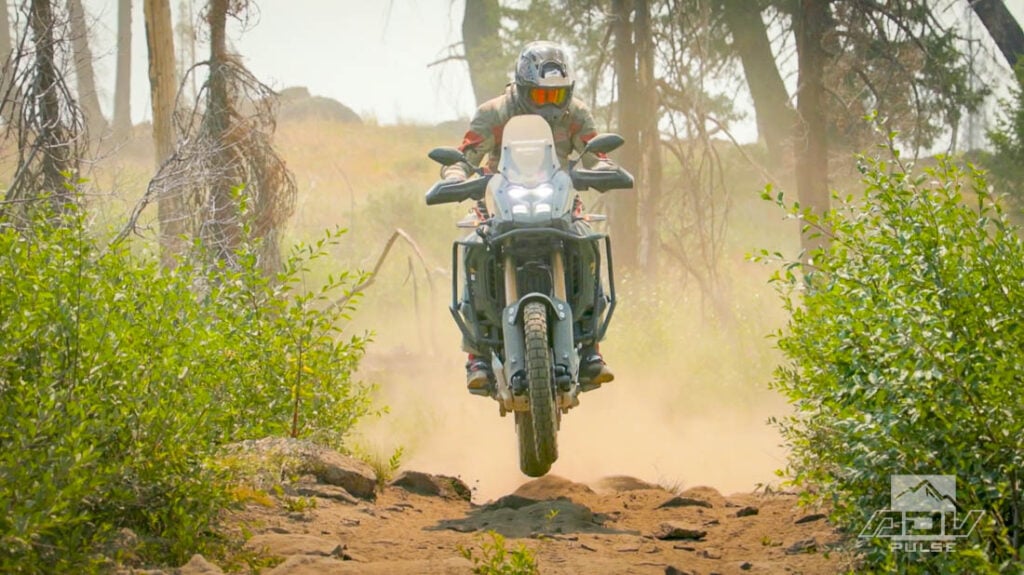
The new suspension was probably the one upgrade I was most eager to test. On the smooth dirt roads, we encountered some washboard and SxS ruts that made the suspension feel a bit harsh. But after pulling over to reduce the damping and compression by several clicks, it was transformed. This gave it a much plusher, premium feel over choppy terrain. Compared to the standard model, it handles small-to-medium size bumps with ease.
After two days without much challenging terrain, I was starting to get a little anxious to push the bike harder. On the last day, we finally got into more heavy-hitting terrain that would test the increased suspension travel on several rocky jeep trails mixed with silty soil. The route turned even more technical after a few of us got separated from the group and ended up on enduro-style trails with even bigger rocks, steeper descents, and tighter tracks.
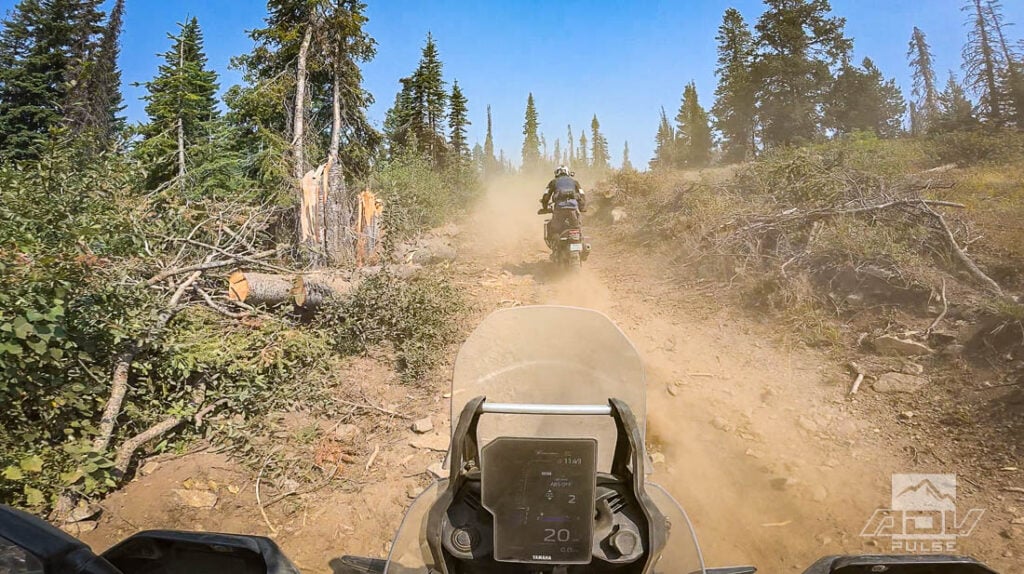
Finally I was able to launch both wheels off the ground and blast through rock gardens to see if the suspension would respond with any unsavory characteristics. On terrain, where the standard T7’s front fork would have bonked and the rear shock would have bottomed, the World Raid just floated through unfazed. Sections where I would have backed off on the standard model, I blasted through at a much higher pace, and the bike stayed composed with no fork clunks, skid‑plate hits, or harsh feedback. I’d still like to test the limits further on bigger whoops, jumps and drop offs, but it’s already clear the World Raid is a significant improvement over the standard T7.
Final Thoughts
With the World Raid variant,Yamaha has clearly addressed the main weak points of the standard Tenere 700 in the dirt while adding more versatility for long-range travel. One thing I would have liked to see though, is the addition of a slipper clutch. On steep loose terrain, I noticed a fair amount of rear wheel chatter and intermittent lockup. A slipper clutch would help smooth that out and improve control on the steeps.
I was also put off a bit by the non-intuitive interface for adjusting the electronic rider aids. Yamaha needs to refine that because I think many riders will just get frustrated and turn everything off, never learning how much these systems can actually help them. If you buy this bike, it’s worth taking the time to read the manual to better understand its capabilities.
And while the standard T7 really needed more fuel capacity, I think going to 6.1 gallons might have been overkill for a 700cc machine. A range of 250 miles is usually more than enough for most adventures and you can always bring auxiliary gas cans or bags for the rare exceptions. A 5.3 gallon tank would have achieved that range while reducing both weight and bulk – and perhaps a bit more leg room for taller riders too.
That said, there aren’t many true long-range adventure bike options out there. Plenty of riders will likely appreciate 300 miles of range for remote travel. I also really like what Yamaha did with the tank design too to give it a low CG. They need to apply the same engineering to the standard model as well.
Off-road riders in the U.S. riders are going to be stoked on the new suspension. It’s a major upgrade to the off-road capability compared to the standard T7. While I still would prefer the slender feel of the base T7 on a flowy, tight singletrack, the World Raid works better everywhere else. The suspension feels more premium in rough terrain, and despite the extra weight, the lower CG helps hide it. The upgraded suspension and premium equipment put it in close competition with bikes like the Aprilia Tuareg 660 and Husqvarna Norden 901 Expedition. What neither of those bikes offer though, is the extended range, Japanese design (even if it’s actually built in France) and track record of reliability.
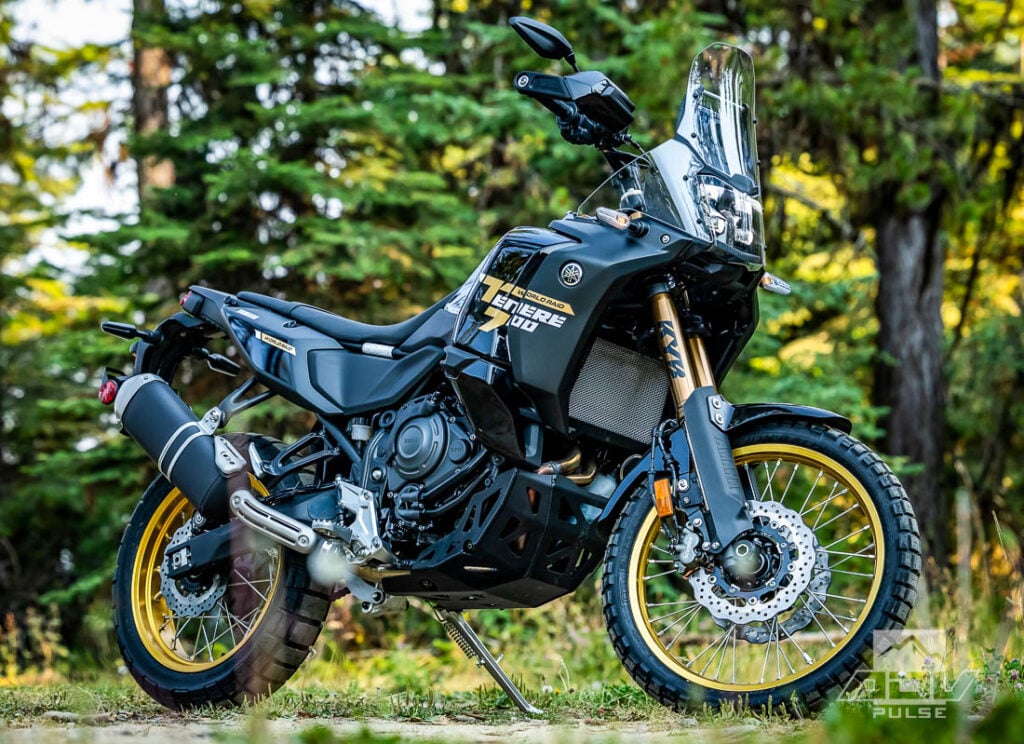
When you consider the entire package with the up-spec suspension, extended fuel range, advanced electronics, cruise control, steering damper, improved protection, touring windscreen, and more – it’s a solid deal at $12,999. There’s a lot to be excited about for T7 fans with the new Rally Raid and we won’t be surprised to see these popping up on the trails over the next few years. Seems like a missed opportunity not bringing it here earlier though because the competition for off-road focused ADV bikes has only grown over the last few years. But better late than never. Do us a favor though and bring that T7 Rally stateside next! .
2026 Tenere 700 World Raid Specs
| Engine type: | 2-cylinder, Liquid-cooled, DOHC, 4-valves, 4-stroke |
| Displacement: | 689cc |
| Bore x stroke: | 80.0 x 68.6 mm |
| Compression ratio: | 11.5 : 1 |
| Maximum power: | 72.4 HP (54.0 kW) @ 9,000 rpm |
| Maximum torque: | 50.2 ft-lbs (68.0 Nm) @ 6,500 rpm |
| Lubrication system: | Wet sump |
| Clutch type: | Wet, Multiple Disc |
| Ignition system: | TCI |
| Starter system: | Electric |
| Transmission system: | Constant Mesh, 6-speed |
| Final transmission: | Chain |
| Fuel consumption: | 54.7 mpg |
| CO2 emission: | 100 g / km |
| Fuel system: | Fuel Injection |
| Frame: | double cradle, Steel tube backbone |
| Caster angle: | 27º |
| Trail: | 105 mm |
| Front suspension: | Upside-down telescopic fork, Ø 46 mm |
| Rear suspension: | link suspension, Swingarm |
| Front travel: | 9.5 in (230 mm) |
| Rear travel: | 10.0 in (220 mm) |
| Front brake: | Hydraulic dual disc, Ø 282 mm |
| Rear brake: | Hydraulic single disc, Ø 245mm |
| Front tire: | 90/90 – 21 M/C 54V |
| Rear tire: | 150/70 R 18 M/C 70V |
| Overall length: | 93.3 in (2,370 mm) |
| Overall width: | 36.8 in (935 mm) |
| Overall height: | 58.9 in (1,495 mm) |
| Seat height: | 35.0 in (890 mm) |
| Wheelbase: | 62.8 in (1,595 mm) |
| Ground clearance: | 10.0 in (255 mm) |
| Wet weight: | 459 lbs (220 kg) |
| Fuel tank capacity: | 6.1 gallon (23 L) |
| Oil tank capacity: | 3 L |
| Screen type: | TFT |
| Screen size: | 6.3 inch |
| Smartphone Connectivity: | MyRide |
| On-screen Navigation: | MyRide turn-by-turn |
| MSRP: | $12,999 USD |
| Availability: | Shipping to U.S. dealers end of August 2026 |
Gear We Used
• Helmet: Alpinestars Supertech M10
• Jacket: Alpinestars Maxdura Drystar XF
• Pants: Alpinestars Maxdura Dual
• Jersey: Alpinestars Maxdura Dual
• Boots: Alpinestars Tech 7 Enduro Drystar
• Gloves: Alpinestars Pro-Dura
Photos by Garth Milan

Author: Rob Dabney
Rob Dabney started a lifelong obsession with motorcycles at the age of 15 when he purchased his first bike – a 1982 Honda MB5. Through his 20’s and 30’s he competed in off-road desert races, including the Baja 250, 500 and 1000. Eventually, his proclivity for exploration led him to dual sport and adventure riding. Rob’s never-ending quest to discover what’s around the next bend has taken him on Adventures in Latin America, Africa, Europe, Asia, and throughout the American West. As a moto journalist, he enjoys inspiring others to seek adventure across horizons both near and far.Related Stories
Related Stories
 Yamaha Launches First‑Ever Ténéré Trek Adventure Rider Rally This summer, Yamaha is bringing its BLU CRU community together with the launch...
 Yamaha’s Flagship Tenere 700 “World Raid” Is Coming To The US Tenere fans rejoice! Yamaha is finally bringing the Ténéré 700 World Raid to...
 Yamaha Unveils Tenere 700 ‘Extreme’ And ‘Explore’ Models For 2023 Since its launch in 2019, Yamaha has expanded the Tenere 700 range over...
Popular Stories
Bultaco Staging Comeback With Budget-Friendly 300cc ADV Bike
Bultaco is officially back in the motorcycle busi...
5 Small‑Bore Adventure Bikes That Aren’t Buzzy On The Highway
Small‑bore adventure bikes in the 300–500cc range...
CFMoto’s 450MT Sweeps All Adventure Classes at Red Bull Romaniacs
CFMoto recorded a standout performance at Red Bul...
KTM Announces Specs And Availability Of New 690 Rally Model
KTM is expanding its LC4 lineup with the introduc...

Notify me of new posts via email