
KTM 690 Rally Review: The LC4 ADV Bike Returns After Nearly 20 Years
A hard‑hitting off‑road machine with everyday usability?
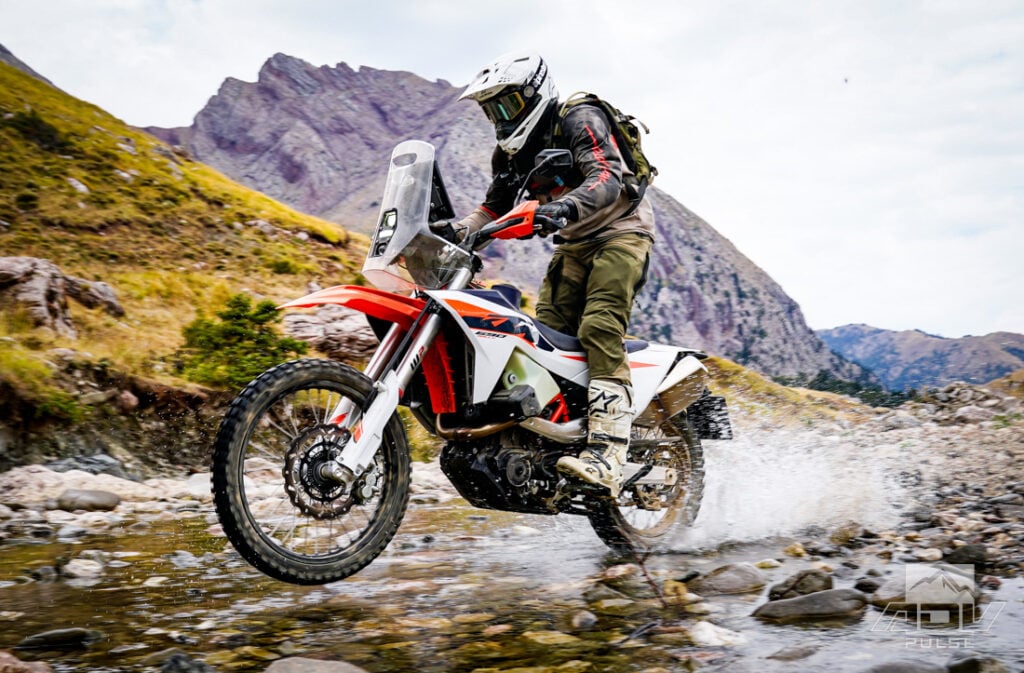
From the late ’90s through the 2000s, one of the seminal machines that helped kick off the entire ADV trend was KTM’s 640 Adventure. It was light, had proper suspension, carried 7 gallons of fuel for long-haul travel, and looked every bit the part of KTM’s Dakar rally bikes of the era. If you wanted something torquey and capable that could take you practically anywhere with all your gear, this was the bike. Plenty of adventure riders cut their teeth on a 640 ADV — myself included.
So when KTM introduced the all-new 690 Enduro R in 2008, anticipation peaked for the inevitable Adventure version. Going back to the 620 Adventure days, the LC4 lineup had always included a companion Adventure model. Spy shots circulated, rumors churned, but year after year nothing materialized.
Nearly two decades later, most fans of the 640 Adventure had given up hope. And then, almost out of nowhere, KTM announced the 690 Rally for 2027. It didn’t get the “Adventure” badge many expected, but KTM insists this is the true successor to the 640. Their reasoning for the name change: the term “Adventure” has been diluted to the point of meaning almost anything, while “Rally” signals a higher level of off-road intent.
Whether that naming strategy lands is debatable, but it’s true the landscape has changed dramatically since the last 640 Adventure rolled off the line around 2008. Today the 650–750cc ADV class is crowded with lighter, more capable, rally‑styled options from nearly every brand.
Did KTM wait too long to make an impact? Can an LC4 once again become the performance king in this segment? Those were the questions I set out to answer when I traveled to Greece for the press launch of the 2027 KTM 690 Rally.
What You Get
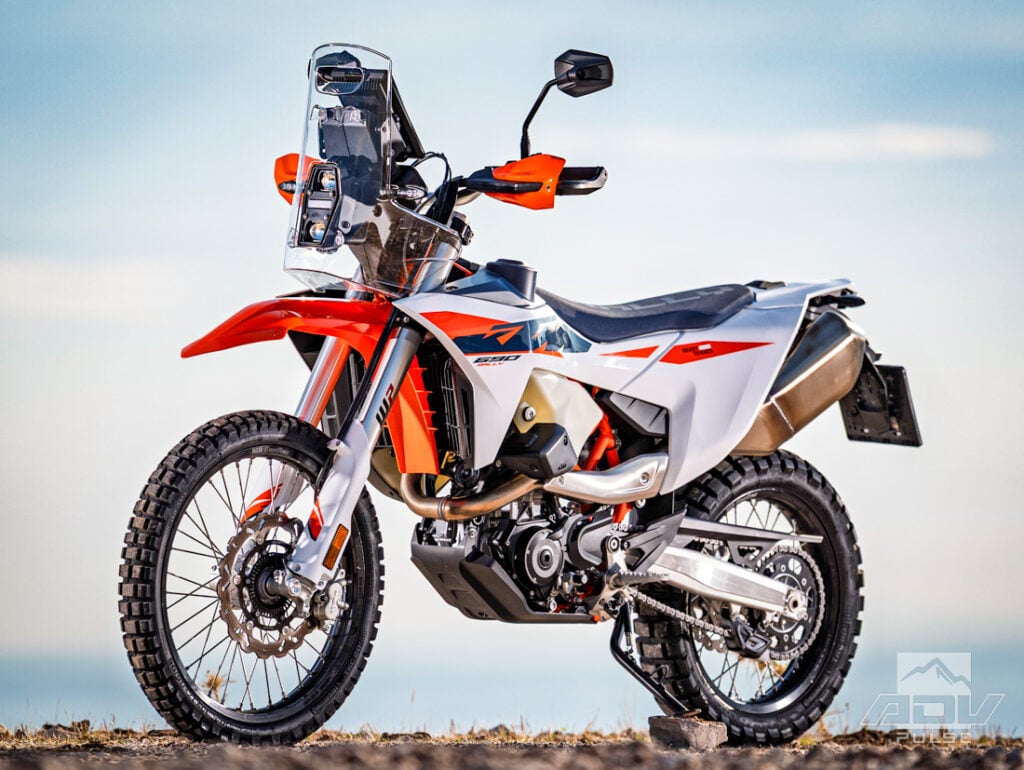
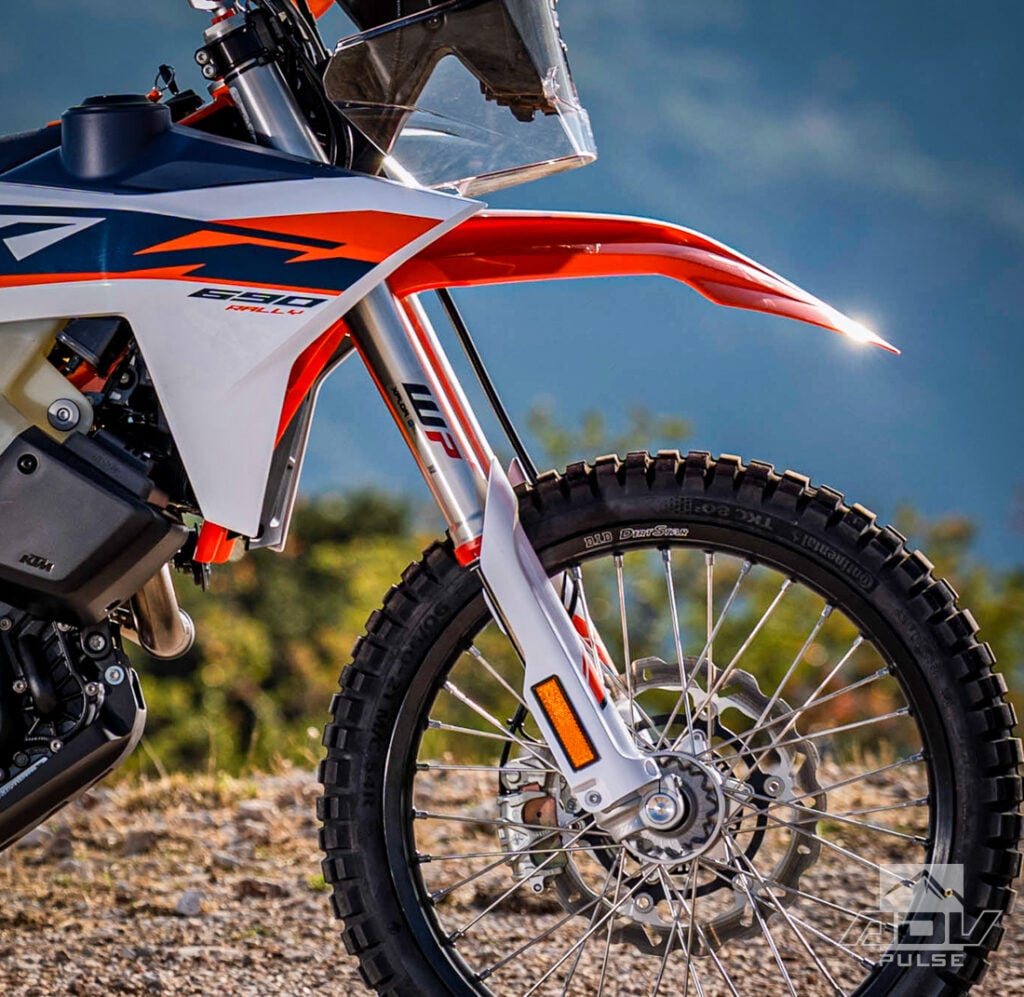
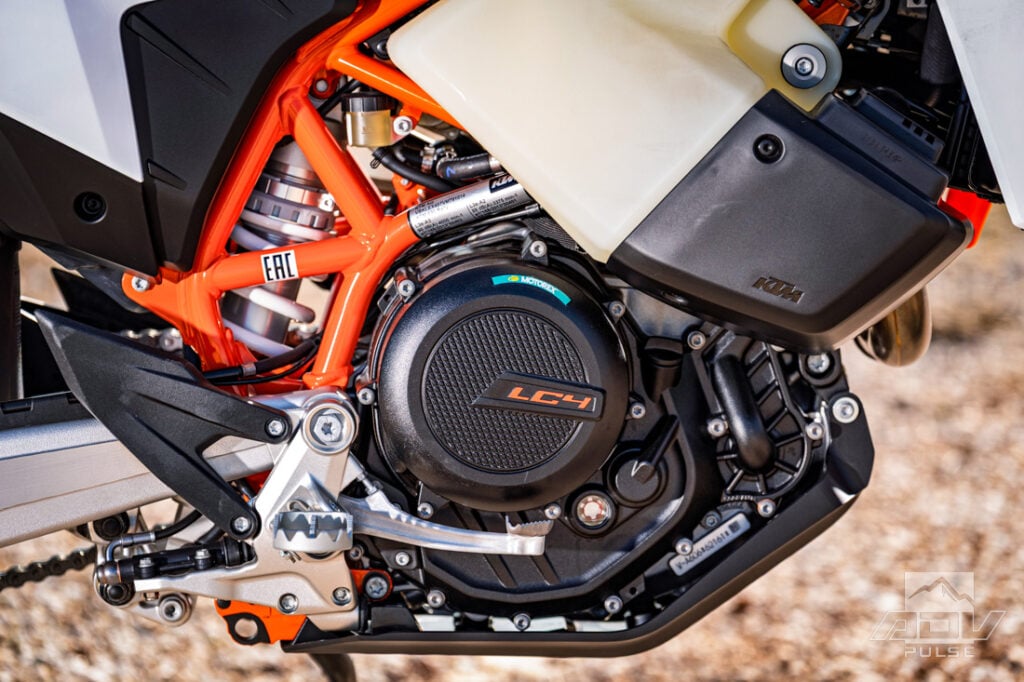
Let’s first start with the specs to see what you actually get with this new machine. The 690 Rally shares much of its DNA with the 690 Enduro R, including the 693cc LC4 single and its steel‑tube trellis frame. Suspension comes from WP’s XPlor line, with a 48mm fork offering easy access rebound and compression adjustments via hand dials on top of the tubes. Out back, a fully adjustable linkage‑type shock handles preload, compression, and rebound. Travel is 10.4 inches up front and 9.8 inches in the rear, translating to 10.4 inches of overall ground clearance and a 36.8‑inch seat height sitting on its 21/18‑inch tube‑type spoked wheels.
The engine and electronics package mirror the Enduro R as well, but it’s worth noting the LC4 platform received significant updates last year. The powerplant got a round of revisions that bumped horsepower, torque, and efficiency. At 78 hp and 54 ft‑lbs of torque, it’s the most powerful single on the market while still meeting the latest EURO 5+ emissions standards. Maintenance intervals were also stretched to 15,000 km for oil changes and 30,000 km for valve checks.
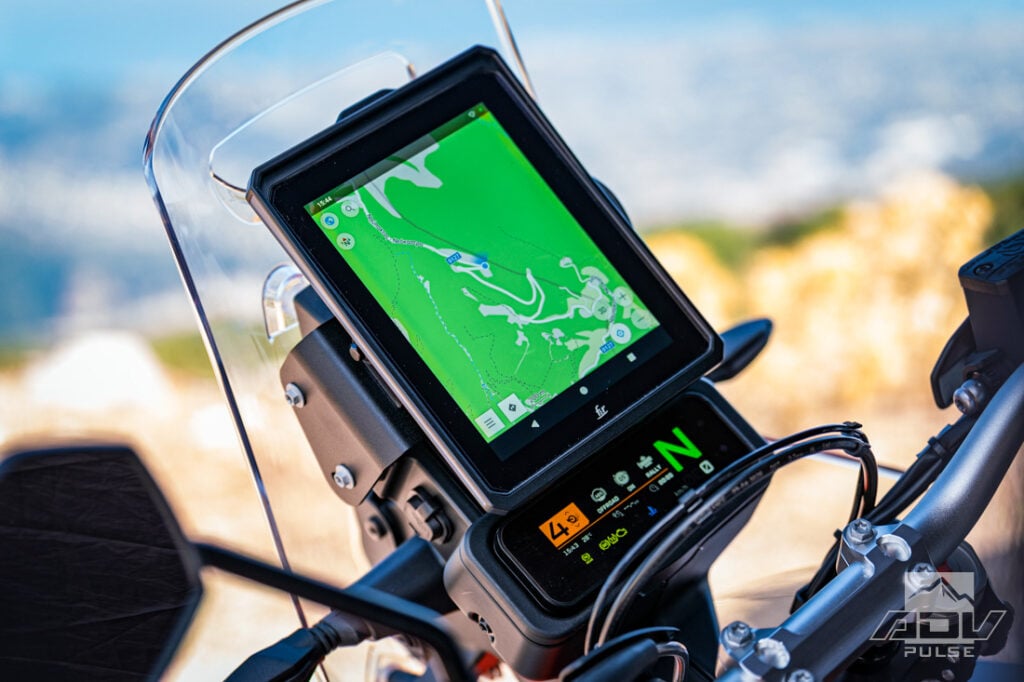
Electronics saw a major overhaul too. A compact 4.2‑inch TFT now manages rider‑aid settings and adds Bluetooth connectivity for phone feature integration. An advanced rider‑aid suite uses an IMU for lean‑sensitive ABS and braking, along with three ride modes — Street, Offroad, and the optional Rally. Rally Mode lets you adjust traction‑control slip from 1–9 or shut it off entirely, all via a thumb dial on the bars. One of the standout electronic advancements is Dynamic Slip Control, which lets you set a baseline TC level in Rally Mode, then the system auto-adjusts intervention depending on terrain and rider input.
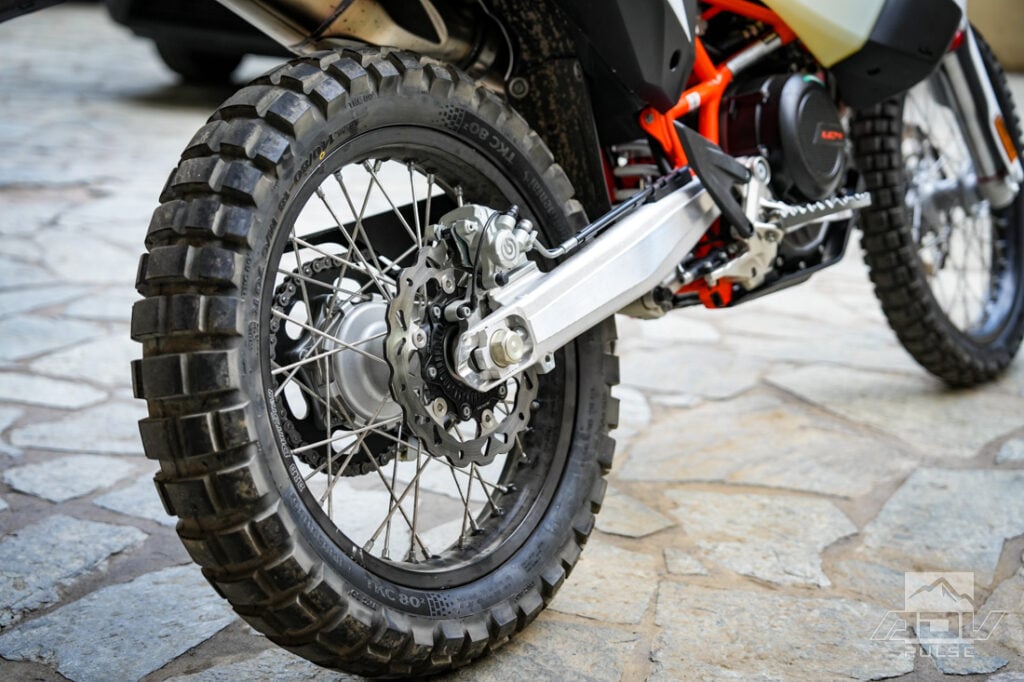
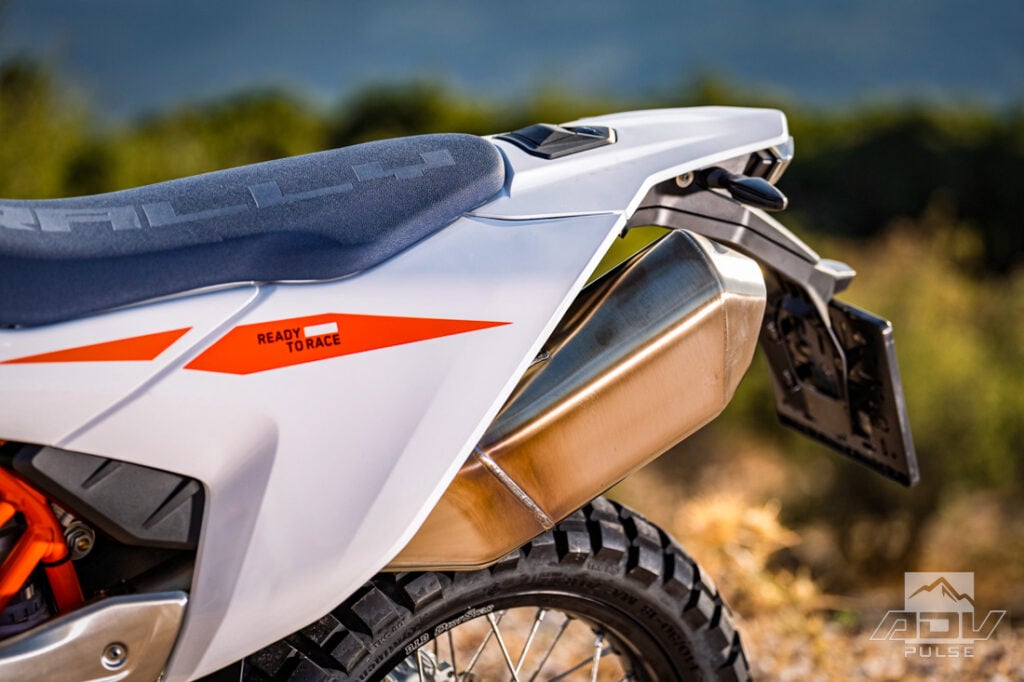
Other upgrades to the 690 Enduro R carried over include new rubber engine mounts for reduced vibration on the highway, a lighter clutch lever pull thanks to an updated slipper clutch, and relocating the catalytic converter to the muffler instead of the header — a welcome change that simplifies aftermarket slip‑on installs.
What’s Different?
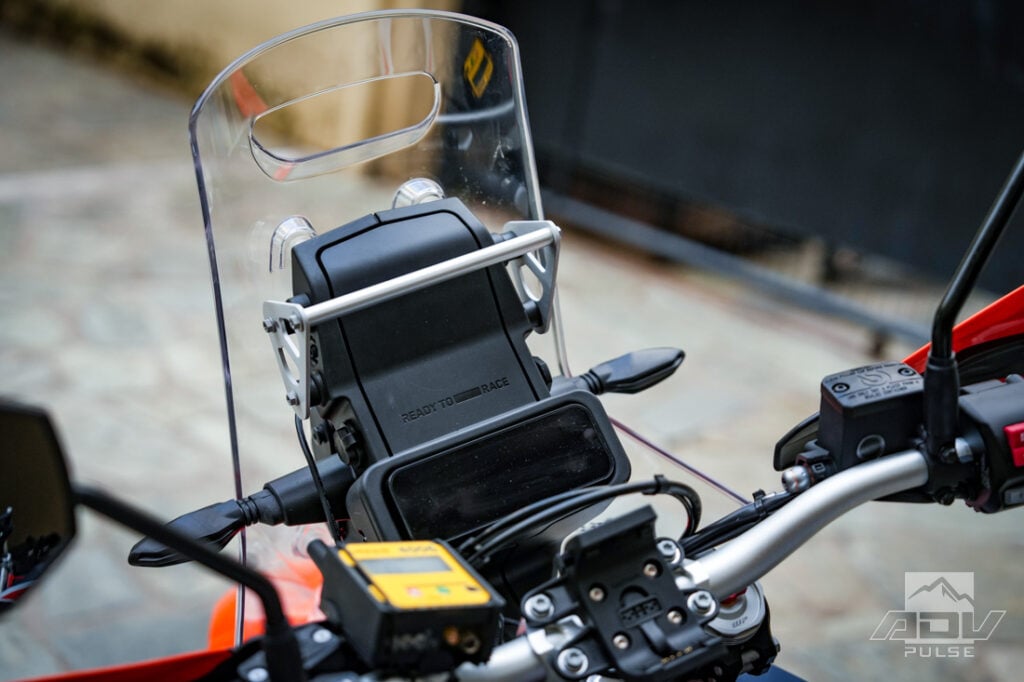
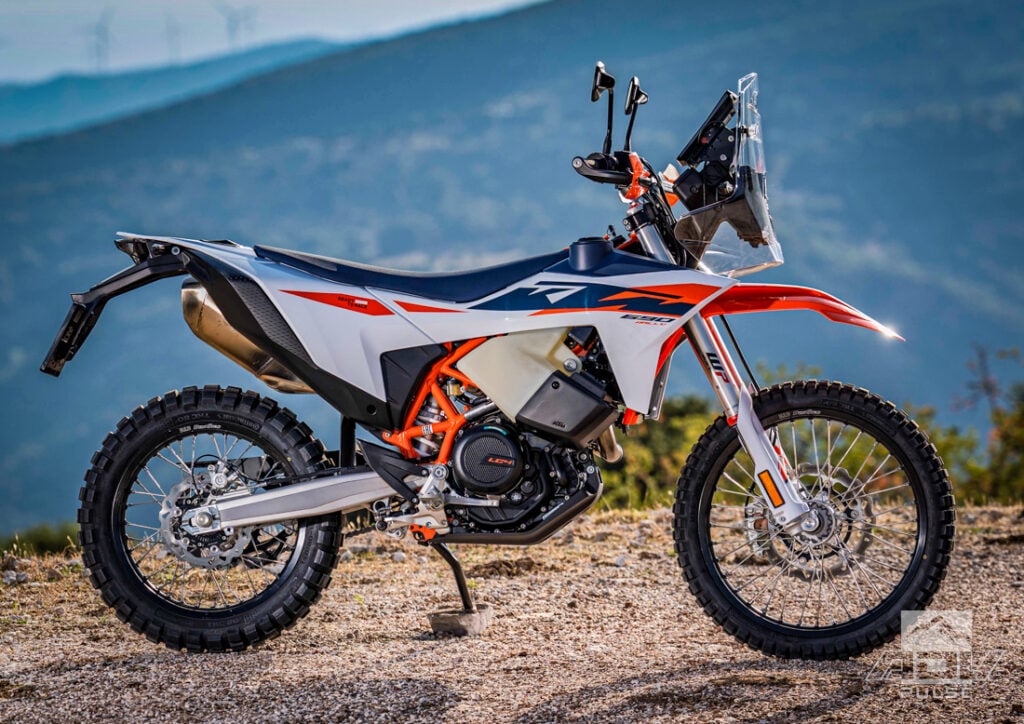
While the underlying engine, chassis, and electronics are shared with the 690 Enduro R, the Rally brings major changes in bodywork, fuel capacity, and accessories. The rally tower is the most recognizable difference — its design layout modeled after the 450 Rally Replica raced at Dakar, with the only differences being materials (no carbon fiber), integrated turn‑signal mounts, and an air duct in the windscreen to help reduce buffeting.
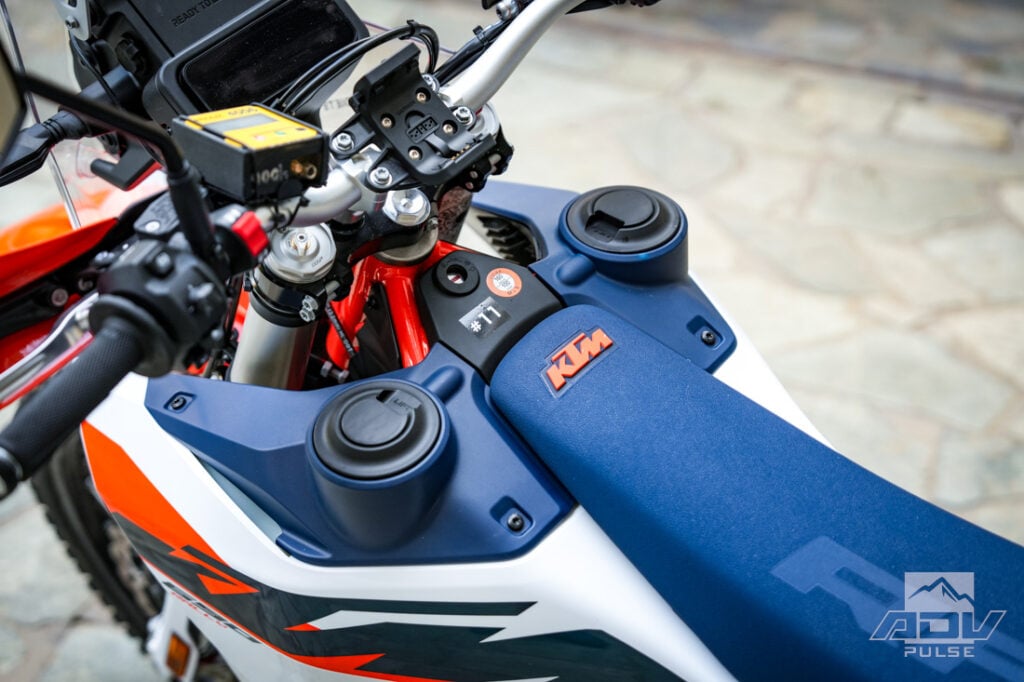
Fueling gets an even bigger transformation. The Rally retains the Enduro’s rear tank but adds twin front tanks shaped much like the 450 Rally’s. Their design keeps fuel mass low for a better center of gravity but without the side bulges found on the 890 Adventure. Total capacity comes in at 5.3 gallons — not quite the 450 Rally’s volume, but a full two gallons more than the 690 Enduro, giving the bike genuinely useful “Adventure” range while keeping the weight reasonable.
Each front tank has its own filler cap for quicker refueling, yet they’re linked internally for even fuel distribution. To mount them, KTM added dedicated tabs welded to the frame, which means these tanks can’t simply be bolted onto a 690 Enduro R without modification.
Riders can also manage fuel draw between the front and rear tanks via a handlebar switch, allowing some control over weight bias as conditions change during the ride. The system uses separate fuel pumps and individual reserve lights for the front and rear circuits as well.
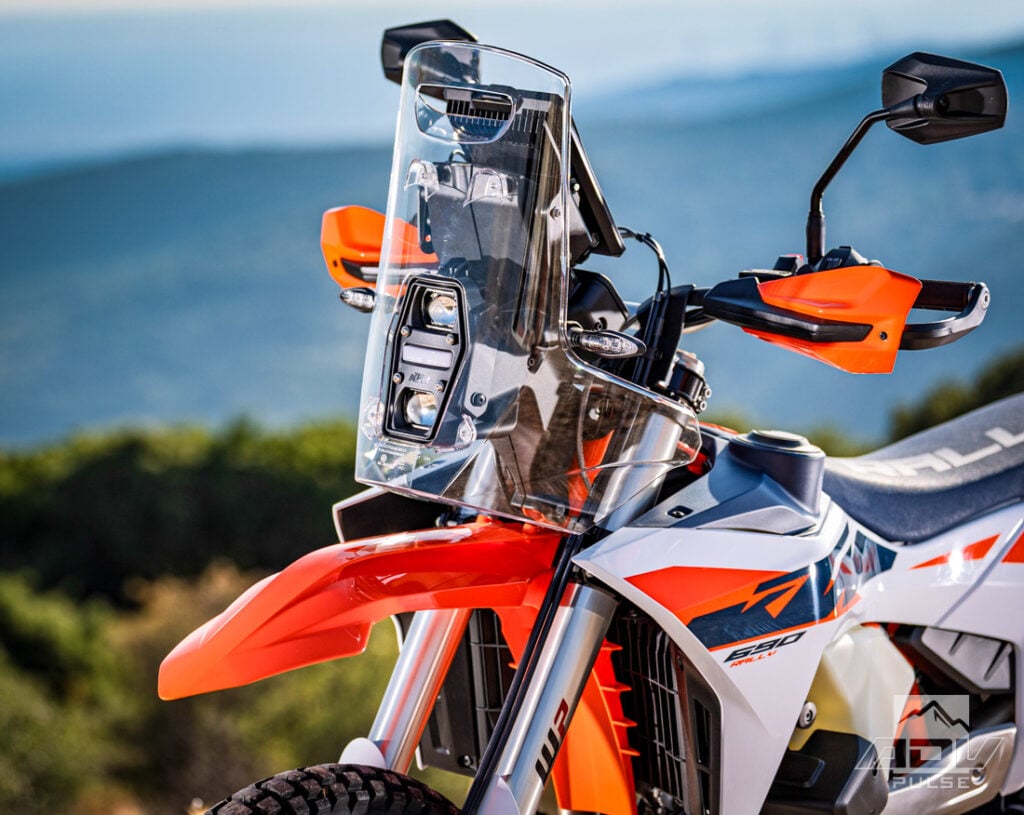
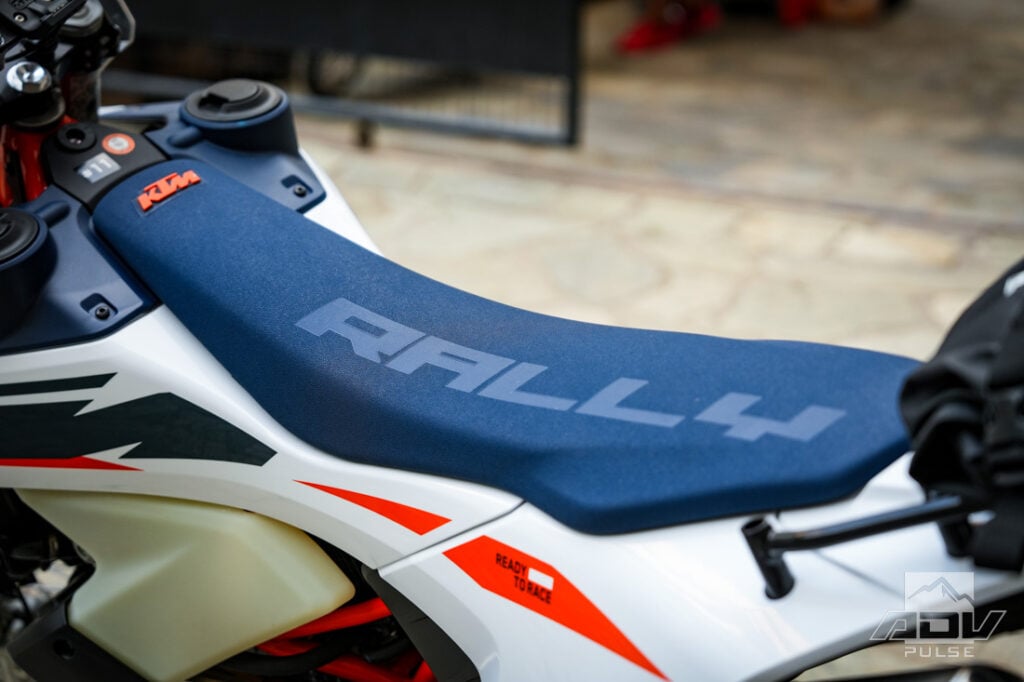
Beyond the tanks and tower, the Rally gets a handful of functional upgrades: full wrap‑around handguards, larger adventure‑style footpegs, a Rally‑branded seat cover, and on the tower, a GPS bar plus USB‑C and 12‑volt charging ports.
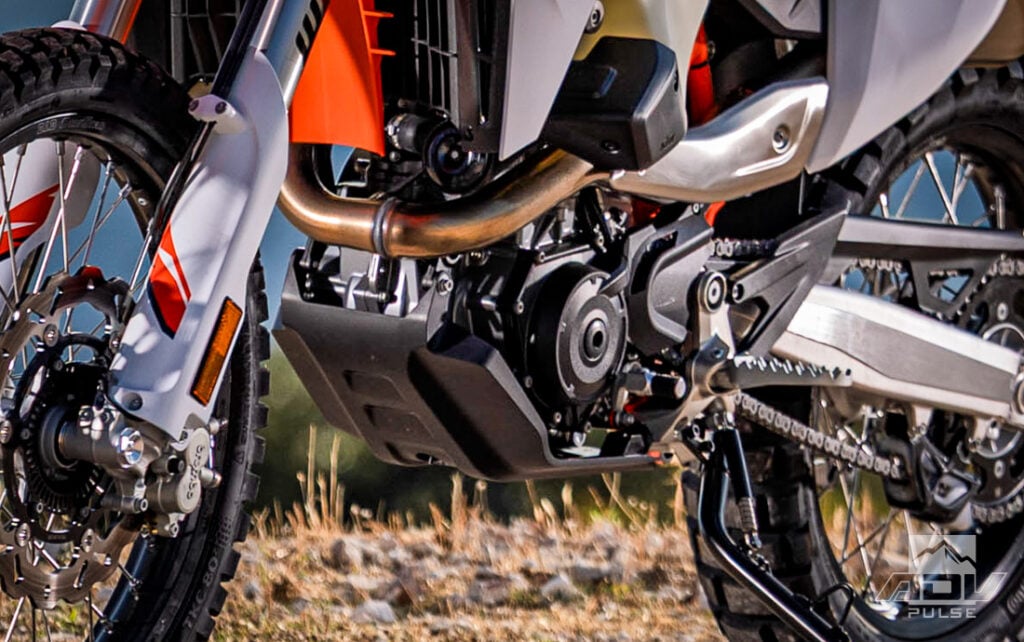
The standard plastic sump guard carries over from the Enduro, though KTM offers a heavy‑duty skid plate with expanded coverage in the hard-parts catalog. What’s more notable though is KTM’s introducing Cruise Control to the LC4 platform for the first time. It’s a simple software activation that uses the existing switchgear and TFT, and can also be added to the 690 Enduro R. An up/down Quickshifter is available as well, and riders seeking maximum performance can opt for a WP Pro suspension upgrade that gives the bike similar componentry to the 450 Rally Replica.
Our test bikes were equipped with the Rally Pack electronics, Quickshifter, and Cruise Control. For navigation, KTM fitted the same rally tablet used by the factory team, but instead of scrolling an electronic roadbook, we ran the OsmAnd GPS app to follow pre‑loaded tracks throughout the test.
The Test
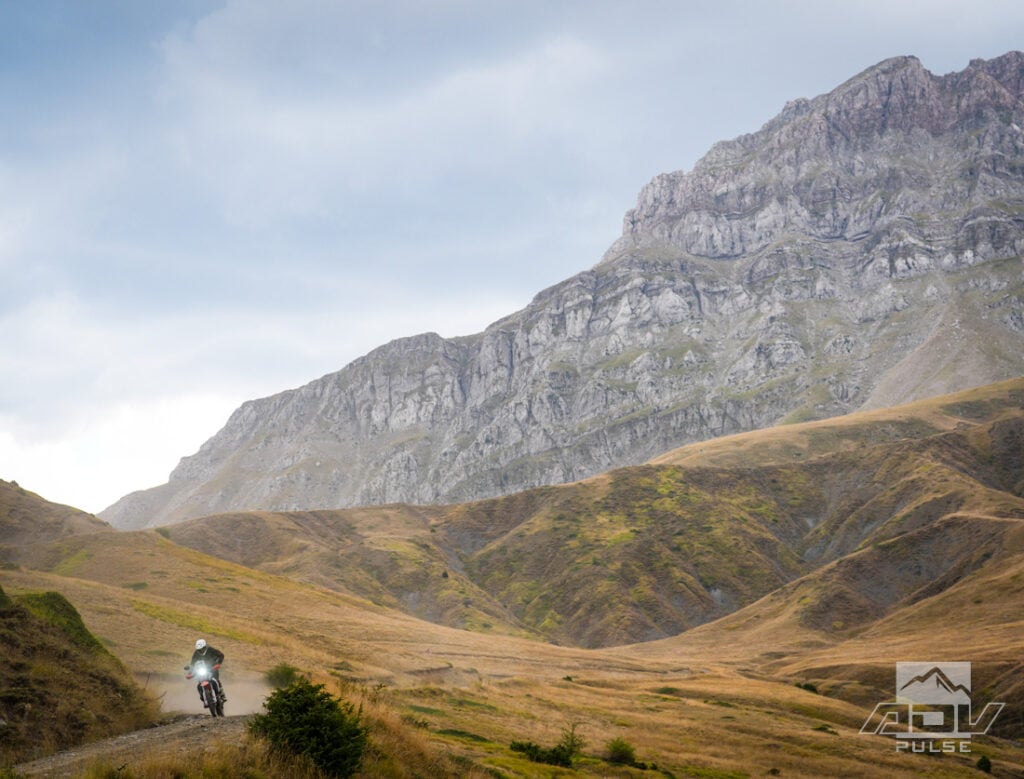
We spent two days covering roughly 350 km through Greece’s mountainous backcountry, which turned out to be far more varied than expected. Most of our route consisted of rocky gravel roads, but we also tackled a mix of technical hill climbs, steep loose descents, sections of forest singletrack, twisty mountain asphalt, and a few short highway stretches. On the final day we rode straight into a heavy thunderstorm, which gave us plenty of opportunity to cycle through the rider‑aid settings and see how the electronics behaved in real‑world conditions.
On The Street
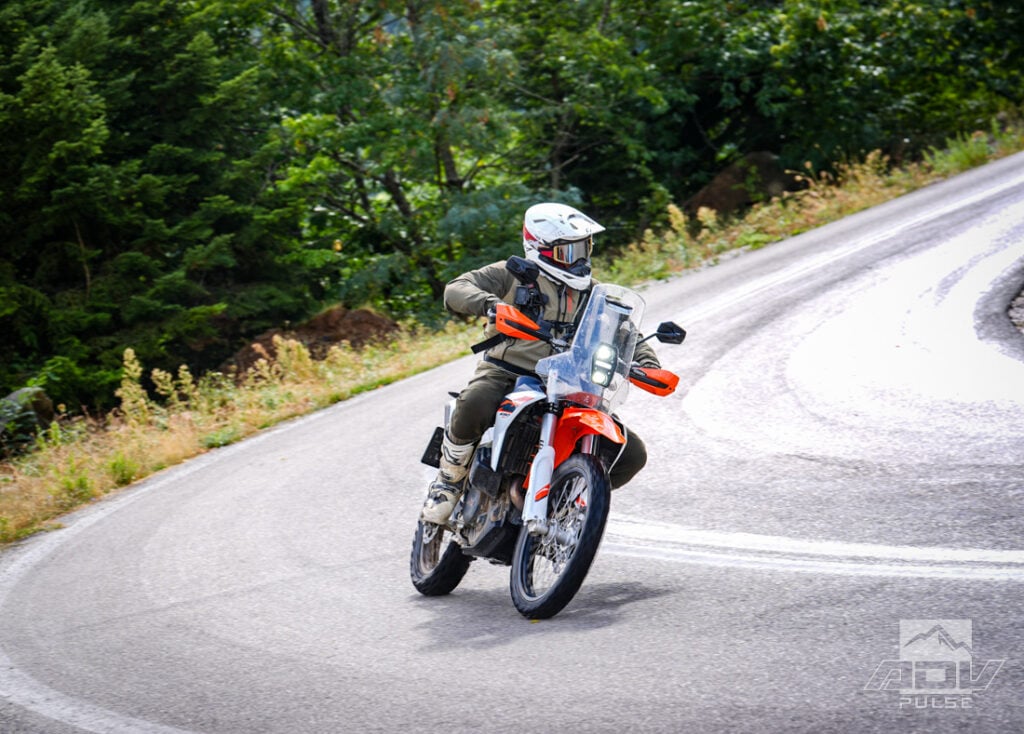
Before getting into the on‑road impressions, it’s worth adding a quick caveat. This launch was designed as an off‑road‑focused test, and a few factors made it harder to fully evaluate the Rally’s street performance. Our test bikes were fitted with race mousses instead of tubes to avoid flats in the rocky terrain, which put effective tire pressure somewhere around 15 psi — great for dirt, not ideal for pavement. The Greek roads we traveled on were also in rough shape, constantly shifting between decent asphalt to broken patches, potholes, and dirt. Intermittent rain added another layer of inconsistency. We found a few stretches where we could explore the bike’s limits on the road, but they were few and far in between.
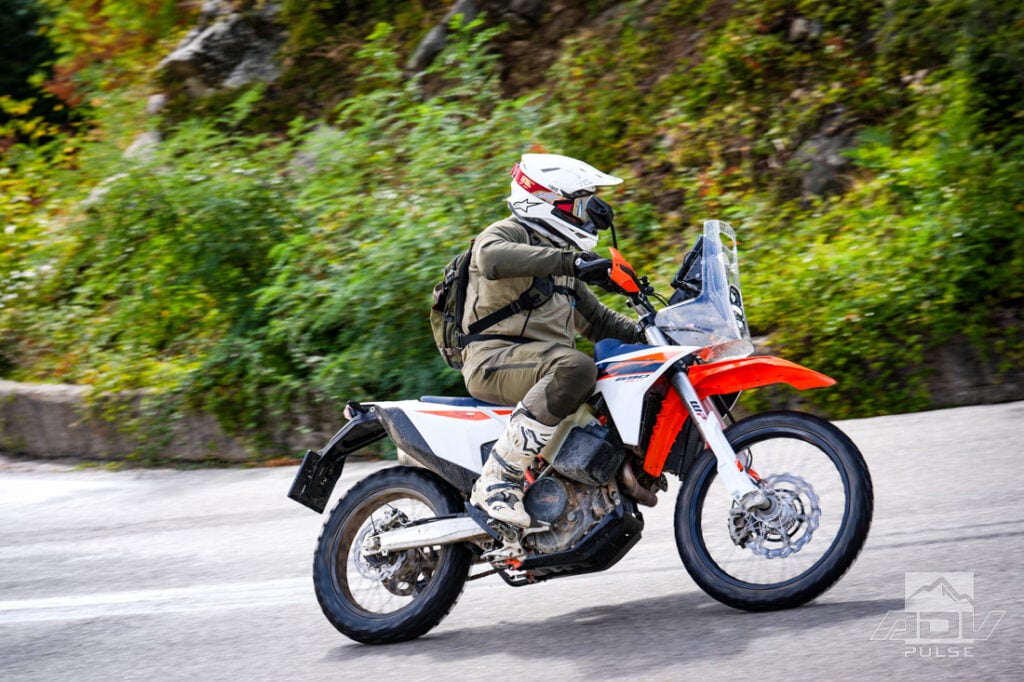
With that out of the way, let’s talk ergonomics. Sitting down, the seat is wide and fairly flat — comfortable enough for a dirt‑biased machine. The front tanks are noticeably broader between the knees compared to the slim 690 Enduro, but not excessively so. The reach to the bars feels natural, though the knee bend is a bit tight for taller riders; at 6’2″, I found myself needing to slide back a bit in the saddle. To make the rear brake usable with motocross boots on, I had to drop the lever adjustment as far as it would go.
Our time at true highway speeds was brief, but enough to confirm what I’d learned on a recent test of the Husqvarna 701 Enduro R (the 690 Enduro R’s twin). The LC4 is much smoother than the old 640 Adventures or early‑generation 690s, though there’s still some buzz under hard acceleration. At a steady 65 mph it’s reasonably calm, and there’s plenty of power to cruise at 80 mph or make quick passes. With the effective windscreen, a decently comfortable seat, and optional cruise control, the Rally is equipped to handle a two‑ or three‑hour freeway transfer with relative ease. The cruise system worked flawlessly, though it uses the standard joystick rather than dedicated buttons, so operation isn’t quite as efficient as some other setups.
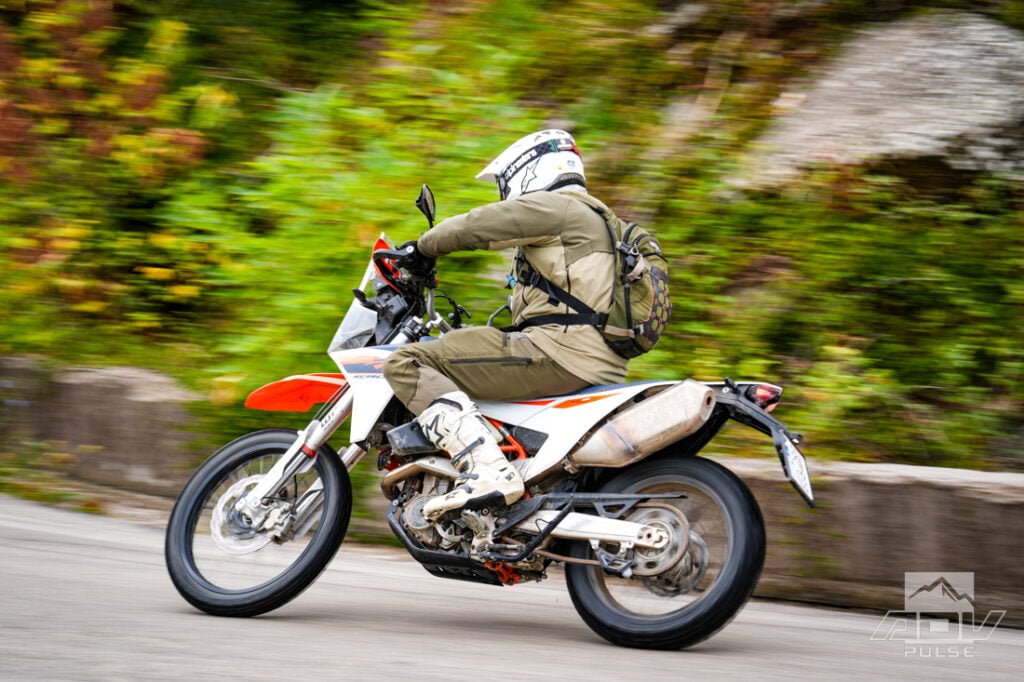
As for spirited street riding, the combination of mousses and inconsistent pavement kept us from pushing very hard. When I tested the 701 last year, it impressed me with how aggressively it could carve a turn when you let it off the leash. That Supermoto DNA is clearly present in the 690 Rally as well — we just didn’t get the conditions to fully tap into it.
Acceleration, however, was easy to sample. The LC4 engine absolutely rips when you let it rev. Crack the throttle in the upper RPMs in first through third and the front end comes up without much persuasion. Low‑end and midrange are more subdued. There’s enough grunt to make quick passes without lots of downshifting, but the explosive power lives up top.
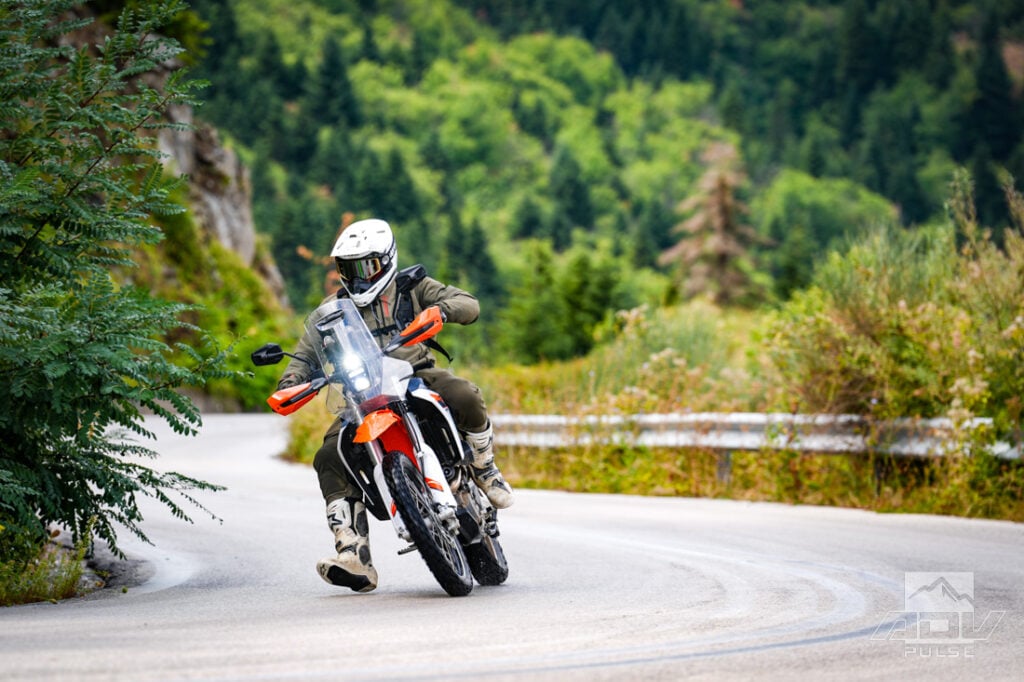
Slowing things down was equally confidence‑inspiring. The Brembo brakes offer strong bite and good feel, and the lean‑sensitive ABS proved its worth in the slick conditions. I relied on it heavily during the rain, and it performed as well as I’d hoped.
As for ride modes, I spent most of the time in Street Mode but switched to Rally Mode when I wanted more control over traction settings. Once the rain started pouring, I bumped TC to the max setting of 9. Then when the skies cleared, I turned it off completely for celebratory wheelies.
In The Dirt
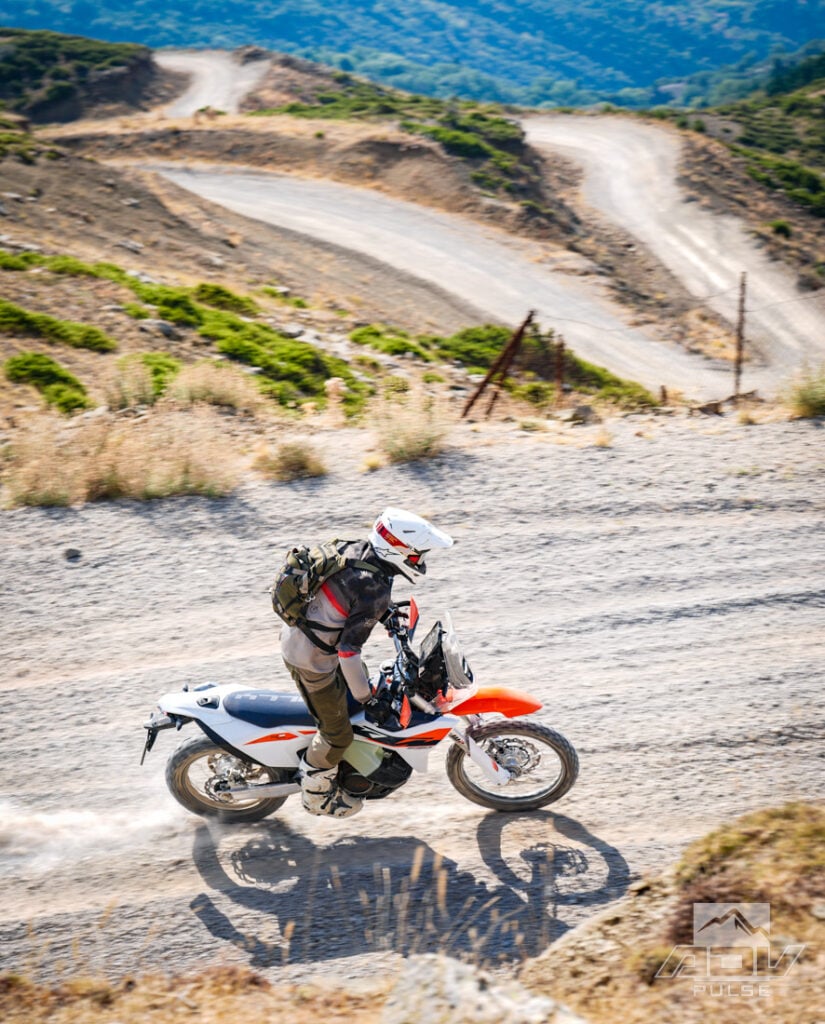
Off‑road is where the 690 Rally really comes into its own, and it’s where we spent the bulk of our time during this test. As mentioned earlier, the seated position is a bit cramped for taller riders, making it harder to shift weight forward or get a leg out cleanly for seated berm turns. Dropping the rear brake lever helped, but I still found myself sliding back in the saddle more than on typical enduro bikes. A taller seat would be a worthwhile upgrade for longer‑legged riders, and it would shorten the transition from sitting to standing. For anyone under six feet, this likely won’t be an issue though.
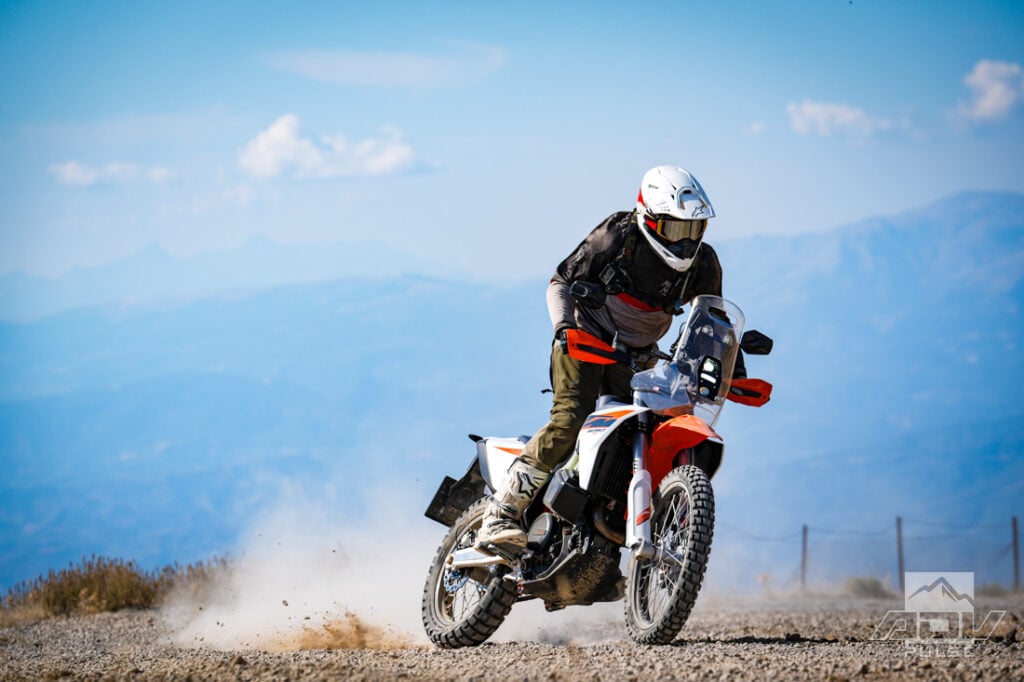
Seat height might be more of a concern. The standard perch sits at 36.8 inches, which sounds intimidating on paper, but it sags considerably once you’re in the saddle. None of the shorter riders in our group seemed to struggle with getting a foot down, though you still need enough flexibility to swing a leg over it to get on.
Once settled in, the suspension feels plush and compliant, soaking up small rocks and chop with ease. Only when we hit larger embedded rocks did the front start to feel a bit skittish. Fortunately, the toolless adjuster dials located on the top of the forks make quick work of tuning; backing off compression and rebound a few clicks noticeably improved tracking in rougher sections. The rear stayed composed throughout the trip without any big kick backs, and the added weight from the front tanks actually seemed to give the Rally some extra stability through loose terrain compared to the ‘rear-tank-only’ 690 Enduro R.
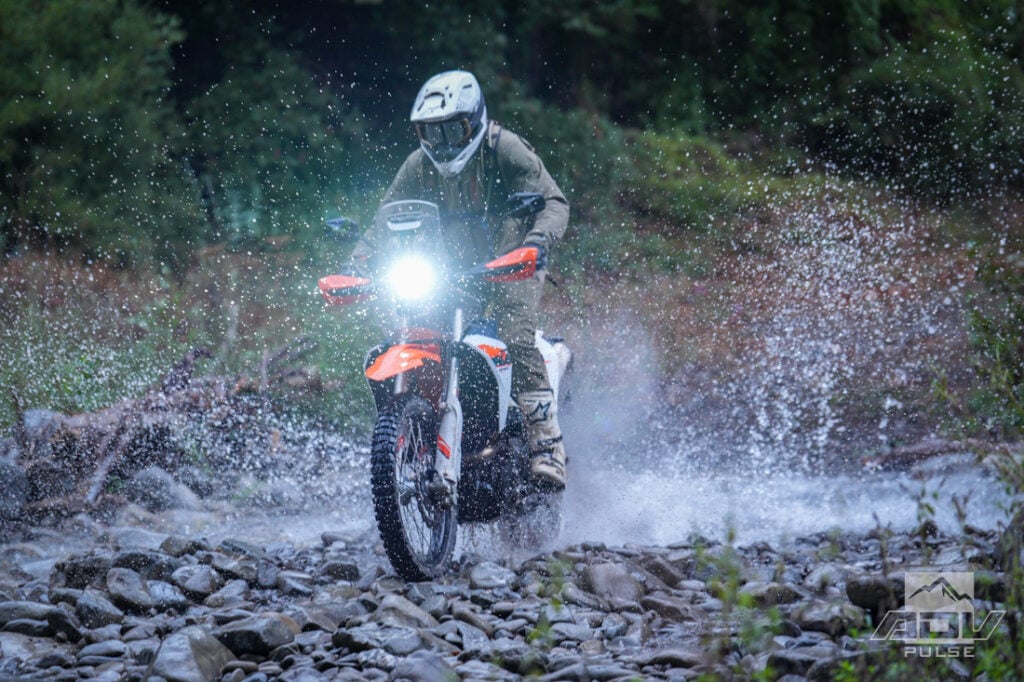
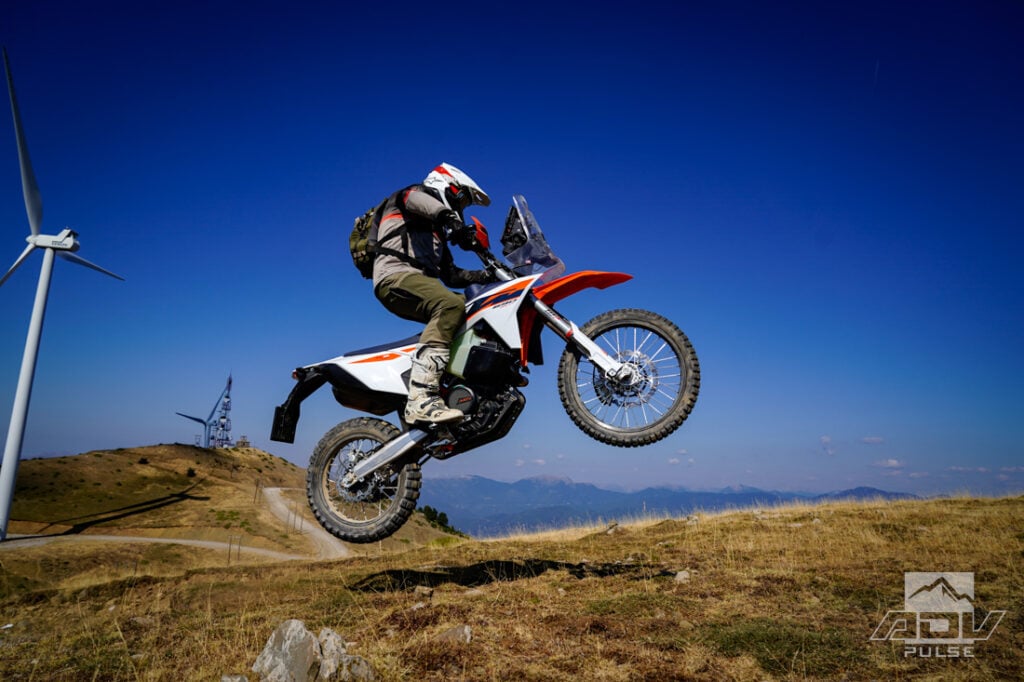
We didn’t encounter many deep whoops or big holes, but the suspension held up well on jumps, logs, and other trail obstacles. No clunks or harsh bottoming were ever experienced. The WP Pro suspension optional upgrade will appeal to riders who truly push hard or race, but for typical adventure terrain it’s probably overkill and will just make the ride harsher.
From a handling standpoint, this is still a big dirt bike at 356 pounds dry. Compared to a 690 Enduro R or a 500 EXC‑F, you feel the extra mass in tight terrain. But judged against other ADV bikes in the 650–750cc class, it’s in a different league. It’s roughly 60 pounds lighter than most twins and behaves far more like a dirt bike than an ADV. Recovering from a tuck — something that happened more than once in the sloppy conditions — was noticeably easier too.
Fuel load plays a role in handling too. With both front and rear tanks filled, the front‑end feel wasn’t much different from the Enduro R, which is known for quirky manners with a full rear tank. But once the front tanks burned off a gallon or so, the balance improved dramatically. Front‑end confidence increased, and the bike felt more planted when charging through loose rocks or ruts.
The Rally’s sophisticated electronics package unleashes even more capability. The systems are tuned specifically for dirt and work impressively well. Offroad Mode keeps everything mellow — ideal for exploring or building off-road skills — but Rally Mode unlocks the bike’s full capability. In Rally, you can choose throttle maps and dial in traction control. In more technical terrain, I preferred Rally throttle with TC set to 2 or 3. Intervention is minimal, allowing smooth, predictable, linear slides. Surprisingly, even at higher settings, the system still works, avoiding bogging down or abrupt cut-offs to keep momentum going.
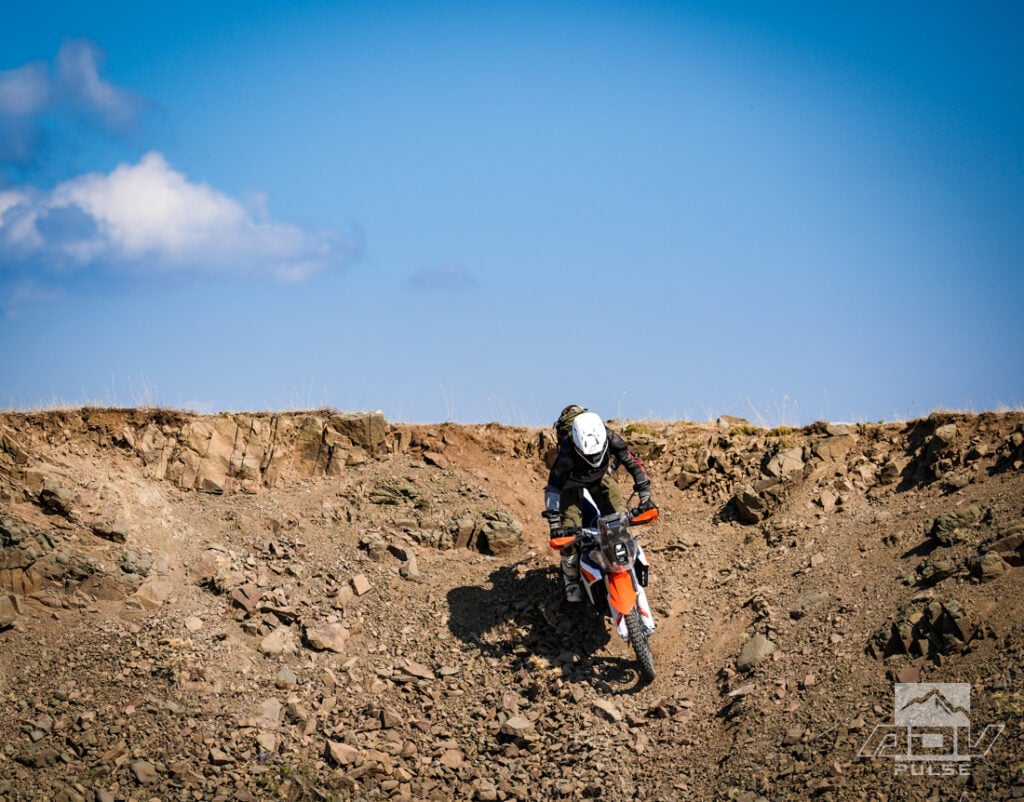
Power delivery in the lower and midrange is smooth but milder than you’d expect from a 690. A 500 EXC‑F definitely has more grunt off idle. That said, fueling is excellent, and the bike won’t stall or flame out when chugging at 2,000–3,000 rpm up a rocky climb. The clutch pull is light with good feel, and the slipper clutch helps avoid lockup on steep, loose descents. Still, with so much power up top, I found myself wishing KTM had shifted a bit more of the grunt lower in the revs to make it more usable off‑road.
Using the Rally throttle map in the upper RPMs brings out the LC4’s wild side. The power hits hard as revs climb — almost like a two-stroke — and it can catch you off guard. Traction Control and Dynamic Slip Control helps tame that. With TC set around 4 or 5, there’s still some mild tire spin allowed but it’s kept under control. Then if you hit deep sand or a loose hill climb and hold the throttle open, it senses the demand and allows more spin in a controlled manner as needed.
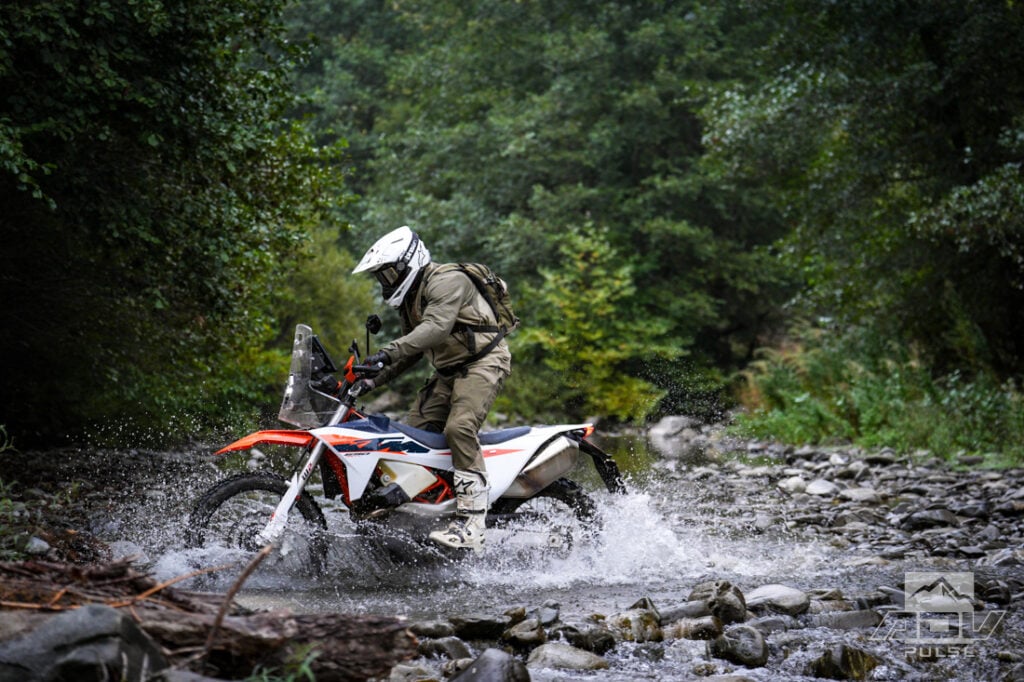
Dynamic Slip strikes a great balance: it keeps things composed when cruising through a surprise loose patch, yet lets the tire eat when you want it too. Only on one very steep, very loose hill climb did I feel like TC killed my momentum a bit; in that case, turning it off would have been better. Most of the time, though, letting the computer manage traction is the smarter move.
Turning TC off still has its place of course. Experienced riders may prefer a more direct connection to the bike for challenging terrain. But the off‑road traction control is genuinely impressive, and even seasoned riders can benefit from it more often than not. The system also retains your throttle map and TC settings when you cycle the key — only ABS resets to Offroad ABS (front only). A dedicated ABS‑off button on the left bar makes quick work of disabling it again though.
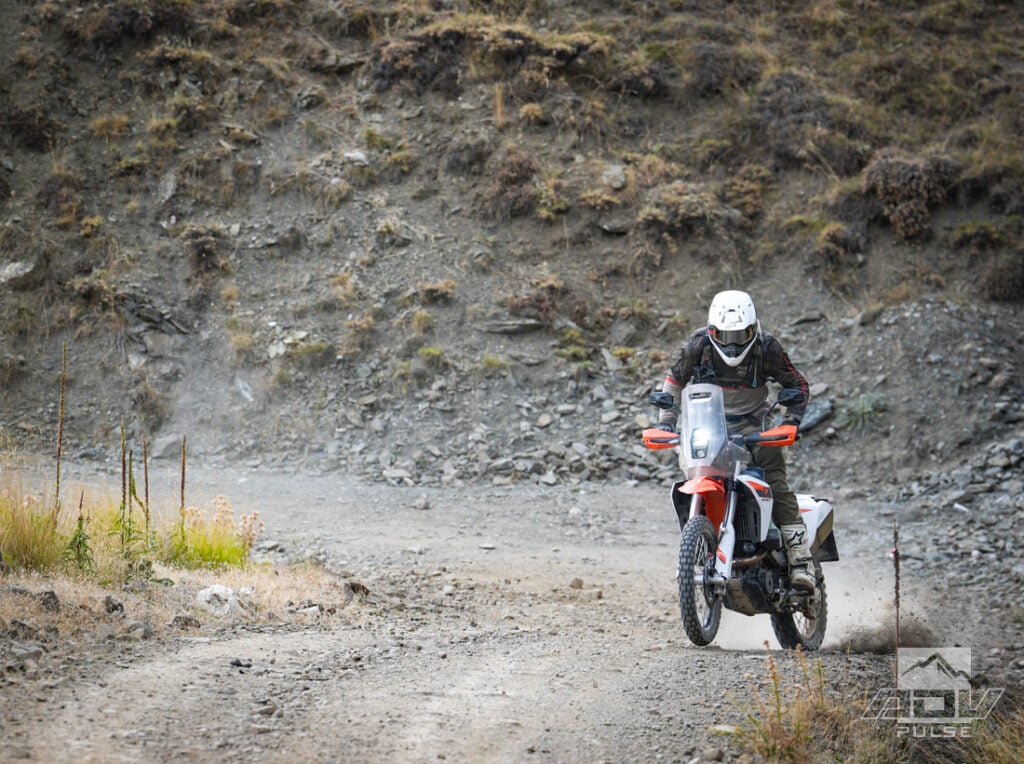
Offroad ABS works well enough to leave it on most of the time. The Brembos offer strong power and excellent feel, and any ABS pulsing is barely perceptible. Only a few times did the system get confused during aggressive braking on loose terrain, giving a momentary freewheeling sensation. While the feeling can be unnerving, I’m not convinced I would have braked any faster without it. There are still situations where you’ll want it off — steep, loose switchbacks with cliff exposure come to mind — but modern systems like this one are good enough that the need to turn it off completely is rare.
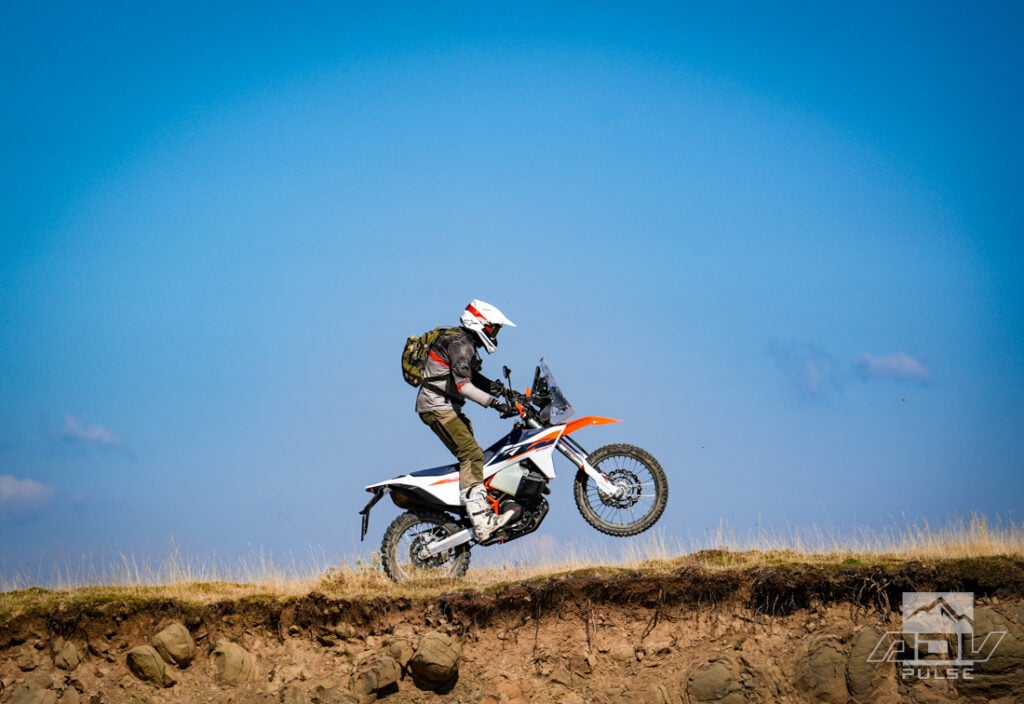
Durability was solid overall. Our group had several mishaps on both dirt and asphalt, and the front tanks held up surprisingly well with minimal scratching. The replaceable plastic guards in high‑wear zones did their job. We did have one odd incident where a rock kicked up caused a cracked engine case. It seemed like a freak occurrence, but it underscores the need for a more protective skid plate. The stock unit is the same used on the 690 Enduro R and a far cry from the big skid plate found on the 450 Rally. Anyone planning serious off‑road use should consider upgrading it.
The Bottom Line
So is the KTM 690 Rally the next hot bike poised to dominate the performance‑focused middleweight ADV segment? It certainly has the off‑road chops, the authentic rally looks, and a price tag that isn’t sky high. With big‑thumper power, a lightweight chassis, and genuine off‑road intent, there’s nothing else quite like it in the 650–750cc class. The closest competitors — the Aprilia Tuareg 660 Rally and Yamaha T7 World Raid — are both capable machines in the same price range, but the 690 Rally sits a clear step ahead in nimbleness and off‑road capability. For riders chasing pure off‑road performance, the Kove 450 Rally and 800X are significantly cheaper and worthy of a look.
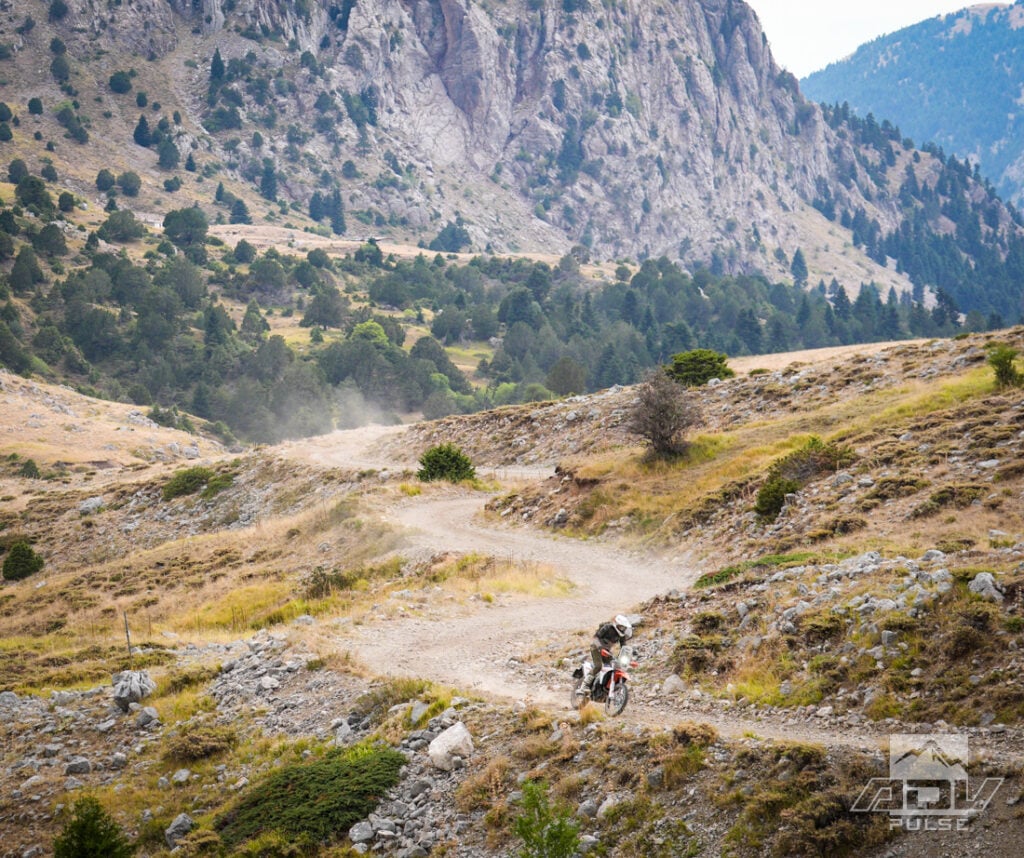
For riders who want a high‑performance machine built for open‑desert speed, the 690 Rally delivers. It has more than enough top‑end power to blast through long, fast stretches, and its responsive chassis and top-end power rewards an aggressive throttle hand. Where it’s more limited is in versatility. The engine still carries some vibration, and the lack of some comfort features reduces its highway range. The mild low‑to‑midrange power also reduces its effectiveness in slower, more technical terrain.
Even with the added rally hardware, it remains a bike that is caught in the middle ground — too minimalistic for serious long‑range ADV travel, yet still a bit bulky for tighter enduro terrain. But for riders who want one machine that can do a bit of everything, and do it fairly well, the 690 Rally hits a sweet spot. It’s especially appealing for those who want a lighter ADV platform for exploring closer to home. It’s still manageable to pick up after the third or fourth drop, and it won’t leave your energy drained at the end of a long day of tough trails like a full-size ADV.
One of the LC4 platform’s biggest strengths is its upgradability. The aftermarket is huge, and many of the Rally’s sharper edges can be softened. A re‑map and exhaust could possibly broaden the powerband. Rubber‑mounted bars, an upgraded seat, and the optional Cruise Control would make it a far better highway bike. Riders who want to race weekend rallies can opt for the WP Pro suspension and beefier protection. The options to make it fit your own idea of the perfect adventure machine are vast.
Overall, it’s a strong platform with solid lineage — now with added fuel range and wind protection for far less money than it would cost to add via the aftermarket. In the past, converting a 690 Enduro R with a rally kit cost anywhere from $3,000 to $6,000. Now the difference between the Enduro and Rally models is just $800. We expect the aftermarket rally‑kit companies are going to feel that. We also expect the 690 Rally to be a popular seller, and it’s high on our list of bikes we want more seat time on for future adventures.
The 2027 KTM 690 Rally is already arriving at North American dealers with an MSRP of $14,199 US and $15,599 CAD, backed by a 24‑month warranty. Pricing for the WP Pro suspension isn’t yet available, but the Tech Pack — which includes the Rally Pack, Quickshifter+, and Cruise Control — is a $649 add‑on. For more details, check out the KTM website.
KTM 690 Rally Specs
| Engine: | 1-cylinder, 4-stroke engine |
| Displacement: | 692.7 cm³ |
| Power: | 78 HP (58.1 kW) |
| Torque: | 53.8 ft-lbs (73 Nm) |
| Transmission: | 6-speed |
| CO2 emissions: | 99 g/km |
| Cooling: | Liquid cooled |
| Engine cylinder: | Single cylinder |
| EMS: | Keihin EMS with RBW, twin ignition |
| Engine oil: | Motorex Power Synth SAE 10W-50 |
| Engine stroke: | 4-Stroke |
| Silencer: | Stainless steel primary and secondary silencer |
| Brake disc diameters (front/rear): | 300 / 240 mm |
| Front brake: | Brembo twin-piston floating caliper, brake disc |
| Rear brake: | Brembo single-piston floating caliper, brake disc |
| Chain: | 520 X-Ring |
| Frame design: | Chromium-Molybdenum steel trellis frame, powder coated |
| Steering head angle: | 62.3 ° |
| Rear subframe design: | Self-supporting plastic tank |
| Trail: | 121 mm |
| Wheelbase: | 1506 ± 15 mm |
| Wheels: | Spoked wheels with aluminum rims |
| Wheel sizes: | 1.85 x 21″; 2.5 x 18″ |
| Front suspension: | WP XPLOR-USD, Ø 48 mm |
| Rear suspension: | WP XPLOR with Pro-Lever linkage |
| Suspension travel (front): | 265 mm (10.43 inch) |
| Suspension travel (rear): | 250 mm (9.8 inch) |
| Front suspension adjustment: | Compression, rebound |
| Rear suspension adjustment: | Compression (high and low speed), rebound and preload adjustment |
| Seat height: | 36.8 in (935 mm) |
| Tank capacity (approx.): | 5.28 US gal (20 l) |
| Ground clearance: | 10.4 in (265 mm) |
| Weight (without fuel): | 356 lbs (161.5 kg) |
| MSRP: | $14,199 USD; $15,599 CAD |
Gear We Used
Jacket: Mosko Moto Surveyor
Pants: Mosko Moto Woodsman Enduro
Jersey: Mosko Moto
Gloves: Alpinestars Full Bore
Helmet: Alpinestars SM8
Goggles: Alpinestars Supertech Vision
Boots: Alpinestars Tech 10
Backpack: Mosko Moto Wildcat 12L
Photos By Marco Campelli

Author: Rob Dabney
Rob Dabney started a lifelong obsession with motorcycles at the age of 15 when he purchased his first bike – a 1982 Honda MB5. Through his 20’s and 30’s he competed in off-road desert races, including the Baja 250, 500 and 1000. Eventually, his proclivity for exploration led him to dual sport and adventure riding. Rob’s never-ending quest to discover what’s around the next bend has taken him on Adventures in Latin America, Africa, Europe, Asia, and throughout the American West. As a moto journalist, he enjoys inspiring others to seek adventure across horizons both near and far.Related Stories
Related Stories
 KTM Announces Specs And Availability Of New 690 Rally Model KTM is expanding its LC4 lineup with the introduction of the 2027 KTM...
 2025 KTM 390 Adventure R First Ride Review It’s been 5 years now since KTM released their first budget-friendly adventure bike,...
 2025 KTM 390 Enduro R First Ride Review Many adventure riders dream of a shiny, new enduro next to their ADV...
Popular Stories
Bultaco Staging Comeback With Budget-Friendly 300cc ADV Bike
Bultaco is officially back in the motorcycle busi...
5 Small‑Bore Adventure Bikes That Aren’t Buzzy On The Highway
Small‑bore adventure bikes in the 300–500cc range...
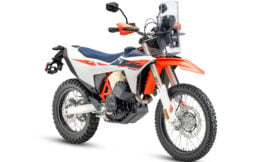
KTM Announces Specs And Availability Of New 690 Rally Model
KTM is expanding its LC4 lineup with the introduc...
New Midsize GS Spied: Is BMW Resurrecting The F650GS Dakar?
BMW Motorrad is working on a new midsize GS, rece...

Notify me of new posts via email
“A 500 EXC‑F definitely has more grunt off idle.” i hope it has more than a 390 adv r as i am trading mine in for the ktm 690 rally in search of more low end.